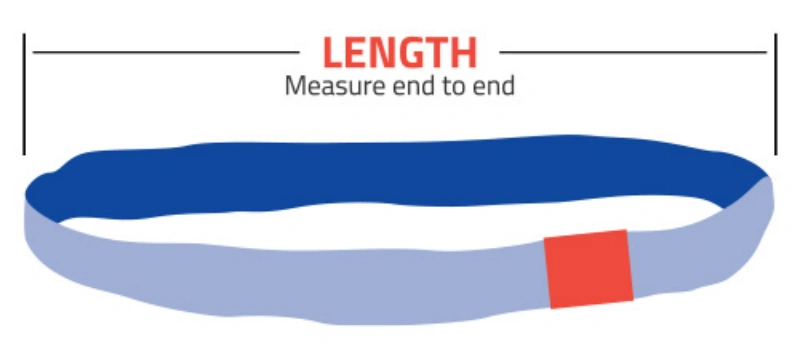
To measure a round sling, lay it flat and measure straight from tip to tip. This method ensures you get the effective working length, which is critical for safe lifting.
Accurate round sling measurement protects you from overloads and unexpected conditions, as the design factor shows how much stronger the sling is compared to its rated load.
Powerful Machinery delivers certified lifting slings you can trust for demanding jobs. Many people make the mistake of measuring the sling’s circumference instead of its length, which can lead to unsafe lifting practices.
Key Takeaways
Measure round slings from tip to tip to ensure accurate, effective working length for safe lifting.
Use color-coded jackets on slings to quickly identify load capacities and avoid overloads.
Inspect slings regularly for damage, focusing on the outer jacket and tags to ensure safety.
Choose the right sling based on load weight, shape, and environment for optimal performance.
Follow safety standards and guidelines to prevent accidents and ensure reliable lifting operations.
What Is a Round Sling?

Construction and Materials
A round sling is a flexible lifting device designed for safe and efficient material handling. You will find that most round slings use high-strength polyester yarn as the core, protected by a durable woven cover. This construction gives you both strength and flexibility.
The endless loop design allows the sling to distribute weight evenly and adapt to different load shapes. The table below shows the most common materials and their properties:
Material | Tensile Strength (lbs) | Safety Factor |
|---|---|---|
Polyester | 6,800 | 5:1 |
Nylon | Not specified | 5:1 |
The outer jacket shields the load-bearing fibers from abrasion, moisture, and chemicals. Powerful Machinery manufactures round slings under strict EN 1492-2 standards, ensuring you receive consistent quality and safety.
Key Advantages of Round Slings
You gain several advantages when you choose a round sling for lifting operations. The endless loop of polyester yarns, protected by a woven jacket, creates a durable and adaptable tool. Here are the main benefits:
Advantage | Description |
|---|---|
Flexibility | Conforms to the shape of the load, ideal for irregular objects. |
Safety | Color-coded jackets show the sling’s capacity, helping you avoid overload. |
Durability | Resistant to moisture, UV rays, and chemicals, suitable for many environments. |
Versatility | Works in vertical, basket, or choke hitch configurations for different lifting tasks. |
A round sling adapts to uneven or fragile surfaces. Its flexibility allows it to wrap closely around irregularly shaped loads, ensuring even load distribution and reducing stress on specific points. This design helps prevent damage during lifting.
Common Lifting Applications
You can use a round sling in many industries. Its strength and adaptability make it a top choice for lifting heavy or delicate items. The table below highlights common application areas:
Application Area | Description | Load Capacity |
|---|---|---|
Automotive | Handles heavy lifting in automotive plants. | Up to 500,000 lbs |
Heavy Industries | Supports various lifting needs due to strength and flexibility. | Varies by application |
Protection of Surfaces | Soft design prevents damage to smooth or polished surfaces. | N/A |
You will see round slings in construction, logistics, and manufacturing. They meet safety standards such as OSHA, ASME, and ISO, giving you confidence in every lift.
Round Sling Measurement Steps
How to Measure a Round Sling?
You need to follow a precise process for round sling measurement to ensure safe lifting. Start by laying the round sling flat on a clean, even surface. Make sure the sling is not twisted or bunched up.
Use a tape measure or ruler to measure a round sling from one tip to the other. This gives you the straight length, not the circumference. The measurement you record is the effective working length, which determines the sling’s lifting capacity and compatibility with your rigging setup.
Step-by-Step Guide:
Place the round sling flat on the ground or a table.
Straighten the sling so there are no twists or folds.
Align the tape measure with one tip of the sling.
Measure directly to the opposite tip.
Record the length as your round sling measurement.
Tip: Always measure a round sling when it is clean and dry. Dirt or moisture can affect the accuracy of your measurement.
Avoiding Common Measurement Mistakes
Many riggers and operators make errors during round sling measurement. The most frequent mistake is measuring the circumference instead of the straight length.
Circumference measurement does not reflect the sling’s actual lifting capacity and can lead to unsafe practices. You must avoid this by always measuring tip to tip.
Powerful Machinery’s color-coded system and clear labeling help you prevent mistakes. You can quickly identify the sling’s rated capacity and material type without consulting manuals. The color coding allows you to verify the safe working load and material compatibility at a glance.
This system minimizes confusion, especially during urgent lifting operations.
Color-coding provides standardized visual identification for load capacities and materials.
Operators can recognize a sling’s rated capacity quickly.
The system allows rapid assessment of equipment during emergencies.
Only safe and properly rated round slings are used for lifting.
Note: Always check the sling’s tag and color before use. If the tag is missing or unreadable, do not use the sling.
Understanding Effective Working Length (EWL)
Effective working length, or EWL, is the straight distance between the two bearing points of a round sling when laid flat. EWL is the industry standard for round sling measurement. You must understand EWL because it directly affects the sling’s lifting performance and compatibility with your rigging hardware.
EWL determines how the round sling fits around the load and connects to the lifting equipment. If you measure a round sling incorrectly, you risk using a sling that is too short or too long, which can compromise safety. Always use the EWL for selecting the right sling for your lifting task.
Term | Definition | Importance |
|---|---|---|
Effective Working Length (EWL) | Straight length between bearing points | Ensures correct sling selection |
Circumference | Total loop distance | Not used for lifting safety |
Powerful Machinery’s round slings feature color-coded jackets and clear labeling for EWL and working load limit. You can trust these markings to guide your selection and ensure safe lifting every time.
Safety Reminder: Double-check your round sling measurement and EWL before every lift. Accurate measurement protects you, your team, and your equipment.
Choosing Lifting Slings from Powerful Machinery

Working Load Limit and Safety Factors
You must always match the lifting slings to the weight and type of your load. Start by checking the working load limit. This value tells you the maximum weight the sling can safely lift. For every lifting application, you need to consider the safety factor.
The design factor for round sling options usually ranges from 5:1 for general use, 6:1 for higher safety, and 7:1 for heavy-duty lifting. This means the sling is much stronger than the load it will carry, giving you a safety margin against overloads or unexpected stress.
Type of Sling | Safety Factor Ratio | Usage Context |
|---|---|---|
Round Slings | 5:1 (general), 6:1 (higher), 7:1 (heavy-duty) | Industrial and critical lifting |
Other Types (e.g., Flat, Web) | Varies by type | Different construction and material properties affect safety factors |
When you select lifting slings, always ensure the working load limit exceeds your load’s weight. Consider the load’s size, shape, and the environment. For delicate loads, synthetic slings work best. For abrasive or heavy loads, choose chain or wire rope slings.
Powerful Machinery’s lifting slings meet ASME, EN, and ISO standards, so you can trust their safety and reliability.
Sling Configuration and Selection
You will find several types of lifting slings and configurations for different lifting applications. The main configurations include vertical, basket, and choker. Each configuration affects load capacity and stability.
Sling Configuration | Load Capacity | Application |
|---|---|---|
Vertical Hitch | Full lifting capacity | Basic connection to a load; not for loose or unbalanced loads |
Basket Hitch | Up to 200% of single-leg capacity | Distributes load equally; not for unbalanced loads |
Choker Hitch | 75-80% of single-leg capacity | Provides greater load control; not for unbalanced or loose loads |
You should select the configuration that matches your lifting application. Vertical hitches provide maximum stability. Basket hitches increase lifting capacity by distributing the load. Choker hitches offer a secure grip for better control. Always check the sling angle, as it changes the capacity multiplier and affects safety.
Powerful Machinery offers a full range of round slings and other lifting sling types. Each product features clear labeling, color coding, and batch tracking for easy identification and compliance.
Durability and Inspection Tips
You need to inspect your lifting slings regularly to ensure safe lifting operations. Inspection intervals depend on service conditions:
Service Type | Inspection Interval |
|---|---|
Normal Service | Yearly |
Severe Service | Monthly to Quarterly |
Special Service | As recommended by a Qualified Person |
During each inspection, look for these common signs of damage:
Abrasion or cuts on the outer jacket
Acid burns or discoloration
Burn damage from high temperatures
Tears, holes, or exposed core yarns
Knotting or weld splatter
Illegible or missing tags
If you find any of these issues, remove the sling from service immediately. Powerful Machinery’s lifting slings carry ISO-9001 and safety certifications, so you can rely on their durability and traceability. Regular maintenance and proper storage will extend the life of your lifting slings and keep your team safe.
Tip: Always store lifting slings in a clean, dry place away from chemicals and direct sunlight.
Conclusion
You ensure safety by measuring round slings from tip to tip and recording the effective working length. This step protects you and your team when lifting heavy loads. Using certified lifting slings from Powerful Machinery adds another layer of safety. The table below shows how these certifications support safety in every lift:
Safety Standard | Description | Impact on Safety |
|---|---|---|
ISO9001 | Quality management systems | Ensures products meet rigorous quality standards, reducing the risk of failure |
ASME B30.9 | Safety standards for slings | Guarantees structural integrity and load-handling capability |
CE | European safety certification | Confirms compliance with EU safety regulations, enhancing trust in equipment reliability |
Always double-check your measurements, follow safety guidelines, and consult experts if you have questions. Regular inspections, clear communication, and proper documentation keep your workplace safe.
Remember, over 30% of rigging accidents happen due to incorrect sling use, often from improper measurement or material selection. For more tips, review OSHA guidelines and maintain accurate records for every sling. You protect your team and equipment by making safety your top priority.
FAQ
How do you select the right round sling for your lifting operations?
You should check the load weight, shape, and environment. Review the sling’s capacity and strength. Confirm the material matches your needs. Always follow the color-coded system and inspect the sling before every lift. This ensures safe and efficient lifting operations.
What are the main benefits of using round slings in lifting equipment?
You gain flexibility, strength, and durability. These slings protect delicate surfaces and adapt to irregular shapes. The color-coded features help you identify capacity quickly. You can use them in many lifting operations, making them a versatile choice for lifting equipment.
How often should you perform an inspection on your slings?
You need to inspect slings before each use and schedule regular inspections based on service conditions. For normal lifting operations, inspect yearly. For severe service, inspect monthly or quarterly. Always remove slings from service if you find damage during inspection.
What features make round slings ideal for heavy lifting operations?
Round slings offer high strength, flexibility, and durability. The seamless material construction protects the core. The color-coded jackets show capacity at a glance. These features ensure safe lifting operations and reliable performance in demanding environments.
Can you use round slings outdoors, and what affects their durability?
You can use round slings outdoors. The polyester material resists UV rays and moisture, which supports durability. Always store slings in a dry place and perform regular inspections. Proper care extends the life and maintains the strength of your lifting equipment.