When you request a chain sling quote, ask who makes the chain and components, who assembles the sling, and who assigns its working load limit (WLL). Two slings made with the same chain grade can have different ratings because of their leg configuration, sling angle, and fittings. The answer affects both the price you compare and the records you need at delivery.
This guide compares chain producers, component makers, and sling fabricators for industrial buyers. It is a shortlist, not a ranking by sales, safety record, or independent product testing. Check the quoted configuration, WLL, applicable standard, and documents with each company. The RFQ table below gives you a consistent basis for comparing offers.
Chain Sling Companies at a Glance
Some companies make chain or fittings; others build and rate the complete sling. The role column identifies what each company publishes. A grade shown in a catalog does not mean every assembly is offered in that grade.
| Company and region | Published role | Grade/legs shown | Buyer fit and check |
| Powerful Machinery · China | Chain/rigging range; sling supplier | G80/G100 chains; 1–4 leg slings | Component sourcing; verify assembly testing and order documents. |
| pewag · Austria | Chain and lifting-system maker | G100 system; configurator | Integrated chain/component system; confirm selected assembly. |
| Peerless Chain · US | Chain and sling maker | G80/G100; 1–4 leg rating tables | Chain and custom sling supply; check model-specific tag and records. |
| RUD · Germany | Chain-system maker | G80, VIP G100, ICE G120 | System-specific components; check grade compatibility. |
| Columbus McKinnon · US | Chain/component maker | Herc-Alloy G80/G100 | Chain and fittings; identify the final sling assembler. |
| Lift-It Manufacturing · US | Sling fabricator | G80/G100; 1–4 legs | Specified fabricated slings; confirm current lead time. |
| Mazzella Companies · US | Sling fabricator/distributor | G80/G100; 1–4 legs | Local fabrication and service; identify component brand. |
| I&I Sling · US | Sling fabricator | G100; G80 for 1 in.+; 1–4 legs | Built-to-order assemblies; confirm fitting selection. |
| Holloway Houston · US | Sling fabricator/supplier | G80/G100; 1–4 legs | Houston assembly and sourcing; confirm selected model. |
| Ashley Sling · US | Sling fabricator/supplier | G100 catalog; single and multi-leg | Catalog and ordering support; confirm requested configuration. |
These profiles draw on the companies’ published product information reviewed in October 2026. The suggested purchasing fit is our interpretation of that information, not an audited performance claim.
10 Chain Sling Companies
Powerful Machinery
Powerful Machinery, based in China, supplies chain slings, lifting chains and rigging hardware.
Its catalog shows single-, double-, triple- and quadruple-leg sling arrangements, with selection tables for master links, coupling links and hook types. Separate pages list Grade 80 and G100 lifting chains.
The chain tables give chain-level WLL and manufacturing proof-force figures; they do not document the testing of a particular finished sling. Buyers sourcing several rigging items can request the proposed component list, assembly WLL, and documents for the order. Ask which assembly and testing steps QDPowerful performs and which, if any, are handled by partners.
Pewag
Austria-based Pewag publishes lifting-chain and component systems.
Its Grade 100 range includes chain, master links, connecting links, shortening hooks, and safety hooks. Buyers can configure a sling from the published system.
For a specified pewag system, use its WLL and compatibility data to check the chosen parts. Ask the seller for the identification and test records required for your order, and confirm that the complete configuration is available in your market.
Peerless Chain
Peerless Chain is a US maker of chain and chain slings.
It publishes Grade 80 and Grade 100 WLL tables for one-, two-, three-, and four-leg slings and offers custom assemblies.
The tables separate ratings by configuration and angle. They help buyers compare a proposed sling with a published rating, provided the chain size and fittings also match. Request the tag information and any proof-test records required for the quoted assembly.
RUD
Germany-based RUD makes lifting-chain systems.
Its published range includes Grade 80 slings, VIP Grade 100 and ICE Grade 120 systems.
RUD’s system instructions limit which chain and components may be combined. A buyer specifying RUD should name the system, grade, and chain size, then check each fitting against the relevant manual and WLL table. Request the identification and order records needed for the lift.
Columbus McKinnon
Columbus McKinnon (CM), a US lifting and rigging group, publishes Herc-Alloy chain and fittings.
Its range includes Grade 80 and Grade 100 chain for sling construction, plus rated hooks and coupling links.
CM chain and component data help define a material specification. If you need a finished sling, ask the seller who assembles and rates it, rather than treating a chain or fitting rating as the assembly WLL. Identify the final assembler and its documentation on the quote.
Lift-It Manufacturing
Lift-It Manufacturing fabricates chain slings in the US.
It lists Grade 80 and Grade 100 options and says it makes and proof tests one-, two-, three-, and four-leg slings.
For a sling made to your specification, compare the grade, chain size, reach, leg angle, and hooks with the finished tag and test certificate. Confirm the hardware combination and delivery date for the order.
Mazzella Companies
Mazzella Companies fabricates and distributes chain slings in the US.
It lists welded and mechanical Grade 80/100 assemblies, one through four legs, adjustable arrangements and custom fabrication.
Mazzella also offers repair and local service. If those services matter, confirm the location handling your order, the chain and fitting brands used, and the documents that will accompany the finished sling.
I&I Sling
I&I Sling fabricates custom chain slings in the US.
It lists one-, two-, three-, and four-leg slings. The company says Grade 100 is its usual chain grade, with Grade 80 used for sizes of 1 inch and above.
I&I says it proof tests every completed chain sling to twice its rated capacity. This describes its own practice; ask for the record for your sling. The company lists fittings from several makers, so confirm that the proposed combination is approved for the assembly.
Holloway Houston
Holloway Houston supplies rigging and fabricates chain slings in Houston.
Its chain sling category lists Grade 80 and Grade 100 products with one through four legs.
Holloway describes in-house assembly, load verification, and sling identification. Buyers seeking regional fabrication can request the selected configuration and shipment records, then check stock and delivery with the seller.
Ashley Sling
Ashley Sling is a US sling supplier and fabricator.
Its alloy chain sling category and ordering guide show Grade 100 products, including single-leg and multi-leg arrangements.
The ordering guide helps identify chain size, fittings, and rated configuration. Use the model table to prepare the RFQ, then confirm the leg count and required traceability or test records on the quote.
What Should Buyers Compare When Choosing a Chain Sling Manufacturer?
Chain Grade and Configuration
Ask which chain grade and fitting grade the assembled sling will use. Grade 80 and Grade 100 are common alloy-chain options, but a grade label is not the complete lifting rating. Compare the manufacturer’s published WLL for the actual assembly. QDPowerful lists both grades in its lifting chain range; this comparison concerns the sling assembled from chain and compatible parts.
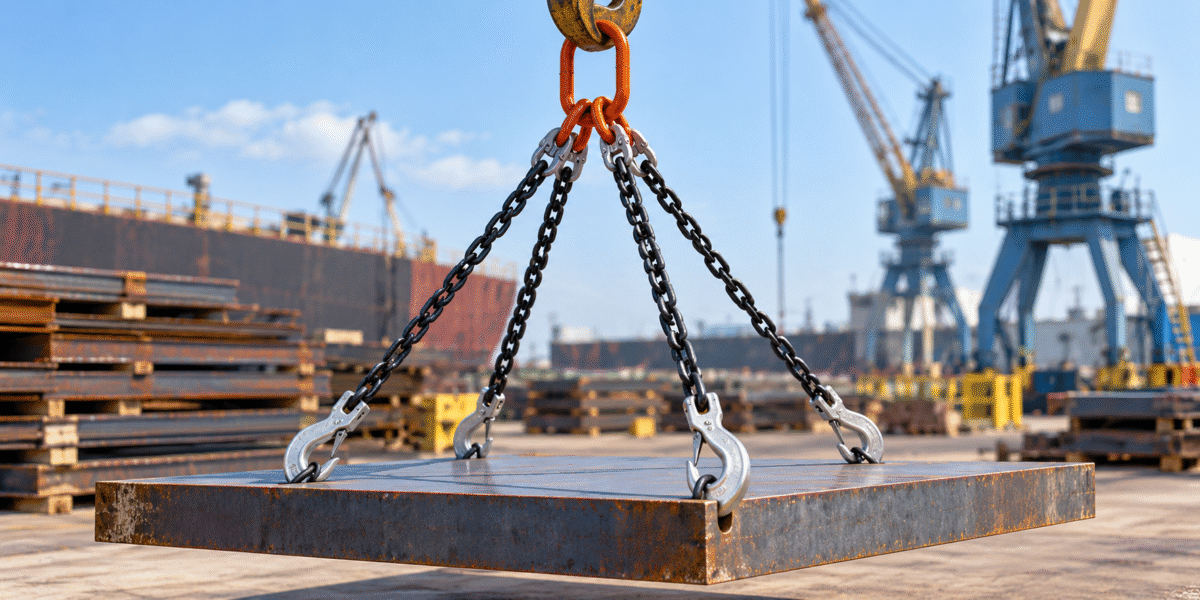
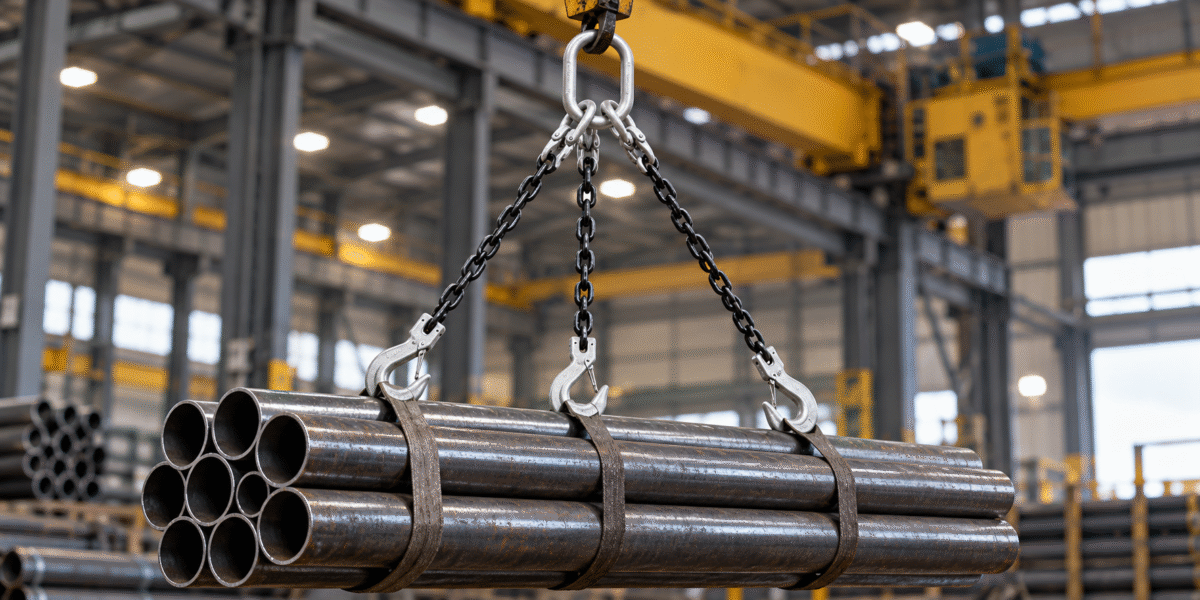
Specify the lifting points and whether you need one, two, three, or four legs. QDPowerful lists single-leg, two-leg, three-leg, and four-leg options. Four installed legs do not automatically share the load equally; use the rated configuration and the applicable loading assumptions.
WLL, Sling Angle and Effective Length
Give the load weight and lifting geometry, then ask for the WLL at the actual sling angle. A shallower leg angle increases tension in each loaded leg. The rating must also account for the fittings and any unequal loading; it cannot be taken from the chain diameter alone. Our chain sling capacity guide covers the calculation in detail.
Give the required effective length (often called reach), the measurement points on the top and end fittings, and any tolerance. A nominal cut length of chain may not produce the reach needed for the lift.
Hooks, Master Links and Connecting Components
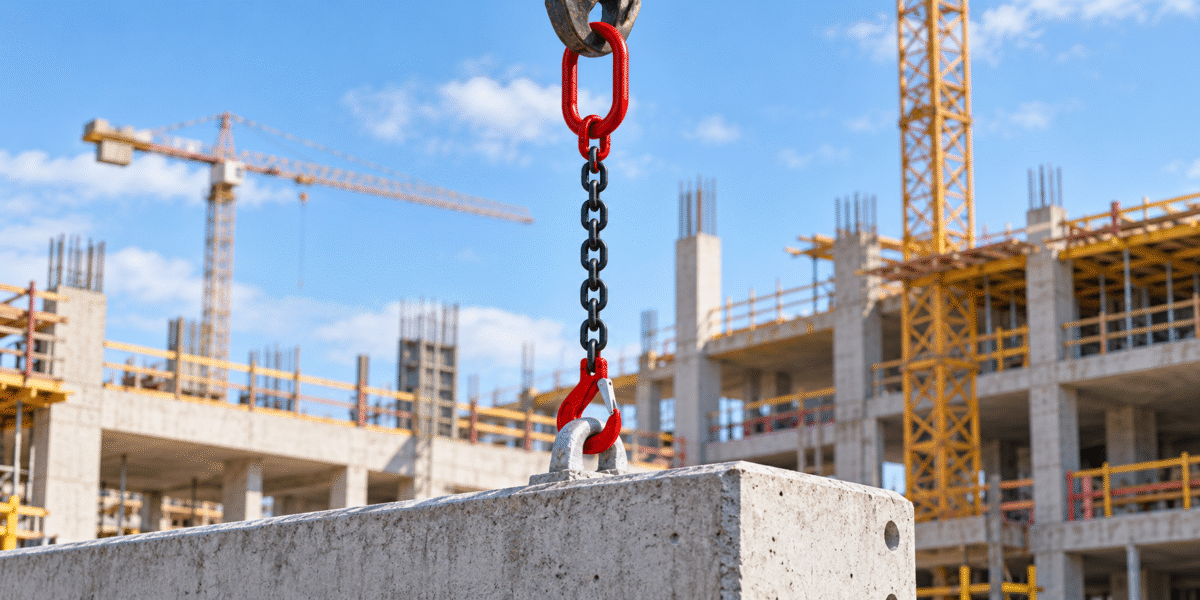
Compare the proposed hook style, hook opening, latch or locking mechanism, top master link, and connecting links. Check their size, grade, and WLL compatibility with the chain and the hoist hook or lifting point. Ask the supplier to identify the component models in the final assembly, especially when parts come from different brands.
Testing, Documentation and Supply
Ask who rates the finished sling and how its chain and fittings are identified. Specify the identification, inspection, and proof-test records required by the applicable rules and your project. Manufacturing proof-force figures for the chain do not document a test of the completed sling. If previously proof-tested components are mechanically assembled, ask what records and assembly identification apply to that route.
Ask for a delivery date based on the specified chain and fittings. A distributor should confirm stock; a fabricator should confirm component availability and production time. Agree on substitutions before the supplier changes a quoted part.
Chain Sling Standards and Testing Buyers Should Ask About
Name the applicable standard and jurisdiction in the purchase specification. ASME and EN address sling or component requirements, OSHA regulates workplace use in the US, and ISO 9001 concerns an organization’s quality management system. None is a substitute for documents identifying the sling you receive.
| Category | What to ask |
| Product or use standard | Check the durable tag for chain size, grade, rated WLL, and reach. Ask how its markings connect to required records and what angle basis applies to a multileg rating. |
| Workplace rule | OSHA 29 CFR 1910.184 addresses sling use in US general industry; 29 CFR 1926.251 covers construction rigging. These are employer obligations, not an OSHA product certificate. |
| Quality system | ISO 9001 concerns the organization’s quality management system. If certification matters, request the issuer, scope, site and valid dates. It does not by itself establish an individual sling WLL. |
| Testing and records | Specify the assembly method and the applicable proof-test requirements. A welded assembly and one built from previously tested mechanical components may follow different routes under US workplace rules. Ask for records that identify the relevant sling or components; do not assume one global proof-test multiple. |
| Identification and traceability | Check the durable tag for chain size, grade, rated WLL and reach. Ask how its markings connect to required records and what angle basis applies to a multileg rating. |
For inspection frequency and removal criteria during service, use the applicable workplace rules and the sling maker’s instructions. The separate chain sling inspection guide addresses those checks.
Chain Sling Manufacturer vs Supplier: What Is the Difference?
These terms describe different roles, and one company can fill more than one. Find out who makes the parts, who builds the sling, and who takes responsibility for its rating.
| Source type | Useful for | Verify before ordering |
| Chain/component manufacturer | Specified chain grade, branded system or OEM component volume | Whether it also fabricates and rates the finished sling. |
| Sling fabricator/assembler | A configured, tagged assembly to a defined drawing | Assembly process, compatible components, WLL assignment and test records. |
| Distributor | Local stock and repeat standard products | Actual maker, source of the tag and access to order documents. |
| Export supplier | Consolidated overseas sourcing and mixed rigging orders | Factory or partner identity, inspection responsibility and delivery scope. |
For a stock order, verify the original assembler and records. For an OEM order, agree on drawing approval, component substitutions, and marking before production. The supplier’s name alone does not establish who rated the sling.
Standard vs Custom Chain Slings
A standard assembly works when its published grade, WLL at your angle, effective length, and fittings match the lift. Specify a custom assembly when the geometry, hook, top link, length, or marking differs. Check the drawing and rating before production. Send project-specific requirements to the custom chain sling team rather than assuming a standard sling can be modified in service.
What Information Should You Send to a Chain Sling Manufacturer?
Send the same specification to each company so its quote covers the same assembly. If a dimension is unknown, attach a sketch and ask the supplier to confirm it.
| RFQ field | What to provide |
| Lift and load | Number of legs, required assembly WLL, chain grade, and preferred diameter. |
| Assembly | Number of legs, required assembly WLL, chain grade and preferred diameter. |
| Geometry | Effective length and measurement points, leg angle or angle range, and lift sketch. |
| Connections | Top master link size and type; end hook or fitting style; mating hook and lifting-point dimensions. |
| Order scope | Quantity, destination, requested delivery date, drawing or OEM marking needs. |
| Acceptance | Applicable standard/edition, required identification, proof-test or inspection records, and any third-party witness requirement. |
If the drawing is still open, use our custom chain sling RFQ guide to organize the missing details.
Why Source Chain Slings from QDPowerful?
QDPowerful’s chain sling range sits alongside Grade 80 and G100 chains, master links, coupling links, hooks, and other rigging hardware. Buyers ordering several rigging items can discuss the component combination in one RFQ. The quote should state the proposed grade, assembly WLL, and order-specific testing and documentation.
FAQ
Who are the leading chain sling manufacturers?
The ten companies above publish chain sling assemblies, lifting-chain systems, or relevant components. They are not ranked by market share or safety record. Shortlist companies by the assembly and documentation your lift requires.
What is the difference between a chain sling manufacturer and a supplier?
A chain maker supplies a material used in the sling. A sling fabricator joins the components and rates the assembly. A distributor may supply a finished sling made elsewhere. One firm may do more than one of these jobs, so identify the actual assembler on the quote.
What grades of chain are used for lifting slings?
Grade 80 and Grade 100 alloy chains appear in many of the ranges above; some companies publish other system grades. Use the rated capacity and approved components for the complete sling you order.
What should buyers check before choosing a manufacturer?
Check the proposed assembly against the load and geometry first. Then verify who builds it, how it is identified, and which records and delivery date are included in the quote.
What documentation should a chain sling supplier provide?
Ask for the sling’s identification and WLL marking, product instructions, and any test or traceability records required by your purchase specification and the applicable rules. The records should identify the delivered sling or its documented components, as appropriate to the assembly route.
Can manufacturers supply single-, double-, triple- and four-leg chain slings?
QDPowerful’s catalog shows all four leg arrangements, and several companies above publish similar options. Ask for the rating of the exact grade, fittings, and lifting geometry; four fitted legs do not necessarily mean four equally loaded legs.
What information is needed for a chain sling quote?
Provide the load and lift sketch, required WLL, leg count and angle, reach, preferred chain grade and size, fittings, quantity, destination, and required records. Use the RFQ table above to make the specification consistent.
Request a quote: Send QDPowerful your lift sketch, required WLL, leg count, reach, and preferred fittings. Include the applicable standard and required records so the proposed assembly can be checked against your specification.