
Hydraulic Lift Tables
Hydraulic lift tables from Powerful Machinery are designed to improve material handling in industrial environments. Our range includes various sizes and capacities, from standard to ground-entry models, all built to meet the highest quality standards.
These lift tables enhance safety, efficiency, and ergonomics by positioning materials at optimal heights. Contact Powerful Machinery for a quote on reliable lifting equipment today!

Our hydraulic lift tables are engineered for durability, offering long-lasting performance in tough industrial environments. Rely on us for high-quality, dependable solutions.
We provide customizable lift tables tailored to your specific operational requirements, ensuring a perfect fit for your business needs.
Designed with ergonomics in mind, our lift tables improve safety and reduce strain, helping boost productivity and protect your workforce.
Backed by expert support, our lift tables deliver consistent performance, with reliable assistance whenever you need it, making us a trusted partner in your operations.
Powerful Machinery - Your Reliable Hydraulic Lift Table Manufacturer
We supply work provide dependable hydraulic lift tables for industry leaders.




INDUSTRIAL HYDRAULIC LIFT TABLE
Our hydraulic lift tables support material handling operations across industrial applications. Our selection includes:
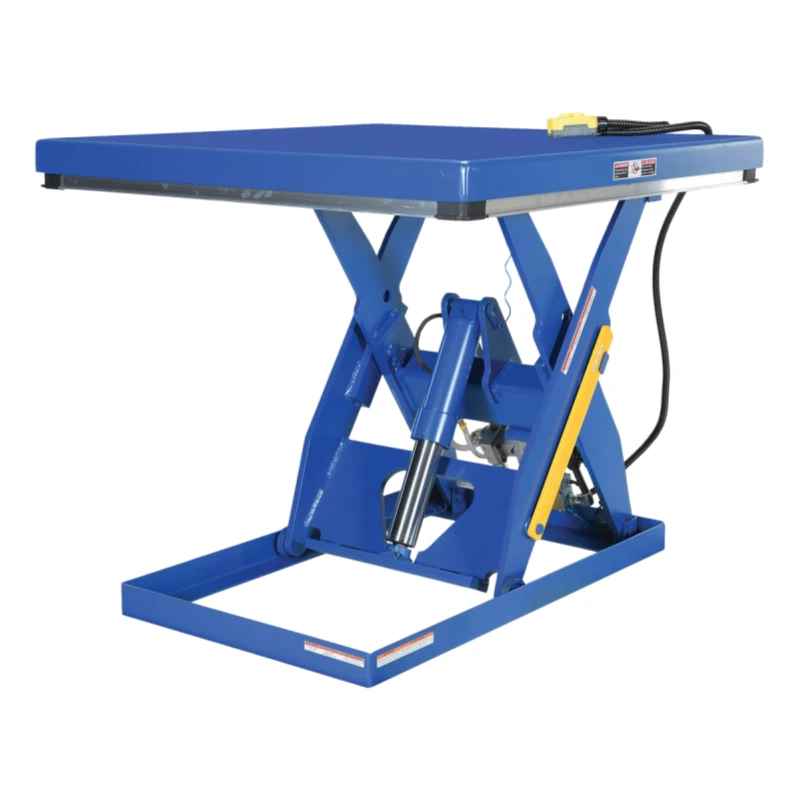
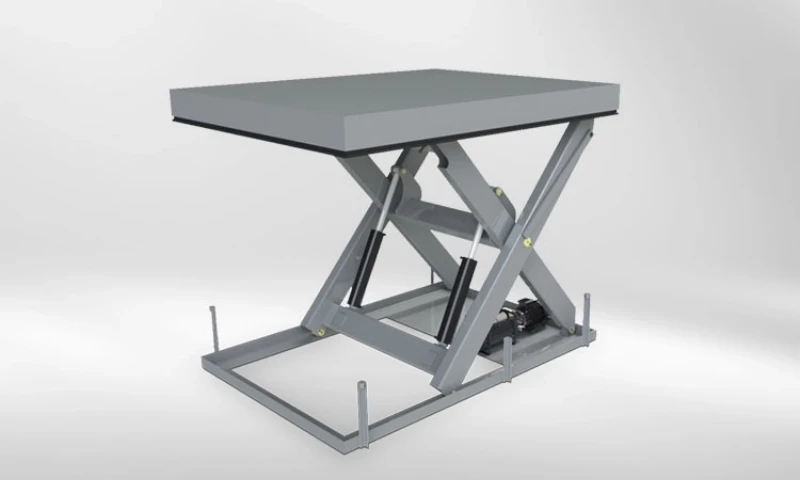
A hydraulic scissor lift table utilizes hydraulic power to raise and lower a platform with a cross-braced mechanism. It’s engineered to safely handle heavy loads, improving efficiency and ergonomics in workstations, loading docks, and assembly lines.
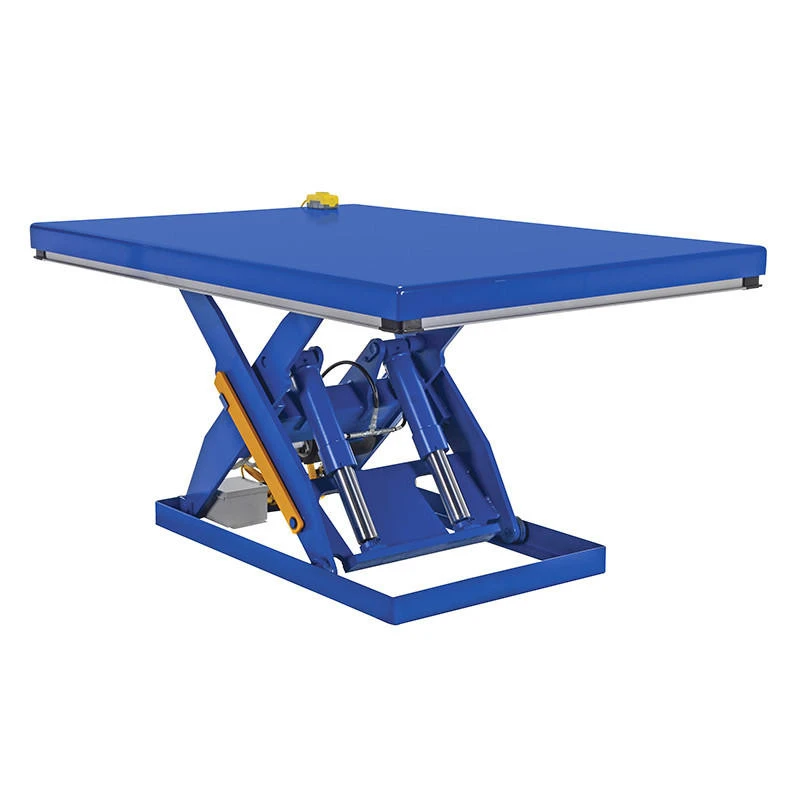
Electric Hydraulic Lift Table
An electric hydraulic lift table uses an electric motor to drive hydraulic cylinders, lifting heavy loads to ergonomic heights. It enhances safety and efficiency, ideal for warehouses, factories, and workstations.
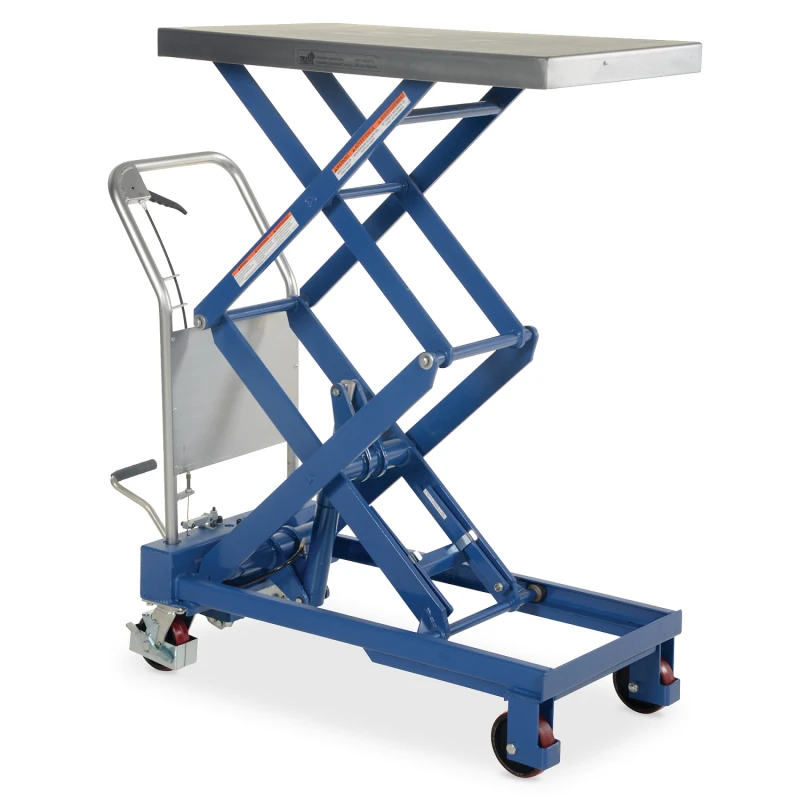
Mobile Hydraulic Lifting Table
A mobile hydraulic lifting table elevates heavy loads to the required height and facilitates easy transport, reducing strain on staff and minimizing injury risks, boosting efficiency in warehouse operations.
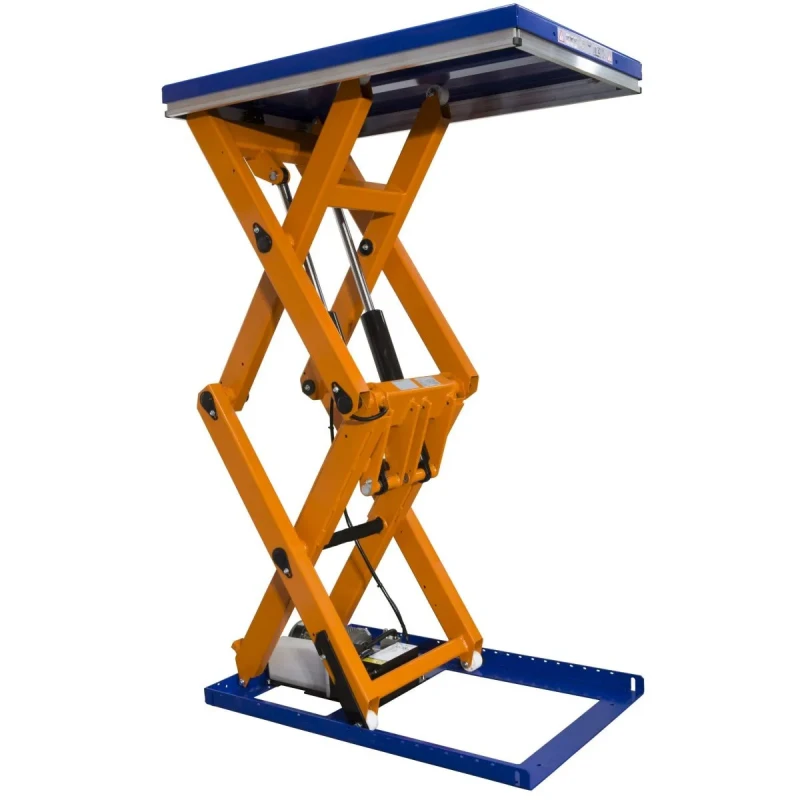
Heavy Duty Hydraulic Lift Table
A heavy-duty hydraulic lift table is built to lift and position extremely heavy loads, up to 25,000+ lbs. It improves safety and operational efficiency in manufacturing, warehousing, and logistics.
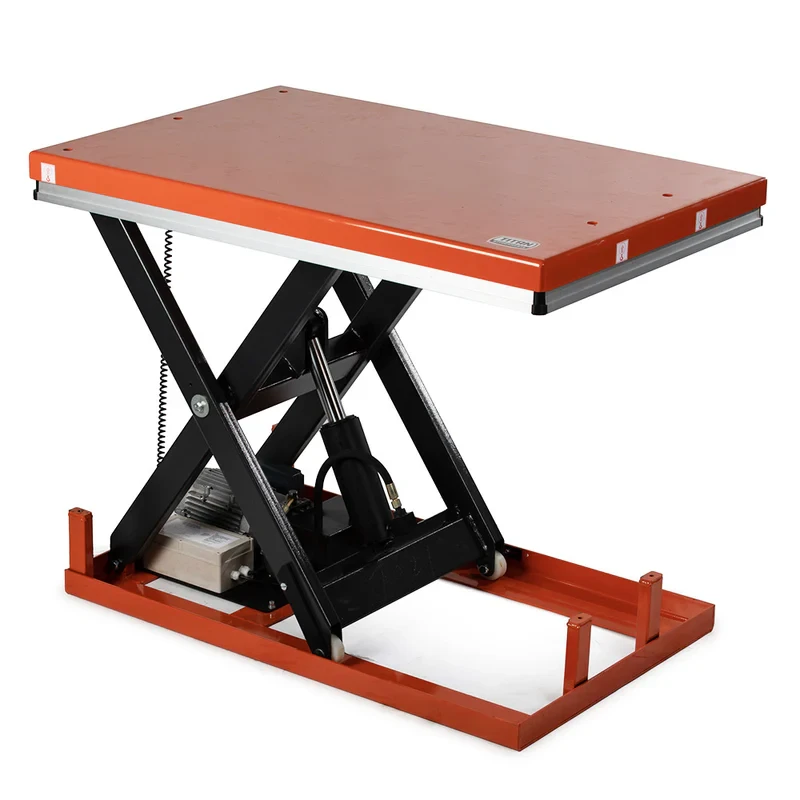
Manual Hydraulic Lift Table
Manual hydraulic lift tables use a foot pump or hand lever to lift heavy loads (up to 4,000+ lbs). With a durable scissor mechanism, they improve ergonomics and efficiency in material handling.
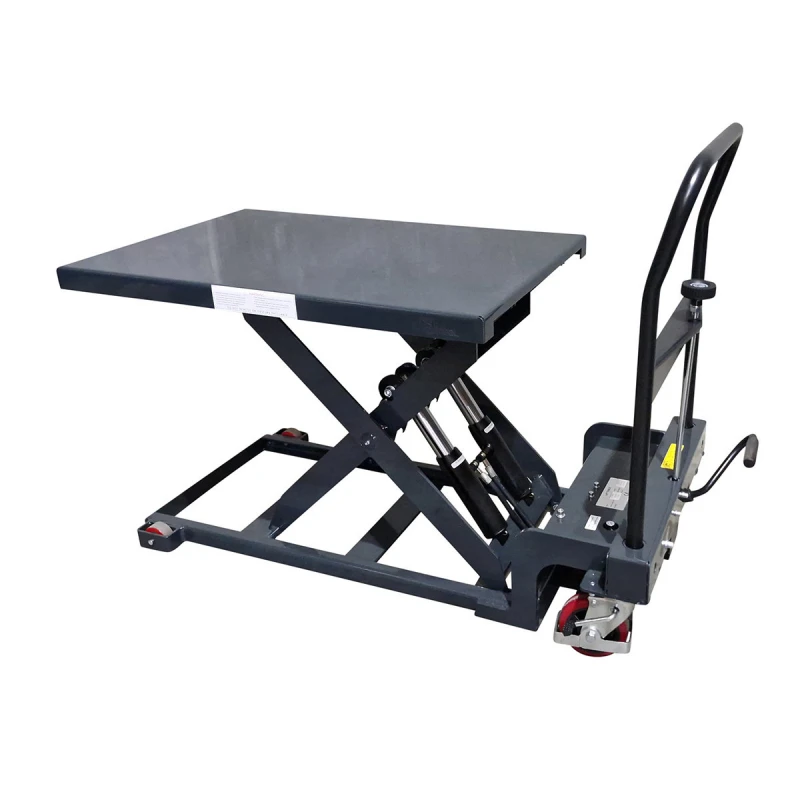
Low Profile Hydraulic Lift Table
A low-profile hydraulic lift table has a collapsed height of 3–4 inches, allowing it to sit directly on the floor. It efficiently raises heavy loads and is perfect for easy loading with pallet jacks or forklifts.
NEED HELP WITH YOUR HYDRAULIC LIFTING TABLE ORDER?
Let us help! Reach out today and get recommendations on materials and sizing from our experts.


Guide to Hydraulic Lifting Tables
Our guide to hydraulic lifting tables covers how these systems use hydraulic power to lift heavy loads safely and efficiently. It explores different types—scissor, mobile, and heavy-duty—highlighting their benefits in enhancing safety, productivity, and ergonomics in industrial settings.
What Are the Main Parts of a Hydraulic Lift Table?
A hydraulic lift table consists of key components working together to lift and position heavy loads efficiently:
- Hydraulic Cylinders: Use hydraulic fluid to generate lifting force, moving the platform up or down.
- Scissor Mechanism: Provides vertical stability and lifting motion.
- Hydraulic Pump: Powers the hydraulic system, controlling the lift’s movement.
- Control Valve: Regulates fluid flow for smooth operation.
- Platform: The surface for placing materials, raised and lowered by the system.
- Base Frame: Provides structural support to ensure stability during operation.
These parts are engineered to handle heavy loads, reduce strain, and improve productivity.
How Do You Repair a Hydraulic Lift Table?
Hydraulic lift tables can face various issues over time, but with the right approach, you can troubleshoot and repair them:
- Hydraulic Leaks: Check hoses, seals, and connections. Replace damaged parts or tighten loose fittings.
- Pump Failures: Inspect the motor and pump for issues. Rebuild or replace faulty components.
- Cylinder Problems: If the platform is lifting unevenly or slowly, inspect cylinders for leaks or wear, and reseal or replace them.
- Control Valve Malfunctions: Clean and inspect control valves. If damaged, replace them.
- Electrical Issues: For electric models, check wiring and fuses to ensure proper connections.
Regular preventive maintenance can minimize costly repairs and extend the lifespan of your lift table.
What Modifications Can Be Made to a Hydraulic Lifting Table?
Hydraulic lift tables can be modified to meet specific operational needs:
- Extended Platforms: Modify the platform to accommodate larger or heavier loads.
- Custom Lift Heights: Adjust the scissor mechanism to lift to higher levels for unique workspace requirements.
- Enhanced Controls: Integrate digital or remote control systems for greater precision.
- Increased Load Capacity: Reinforce the structure or upgrade the hydraulic system to handle higher weight capacities.
- Mobile Designs: Add wheels or casters for portability, making the lift easier to move across work areas.
These modifications make hydraulic lift tables adaptable to specialized tasks, improving efficiency and safety.
How Does a Hydraulic Lift Table Work?
A hydraulic lift table uses hydraulic pressure to raise and lower heavy loads efficiently:
- Hydraulic Fluid: The pump directs fluid into the hydraulic cylinders, generating pressure.
- Pressure Activation: The fluid pushes the piston inside the cylinder, which raises the platform.
- Scissor Mechanism: As the platform rises, the scissor arms extend, providing stability and height adjustment.
- Fluid Flow: When the valve opens, fluid exits the cylinder, and the platform lowers smoothly.
This system allows the lift table to handle heavy loads and provide ergonomic working heights in industrial environments.
How Do You Build a Hydraulic Lift Table?
Building a hydraulic lift table involves these steps:
- Design: Determine the required load capacity, lift height, and available space.
- Frame Construction: Use heavy-duty steel for the frame to support the entire system and ensure durability.
- Scissor Mechanism: Choose or fabricate a scissor mechanism that suits the design and load requirements.
- Hydraulic System: Install hydraulic cylinders, a pump, and control valves to power the system.
- Assembly: Attach the scissor mechanism to the platform and integrate the hydraulic system.
- Safety Features: Install safety features like overload protection, limit switches, and emergency stops.
Building a hydraulic lift table requires expertise in mechanical design and hydraulic systems to ensure smooth, reliable operation.
What is Involved in Hydraulic Lift Table Cylinder Replacement?
Replacing a hydraulic cylinder in a lift table involves:
- Lowering the Table: Ensure the table is fully lowered before disconnecting the cylinder.
- Relieving Pressure: Release hydraulic pressure before disconnecting the hydraulic lines.
- Removing the Cylinder: Unbolt the old cylinder from the platform and remove it carefully.
- Installing the New Cylinder: Align and secure the new cylinder in place.
- Reconnecting Hydraulic Lines: Attach the hydraulic lines to the new cylinder, checking for leaks.
- Testing: Run the lift to ensure the cylinder functions properly and the system works smoothly.
This replacement ensures the lift table maintains its lifting capacity and reliability.
Hydraulic Lift Table Troubleshooting
Troubleshooting common hydraulic lift table issues includes:
- Lift Won’t Raise: Check hydraulic fluid levels and pump functionality. Ensure no blockages in hydraulic lines.
- Uneven Lifting: Inspect scissor arms and cylinders for alignment issues or damage.
- Slow Lifting: This could indicate a low fluid level, air in the system, or a worn pump. Check and refill hydraulic fluid.
- Fluid Leaks: Inspect hoses and cylinders for leaks, and replace any damaged components.
- Electrical Issues: For electric models, check the motor, wiring, and control systems to ensure proper functionality.
By addressing these common issues early, you can keep your lift table running efficiently and extend its lifespan.
How Do You Replace the Hydraulic Pump in a Motorcycle Lift Table?
To replace the hydraulic pump in a motorcycle lift table:
- Lower the Table: Ensure the platform is fully lowered to access the pump.
- Disconnect Hydraulic Lines: Relieve the system’s pressure and disconnect the hydraulic lines.
- Remove the Old Pump: Unscrew and remove the old pump from its mount.
- Install the New Pump: Secure the new pump in the same position, ensuring it is properly aligned.
- Reconnect Hydraulic Lines: Attach the hydraulic lines and check for any leaks.
- Test: Run the system to ensure proper functioning.
Regular pump maintenance or replacement ensures smooth operation and extends the lifespan of your motorcycle lift table.
What Are the Best Hydraulic Lift Tables for Heavy Lifting?
The best hydraulic lift tables for heavy lifting provide:
- High Load Capacities: Models that handle over 20,000 lbs are ideal for heavy-duty operations.
- Stable Design: Look for scissor lifts with reinforced frames and cylinders capable of handling large loads.
- Customizable Options: Choose models that allow adjustments for lift height, load capacity, and platform size.
- Safety Features: Ensure the lift includes overload protection, emergency stops, and anti-slip surfaces for safety.
These lift tables enhance safety and productivity in industries requiring heavy load handling.
How Do Hydraulic Lifts Work With a 3d Welding Table?
Hydraulic lifts integrated with 3D welding tables offer:
- Ergonomic Height Adjustment: Adjust the welding table to the optimal working height, reducing operator strain.
- Stable Platform: The hydraulic system ensures a solid, stable base for precision welding, even with heavy components.
- Improved Workflow: Lift tables allow for easy positioning and movement of large materials, increasing productivity.
- Enhanced Safety: Hydraulic lifts offer controlled lifting, reducing the risk of accidents when handling large, heavy items.
This integration increases efficiency and reduces physical strain, making welding operations more efficient.
Hydraulic Scissor Lift Table Design Calculation
Designing a hydraulic lift table involves several calculations:
- Load Capacity: Ensure the system can handle the required weight by selecting appropriately sized cylinders and a strong frame.
- Lifting Height: Calculate the maximum lift height and ensure the scissor mechanism supports the necessary travel.
- Cylinder Sizing: Determine the correct cylinder size to generate sufficient lifting force.
- Pump Selection: Choose a pump that can deliver the required flow rate and pressure.
- Safety Considerations: Account for overload protection, stability, and the proper selection of materials.
- Ergonomic Features: Incorporate design elements that improve operator safety and comfort.
These calculations ensure the hydraulic lift table meets your operational requirements and remains safe and efficient.
Have More Questions of Hydraulic Lift Tables?
Have more questions about hydraulic lift tables? Whether it’s about installation, maintenance, or customization, our team is ready to assist. Reach out for expert guidance on selecting and optimizing lift tables for your business needs.