
Cranes: Wire Rope, Chain & Rigging Hardware Solutions
Cranes rely on a complete load path: the rope or load chain, drum, sheaves, hook block, sling, connectors and lifting points all have to work as one system. PowerFul Machinery manufactures and supplies crane wire rope, Grade 80 and Grade 100 chain slings, hooks, shackles, master links, blocks and wire rope fittings for tower, mobile, crawler, overhead, port and offshore cranes.
Tell us the crane make and model, rope position, operating environment and required documentation. We’ll check the missing details, identify compatible products and prepare a quote your engineering or maintenance team can review.
Start With the Complete Crane Load Path
Crane components do different jobs and fail in different ways. A main hoist rope may need strong rotation control over a long fall. A boom-hoist rope may spend its life fighting drum crushing and repeated bending. Below the hook, the sling and every connector must suit the load geometry, hitch and sling angle. Choosing each item in isolation creates avoidable compatibility problems.
We help buyers close the gaps between components: rope constructions matched to the crane position, chain slings configured for the lift, and forged hardware sized to the connection. Start with the crane manufacturer’s instructions and the inspection and safety rules that apply to your site.
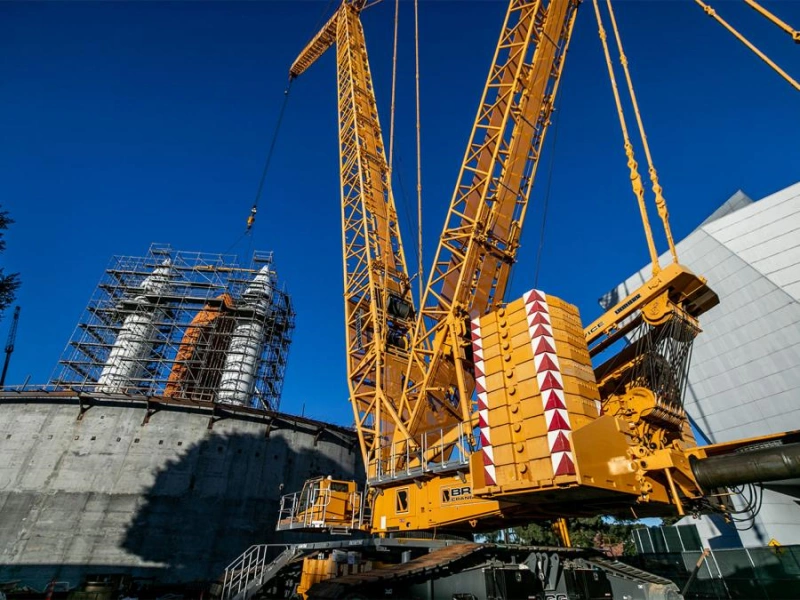
Where Wire Ropes Work on Cranes
“Crane rope” is not one specification. The correct construction depends on where the rope sits, how it bends and spools, whether the load is guided, and how much torque the system can tolerate. Use the position map below to describe the application before discussing rope construction.
Match the Rope Construction to the Position
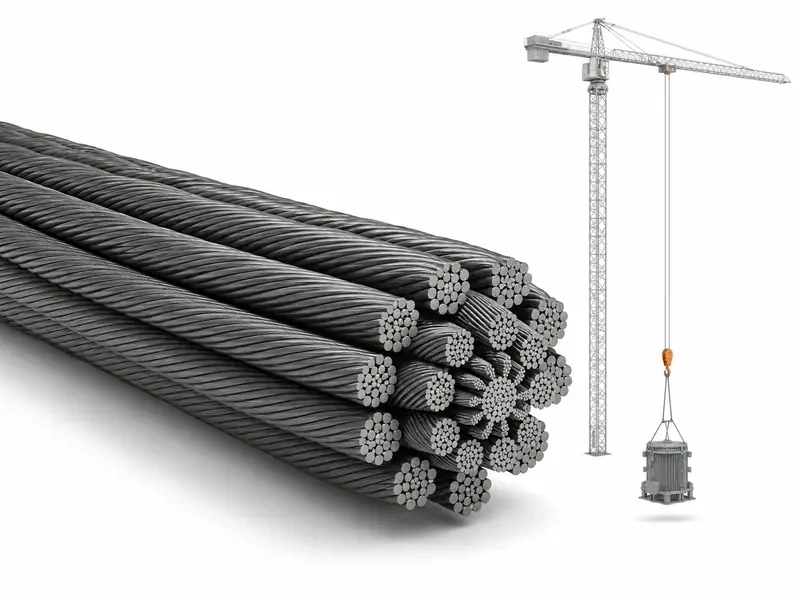
Rotation-Resistant and Non-Rotating Hoist Ropes
Multi-layer, counter-laid constructions such as 35×7 and 18×7 are used where load rotation has to be controlled, especially on long, unguided lifts. The category of rotation resistance matters. Swivel use, design factor, discard criteria and handling requirements can differ by rope type, so the exact crane and rope manufacturer instructions must be checked.
Six- and Eight-Strand Running Ropes
Constructions such as 6×25, 6×29, 6×36 and 8×36 with an independent wire rope core can provide a practical balance of strength, flexibility, fatigue life and resistance to drum pressure. They are commonly considered for boom hoists, luffing systems, trolley ropes, winches and other positions where rotation resistance is not the main requirement.
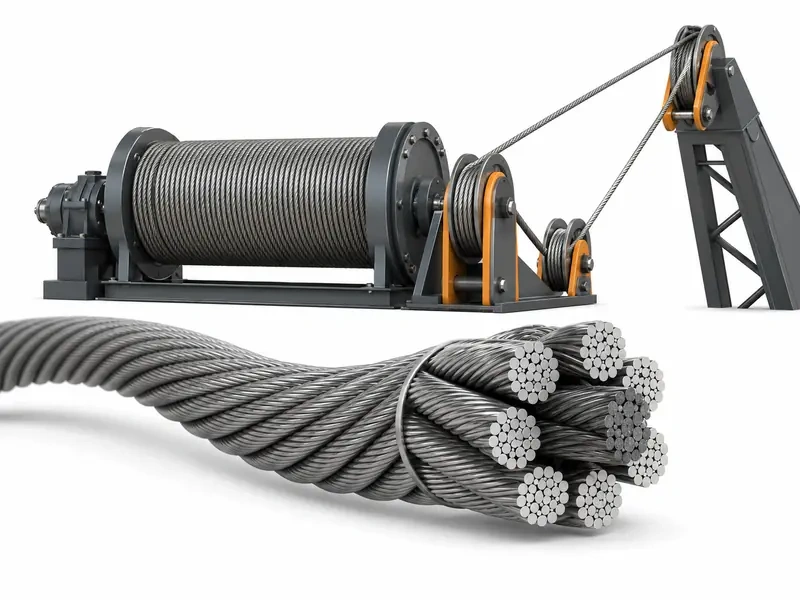
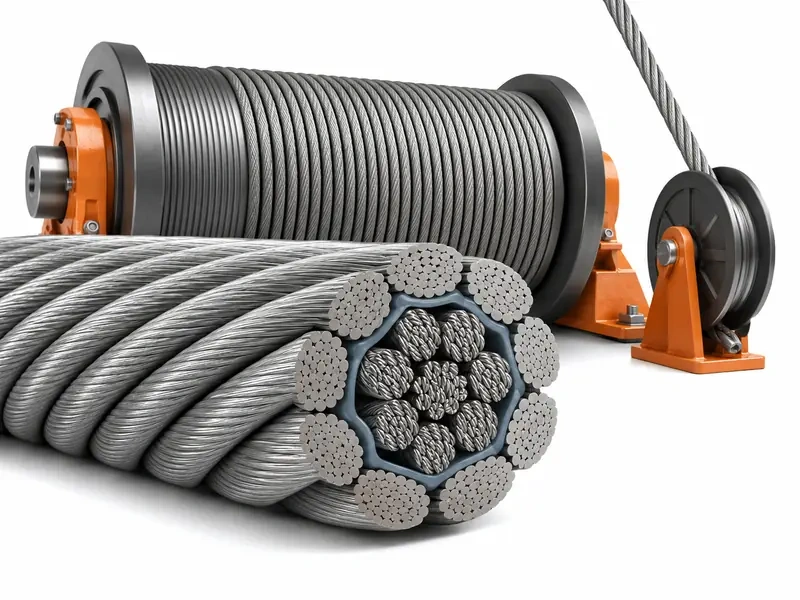
Compacted and Plastic-Impregnated Ropes
Compacted strands increase metallic area and create smoother contact with drums and sheaves. Plastic impregnation can support the outer strands, retain lubrication and reduce internal friction. These features are useful in high-cycle or multilayer-spooling service, but they do not replace correct installation, groove condition or inspection.
Bright, Galvanized and Stainless Options
Bright steel is common in controlled industrial service. Galvanized rope adds protection for outdoor, port and marine exposure. Stainless steel may be considered for aggressive corrosion conditions, but strength, fatigue behavior, availability and crane compatibility must be reviewed rather than selected on corrosion resistance alone.
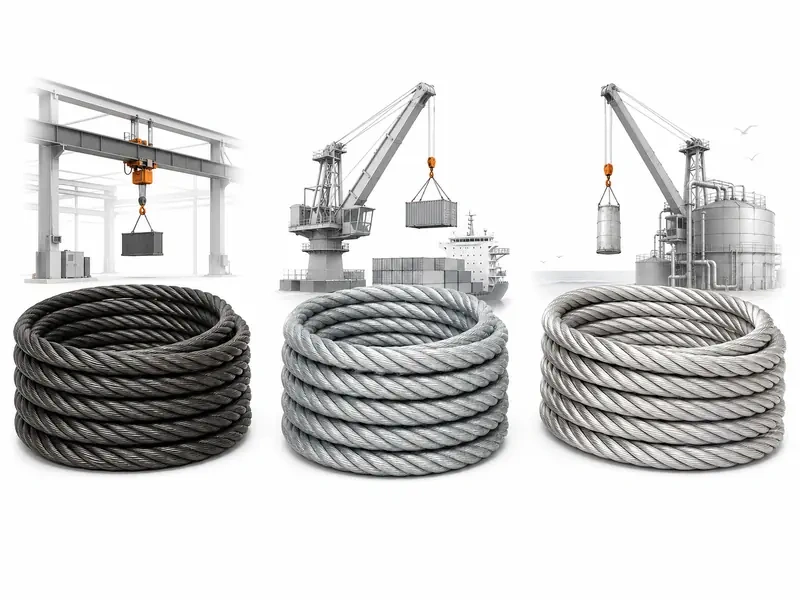
Replacement rule: match the crane OEM specification first. If the original rope is unknown or has failed early, document the make, model, rope position, reeving, drum, sheaves, duty cycle and failure pattern, then have the replacement selected by the rope manufacturer, equipment manufacturer or a qualified person.
Common Crane Wire Rope Failure Modes—and What They Point To
A damaged rope often tells you what is happening elsewhere in the crane. Broken wires clustered near a sheave suggest a different problem from flattened rope at a drum crossover. Record where the damage appears, how the rope travels and what the crane was doing when the condition developed. That evidence is more useful than a photo of the removed rope by itself.
Signs
Crown or valley wire breaks where the rope repeatedly travels over sheaves. Fine transverse cracks may also appear.
Possible Causes
High cycle counts, a small D/d ratio, worn sheave grooves, reverse bending, or vibration.
Recommended Response
Map the damaged sections to the rope’s travel path. Inspect the sheaves and equalizers, then review the rope construction and duty cycle before replacement.
Signs
Flattened or polished outer wires, knife-edge wire ends, and localized surface wear.
Possible Causes
Rough grooves, misalignment, contact with nearby structures, an excessive fleet angle, or contaminated surfaces.
Recommended Response
Identify and correct the contact or alignment problem. Replacing the wire rope alone will not remove the underlying cause.
Signs
A flattened rope, distorted strands, displaced wires, or concentrated damage around crossover and step-up zones.
Possible Causes
Loose lower layers, high multilayer pressure, poor spooling, or a rope construction with inadequate crush resistance.
Recommended Response
Correct the spooling foundation and inspect the drum. Install the specified replacement rope under controlled tension.
Signs
Rust, pitting, reduced flexibility, dry rope surfaces, or red debris between the strands.
Possible Causes
Water or chemical exposure, an unsuitable rope finish, depleted lubricant, or extended idle periods.
Recommended Response
Assess both the external and internal condition of the rope. Improve the rope finish, lubrication program, and storage controls before installing a replacement.
Signs
Permanent loop distortion, opened strands, a protruding core, or an enlarged section of rope.
Possible Causes
Mishandling, twist introduced during installation, sudden load release, or shock loading.
Recommended Response
Remove the crane from service. Have a qualified person evaluate the rope and review the installation procedure before operation resumes.
Signs
The core becomes visible between the outer strands. The rope may also show a localized diameter change or unusual stiffness.
Possible Causes
Shock loading, torsional imbalance, improper installation, or severe internal wear.
Recommended Response
Treat the condition as structural damage. Investigate rope torque, reeving, and installation practices before fitting a new rope.
Signs
Necking, permanent stretching, tension-type wire breaks, or damage following a snag or sudden stop.
Possible Causes
Loads beyond rated conditions, side pulling, rapid acceleration, or a caught load.
Recommended Response
Inspect the complete load path, including the crane controls and rigging. Do not focus on the wire rope alone when deciding whether the crane can safely return to service.
Signs
Rope piling, flange wear, cross-winding, loose wraps, or concentrated wear on one side of the drum.
Possible Causes
An incorrect entry angle, misaligned sheaves, the wrong rope lay direction, or insufficient installation tension.
Recommended Response
Restore the correct alignment and winding pattern. Break in the new rope according to the crane and wire rope manufacturers’ instructions.
Signs
Discoloration, fused metal, arc marks, brittle wires, or areas where the lubricant has burned away.
Possible Causes
Welding current, electrical contact, fire, or operation above the rope’s permitted temperature.
Recommended Response
Remove the crane from service. Inspect adjacent sheaves, terminations, and structural components for related heat or electrical damage.
Safety Note: Do not use this page as a discard chart. Inspection frequency and removal criteria depend on the crane, rope class, jurisdiction, service and applicable standard. If significant distortion, corrosion, heat or electrical damage, broken wires, core failure or damaged end connections are found, stop and follow the crane manual and the decision process required by your site and local rules.
Products for Crane Manufacturers, Service Teams and Rigging Suppliers
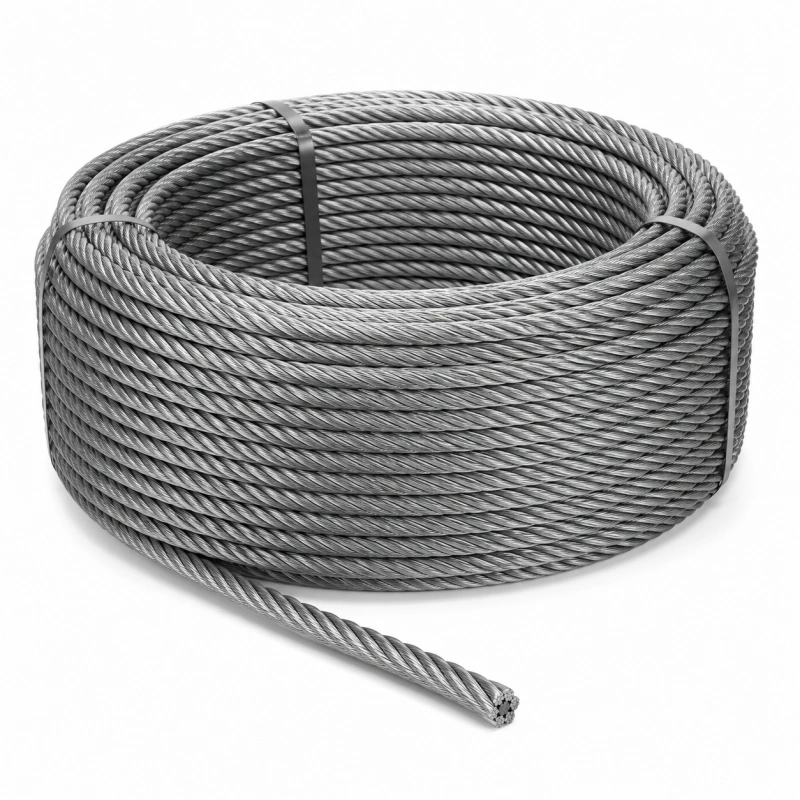
Order rotation-resistant, non-rotating and conventional steel wire ropes in the diameter, construction, core, grade, finish, lay and length required for the crane. Available families include 35×7 and 18×7 hoist ropes plus flexible 6- and 8-strand IWRC constructions for luffing, boom-hoist, trolley and general running-rope positions.
- Main and auxiliary hoist rope
- Boom-hoist and luffing rope
- Trolley, holding and closing rope
- Bright or galvanized finish
- Cut lengths, reels and application-specific documentation
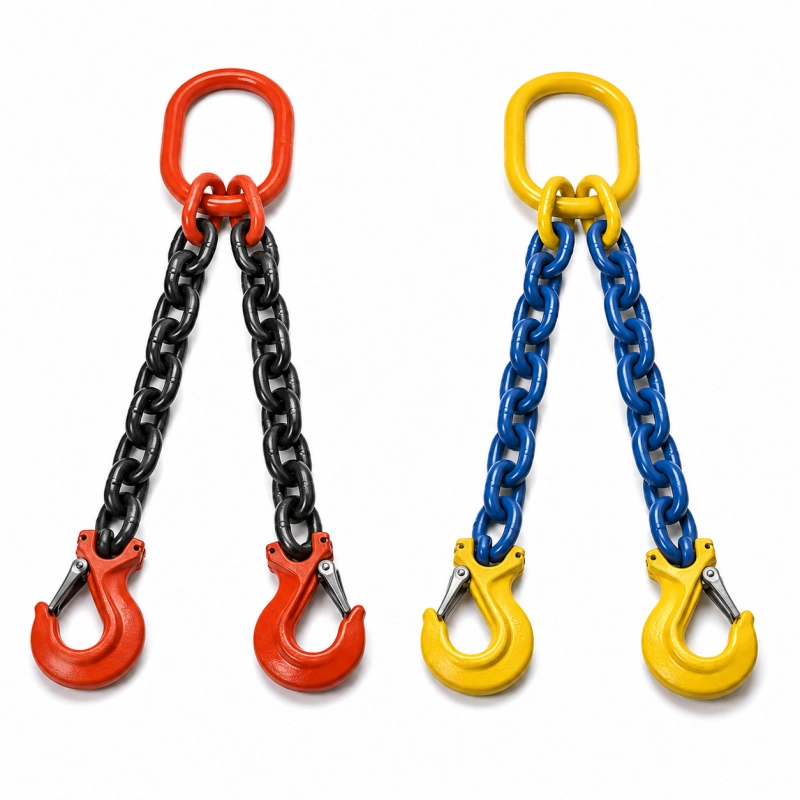
Chain slings handle rough surfaces, high temperatures within the sling manufacturer’s limits and loads that need adjustable leg lengths. We supply single-, two-, three- and four-leg assemblies with compatible master links, shortening devices and hooks. The finished sling must be rated as an assembly for the hitch, angle and service—not as a collection of individual components.
- Custom reach and leg count
- Eye, clevis and self-locking hooks
- Shortening components for load control
- Identification tags and requested test documentation
- Replacement components matched by grade and size

Hooks, Shackles and Master Links
Forged connectors complete the path from the crane hook to the load. Choose hardware by working load limit, load direction, pin or eye fit, sling interface, temperature and environment. Bow shackles provide room for multi-leg connections; dee shackles suit straighter loading; self-locking hooks help reduce accidental disengagement when correctly selected and used.
- Crane and sling hooks
- Screw-pin and bolt-type shackles
- Master links and master-link assemblies
- Clevis links and connecting components
- Lifting points and eye hardware
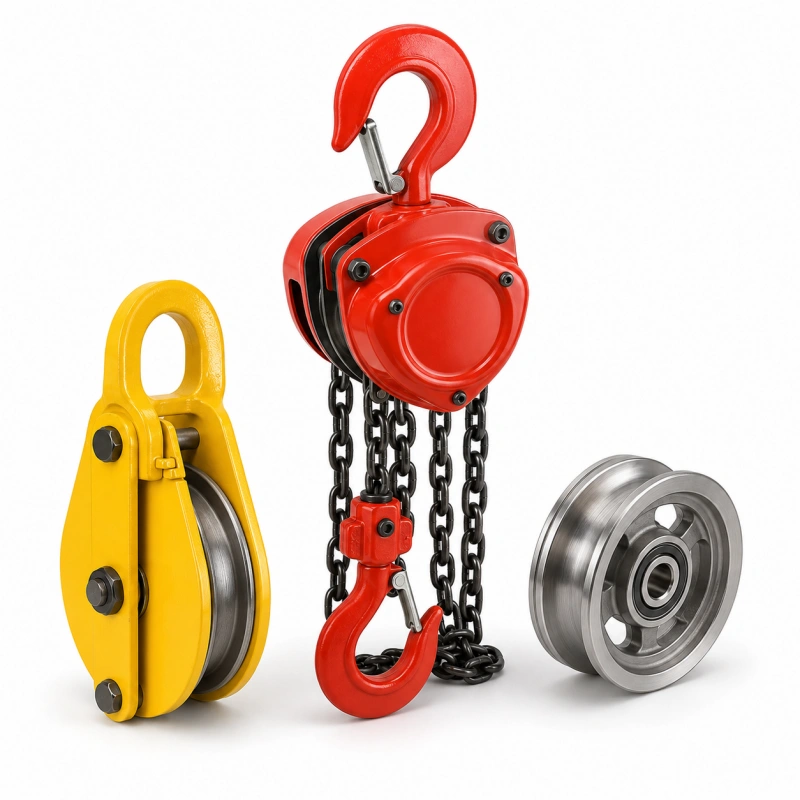
Blocks, Sheaves and Hoists
Blocks and sheaves control rope direction and bending. Groove profile, sheave diameter, alignment and bearing condition have a direct effect on rope life. We supply pulley blocks, snatch blocks, rigging blocks and electric or manual hoists for maintenance, workshop and below-the-hook applications.
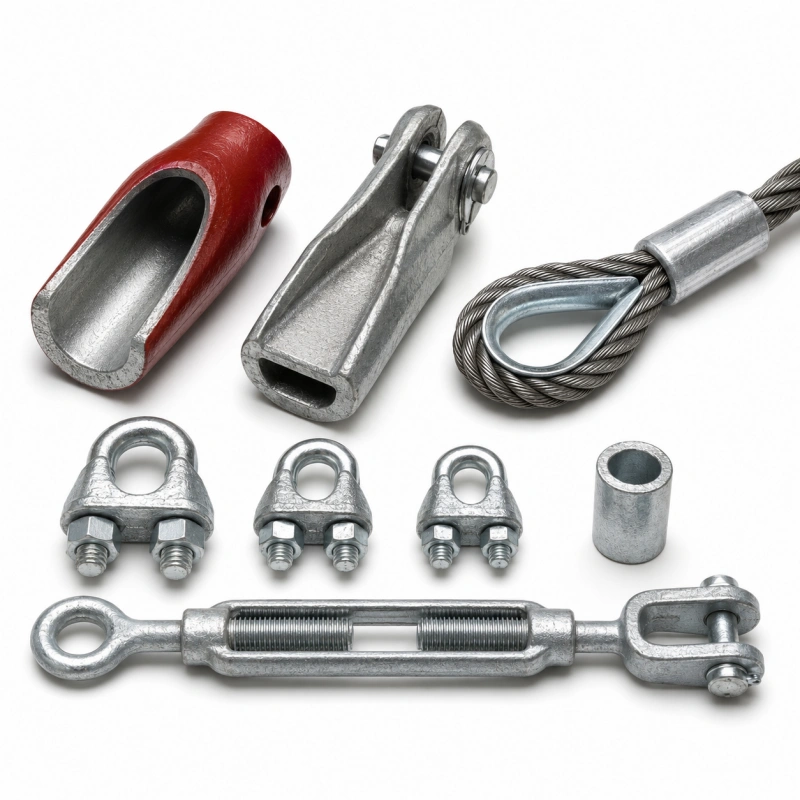
Wire rope thimbles protect eyes, while wire rope clips and other fittings serve only where their use is permitted by the application and assembly instructions. Critical crane ropes often use engineered sockets, wedge sockets or factory-made pendant terminations. Specify the end connection at the same time as the rope; an incompatible termination can undo an otherwise correct rope selection.
Solutions by Crane Type

Typical Rope Positions
Main hoist ropes, trolley ropes, luffing ropes, and boom pendant ropes.
Product Priorities
Controlled rotation on long rope falls, high bending-fatigue life, precise rope lengths, and terminations compatible with the crane design.
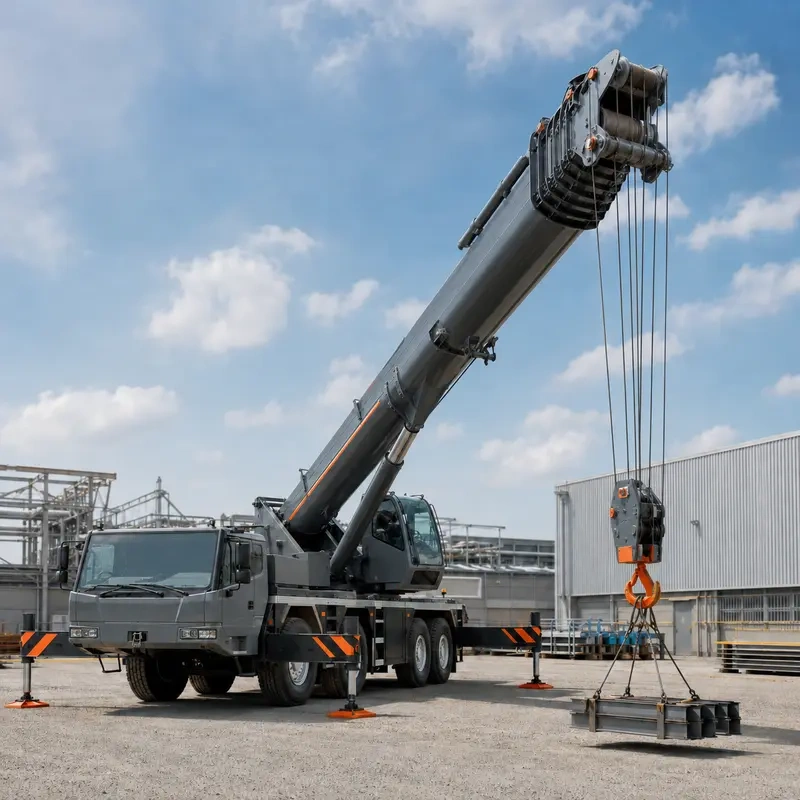
Typical Rope Positions
Main hoist and auxiliary hoist ropes. Lattice-boom models may also use boom-hoist ropes.
Product Priorities
Stable multilayer spooling, resistance to crushing and drum pressure, high strength, and clear traceability for inspection and field replacement.
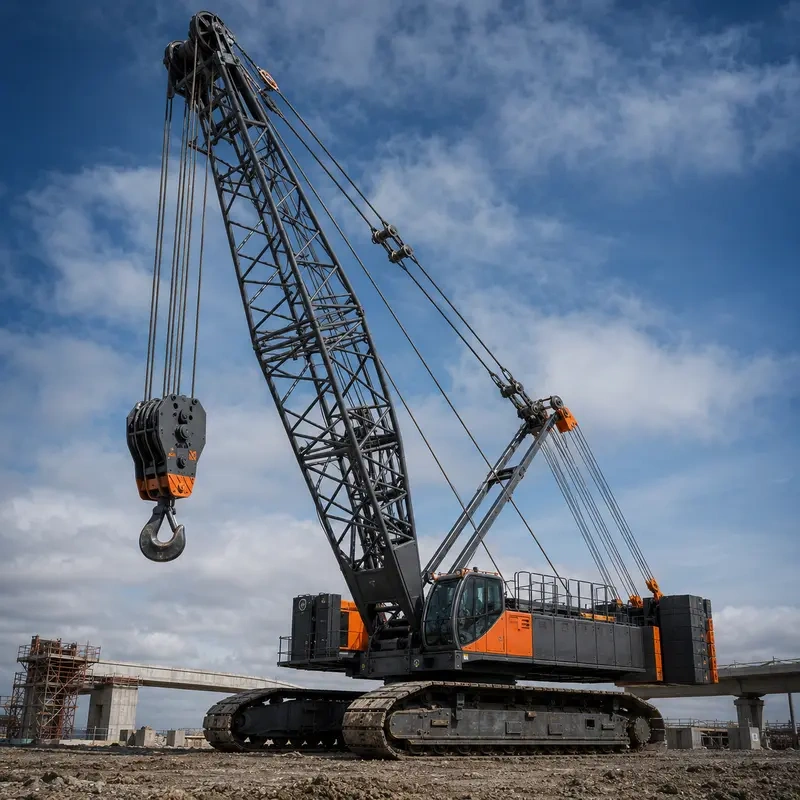
Typical Rope Positions
Main hoist, auxiliary hoist, boom hoist, and grab ropes.
Product Priorities
Long fatigue life, reliable drum performance, abrasion resistance, and rope construction matched to the crane’s operating cycle.
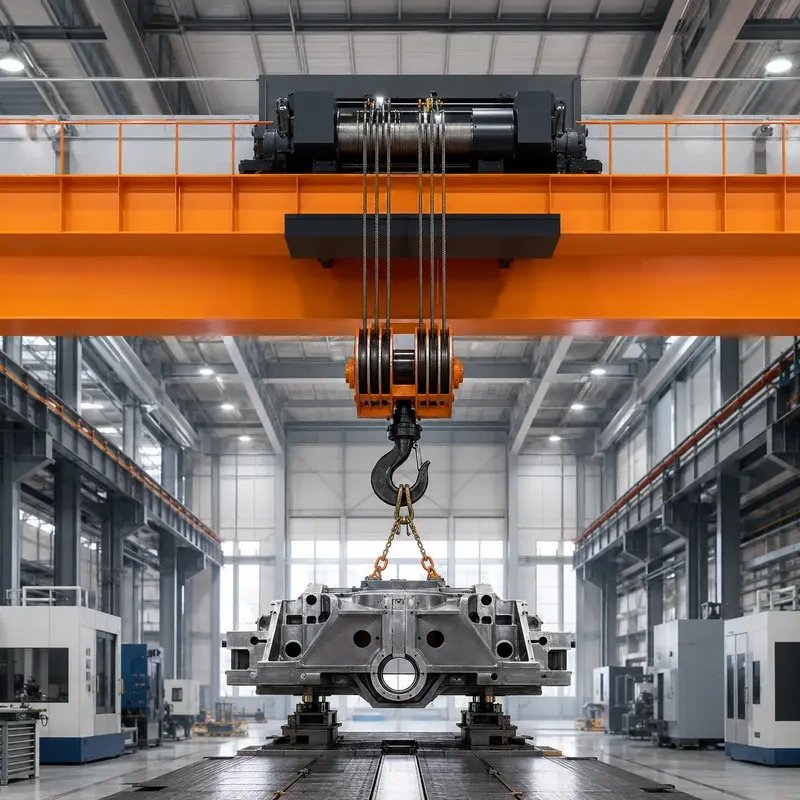
Typical Rope Positions
Main and auxiliary hoist ropes. Chain-hoist systems use load chain instead of wire rope.
Product Priorities
Resistance to frequent bending, smooth operation, accurate load positioning, and compatible hooks, blocks, and replacement hoists.
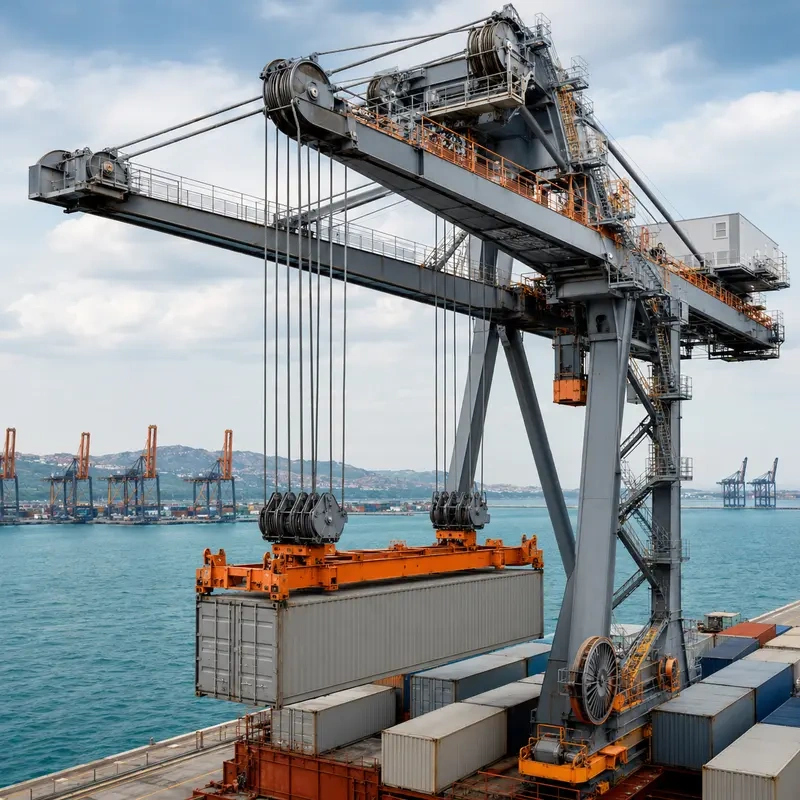
Typical Rope Positions
Hoist, trolley, boom-hoist, holding, and closing ropes.
Product Priorities
Performance under high cycle counts, precisely matched rope sets, corrosion protection, and resistance to crossover and drum damage.

Typical Rope Positions
Main hoist, whip hoist, boom hoist, pendant, and subsea-handling lines.
Product Priorities
Corrosion control, dependable performance under dynamic loading, documented terminations, and certification matched to the application.

Typical Rope Positions
Main and auxiliary hoist ropes, together with load-handling chains and rigging assemblies.
Product Priorities
Resistance to heat exposure, demanding duty cycles, and abrasion, with sufficient access for routine inspection and maintenance.
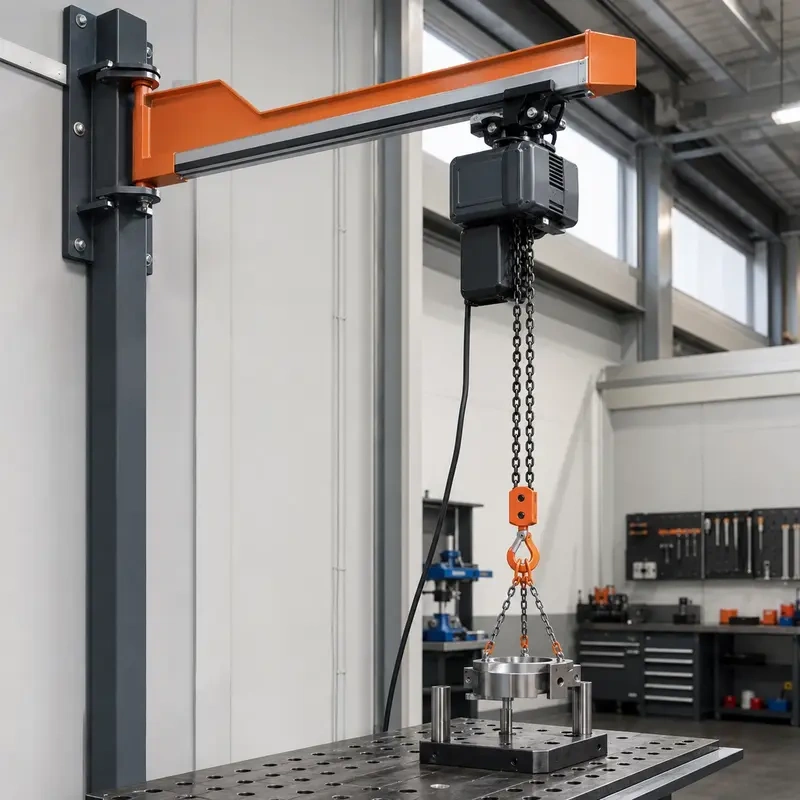
Typical Rope Positions
Wire-rope hoists or load-chain hoists.
Product Priorities
Compact lifting equipment, predictable reeving, and hooks, shackles, slings, and other components that are easy to inspect and replace.
How to Specify Crane Rope and Rigging Without Guesswork?
A useful RFQ describes the crane and service before it lists a rope. If the current rope has performed well, start with the OEM part number and certificate. If it has failed early, include the operating and damage evidence so the replacement does not repeat the same problem.
1. Crane manufacturer, model, serial number and year
2. Crane type and rope position
3. OEM rope part number or original certificate
4. Diameter, length, construction and core
5. Tensile grade, finish, lay type and lay direction
6. End terminations and required length tolerance
7. Reeving, number of parts of line and lift height
8. Drum type, number of layers, sheave diameters and groove condition
9. Rated load, duty cycle, operating speed and environment
10. Quantity, packaging, inspection documents, standards and delivery destination
Quality Records That Travel With the Order
Crane buyers need more than a product name. Put the documentation requirement in the RFQ so the quotation, manufacturing plan and shipment are aligned. Depending on the product and contract, the order package may include material or mill records, dimensional results, minimum breaking force data, proof-load or test records, batch traceability, inspection certificates, marking and packing details.
For repeat OEM and distributor orders, we can review drawings, samples, packaging, labeling and batch requirements before production. For replacement ropes, send the original certificate whenever possible. A familiar diameter is not enough to confirm construction, grade, lay direction or termination.
Case Study: The Rope Looked Overloaded, but Vibration Caused the Failure
In a documented Industrial Training International failure analysis, a distributor submitted a hoist rope and poured sockets from a rubber-tired gantry crane after an incident. Investigators examined the outer and inner strands and core under magnification, then sectioned and checked the sockets.
The wire-break pattern showed fatigue and a significant loss of rope strength caused by vibration. The investigation found no evidence that the rope had been overloaded, and the poured sockets showed no abnormality in the pouring method, zinc bonding length or materials. The visible failure was in the rope, but the mechanism was cyclic vibration rather than a one-time overload.
What This Means for Crane Buyers and Maintenance Teams?
- Do not diagnose a failure from the final break alone.
Keep the rope, terminations and service records when an incident is investigated.
Map wire breaks to the drum, sheaves, equalizer and working zone.
Check vibration, alignment, spooling and duty cycle before installing the same replacement.
Use the findings to update the rope specification, inspection points and maintenance plan.
Why crane customers work with PowerFul Machinery?
- One source for wire rope, chain slings and forged rigging hardware
- Product options for OEM production, distribution and replacement programs
- Custom lengths, assemblies, markings and packaging
- Technical review based on the crane position and operating evidence
- Export support for repeat and mixed-product orders
Send the specification you have, even if it is incomplete. We’ll flag the missing information before the order moves forward.
FAQ About Cranes and Rigging
What type of wire rope is used on cranes?
Cranes use several rope types. Rotation-resistant multi-strand ropes are common on long, unguided main-hoist falls. Six- and eight-strand IWRC ropes are often used for boom hoists, luffing, trolley and other running-rope positions. The correct answer comes from the crane OEM specification and the exact rope function.
What is the difference between rotation-resistant and standard crane rope?
Rotation-resistant rope uses opposing strand layers to reduce the rope’s tendency to rotate under load. Conventional six- or eight-strand rope does not provide the same torque control, but it may offer better handling, fatigue or spooling performance in positions that do not require rotation resistance. They are not automatic substitutes for one another.
Where should crane wire rope be inspected most closely?
Inspect the full accessible rope, with extra attention to drum crossover and step-up zones, sections that pass over running and equalizer sheaves, end connections, areas exposed to heat or corrosion, and any location where the rope contacts a structure. The inspection plan should reflect the crane’s duty and failure history.
When should crane wire rope be replaced?
Replace or remove the rope from service when it meets the discard or action criteria in the applicable crane manual, regulation or standard. Broken wires are only one criterion; distortion, crushing, corrosion, heat damage, core failure, diameter change and damaged end connections can also require action.
What details are needed for a crane wire rope quote?
Send the crane make and model, rope position, OEM part number, diameter, length, construction, core, grade, finish, lay, end terminations, quantity, environment and required documents. A reeving drawing and photos of the old rope, drum and sheaves help when the original specification is incomplete.
Can one supplier provide the rope and below-the-hook rigging?
Yes. PowerFul Machinery can combine crane wire rope with chain slings, hooks, shackles, master links, blocks and wire rope fittings. Each item still needs its own correct rating and compatibility review, while the order can be coordinated as one sourcing package.
Build the Crane Package Around Your Actual Application
Send your crane data, rope certificate, drawings or site photos. We will help you organize the requirement and quote the wire rope, chain sling and rigging hardware that fit the job.