
Mining Wire Rope & Lifting Hardware for Demanding Duty Cycles
PowerFul Machinery supplies mining wire rope, alloy chain slings, forged lifting hardware, and blocks for surface mines, underground operations, and mineral-processing plants. We help procurement and engineering teams specify the complete system around the load, equipment, duty cycle, and site conditions—not just a rope diameter or hardware size.
Mining Equipment Does Not Get Light Duty
Mining ropes and lifting components work through dust, grit, water, shock loading, and repeated bending. On a drum, poor spooling can press one rope layer into the next. At a sheave, an incorrect groove or fleet angle can accelerate wear. Around crushers, conveyors, workshops, and mobile equipment, rigging hardware is repeatedly handled, loaded, inspected, and returned to service.
That combination makes selection a service-life decision as much as a strength decision. A rope may have enough minimum breaking force and still be a poor fit for the machine if its construction cannot tolerate the actual bending cycle, abrasion level, drum pressure, or operating environment. The same applies to chain slings, shackles, hooks, and blocks: capacity is only the starting point. Geometry, load direction, temperature, edge contact, and inspection practice all matter.
PowerFul Machinery reviews the operating details behind the request so the proposed rope, chain, hardware, and termination are compatible with the job. The aim is practical: predictable performance, clear documentation, and fewer avoidable replacements.
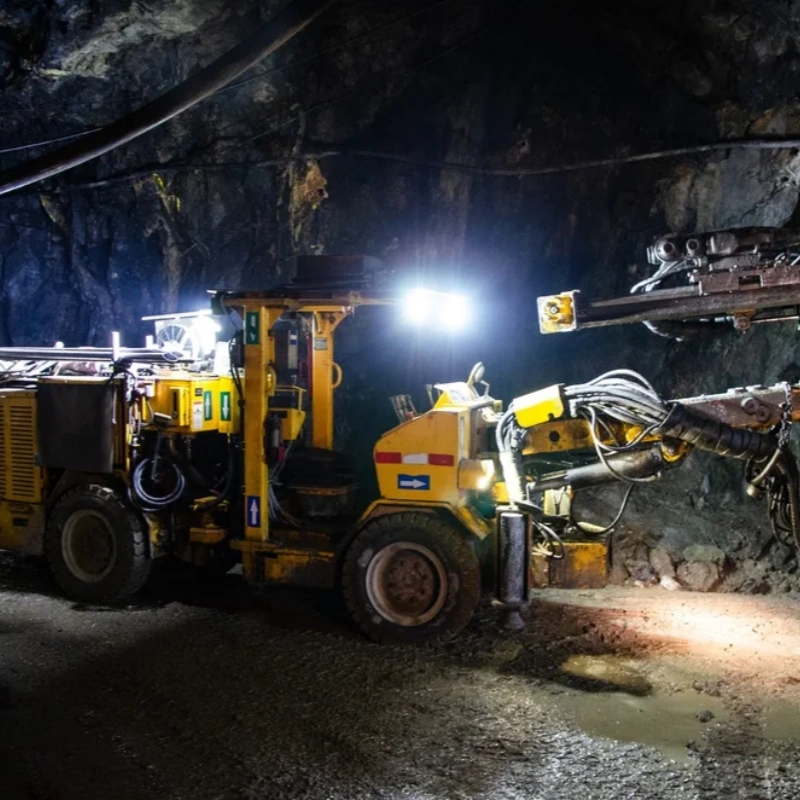
Mining Applications We Support
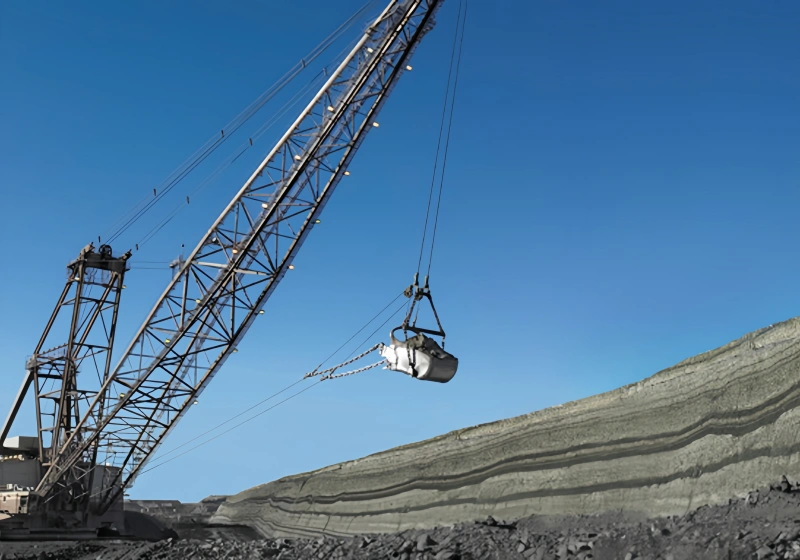
Surface Mining Wire Rope
Open-pit equipment puts rope through high loads, frequent reversals, abrasive dust, and heavy contact pressure. We supply steel wire rope and matching fittings for hoisting, pulling, winching, and auxiliary duties on draglines, electric rope shovels, excavators, and mine-service equipment.
- Dragline and shovel duties: Rope specifications can be reviewed for hoist, drag, crowd/retract, trip, and auxiliary functions according to the machine maker’s requirements.
- Winches and recovery systems: Steel wire rope, wire rope thimbles, sockets, hooks, and blocks for controlled pulling and equipment handling.
- Boom support and pendant assemblies: Rope, strand, and end connections produced to the required drawing and length.
- Maintenance lifting: Wire rope slings, chain slings, shackles, hooks, and master links for component changes and planned shutdown work.
Underground Mining And Shaft Systems
Underground rope selection must account for depth, suspended rope weight, conveyance load, acceleration, braking, bending frequency, drum or friction-drive arrangement, moisture, and local mine regulations.
Depending on the equipment specification, applications can include drum hoists, friction winders, shaft sinking, guide duties, balance ropes, incline haulage, and service winches.
For these systems, a generic “high-strength rope” description is not enough. Send the existing rope certificate and construction, drum and sheave data, operating speed, load spectrum, and observed retirement pattern.
Our team can review the manufacturing specification and identify the rope characteristics and documentation the replacement must address. Final selection and acceptance must follow the hoist designer, mine authority, and applicable standard.
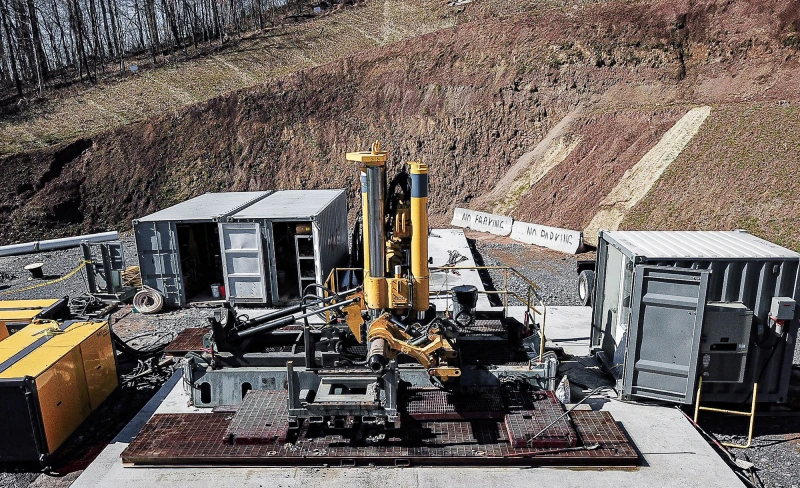
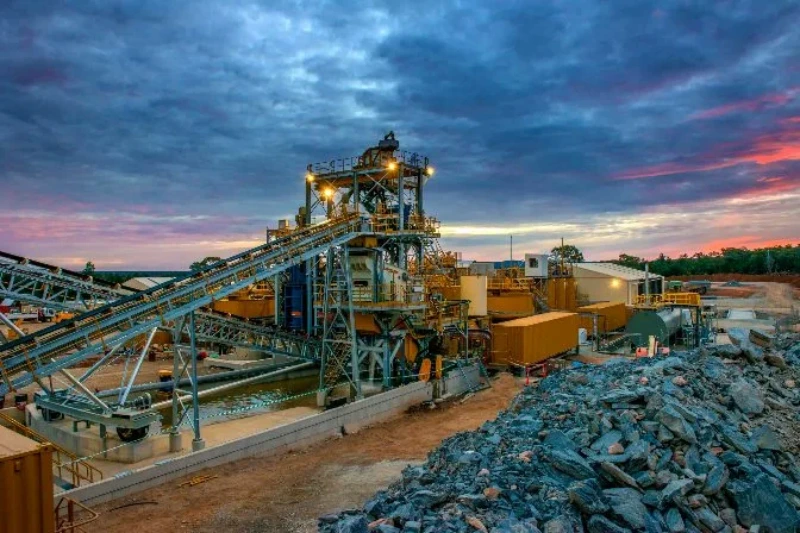
Processing Plants, Workshops, And Mobile-equipment Maintenance
Much of a mine’s lifting work happens away from the shaft or digging face. Crusher liners, screens, pumps, gearboxes, motors, conveyor components, and ground-engaging tools all need safe, repeatable handling during planned and unplanned maintenance.
- Grade 80 and Grade 100 chain slings: Single- and multi-leg assemblies for rugged maintenance lifts, with hooks, master links, shortening devices, and other compatible components.
- Wire rope slings: Useful where strength, abrasion tolerance, and flexible load connection are required.
- Shackles and hooks: Forged connection points for slings, lifting lugs, and below-the-hook assemblies.
- Snatch blocks and pulley blocks: For redirecting a line or building mechanical advantage in properly engineered pulling systems.
- Turnbuckles and tensioning hardware: For controlled tensioning and alignment where the product design and load direction permit.
Every assembly should be selected from the load, hitch, sling angle, attachment points, headroom, temperature, and site rules. Hardware should never be chosen by nominal size alone.
Specify Around The Real Damage Mechanism
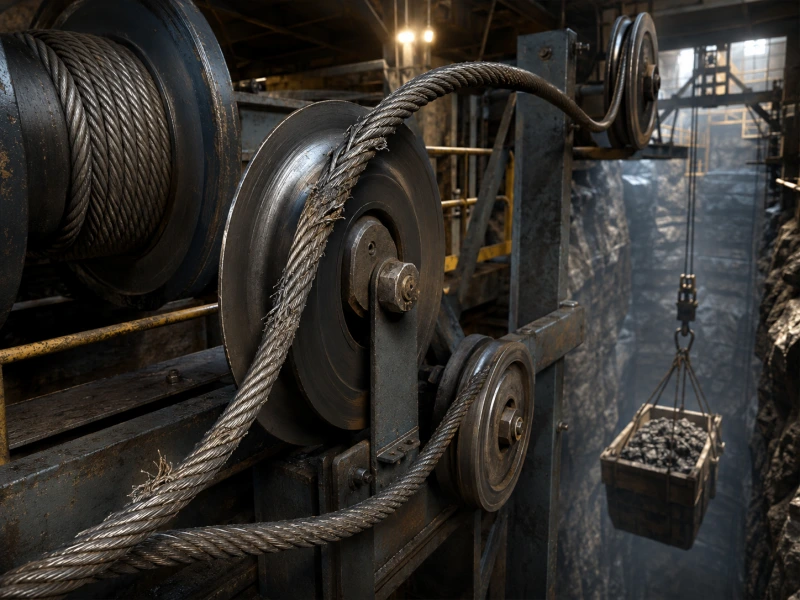
Duty Cycle And Bending Fatigue
Two ropes with the same diameter and minimum breaking force can deliver very different service in the same mine. Operating hours, cycles per shift, load spectrum, rope speed, acceleration, reverse bending, sheave-to-rope diameter ratio, and reeving layout all influence fatigue life.
For a useful recommendation, describe the normal load as well as the peak load. Include the number of starts, lifts, or digging cycles; the number and diameter of sheaves; and whether the rope repeatedly bends in opposite directions. This makes it possible to balance flexibility, strength, and fatigue resistance instead of optimizing one property in isolation.
Abrasion And External Wear
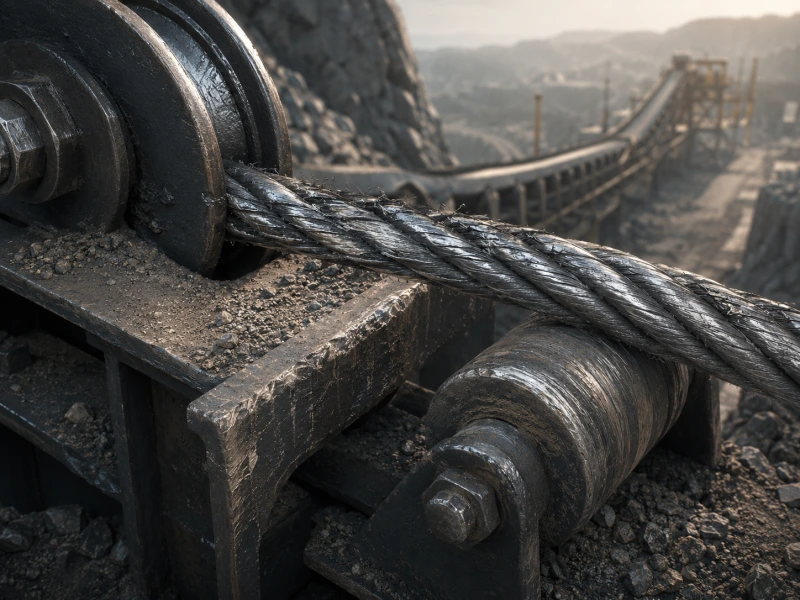
Dust and crushed rock can turn contact points into grinding surfaces. Outer wires wear at sheaves, drums, rollers, and any point where the rope rubs against the structure or material. Chain links and sling hardware can also lose section when they are dragged, pinched, or loaded across sharp edges.
Rope construction, wire size, compaction, lubrication, surface finish, sheave condition, and line routing all affect abrasion performance. For slings, protect the assembly from edges and keep it out from under the load. If an existing product is wearing early, send clear photos and the location of the damage; the wear pattern often says more than the hours in service.
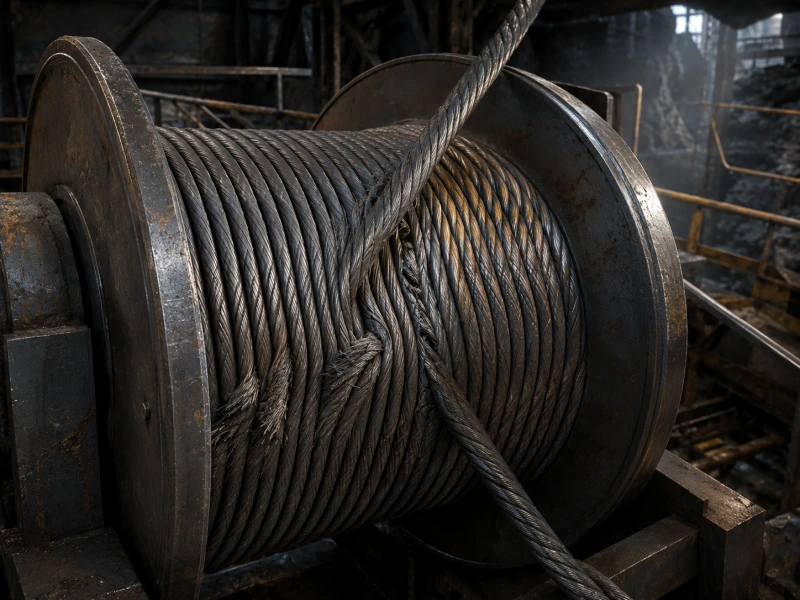
Crushing And Multilayer Spooling
Crushing is different from abrasion. It occurs when radial pressure distorts the rope structure—often on multilayer drums, at cross-over zones, or where the rope is wound without sufficient tension. A flattened or displaced rope may no longer run correctly even if the outer wires do not appear badly worn.
Rope stability, drum geometry, groove condition, fleet angle, installation tension, and the quality of the first layer all influence spooling behavior. Before changing rope construction, review the drum and spooling system. A tougher rope cannot correct a damaged groove, poor alignment, or uncontrolled winding.
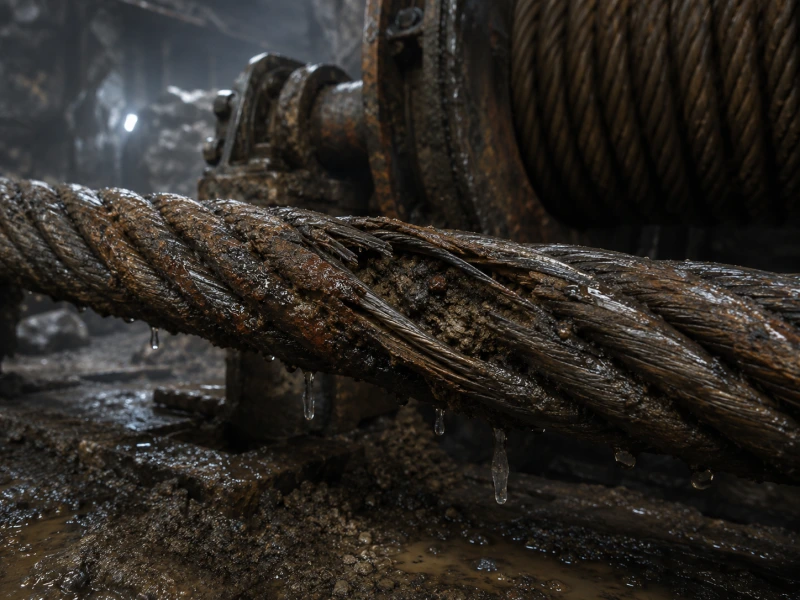
Moisture, Corrosion, And Contamination
Mine water, humidity, chemicals, and fine particles can attack both the outside and the core of a rope. Galvanized wire, suitable lubrication, an appropriate core, and protective features may help, but the right choice depends on temperature, chemical exposure, and inspection access. State whether the rope works underground, outdoors, in washdown areas, or near corrosive process media.
Products For A Complete Mining Lifting System
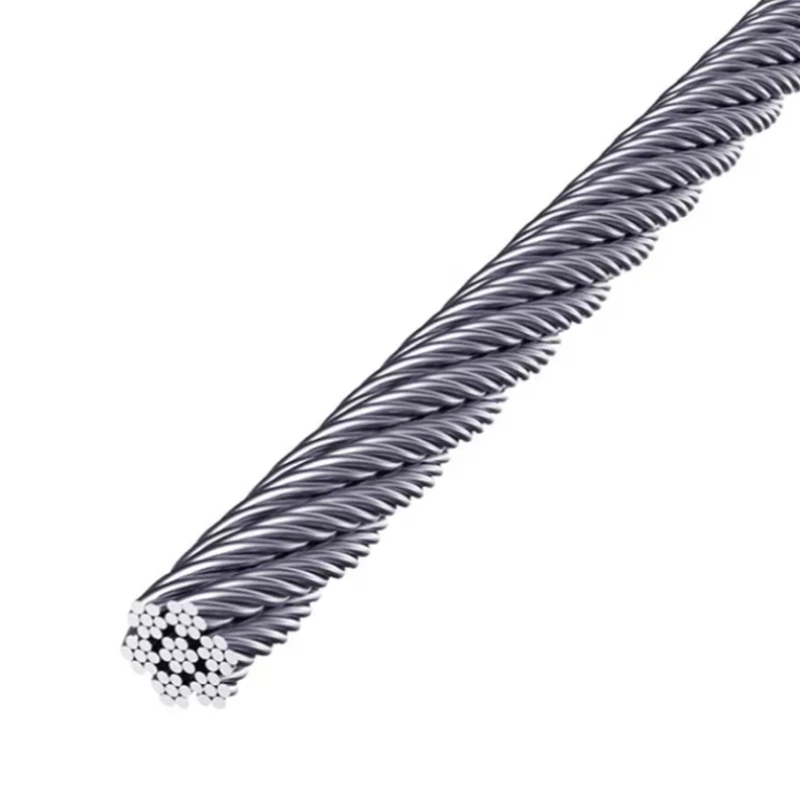
Choose from multiple constructions, core types, lay directions, tensile grades, surface finishes, lubricants, diameters, and custom lengths. We review the combination against bending, abrasion, crushing, rotation, corrosion, and load requirements. Matching terminations can be supplied to the approved drawing or specification.

Custom Grade 80 and Grade 100 chain sling assemblies are available in single-, double-, triple-, and four-leg configurations with compatible master links, hooks, connectors, and shortening components. Provide the maximum gross load, center of gravity, lifting points, hitch, angle from vertical, reach, and service temperature so the finished assembly can be rated and tagged correctly.
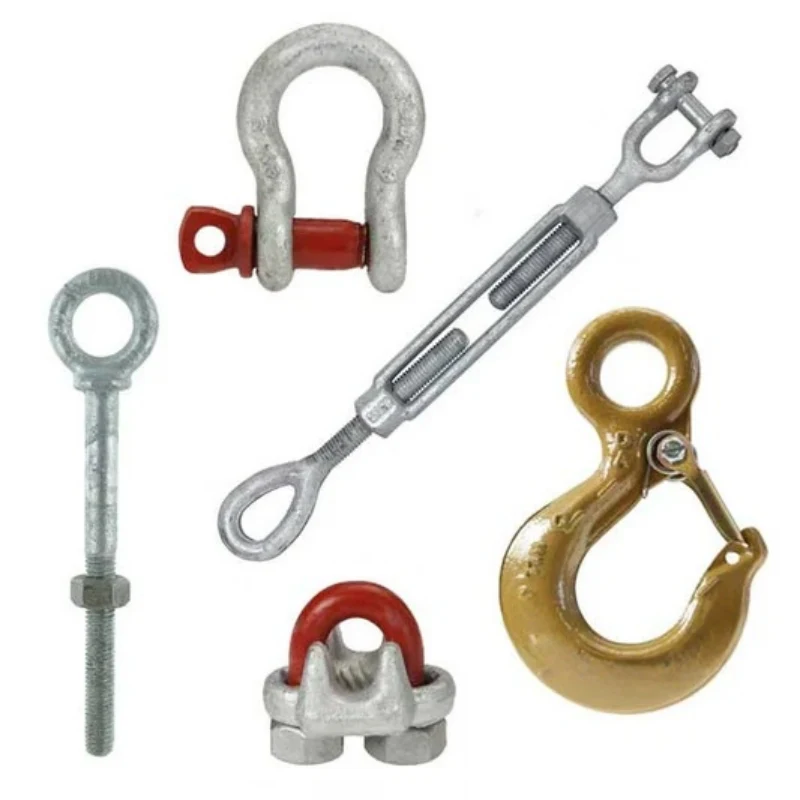
Our range includes bow and dee shackles, safety hooks, eye hooks, clevis hooks, master links, connecting links, swivels, eye bolts, and related forged components. Select hardware by Working Load Limit, load direction, pin and bow geometry, connection fit, temperature, and the standard required by the site—not by appearance or body diameter.
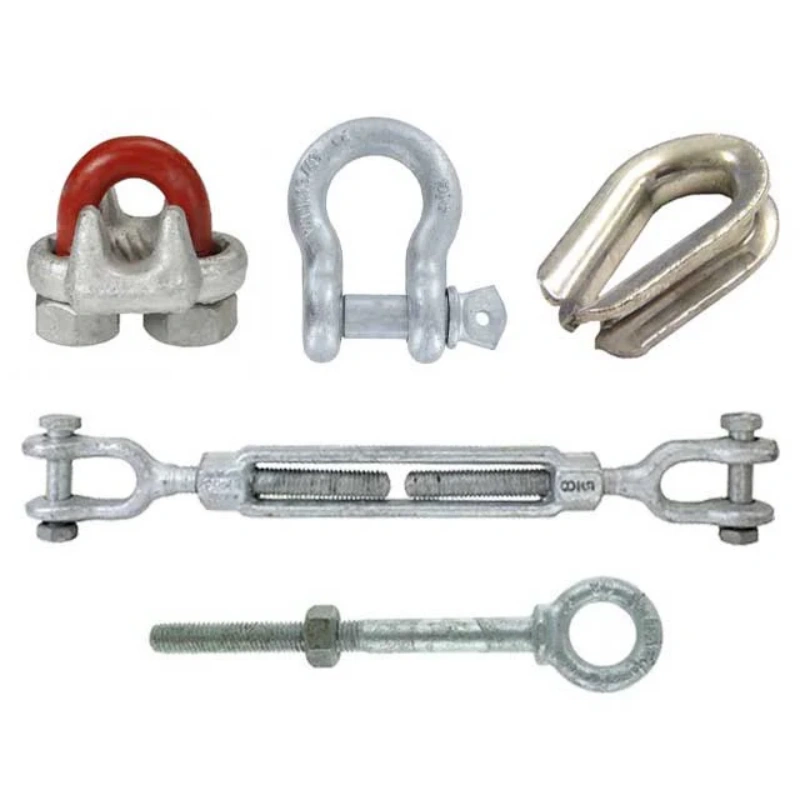
Thimbles, clips, sockets, and swage fittings protect and terminate wire rope when used in a compatible, approved assembly. Termination efficiency and installation method vary by rope construction and fitting. Wire rope clips are not a universal substitute for engineered sockets or swaged terminations, especially on critical hoisting systems. Follow the equipment design, fitting instructions, and applicable mine rules.
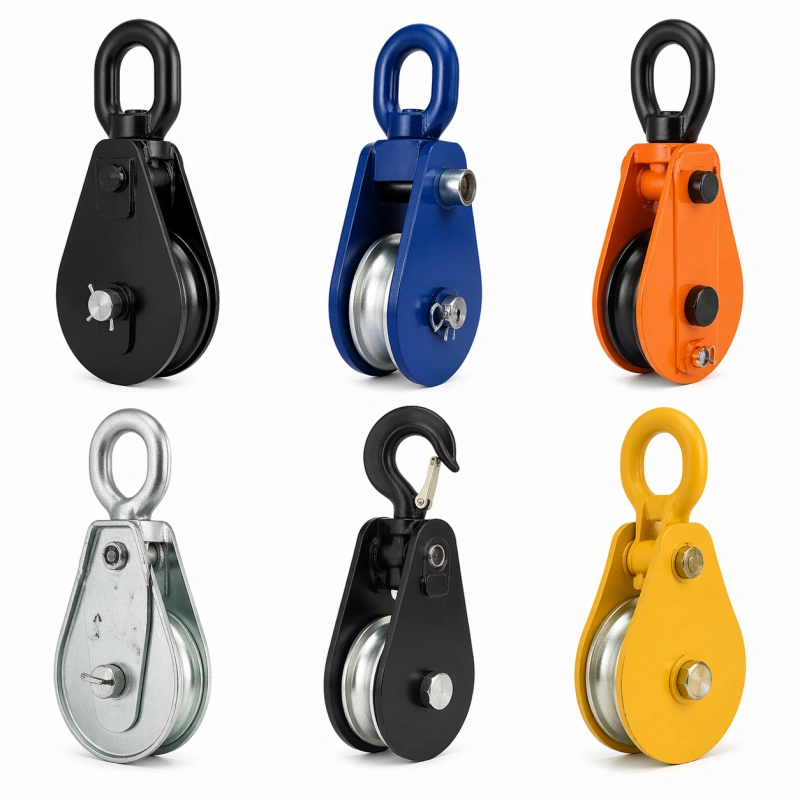
Blocks can redirect a pull or increase mechanical advantage, but they must be matched to line pull, rope diameter, sheave groove, bearing arrangement, and reeving. Side loading, poor alignment, and undersized sheaves shorten component life and can create serious risk.
Equip Your Operations for Success
1. Application Review
We start with the machine and duty, not a catalog number. Share the equipment model, application, load data, duty cycle, rope path, drum and sheave dimensions, environment, current product, and reason for replacement. For fabricated assemblies, add drawings, connection dimensions, and required reach.
2. Product and Assembly Proposal
Our engineering team reviews the construction, grade, finish, fittings, and dimensional requirements. Where the application is unusual, we can support OEM/ODM development from a technical drawing or performance brief. Any assumptions are stated for confirmation before production.
3. Testing and Documentation
PowerFul Machinery operates in-house tensile, chemical-composition, fatigue, and proof-load testing capabilities. Inspection and test scope is agreed against the product, order, and applicable standard. Material certificates, test records, identification, and export documents can be prepared to the purchase specification.
4. Delivery and After-Sales Review
Mining sites are often remote, so packaging, reel orientation, preservation, identification, and shipping documents matter. Our export team supports these details before dispatch. If service life changes after installation, send the operating record, inspection findings, and damage photos. We can review the evidence with you and help separate product fit from installation, alignment, lubrication, or operating causes.
Why Work With Powerful Machinery
Wire rope, alloy chain, custom slings, forged hardware, fittings, and blocks can be coordinated in one order.
Automated production, precision forging, heat treatment, mold development, and machining support repeatable OEM and volume supply.
Tensile, proof-load, chemical-composition, and fatigue testing support product-specific quality plans and documentation.
We work from equipment data, technical drawings, target dimensions, and performance requirements rather than forcing every job into a standard catalog item.
More than 20 years of export experience supports documentation, packing, and delivery to mining customers and distributors across major international markets.
What to Include in a Mining RFQ
Send as much of the following as possible. A complete inquiry reduces clarification time and helps avoid a technically correct product that does not fit the machine.
- Mine type and location: surface, underground, quarry, or processing plant
- Equipment maker, model, serial number, and rope or rigging function
- Existing rope or assembly certificate, drawing, tag, and part number
- Rope diameter, construction, core, grade, lay, finish, length, and end terminations
- Maximum load, normal load, shock loading, speed, acceleration, and braking details
- Duty cycle: operating hours, shifts, cycles per hour or day, and expected service interval
- Drum type, number of layers, groove dimensions, fleet angle, and winding direction
- Sheave diameters, groove condition, reeving arrangement, and reverse bends
- Abrasion, contamination, moisture, corrosion, and temperature conditions
- For slings: hitch, number of legs, angle from vertical, reach, lifting points, and headroom
- Required standard, inspection/test plan, certificates, marking, packaging, and delivery date
- Current service life and clear photos of wear, crushing, broken wires, corrosion, or damaged hardware
Mining Wire Rope and Lifting Hardware FAQ
What is the best wire rope for mining?
There is no single best mining wire rope. The correct construction depends on the machine, minimum breaking force, duty cycle, bending system, drum arrangement, abrasion, crushing pressure, rotation behavior, corrosion, temperature, and governing standard. Start with the equipment maker’s specification and the operating record of the current rope.
How do abrasion and crushing affect rope selection?
Abrasion removes metal from the outer wires through rubbing contact. Crushing distorts the rope under radial pressure, often on multilayer drums or at cross-over zones. Larger outer wires, compacted constructions, plastic support, lubrication, and improved structural stability may help in the right application, but drum condition, sheave grooves, alignment, and winding tension must also be checked.
What duty-cycle information should I send for a quote?
Include operating hours, shifts, cycles, normal and peak loads, rope speed, acceleration and braking, number of bends, sheave diameters, reverse bends, and number of drum layers. If the current rope is being replaced early, include its service hours and retirement reason.
Can chain slings be used for mine maintenance?
Yes. Alloy chain slings are widely suited to rugged maintenance lifting because they tolerate handling and abrasion better than many softer sling materials. They still require correct rating for the load and angle, protection from damaging edge contact, legible identification, and inspection under the mine’s lifting procedure.
Do you supply mining rope terminations and matching hardware?
We supply wire rope thimbles, wire rope clips, sockets, swage fittings, shackles, hooks, links, and blocks. The termination must be compatible with the rope construction and approved for the application. Critical hoisting systems may require engineered sockets or other specified terminations rather than field-installed clips.
What service support is available after delivery?
Our team supports specification records, manufacturing documentation, packing and shipping details, and post-delivery review of inspection findings or damage patterns. If field installation, commissioning, training, or third-party inspection is needed, include it in the inquiry so the scope can be confirmed before order placement.
Keep the Next Lift—and the Next Shift—on Schedule
Send your rope certificate, equipment data, duty cycle, drawings, and service conditions. PowerFul Machinery will help you define a mining wire rope and lifting hardware package that fits the machine, the environment, and the documentation your site requires.