When you look at industry standards, the longest anchor chain belongs to military vessels. For example:
The USS Gerald R. Ford uses a 1,440-foot (439-meter) anchor chain.
Nimitz-class carriers have chains reaching 1,080 feet (329 meters).
Vessel Type | Typical Anchor Chain Lengths |
|---|---|
Military Vessels | Up to 1,440 feet (439 meters) |
Commercial Vessels | 300 to 1,000 feet (91 to 305 meters) |
Recreational Vessels | 1 foot of chain for each foot of boat length |
The anchor chain length ensures safety and stability at sea. The right length helps your vessel maintain grip on the seabed, preventing drift in challenging conditions.
Key Takeaways
Military vessels use the longest anchor chains, with lengths up to 1,440 feet, ensuring safety in extreme conditions.
For commercial vessels, anchor chains typically range from 300 to 1,000 feet, depending on the vessel size and operational needs.
Recreational vessels should have anchor chains at least as long as the boat, with a recommended scope of four to seven times the water depth.
Regular maintenance and inspection of anchor chains are crucial for safety; check for rust and damage before every voyage.
Choosing certified anchor chains from trusted manufacturers enhances safety and reliability, meeting international standards.
Anchor Chain Length Basics
What Is an Anchor Chain?
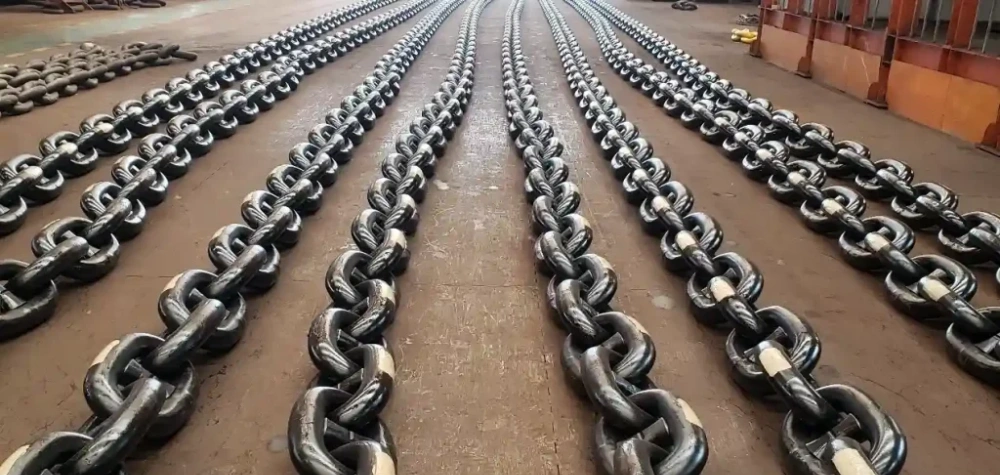
An anchor chain is a vital part of any vessel’s anchoring system. You rely on it to keep your boat or ship secure in changing marine conditions. The chain connects your vessel to the anchor, absorbing shock loads and resisting corrosion from saltwater.
High-strength alloy steel forms the backbone of most anchor chains, giving them the durability needed for harsh environments. Powerful Machinery manufactures anchor chains with precision, ensuring each link meets strict industry standards for safety and performance.
Here are the main components and their functions:
Component | Function |
|---|---|
The main part of the anchor chain increases strength and prevents deformation. | |
Kenter Shackle | Connects two lengths of chain, detachable for easy installation. |
Swivel | Prevents twisting of the chain, allowing free rotation for safety. |
End Shackle | Connects the chain to the anchor, must withstand the full load. |
End Link | Connects to the anchor or shackle, helping align the chain. |
Enlarged Link | Used at transition points, ensures smooth transitions between components. |
Factors Affecting Anchor Chain Length
You must consider several factors when determining the right anchor chain length for your vessel. The size of your boat, the depth of the water, and the type of seabed all play a role. The table below outlines the main factors influencing chain length:
Factor | Description |
|---|---|
Boat Length | Larger boats generally require more chain; a rule of thumb is one foot of chain per foot of boat length. |
Water Depth | The depth of water influences the amount of chain needed; deeper water requires longer chain. |
Scope Ratio | The ratio of anchor rode length to water depth is crucial; a 7:1 ratio is often recommended. |
Anchoring Conditions | Different seabed types (sand, mud, weeds, rocks) affect holding power and chain requirements. |
You should always check the standard length for an anchor chain based on your vessel type and operating environment.
Why Anchor Length Matters?
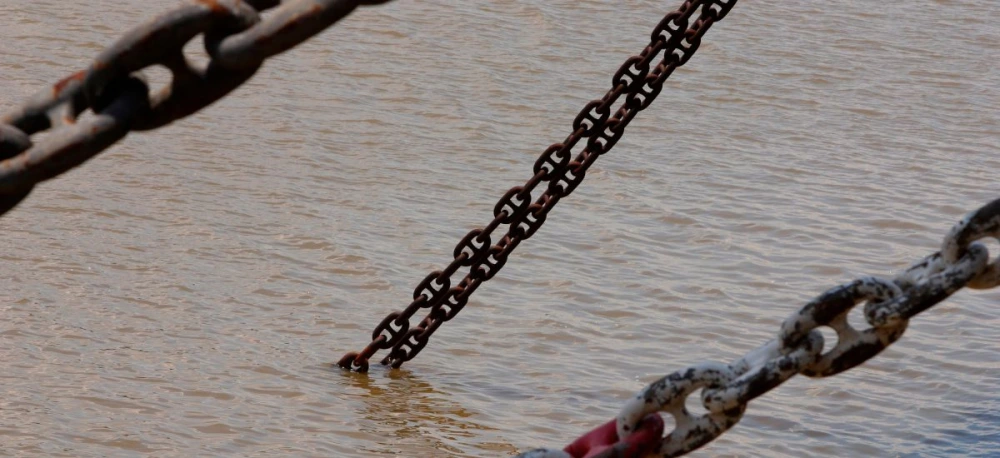
Anchor chain length directly impacts your vessel’s safety. If you use too little chain, your anchor may not hold during storms or strong winds. This can lead to dangerous drifting, collisions, or even grounding.
Research shows that anchor holding power drops sharply when the scope falls below the recommended ratio, especially in rough weather. Powerful Machinery’s anchor chains provide the strength and reliability you need to maintain position and protect your crew and cargo.
By choosing the right chain and maintaining proper length, you reduce risks and ensure safe operations at sea.
How Long is the Longest Anchor Chain?
Military Vessel Standards
When you examine military vessels, you see some of the most impressive anchor chains in the world. The question of how long the longest anchor chain often leads to examples from naval engineering. Aircraft carriers like the USS Gerald R. Ford use chains that reach up to 1,440 feet (439 meters).
Nimitz-class carriers follow closely with chains around 1,080 feet (329 meters). These chains must handle extreme loads and harsh conditions.
You might wonder what drives these standards. Military regulations assess anchoring equipment for ships over 135 meters in length. These rules focus on anchoring in depths up to 120 meters, considering current speeds and wave heights.
However, compliance with deep water anchoring recommendations remains optional. Most military vessels use anchor chains between 100 and 300 meters, but large ocean-going ships may require each anchor to have chains exceeding 300 meters. In deep water, warships rarely anchor because of the depth.
Note: The seawise giant anchor, used on the largest ship ever built, weighed over 50 tons. This anchor, along with its chain, set records for the heaviest anchors ever built and showcased the engineering behind gigantic ship anchors.
Powerful Machinery manufactures certified anchor chains that meet or exceed these military standards. You can rely on their products for strength, durability, and compliance with international regulations.
Commercial Vessel Standards
Commercial vessels also require robust anchor chains, but the standards differ from military requirements. The longest anchor chain for commercial ships typically ranges from 300 to 1,000 feet (91 to 305 meters), depending on vessel size and operational needs.
The standard length for an anchor chain must match the ship’s windlass and hawsepipe, ensuring smooth operation.
Specification Type | Details |
|---|---|
Chain Grade | U1, U2, U3 (defines minimum breaking load and material quality) |
Chain Diameter | Must match the vessel’s windlass and hawsepipe |
Compliance Standards | ISO 1704 and classification society rules are mandatory for commercial vessels |
Recommended Scope | 3 to 5 times the water depth under normal conditions; 7:1 or 10:1 in storm conditions |
Certification | Chains must be certified by recognized classification societies (e.g., ABS, DNV-GL) |
Performance Metrics | Minimum Breaking Load (MBL), Proof Load, and Test Load must exceed calculated holding requirements |
You need to consider cost implications when choosing longer chains. High-quality steel chains cost more due to their durability and corrosion resistance. Larger diameter chains require more material, which increases both the price and shipping costs.
Longer chains have a significant impact on total cost, but bulk purchases can offer savings. Reputable manufacturers like Powerful Machinery provide certified anchor chains that deliver reliability and value for commercial operations.
Recreational Vessel Guidelines
For recreational vessels, the answer to how long is the longest anchor chain depends on boat size and anchoring conditions. Maritime authorities recommend that the total anchor rode (chain and rope combined) should be four to seven times the expected anchorage depth.
The chain portion should be at least as long as your boat. The International Association of Classification Societies suggests using a chain length of six to ten times the water depth in meters.
The Admiralty Manual of Seamanship offers a formula: use 1.5 times the square root of the water depth in meters to determine the number of shackles needed.
The chain should never be shorter than your boat.
In crowded anchorages, use a longer rode for added security.
For deep water, increase the scope to maintain holding power.
You can trust Powerful Machinery’s anchor chains for recreational use. Their products offer corrosion resistance, high tensile strength, and customization options to fit any vessel size. Whether you own a small sailboat or a luxury yacht, you get peace of mind with a chain built for safety and performance.
Powerful Machinery Anchor Chains: Features and Value
Types and Specifications
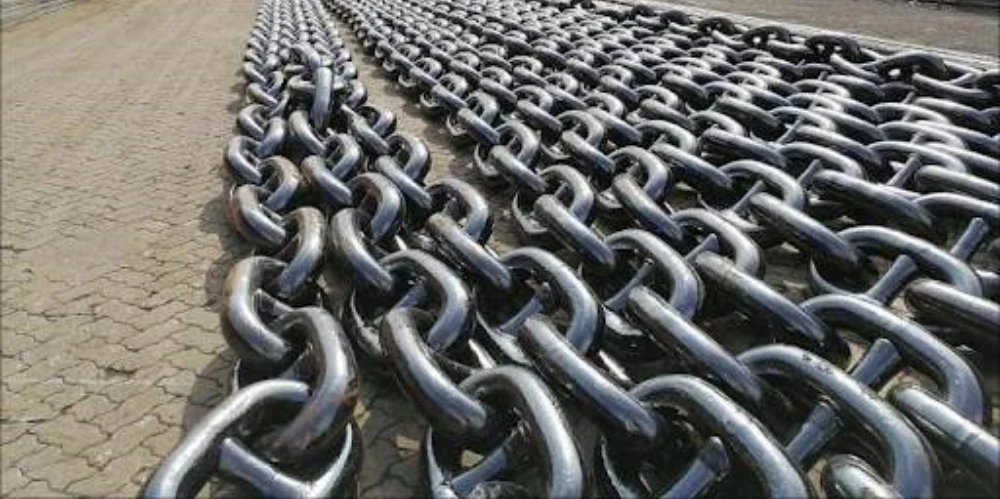
You can choose from a wide range of anchor chains at Powerful Machinery, each designed for specific vessel types and marine conditions. The selection includes stud chains for large ships, studless chains for smaller vessels, and specialized options like cast steel and electric welded chains.
You also find U3 anchor chains, which use low-carbon alloy steel and advanced heat treatment for extra strength. The table below highlights the main types and their specifications:
Type of Anchor Chain | Specifications |
|---|---|
Stud Chain | Fitted with crossbars, greater strength, and used on large and medium-sized ships. |
Studless Chain | No rungs, ideal for small ships, can be replaced by ropes of equal breaking load. |
Cast Steel Anchor Chain | High strength, good rigidity, suitable for mass production. |
Electric Welded Anchor Chain | Made from round steel, low cost, widely used on commercial ships. |
Forged Anchor Chain | Good impact resistance, complex manufacturing process. |
U3 Anchor Chain | Low-carbon alloy steel, heat-treated, diameters from 14mm to 60mm. |
Grades | M1, M2, M3 for electric welded; M2, M3 for cast steel; AM and BM indicate gear presence. |
You can select chains made from galvanized steel, stainless steel, or high-tensile steel. Stainless steel chains work best in saltwater, while galvanized steel offers a balance of strength and corrosion resistance.
Product Advantages
Powerful Machinery anchor chains deliver unmatched durability and safety. You benefit from high-tensile steel and corrosion-resistant materials that withstand harsh marine environments. Every chain is certified by class authorities, ensuring quality and reliability for your vessel.
The range of designs fits different operations and seabed types, which boosts operational safety. Advanced heat treatment processes, such as normalizing, improve the strength and toughness of each link. Modern manufacturing uses high-strength materials, making chains lighter without sacrificing holding power.
This technology allows you to handle even the longest anchor chain with ease, whether you operate a commercial ship or manage gigantic ship anchors like those used on the seawise giant anchor.
Tip: Certified anchor chains help you meet international safety standards and reduce the risk of failure, even when dealing with the heaviest anchors ever built.
Value for Maritime Operations
You gain significant value when you choose Powerful Machinery anchor chains for your maritime operations. The chains’ durability means fewer replacements and lower maintenance costs. You can customize chain length and specifications to match your vessel’s needs, ensuring optimal performance.
Many clients report improved operational efficiency and reliability. For example, shipping firms have seen a 20% increase in chain lifespan, and fleets using advanced monitoring systems have reduced maintenance costs by 15%.
Powerful Machinery also adopts eco-friendly practices, such as using sustainable materials and water-based paints, which help protect marine ecosystems. You can recycle old chains, turning them into raw materials for new steel products.
This commitment to quality and sustainability ensures your operations remain safe, efficient, and environmentally responsible.
Practical Considerations for Anchor Chains
Maintenance and Inspection
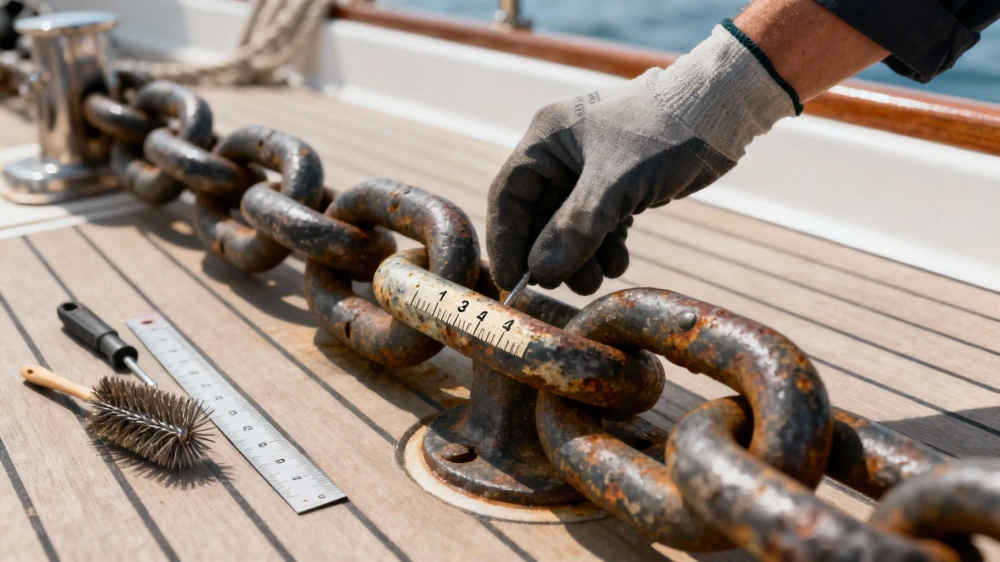
You protect your vessel and crew when you follow a regular maintenance routine for your anchor chain. Proper inspection helps you spot issues before they become serious problems. Use this table to guide your daily and periodic checks:
Item Description | Details |
|---|---|
Inspect chain links | Check all links and connection points for rust and damage. |
Cut bad links | Remove severely rusted links with a mini grinder. |
Inspect chain-to-rope splice | Look for moisture that could cause rust. |
Clean anchor locker | Rinse with freshwater to remove mud and sand. |
Check drainage | Make sure the locker drains freely and stays clear. |
Daily inspection | Regularly check the entire anchoring system. |
You should always inspect the chain after rough seas or storms. Teach your crew to handle the chain properly to avoid kinks and twists. Powerful Machinery recommends cleaning your chain with mild soap and water, drying it completely, and lubricating it with a petroleum-based oil.
This routine extends the life of your chain and ensures it meets the standard length for an anchor chain required by your vessel type.
Storage and Handling
You can prevent corrosion and damage by storing and handling your anchor chain correctly. Follow these best practices:
Rinse and oil the chain after every offshore job to boost corrosion resistance.
Store the chain in a dry, ventilated area with good airflow.
Elevate the chain on deck when not in use to avoid contact with standing water.
Rotate different sections of the chain to ensure even wear.
Label chains by type and date for easy tracking.
Maintain stable temperature and humidity in storage areas.
Tip: Powerful Machinery provides detailed guidance and support for anchor chain care. You can contact their team for advice on maintenance schedules and storage solutions tailored to your vessel’s needs.
By following these steps, you help your anchor chain perform reliably, whether you use the longest anchor chain for a military vessel or a shorter chain for a recreational boat.
Conclusion
You see clear differences in anchor chain length across military, commercial, and recreational vessels. Following industry standards keeps your vessel safe and stable. Choosing certified anchor chains from Powerful Machinery brings you proven safety and performance advantages:
Safety Benefit | Description |
|---|---|
Certified by International Bodies | Products meet strict safety standards set by global classification societies. |
Commitment to Quality | Manufacturers focus on exceptional quality and sustainability. |
HSEQ Certifications | Certifications reflect dedication to health, safety, environment, and quality. |
For best results, you should:
Select certified anchor chains from trusted providers.
Conduct regular inspections and maintenance.
Match chain types and materials to your vessel and environment.
Regular consultation with anchor chain specialists ensures you make the right choices for safety and reliability.
FAQ
How do you choose the right anchor chain length for your vessel?
You should match the chain length to your vessel size and typical anchoring depth. Use one foot of chain for each foot of boat length. Always check industry guidelines for your vessel type.
What materials do Powerful Machinery anchor chains use?
You get anchor chains made from high-grade steel. Powerful Machinery offers galvanized and stainless steel options. These materials resist corrosion and provide high tensile strength for marine environments.
How often should you inspect your anchor chain?
You need to inspect your anchor chain before every voyage and after rough weather. Regular checks help you spot wear, rust, or damage early. This practice keeps your vessel safe.
Can you customize anchor chain length and specifications?
You can request custom lengths, diameters, and materials from Powerful Machinery. The company tailors anchor chains to fit your vessel’s requirements and operational needs.
What certifications do Powerful Machinery anchor chains carry?
Certification | Description |
|---|---|
ISO9001 | Quality management |
TUV Rheinland | Safety and reliability |
ABS, DNV-GL | Marine classification standards |
Tip: Certified chains help you meet international safety regulations and boost your vessel’s reliability.