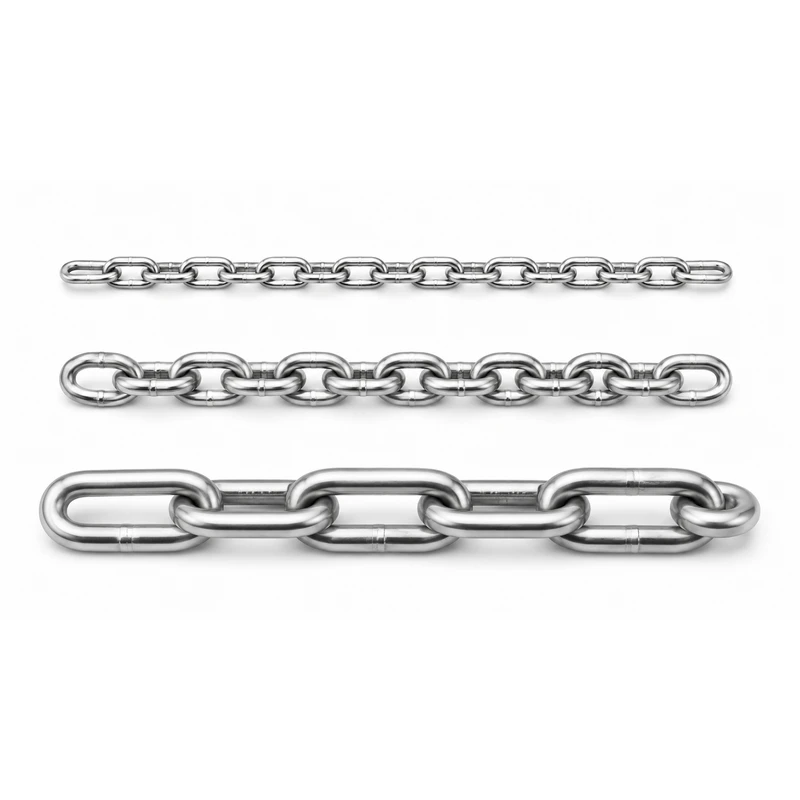
Crane wire rope maintenance gives you greater safety and maximizes the lifespan of your equipment. Powerful Machinery delivers certified crane wire ropes trusted by industries worldwide. You protect your investment and reduce replacement costs with regular inspection and proper handling.
The operational reliability of wire ropes depends on maintenance and monitoring.
Routine maintenance extends crane service life and prevents unexpected breakdowns.
Regular maintenance costs less than premature replacement and avoids production downtime.
Choosing the right wire rope ensures peak efficiency and reliability for every lift.
Key Takeaways
Regular inspections are crucial. Perform monthly checks to catch wear and damage early.
Proper lubrication extends rope life. Use quality lubricants to reduce friction and prevent corrosion.
Handle ropes with care. Store them properly to avoid deformation and protect against environmental factors.
Choose the right wire rope for your needs. Select based on strength, flexibility, and resistance to wear.
Document maintenance activities. Keep records of inspections and repairs to ensure compliance and safety.
Understanding Crane Wire Rope Maintenance
Why Maintenance Is Essential?
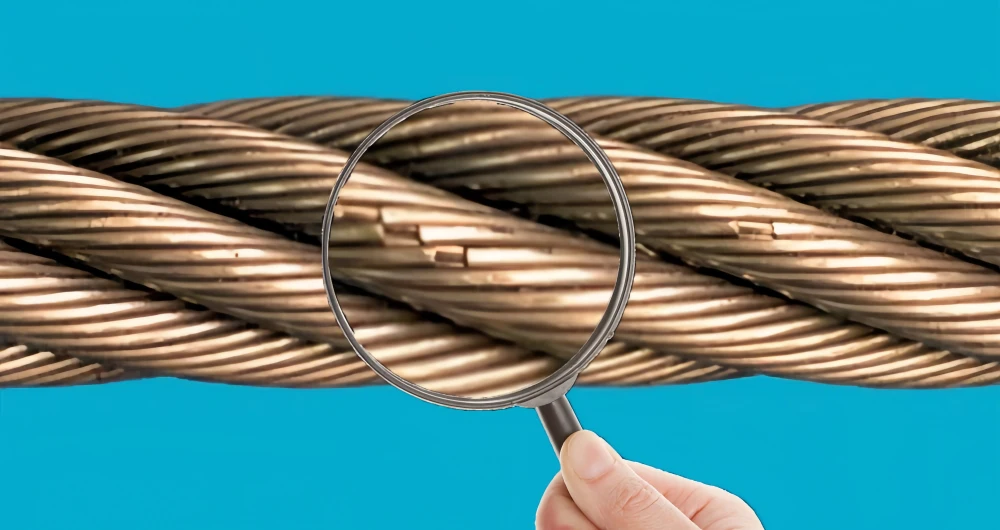
You rely on crane wire rope maintenance to keep your lifting operations safe and efficient. Powerful Machinery stands as a trusted provider of certified crane wire ropes, delivering solutions that meet international standards.
When you follow proper maintenance routines, you reduce the risk of unexpected failures and extend the service life of your equipment. Regular inspections, cleaning, and lubrication help you detect early signs of wear and prevent costly breakdowns.
Tip: Operational discipline matters. Avoid overloads and shock loading. Maintain smooth lifting motions to reduce stress on the wire rope.
Industry standards guide your maintenance practices. The table below highlights key guidelines:
Standard / Regulation | Scope / Coverage | Key Maintenance & Inspection Criteria |
|---|---|---|
ISO 4309-2017 | International discard criteria | Rope retirement based on wear, broken wires, diameter reduction, corrosion, deformation, and heat damage |
ASME B30.2 | Overhead and gantry cranes | Broken wire limits, inspection intervals, and replacement triggers |
OSHA 29 CFR 1910.179 | Overhead crane regulations | Inspection documentation, safety compliance |
You must document inspections and follow the most conservative criteria to ensure safety and compliance. Regular crane wire rope maintenance protects your investment and supports reliable crane performance.
Common Causes of Wire Rope Wear
You encounter several factors that contribute to wire rope wear. Friction from constant movement over pulleys and sheaves wears down wires and strands. Environmental factors, such as moisture, salt, and chemicals, accelerate corrosion and damage.
Inadequate lubrication increases friction, causing internal and external deterioration.
Cause | Description |
|---|---|
Friction | Movement over pulleys and sheaves rubs wires and strands, leading to wear. |
Environmental Factors | Exposure to moisture, salt, and chemicals speeds up corrosion and damage. |
Inadequate Lubrication | Lack of proper lubrication raises friction and wear, resulting in internal and external damage. |
You prevent these issues by practicing proper maintenance. Regular cleaning, lubrication, and careful handling help you minimize wear and extend the lifespan of your crane wire rope.
Powerful Machinery Crane Wire Rope Features
Product Specifications and Options
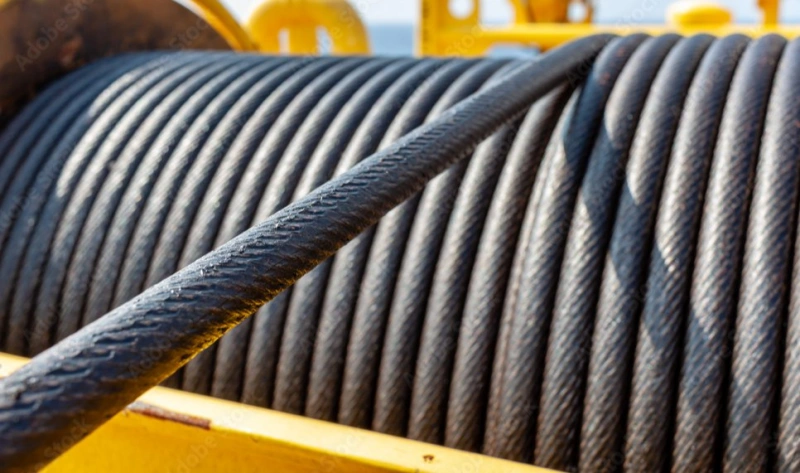
You gain access to a wide range of crane wire rope options from Powerful Machinery. Each wire rope type offers unique benefits for your lifting needs. The company provides ropes with different constructions, such as 6×19 and 6×25, which vary in flexibility, durability, and wear resistance.
Wire Rope Type | Flexibility | Durability | Wear Resistance |
|---|---|---|---|
6×19 | Less | Moderate | High |
6×25 | More | High | Moderate |
You also choose between fiber core and IWRC (Independent Wire Rope Core) options. Fiber core ropes deliver excellent flexibility and lighter weight. IWRC ropes offer higher load capacity, crush resistance, and superior performance in high-temperature environments.
Core Type | Flexibility | High-Temperature Resistance | Load Capacity | Crush Resistance | Self-Weight |
|---|---|---|---|---|---|
Fiber Core | Excellent | Poor | Lower | Poor | Light |
IWRC | Less | Excellent | Higher | Excellent | Heavy |
Powerful Machinery’s steel wire ropes feature advanced designs, including non-rotating construction. This design prevents twisting and kinking, giving you precise control and safer lifting operations. You benefit from ropes that meet international certifications, such as ISO, TUV Rheinland, and EURO CERT.
Crane wire ropes comply with global standards for safety and quality.
You receive products that support longer-lasting equipment and reliable performance.
Advantages for Crane Operations
You experience several advantages when you use Powerful Machinery crane wire ropes. The features directly support maintenance and extend the lifespan of your lifting equipment.
Feature | Contribution to Service Life |
|---|---|
Non-rotating design | Prevents twisting and kinking, enhancing safety |
Strength | High tensile strength (1570MPa to 1960MPa) for reliability |
Durability | Resists wear in demanding environments |
Regular maintenance | Boosts strength, flexibility, and reliability, extending lifespan by up to 35% |
You benefit from rigorous testing and advanced manufacturing equipment, which ensures consistent quality. Custom design requests allow you to tailor wire ropes to your project needs.
Advantage | Description |
|---|---|
Rigorous Testing | Every product undergoes thorough safety and quality testing. |
Advanced Manufacturing Equipment | Ensures consistent results in production. |
Custom Design Requests | Tailored solutions to meet specific project needs. |
Tip: Choose wire ropes with the right specifications and certifications to maximize safety and reduce maintenance costs.
Crane Wire Rope Maintenance Tips
Inspection and Cleaning
You must prioritize routine maintenance to keep your crane wire rope in top condition. Inspection is the foundation of crane wire rope maintenance. You should perform monthly inspections to reduce the risk of failure and injury.
Always inspect the rope before returning idle equipment to service. Inspection intervals depend on national regulations, crane type, environmental conditions, previous inspection results, and how often you use the rope.
Monthly inspections are essential for safety.
Inspect ropes before using idle equipment.
Adjust inspection frequency based on statutory requirements, crane type, and operating conditions.
Tip: A thorough inspection helps you spot broken wires, corrosion, diameter reduction, and deformation early.
Cleaning is a key part of wire rope tips for maintenance. You remove contaminants like dirt, grease, and salt to prevent corrosion and wear. Choose the right cleaning method for your application:
Method | Description |
|---|---|
Manual Lubrication | Apply lubricant by painting, swabbing, or brushing. Best for outer wires. |
Semi-Automatic Technique | Use drip, spray, or trough methods at a single point. Rope movement helps distribute lubricant. |
Automatic Technique | Apply lubricant under pressure for maximum penetration and corrosion protection. |
You can use systems like BRILUBE by dipping, brushing, spraying, or pumping. The MASTO system cleans and applies dressing under high pressure. Clean ropes ensure better performance and longer lifespan.
Lubrication and Protection
Lubrication is vital for crane wire rope maintenance. You must use a quality wire rope lubricant to reduce friction and protect against corrosion. Proper lubrication minimizes internal and external friction, leading to smoother operation and protection from contaminants.
Field experience shows that using penetrating lubricants can double the life cycle of wire ropes.
Lubricant Type | Description | Recommended Use |
|---|---|---|
BRILUBE 30 | Semi-dry thin film with excellent penetration and corrosion resistance. | General outdoor use. |
BRILUBE 40 | Synthetic, slip-resistant film. | Lifts, elevators, friction-driven installations. |
BRILUBE 50 | Oil-based with additives for adherence and corrosion protection. | Overhead cranes, hoist ropes. |
BRILUBE 60 | Medium gel with excellent corrosion protection. | Outdoor, standing or dynamic ropes. |
BRILUBE 70 | Medium gel for marine conditions. | Offshore, hostile environments. |
BRILUBE 90 | Biodegradable heavy-duty lubricant. | Environmentally sensitive applications. |
Note: According to DIN 15020, consistent lubrication is necessary. Stopping lubrication shortens service life. In mines and overhead crane applications, proper lubrication doubles rope lifespan.
You must apply lubricant regularly and choose the right type for your environment. Lubrication protects the rope from moisture, salt, and chemicals. Always follow manufacturer recommendations for best results.
Handling and Usage
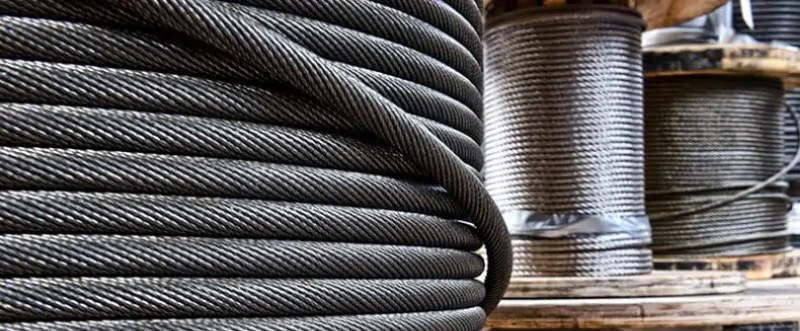
You must handle crane wire ropes carefully to prevent damage. Proper handling and usage are essential for extending service life. Store ropes in a dry, temperate environment. Keep storage areas free from acids and chemicals. Apply lubricant before storage to create a protective barrier.
Store heavy ropes vertically to reduce stress and avoid deformation. Organize shelving to prevent crushing and make ropes easy to access.
Stand the coil on its edge to unroll the rope.
Use a revolving shaft for controlled unwinding.
Support the reel for free rotation while pulling the rope off.
Apply back tension with a timber brake to avoid twists and permanent damage.
You must pay out the rope in a straight line with minimal slack. Use a turntable for a coiled rope to ensure straight payout. Protect the rope from grit and contaminants by using suitable matting.
Tip: Regularly inspect and maintain wire ropes to detect wear and damage early. Ensure proper tension on the drum to prevent stress.
Train operators and riggers on correct usage and maintenance. Avoid common errors like overloading, twisting, knotting, inadequate lubrication, and exposure to excessive wear from undersized drums or sheaves.
Improper storage and failure to maintain proper tension can cause wire breakage, strand breakage, and mechanical crushing.
Powerful Machinery provides technical guidance and maintenance support. You can consult their experts for best practices and custom solutions. Routine maintenance and proper handling help you maximize safety, reliability, and lifespan.
Monitoring Wear and Damage
Signs of Deterioration
You must recognize early signs of deterioration to keep your crane wire rope safe and reliable. Regular checks help you spot problems before they become serious. The most reliable methods for detecting early signs include:
Visual inspections: Skilled inspectors look for broken wires, corrosion, and surface wear.
Electromagnetic inspections (EM): These tests reveal hidden issues inside the rope. Localized-Flaw (LF) inspection finds broken wires, while Loss-of-Metallic-Area (LMA) inspection measures wear and corrosion.
Diameter measurement: You compare the current diameter to the original size to spot possible damage, but this method may not catch all problems.
Marlinspike method: You lift strands to check for internal damage that is not visible from the outside.
Tip: Always document your findings and act quickly if you notice any damage. Early intervention prevents accidents and extends rope life.
Tracking Rope Condition
You can use advanced tools and technologies to track the condition of your crane wire rope over time. Rope Watcher is a permanent device that uses the magneto-inductive method to monitor both internal and external faults.
This system allows you to perform remote inspections and sends alerts when deeper analysis is needed. You gain a complete view of rope integrity and can plan maintenance before damage leads to failure.
The table below compares leading technologies for tracking rope condition:
Technology | Description | Benefits |
|---|---|---|
TRUCONNECT Wire Rope Monitoring | Sensors provide continuous updates on rope condition. | Instant updates, detects hidden defects, reduces safety risks, remote monitoring, cost-effective. |
Rope Watcher | Magneto-inductive device for constant monitoring. | On-demand analysis, remote file transfer, and alerts for further inspection. |
TRUCONNECT gives you a real-time view of rope health and helps you plan maintenance.
Rope Watcher detects internal and external faults and supports remote inspections.
By using these tools, you reduce the risk of unexpected damage and keep your crane operations safe and efficient.
Storage and Environmental Protection
Best Storage Practices
You protect crane wire ropes by following industry-approved storage methods. Proper storage prevents premature wear and corrosion, ensuring your ropes remain reliable and safe for lifting operations. Always store wire ropes in a dry, temperate, and ideally indoor environment.
This shields them from moisture, sunlight, and extreme temperatures. You avoid placing ropes directly on the floor. Elevate them using racks or pallets to prevent contamination and corrosion.
Remove dirt and grime before storing wire ropes.
Apply a high-quality lubricant to maintain flexibility and guard against corrosion.
Keep storage areas free from acids, chemicals, and bases.
Ensure the location is well-ventilated to avoid humidity and condensation.
Use a supportive structure for reels to prevent deformation.
Maintain airflow under the reel to reduce moisture accumulation.
Tip: Improper storage leads to gradual material loss from friction and environmental exposure. Severe corrosion weakens the rope, increasing the risk of dangerous failures.
You should periodically inspect stored ropes for signs of deterioration. If you must store ropes outdoors, cover them to prevent moisture exposure. Industry guidelines recommend checking ropes regularly and applying compatible preservatives when necessary.
Managing Moisture and Corrosive Factors
Moisture and corrosive agents pose significant threats to crane wire rope longevity. Rain, humidity, and saltwater accelerate corrosion of steel strands. High temperatures cause lubricants to evaporate and materials to lose strength. Low temperatures make steel brittle and reduce flexibility.
Chemical exposure from acids, alkalis, or solvents degrades synthetic materials and fibers. Constant sunlight can cause UV damage, leading to brittleness.
Environmental Factor | Impact on Wire Rope |
|---|---|
Moisture | Corrosion, weakened steel strands |
Temperature Extremes | Loss of strength, reduced flexibility |
Chemical Exposure | Fiber weakening, potential failure |
UV Radiation | Brittleness, reduced flexibility |
Abrasive Environments | Increased wear due to friction |
You minimize these risks by storing ropes in cool, dry buildings, elevated off the floor, and away from chemicals, fumes, steam, or corrosive agents. Cover ropes outdoors to block moisture.
Maintain regular inspections and apply preservatives as needed. These steps help you extend the service life of your crane wire ropes and maintain operational safety.
Wire Rope Replacement Guidelines
When to Replace Crane Wire Rope?
You must know when to replace crane wire rope to maintain safety and efficiency. Several clear indicators signal that your wire rope has reached the end of its service life. You should inspect the rope regularly and look for these signs:
Broken wires that exceed acceptable limits. For running ropes, more than six broken wires in one lay means replacement. For standing ropes, more than two broken wires in one lay require action.
Significant diameter reduction. If you notice a diameter loss of around 5%, the rope is no longer safe.
Advanced corrosion, including rust or pitting, especially at connections.
Structural distortion such as kinking, birdcaging, or permanent unstranding.
Damaged or improper end terminations. Compromised end fittings can lead to failure.
Heat damage or signs of core protrusion.
Crushing or flattening of the rope.
Shock loading or sudden tension spikes.
Internal core failure or signs of internal damage.
Tip: You should always use a condition-based approach. Replace the wire rope when you see these signs, not just based on time or usage.
How to Change Crane Wire Rope?
You must follow a systematic process when changing crane wire rope. Proper steps ensure safety and prevent damage during installation. Here is a recommended procedure:
Secure the ends of the wire rope to prevent slippage.
Place wire rope clips about six rope diameters apart.
Tighten each clip before applying tension to the rope.
Insert a wire rope thimble in the eye of the loop to prevent kinking.
Position the U-bolt clips correctly on the rope.
Apply proper seizings on both sides of the cut to ensure even load distribution.
Before installation, you should:
Check for broken wires, especially in high-stress zones.
Inspect for corrosion or surface rust.
Examine wear at sheave and drum contact points.
Identify any birdcaging, kinks, or crushed sections.
Measure the diameter of the new wire rope under tension-free conditions.
Visually inspect the wire rope for corrosion after storage.
Ensure pulleys and reel rope grooves meet specifications.
Note: You can consult Powerful Machinery’s technical team for guidance and support during replacement. Proper installation extends the lifespan of your crane wire rope and keeps your operations safe.
Choosing the Right Wire Rope
Selecting for Application Needs
You must select crane wire rope based on your operational requirements. Each application demands specific characteristics to ensure safety and performance. Consider these factors when choosing the right wire rope:
Strength: Assess both working and dynamic loads to match the rope’s capacity to your lifting needs.
Crushing Resistance: Choose ropes that withstand pressure from sheaves and drums.
Fatigue Resistance: Select ropes that absorb vibrations and shocks, especially for repetitive lifting.
Corrosion Resistance: Opt for ropes with coatings or materials that resist rust in harsh environments.
Bend Ability: Ensure the rope recovers from repeated bending without losing integrity.
Rotation Resistance: Use rotation-resistant ropes for stability during lifting operations.
Wire ropes come in various constructions. Compacted strand ropes offer increased strength and reduced wear. Rotation-resistant ropes prevent twisting under heavy loads. You can categorize ropes by the number of outer strands:
Category 1: At least 15 outer strands—highest strength and rotation resistance.
Category 2: At least 10 outer strands—medium strength and rotation resistance.
Category 3: Up to 9 outer strands—lowest strength and rotation resistance.
Tip: Consult Powerful Machinery’s experts for tailored recommendations. Their technical team helps you match rope characteristics to your unique operational needs.
Installation Tips
Proper installation ensures your crane wire rope performs reliably and lasts longer. You avoid common mistakes by following these guidelines:
Mistake | Consequence | Solution |
|---|---|---|
Bending the rope beyond the minimum radius | Damages strands, reduces strength | Follow the manufacturer’s minimum bend radius—usually at least 10 times rope diameter. Handle gently. |
Incorrect wire rope clip placement | Poor grip, slippage, failure | Place the saddle on the live end, U-bolt on the dead end. Use the correct number of clips and torque them properly. |
Using incompatible fittings | Accelerated wear, corrosion | Select hardware compatible with the rope material. |
Improper tension | Weakens the rope or causes sagging | Use calibrated tools for the recommended tension. Recheck after load cycles. |
Failing to inspect before installation | Risk of using damaged rope | Inspect for kinks, corrosion, broken wires, and diameter variations. |
Poor spooling | Uneven wear, reduced lifespan | Wind rope evenly and under tension onto drums. |
Not recording installation details | Harder to monitor safety | Document specifications, tension, and rope ID. |
You must inspect all end terminations, thimbles, and sockets. Consider environmental exposure and select ropes with appropriate coatings or lubricants. Always record installation details for future reference.
Note: Powerful Machinery provides installation support and expert guidance. Their specialists help you avoid mistakes and optimize crane wire rope performance.
Conclusion
You extend crane wire rope lifespan by following essential maintenance routines.
Proper lubrication protects internal strands and reduces friction.
Routine tensioning prevents crushing and abrasion at crossover points.
Rotating rope sections before excessive wear preserves strength.
Expert inspections catch defects early and ensure high performance.
Consult Powerful Machinery’s specialists for certified products and technical guidance. You maintain operational safety, comply with industry standards, and protect your team from costly failures.
FAQ
How often should you inspect crane wire ropes?
You should inspect crane wire ropes at least once a month. Increase inspection frequency if you operate in harsh environments or use the crane heavily. Always check ropes before returning idle equipment to service.
What signs indicate you need to replace your wire rope?
Look for broken wires, diameter reduction, corrosion, kinks, birdcaging, or damaged end terminations.
Replace the rope if any of these signs exceed industry safety limits.
Which lubricant works best for crane wire ropes?
Choose a lubricant that penetrates well and resists corrosion.
Lubricant Type | Best Use |
|---|---|
BRILUBE 30 | Outdoor cranes |
BRILUBE 50 | Hoist ropes |
BRILUBE 70 | Marine cranes |
How do you store crane wire ropes safely?
Store ropes in a dry, ventilated area. Elevate them off the floor using racks or pallets.
Apply lubricant before storage to protect against corrosion.
Can you get technical support from Powerful Machinery?
You receive technical guidance and maintenance support from Powerful Machinery.
Contact their specialists for installation tips, custom solutions, and expert recommendations.