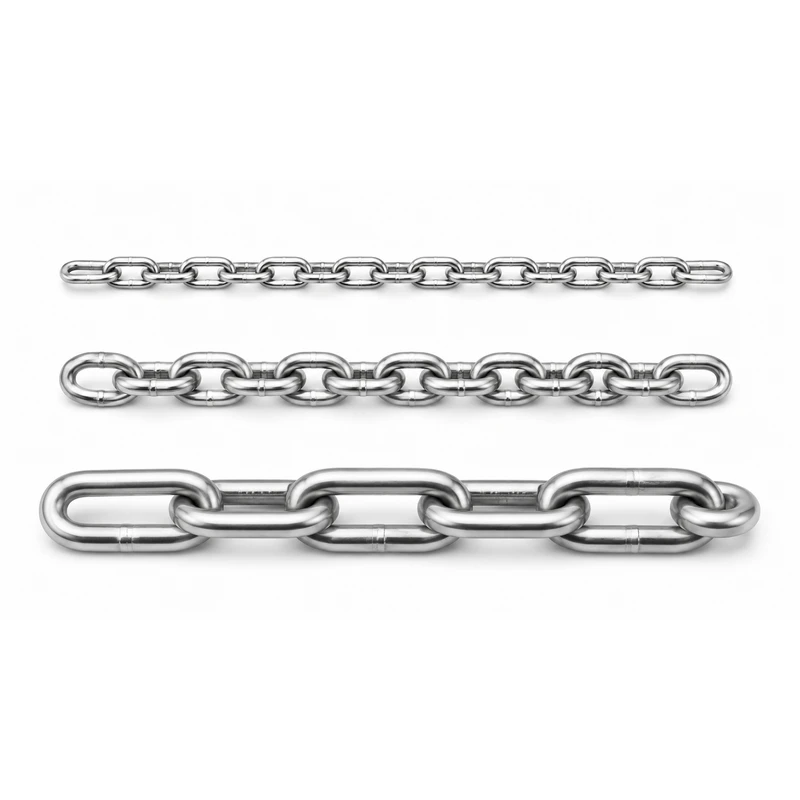
When you compare grade 30 vs grade 70 chain, the key differences stand out in strength, durability, and how you use them. Grade 30 chain offers solid performance for general tasks, while grade 70 chain delivers higher tensile strength and excels in heavy-duty transport. The table below highlights these differences:
Feature | Grade 30 Chain | Grade 70 Chain |
|---|---|---|
Strength | Lower tensile strength | Higher tensile strength |
Durability | Utility use | Regulated transport environments |
Typical Uses | General applications | Cargo securement, equipment hauling |
You can trust Powerful Machinery for certified, high-quality chain solutions in both categories.
Key Takeaways
Grade 30 chains are suitable for general tasks, while Grade 70 chains excel in heavy-duty transport and cargo securement.
Always check the Working Load Limit (WLL) to ensure the chain can safely handle the intended load.
Inspect chains regularly for wear and damage, especially Grade 70 chains, which face tougher conditions.
Choose the right chain grade based on your specific application to ensure safety and compliance with industry standards.
Powerful Machinery offers certified chains that meet safety regulations, providing reliable solutions for various tasks.
Chain Grades & Strength
What Are Chain Grades?
You often see chain grades when you select chains for lifting, towing, or securing loads. Chain grades classify chains based on their material composition, manufacturing process, and minimum performance standards.
Each grade has a specific number, such as 30, 43, 70, 80, or 100. These numbers help you understand the intended use and the quality level of the chain.
Industry organizations like NACM and ASTM set the definitions and standards for chain grades. NACM focuses on chemical composition, heat treatment, and minimum strength requirements for chain grades from G30 to G100.
ASTM provides manufacturing and testing requirements, performance standards, and application guidelines. The table below summarizes how these organizations define and regulate chain grades:
Organization | Focus | Key Standards |
|---|---|---|
NACM | Defines chain grades and standardizes testing methods | Chemical composition, heat treatment, and minimum strength requirements for chain grades G30 to G100 |
ASTM | Categorizes and references specification standards | Manufacturing and testing requirements, performance standards, grades, and applications for chains |
You can rely on Powerful Machinery to deliver chains that meet or exceed these standards. The company’s products carry certifications from ASTM, OSHA, and NACM, ensuring you get reliable and compliant solutions.
How Is Chain Strength Measured?
You measure the strength of a chain using several industry-standard methods. The most common units include Working Load Limit (WLL), Minimum Breaking Load (MBL), and Safety Factor (SF). Here is how these measurements work:
Working Load Limit (WLL) is calculated as Minimum Breaking Load divided by Safety Factor.
For example, if a chain has a Minimum Breaking Load of 32,000 Newtons and a Safety Factor of 4:1, the WLL is 8,000 Newtons.
These values help you choose the right chain grade for your application and ensure safety.
Industry standards impact the certification and use of each chain grade. Grade 30 chains are suitable for light construction, agriculture, and marine tasks. Grade 43 chains offer better wear resistance for towing and utility work.
Grade 70 chains provide about 20% higher load ratings than Grade 43, making them ideal for cargo securement and heavy-duty transport.
You should always check the chain grades and certifications before making a selection. This practice ensures you meet safety requirements and get the best performance for your needs.
Grade 30 Chain Overview
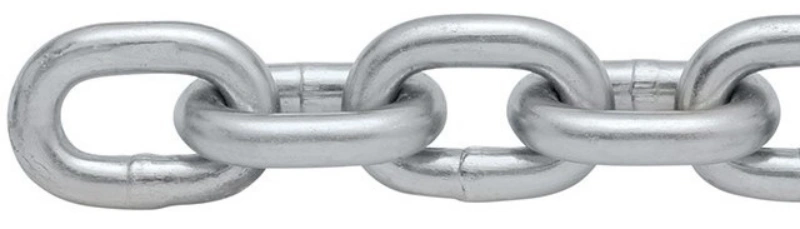
Material & Construction
When you choose a grade 30 chain, you select a product made from low-carbon steel. This material gives the g30 chain the right balance of strength and flexibility for light-duty tasks. Manufacturers weld each link, which creates a solid connection and ensures reliable performance.
You can count on the G30 chain for towing, cargo securement, and other general uses. The construction process makes G30 a dependable option among industrial chains.
Strength & Load Limits
You need to know the working load limits and minimum breaking strength before using any industrial chains. Grade 30 chain offers a range of options to fit your needs. The table below shows typical working load limits for different sizes:
Chain Size (Inch) | Working Load Limit (lbs) |
|---|---|
1/4″ | 1,300 |
5/16″ | 1,900 |
3/8″ | 2,650 |
You can also compare grade 30 vs grade 70 chain to see how g30 chain fits your application. For example, a 1/4″ g30 chain has a minimum breaking strength of 1,300 lbs, while larger sizes like 5/8″ reach up to 6,900 lbs.
The minimum breaking strength is a key factor in chain strength and safety. Always check the minimum breaking strength for your specific g30 chain size.
Durability & Finishes
You want your industrial chains to last, even in tough environments. Grade 30 chain comes in several finishes to boost durability and resist corrosion. The table below lists common finish types:
Finish Type | Description |
|---|---|
Hot Dip Galvanized | Enhances corrosion resistance |
Self Colored | Basic finish without additional coating |
Zinc Plated | Provides a protective layer against rust |
These finishes help your G30 chain perform well in both indoor and outdoor settings. Hot-dip galvanized and zinc-plated options give extra protection, making g30 a smart choice for long-term use.
Common Uses
You will find grade 30 chain in many industrial chain applications. Here are some of the most common uses:
Used in industrial, agricultural, and commercial environments for non-load-bearing tasks.
Commonly applied in barrier and safety marking applications, such as crowd control and traffic direction.
Utilized for equipment stabilization, gate closures, and general securing tasks in agricultural settings.
May be used for light-duty towing within the chain’s rated capacity.
Grade 30 chain stands out for its versatility and reliability. You can trust g30 chain for a wide range of tasks that require minimum breaking strength and consistent performance.
Note: Grade 30 chain from Powerful Machinery meets or exceeds all major standards. The table below highlights the certifications:
Standard | Description |
|---|---|
OSHA | Ensures compliance with safety regulations for lifting equipment. |
NACM | Specifies chain specifications and requirements for safe use. |
ASTM | Sets standards for materials and performance of chains used in lifting. |
You can rely on the G30 chain from Powerful Machinery for certified quality and safety in every application.
Grade 70 Chain Overview
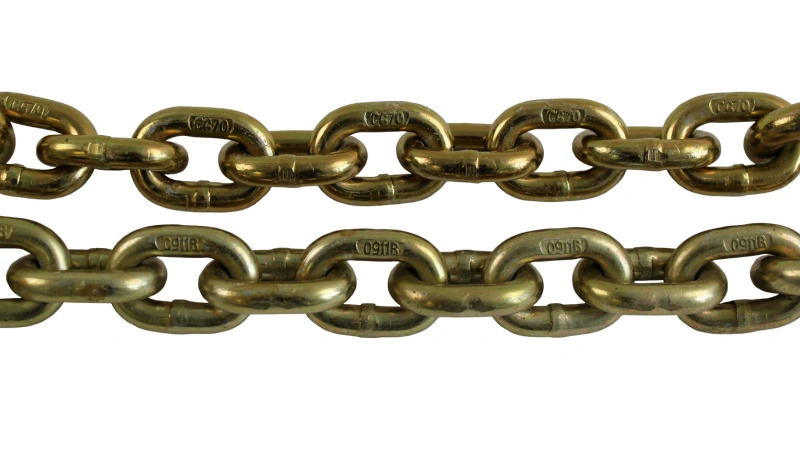
Material & Construction
When you select a grade 70 chain, you choose a product built for demanding jobs. Manufacturers use high-quality steel and apply a specialized heat treatment process. This process boosts the chain’s metallurgical properties and tensile strength.
You will notice a distinctive gold chromate or yellow zinc finish on most grade 70 chains. This finish not only provides corrosion resistance but also helps you quickly identify the chain’s grade in the field. Every g70 chain undergoes 100% proof testing to ensure reliability and safety.
Material/Process | Description |
|---|---|
Steel | Grade 70 chains are made from high-quality steel, which is heat-treated for enhanced strength. |
Heat Treatment | The chains undergo a heat treatment process to improve their metallurgical and tensile properties. |
Finish | Typically finished with Gold Chromate or Yellow Zinc for corrosion resistance. |
Proof Testing | All Grade 70 chains are 100% proof tested to ensure reliability and safety. |
Strength & Load Ratings
Grade 70 chains deliver impressive strength and higher working load limits compared to grade 30. You can rely on grade 70 for heavy-duty tasks that require secure load handling. The table below shows the working load limits for different chain sizes:
Chain Size (inch) | Grade 70 WLL (lbs) |
|---|---|
1/4″ | 3,150 |
5/16″ | 4,700 |
3/8″ | 6,600 |
7/16″ | 8,760 |
1/2″ | 11,300 |
5/8″ | 15,800 |
When you compare grade 30 vs grade 70 chain, you see that grade 70 offers much higher load ratings. This makes it the preferred choice for regulated transport and cargo securement.
Durability & Wear Resistance
You need a chain that stands up to tough conditions. Grade 70 chains feature a gold chromate or yellow zinc finish, which protects against rust and corrosion. The heat treatment process increases wear resistance, so your chain lasts longer even with frequent use.
You can trust grade 70 to maintain its performance in harsh environments.
Tip: Always inspect your grade 70 chain for signs of wear or damage before each use to ensure maximum safety.
Typical Applications
Grade 70 chains serve in industries where strength and compliance matter most. You will find them in cargo securement, towing, logging, and trucking. These chains meet strict regulations for transport and heavy equipment tie-downs.
Application/Industry | Description |
|---|---|
Cargo Securement | Used for securing loads during transport. |
Towing | Commonly used for towing vehicles and machinery. |
Logging | Utilized in logging operations for securing logs. |
Trucking and Trailer Tie-Downs | Essential for securing heavy equipment and cargo. |
You can depend on grade 70 chain for critical jobs where safety and strength are non-negotiable.
Grade 30 vs Grade 70 Chain Comparison
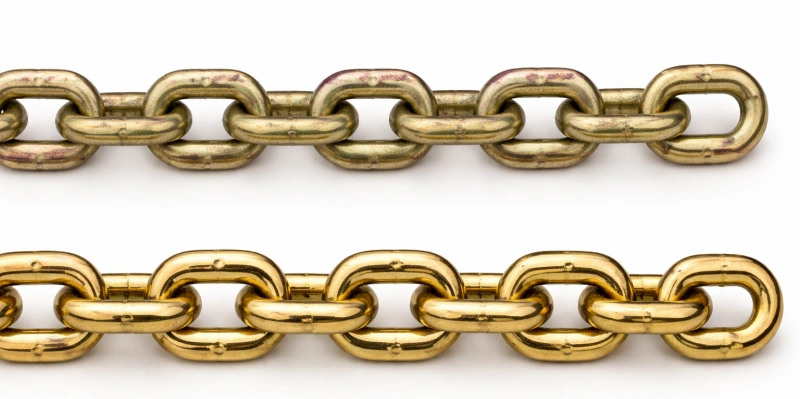
Strength & Load Table
When you compare grade 30 vs grade 70 chain, you see a clear difference in strength and working load limit. Grade 30 chain works well for lighter tasks, while grade 70 chain handles much heavier loads. You should always check the working load limit for your chain size before use.
The table below shows how the two grades compare across common diameters:
Diameter | Grade 30 WLL | Grade 70 WLL |
|---|---|---|
1/4″ | 1,300 lb | 3,150 lb |
5/16″ | 1,900 lb | 4,700 lb |
3/8″ | 2,650 lb | 6,600 lb |
7/16″ | 3,700 lb | 8,750 lb |
1/2″ | 4,500 lb | 11,300 lb |
5/8″ | 6,900 lb | 15,800 lb |
You notice that grade 70 chain consistently offers more than double the working load limit of grade 30 chain at each size. This difference matters when you need to secure heavy cargo or equipment. Always match your chain’s working load limit to the demands of your job.
Durability & Lifespan
Durability plays a key role in your chain selection. Grade 30 chain provides reliable service for general use and light-duty tasks. You can expect minimal maintenance if you use it for non-critical applications.
Grade 70 chain, on the other hand, features heat-treated steel and a protective finish. This design gives it higher strength and better resistance to wear.
The table below highlights the main differences in durability and maintenance:
Chain Grade | Durability Characteristics | Maintenance Requirements |
|---|---|---|
Grade 30 | Low tensile strength, not suitable for overhead lifting | Minimal maintenance for light-duty tasks |
Grade 70 | Heat-treated for higher strength, compliant with transport regulations | Requires more rigorous maintenance due to heavy-duty applications |
You should inspect your chains regularly, especially if you use them in demanding environments. Grade 70 chain may need more frequent checks and care because it often faces higher stress and tougher conditions. Grade 30 chain works best when you keep it clean and store it away from moisture.
Tip: Always store your chains in a dry place and lubricate them as needed. This practice extends the lifespan of both grade 30 and grade 70 chains.
Application Differences
You must choose the right chain for your specific job. Grade 30 chain fits general utility work, such as securing gates, marking barriers, or light towing. Grade 70 chain meets strict transport regulations and handles heavy-duty cargo securement, towing, and logging.
Here are the most common causes of chain failure you should avoid:
Using an undersized chain for the load
Improper storage that leads to rust
Skipping regular inspections
Mixing different chain grades in one setup
Failing to lubricate the chain
Using a grade 30 chain for critical lifting
Overloading the chain beyond its working load limit
Neglecting to check for hidden defects
Ignoring environmental factors like moisture or chemicals
Setting improper sling angles
You can prevent most failures by following best practices. Always select the correct grade, inspect your chains, and respect the working load limit. Grade 30 vs grade 70 chain selection depends on your application, safety needs, and compliance requirements.
Powerful Machinery offers certified solutions for both grades, so you can work with confidence in any environment.
Choosing the Right Chain
Application & Safety
You must match your chain selection to the demands of your job. Grade 30 chains work well for light construction, agricultural use, and general utility tasks. If you need a chain for load securement and towing, G70 is the industry standard.
You should always calculate the working load limit before use. The working load limit tells you the maximum weight your chain can handle safely. Use the formula: WLL = MBL / SF, where MBL is the minimum breaking load, and SF is the safety factor.
For g70, the higher minimum breaking strength and heat-treated steel provide extra security. You should inspect your G70 chain before every use. Look for cracks, wear, elongation, or any damage. Monthly detailed inspections help you catch problems early.
Most fleets replace G70 chains every year for safety. If you see any signs of damage, remove the chain from service right away.
Regulatory & Industry Needs
You must consider regulations and industry standards when choosing between grade 30 and g70. Many industries require chains that meet specific certifications. The table below summarizes key factors:
Factor | Description |
|---|---|
Load-Bearing Capacity | Calculate the required working load limit for your application. |
Working Environment | Select chains based on humidity, temperature, and exposure to chemicals. |
Certifications and Standards | Ensure compliance with standards like ASTM, OSHA, and NACM for safety and performance. |
G70 chains play a critical role in trucking, transportation, and heavy equipment tie-downs. You must use g70 for regulated cargo securement. Construction and marine operations also rely on G70 for its strength and compliance.
Powerful Machinery offers a full range of certified G70 chains that meet or exceed all major standards. You can trust their expertise for reliable solutions in demanding environments.
Cost & Value
You want the best value for your investment. Grade 30 chains cost less and suit general tasks. G70 chains cost more but deliver higher strength and longer service life. The table below compares the material and price:
Chain Grade | Material Type | Minimum Breaking Strength (MPa) | Average Price Range (per foot) |
|---|---|---|---|
G30 | Carbon Steel | 300 | $5 – $10 |
G70 | Heat-Treated Steel | 700 | $8 – $25 |
G70 chains offer a better return for heavy-duty work. You reduce replacement costs and downtime with g70. Powerful Machinery provides both grade 30 and g70 chains, so you can choose the right balance of cost, strength, and compliance.
Their team can help you select the best G70 chain for your project, ensuring safety and value every time.
Conclusion
You see clear differences between grade 30 and grade 70 chains. Grade 30 chains handle general tasks with solid durability. Grade 70 chains deliver higher strength for heavy-duty transport.
Choosing the correct chain grade protects your equipment and ensures safe operation. Review the table below to match your chain to your trailer and load:
Factor | Description |
|---|---|
Type of Trailer | Match the chain grade to the trailer’s weight class |
Gross Trailer Weight | Confirm the chain’s breaking strength exceeds GTW |
Grade 70 secures loads; Grade 80/100 for lifting |
Trust Powerful Machinery for certified, reliable chain solutions that meet your industry’s demands.
FAQ
What is the main difference between Grade 30 and Grade 70 chain?
You see the main difference in strength and application. Grade 30 chains handle general utility tasks. Grade 70 chains provide higher strength for heavy-duty transport and cargo securement.
Can you use a Grade 30 chain for overhead lifting?
No, you should not use Grade 30 chain for overhead lifting. Grade 30 chains do not meet the strength or safety requirements for lifting applications.
How do you identify a Grade 70 chain?
You can identify Grade 70 chains by their gold chromate or yellow zinc finish. Manufacturers often stamp “G70” on the links for quick recognition.
Does Powerful Machinery offer certified chains?
Yes, Powerful Machinery provides chains that meet or exceed ASTM, OSHA, and NACM standards. You receive certified quality for every application.
How do you choose the right chain grade for your job?
Assess your load weight.
Check industry regulations.
Match the chain’s working load limit to your needs.
Consult Powerful Machinery for expert guidance.