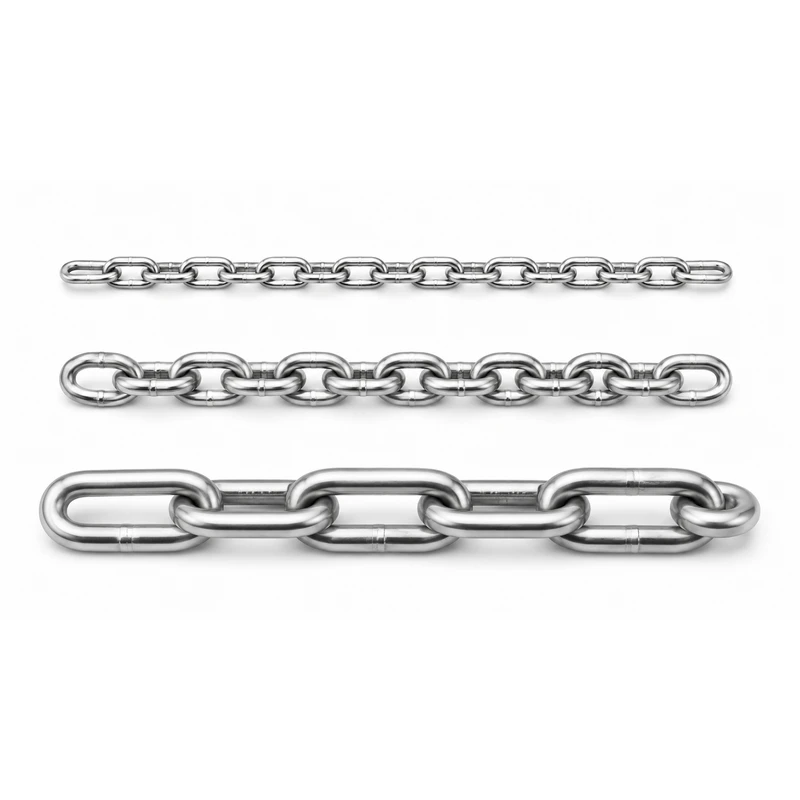
A wire rope rarely becomes unsafe for just one reason. You may find broken wires, diameter loss, corrosion, abrasion, distortion, or hidden core damage—and several small defects can combine into a serious risk. That is why you should treat wire rope discard criteria as a structured decision process, not a single universal number.
In this guide, you will learn what to inspect, which conditions normally require removal from service, how common standards differ, and how to document a defensible decision. The examples include widely used OSHA and ISO references, but you must always apply the rule that governs your equipment, rope construction, industry, and location.
Quick answer: Remove a wire rope from service when it reaches the applicable broken-wire limit or shows a broken strand, unacceptable diameter reduction, severe corrosion, serious wear, kinking, birdcaging, crushing, core failure, heat or electrical damage, or an unsafe end connection. If you cannot determine whether the rope is safe, stop using it and have a competent or qualified person assess it.
Why Wire Rope Discard Criteria Are Not One Universal Number
You cannot judge every rope by the same broken-wire count or percentage of diameter loss. The correct limit depends on several factors:
- Whether the rope is running, standing, rotation-resistant, or part of a wire rope sling
- The rope construction, nominal diameter, core, lay, and rope category
- The equipment, such as a mobile crane, overhead crane, hoist, winch, elevator, or mining machine
- Single-layer or multilayer drum spooling
- The location and concentration of the damage
- The governing regulation, safety standard, manufacturer instruction, and site procedure
For example, OSHA 1926.1413 gives criteria for wire ropes on cranes and derricks used in construction. OSHA 1910.184 provides different removal limits for wire rope slings. ISO 4309:2017 covers the care, maintenance, inspection, and discard of steel wire ropes used on cranes and hoists. These documents overlap, but they are not interchangeable.
Before you count wires or measure diameter, identify the rope and the rule you must apply. Check the rope certificate, equipment manual, manufacturer guidance, inspection history, and local legal requirements. If two requirements apply, your safety program should follow the more conservative rule unless the responsible authority directs otherwise.
Wire Rope Discard Criteria at a Glance
| Inspection finding | What it may indicate | Typical decision |
|---|---|---|
| Broken wires at or above the applicable limit | Bending fatigue, abrasion, overload, or internal deterioration | Remove from service |
| Clustered breaks or breaks near a termination | Severe localized stress | Stop and obtain a competent assessment; removal is often required |
| Broken strand | Major loss of rope structure | Remove immediately |
| Diameter below the applicable limit | Core failure, wear, corrosion, or metallic area loss | Remove when the governing threshold is reached |
| Severe wear or flattened outer wires | Loss of metallic area and fatigue resistance | Remove at the applicable wear limit |
| Severe corrosion or pitting | Reduced wire area and possible hidden internal damage | Remove or perform further examination as required |
| Kink, birdcage, crushing, unstranding, or core protrusion | Permanent structural distortion and uneven load sharing | Remove from service |
| Heat, electric arc, or power-line damage | Altered steel properties or local melting | Remove as required by the applicable rule |
| Damaged or improperly applied end connection | Poor load transfer and local stress | Stop use until corrected or replaced |
| Several moderate defects in the same area | Combined deterioration | Assess cumulatively; discard may be required before any single limit is reached |
This table is a screening guide. Your final decision must use the exact criteria for your rope and application.
1. Broken Wires
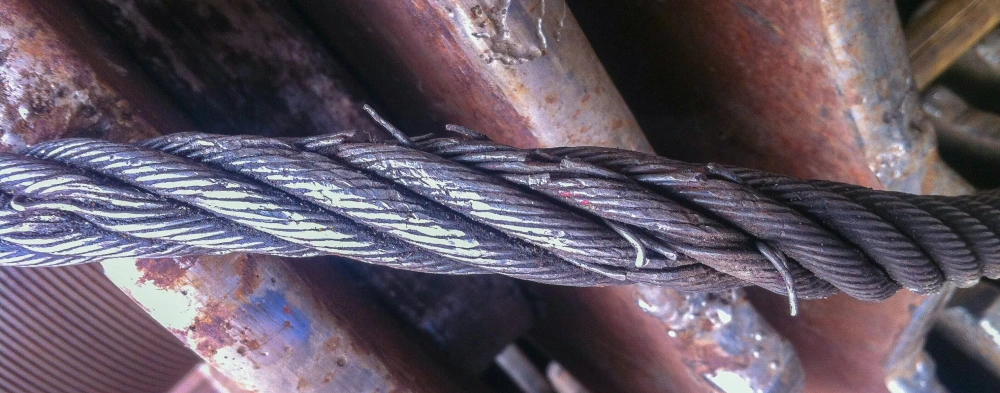
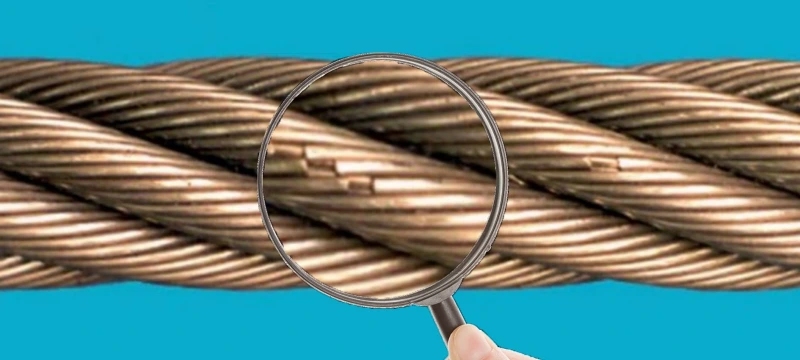
Broken wires are the most familiar discard indicator, but the number alone does not tell the whole story. You must consider how many wires are broken, where the breaks occur, whether they are distributed or concentrated, and what type of rope you are inspecting.
First, identify one rope lay—the distance along the rope in which one outer strand makes one complete turn around the rope. Then inspect the full circumference and count every visible broken wire within the required reference length.
Under OSHA 1926.1413, the visible broken-wire criteria for construction cranes include:
- Running ropes: six randomly distributed broken wires in one rope lay, or three broken wires in one strand in one rope lay
- Rotation-resistant ropes: two randomly distributed broken wires in six rope diameters, or four in 30 rope diameters
- Pendants or standing ropes: more than two broken wires in one rope lay beyond the end connection, or more than one broken wire in a rope lay at an end connection
For wire rope slings covered by OSHA 1910.184, removal is required at ten randomly distributed broken wires in one rope lay or five broken wires in one strand in one rope lay.
These examples show why you must not copy one limit into every inspection program. A sling and a running crane rope may look similar, but the removal rules differ.
Pay particular attention to:
- Crown breaks, which appear on the outside of a strand and often result from abrasion or bending fatigue
- Valley breaks, which occur between strands and can indicate serious internal deterioration
- Clusters of breaks, because concentrated damage weakens one small area
- Breaks near sockets, sleeves, clips, and other terminations, where stress and corrosion can be high
- A rapidly increasing break count, even when the current count remains below the final limit
Tip: Mark the beginning and end of the inspected section, record the reference length, and photograph the breaks with a scale. A simple total without a location is difficult to verify later.
2. Rope Diameter Reduction
A smaller measured diameter can point to more than surface wear. It may indicate loss of core support, internal corrosion, broken internal wires, strand compaction, or permanent stretch.
Measure the rope across the crowns of opposite strands with a suitable wire rope caliper. Take measurements in two directions at the same point, then repeat at several locations. Compare the result with the correct baseline: the rope’s verified reference diameter, nominal diameter, or another value specified by the governing standard.
OSHA 1926.1413 identifies a reduction of more than 5% from nominal diameter as a deficiency for construction crane rope. ISO 4309 uses criteria that vary with rope type and operating arrangement, so you should use the correct ISO table instead of applying one percentage to every rope.
A sudden local decrease is especially serious. If one section is visibly smaller than the adjacent rope, stop and investigate for a failed core, sunken strand, or other internal damage.
Do not wait for an inspection to establish your first baseline. Measure and record a new rope after installation and running-in, following the manufacturer’s instructions. That reference makes future trend comparisons far more useful.
3. Abrasion and External Wear
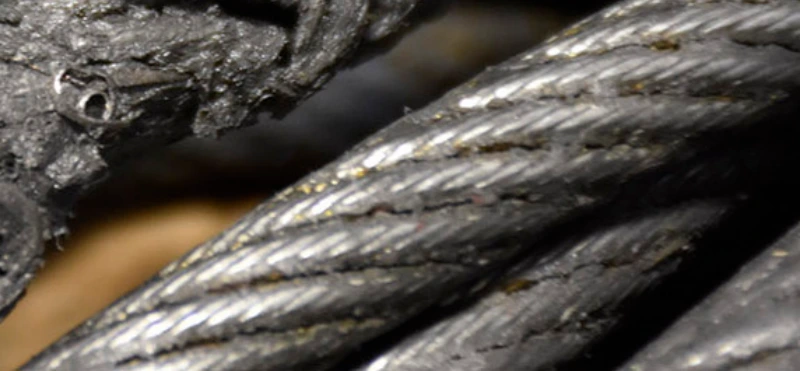
Abrasion flattens the crowns of the outer wires as the rope moves over sheaves, drums, rollers, or guides. The shiny surface may look harmless at first, but continued wear removes metal and increases the chance of fatigue breaks.
For wire rope slings covered by OSHA 1910.184, wear or scraping of one-third the original diameter of outside individual wires is a removal condition. Other applications may use different limits or evaluate wear together with rope diameter and broken wires.
When you find unusual wear, inspect the equipment as well as the rope. Check for:
- Incorrect sheave groove size or profile
- Seized or misaligned sheaves
- Poor fleet angle
- Rope rubbing on guards or structures
- Loose or uneven multilayer spooling
- Excessive contact pressure
- Contaminated or inadequate lubrication
Replacing the rope without correcting the cause usually leads to the same damage on the new rope.
4. Corrosion
Corrosion reduces the metallic area of the wires and accelerates fatigue. External rust is easy to notice, while internal corrosion can develop out of sight beneath lubricant or between strands.
Look for red dust, pitting, rough wire surfaces, loss of flexibility, loosened outer wires, and rusty lubricant emerging from the strand valleys. Pay extra attention to outdoor, marine, chemical, wet, and long-idle equipment.
Light surface discoloration may call for cleaning, relubrication, and closer monitoring if the applicable procedure allows it. Severe corrosion, deep pitting, or evidence of internal corrosion requires removal or further examination by a qualified person. When internal condition is uncertain, magnetic rope testing or another approved nondestructive method may be necessary.
Use a lubricant that is compatible with the rope and the operating environment. It should penetrate and protect the rope without creating a coating that prevents inspection.
5. Kinks, Birdcaging, Crushing, and Other Deformation
Structural deformation changes how strands and wires share the load. You cannot restore the original strength by hammering, straightening, or pulling the rope back into shape.
Common deformation-related wire rope discard criteria include:
- Kinks or tightened loops: permanent sharp bends that disturb the rope lay
- Birdcaging or basket deformation: outer strands spread outward, often after shock loading or the sudden release of tension
- Crushing and flattening: cross-sectional distortion caused by poor spooling, excessive pressure, or contact damage
- Unstranding: strands open or separate from their normal position
- Core or strand protrusion: the core or an inner strand pushes between the outer strands
- Waviness or doglegs: the rope axis no longer follows a straight, consistent line
- Local increases in diameter: possible core movement, strand displacement, or internal imbalance
If the deformation is significant or appears in the governing removal criteria, take the rope out of service. Also inspect the drum, sheaves, reeving, installation method, and operating practice so the replacement rope is not damaged in the same way.
6. Heat, Electric Arc, and Power-Line Damage
Heat can change the mechanical properties of the wires and damage the lubricant or core. Look for blue or brown discoloration, fused wires, local melting, hardened lubricant, or a burned core.
Electric arc damage creates highly localized heat and may leave small pits or weld-like marks. A rope that has contacted an energized power line requires the action specified by the applicable regulation; under OSHA construction rules, prior electrical contact with a power line is a Category III deficiency.
You cannot judge the remaining strength of heat-damaged steel by appearance alone. Isolate the equipment and replace the rope when the governing rule requires it.
7. Broken Strands and Internal Damage
A broken strand is an immediate warning that the rope has lost a major load-bearing element. OSHA construction rules list a broken strand as a Category III deficiency.
Internal damage may exist before you can see a broken strand. Warning signs include:
- A local change in rope diameter
- Valley wire breaks
- Rust or dry metallic debris between strands
- Loss of flexibility
- Core protrusion
- Unusual noise or vibration as the rope bends
- A rapid increase in visible wire breaks
Visual inspection remains essential, but it cannot reveal every internal defect. For critical ropes, long ropes, multilayer spooling, or service where the inside cannot be assessed confidently, include magnetic rope testing when required by ISO 4309, the manufacturer, or your inspection scheme. Treat the test as part of the overall evaluation, not as a substitute for a physical and visual inspection.
8. End Connections and Terminations
The rope may be sound while its termination is unsafe. Inspect sockets, sleeves, wedges, clips, thimbles, and drum anchor points for:
- Cracks, corrosion, wear, bending, or deformation
- Loose, missing, or incorrectly installed components
- Broken wires where the rope enters the fitting
- Rope slippage or movement marks
- Incorrect tail length or clip arrangement
- Damage caused by sharp edges or poor alignment
Do not improvise a repair. Follow the rope and equipment manufacturer’s approved procedure. A localized damaged section may sometimes be removed and the rope re-terminated, but only when the applicable rule permits it, enough usable length remains, and a competent or qualified person controls the work.
9. Combined Deterioration
A rope can become unsafe before any single defect reaches its individual limit. Moderate wear, a few broken wires, and corrosion in the same short section may create a greater loss of strength than each condition suggests on its own.
ISO 4309 includes a method for considering the combined effect of deterioration. In practice, you should record each defect, its severity, and its location, then evaluate how the conditions interact. This is another reason a pass/fail decision should not be reduced to one checklist box.
If damage is progressing quickly, shorten the inspection interval. If you cannot quantify the combined condition with confidence, remove the rope from service pending a qualified assessment.
Step 1: Make the Equipment Safe
Follow your lockout, tagout, and equipment isolation procedure. Keep the rope unloaded and stationary unless an approved inspection method requires controlled movement. Never hold a cloth or your hand around a moving wire rope. Wear suitable gloves and eye protection when handling a stationary rope because broken wires can cause deep puncture injuries.
Step 2: Confirm the Rope Identity
Record the equipment ID, rope function, manufacturer, construction, nominal diameter, core type, lay, installation date, and applicable standard. Without this information, you may compare the rope with the wrong limit.
Step 3: Inspect the Entire Accessible Length
Work methodically and view the full circumference. Concentrate on:
- Terminations and drum anchor points
- Sheaves and reverse bends
- Drum crossover and flange points
- Sections exposed to heat, chemicals, weather, or splash
- Areas with repetitive pickup or equalizer-sheave contact
- Sections that were previously marked for monitoring
Step 4: Count, Measure, and Compare
Count broken wires over the specified length. Measure diameter and any visible deformation with the correct tool. Compare each observation with the current standard, manufacturer criterion, and site procedure.
Step 5: Record the Result
Your inspection record should include:
- Date, equipment, rope ID, and inspector
- Rope construction and nominal/reference diameter
- Exact defect type and location
- Broken-wire count and reference length
- Diameter readings and measurement points
- Photographs or sketches
- Decision: acceptable, monitor, or remove from service
- Required corrective action and responsible person
Trend data helps you see whether deterioration is stable or accelerating. It also helps you find recurring equipment problems.
Step 6: Tag Out and Control a Rejected Rope
When the rope meets a discard criterion, stop the affected operation and tag out the equipment or hoist line according to your procedure. Prevent the rejected rope from returning to service. Replace it with the specified size, grade, construction, and performance characteristics unless an approved alternative has been authorized.
How Often Should You Inspect Wire Rope?
Inspection frequency depends on the equipment and applicable rule. For construction cranes under OSHA 1926.1413, a competent person performs a shift inspection, monthly inspections are documented, and a qualified person completes an annual/comprehensive inspection. Other equipment, industries, and jurisdictions use different schedules.
You should increase the frequency when the rope:
- Operates in severe, corrosive, dirty, or high-temperature service
- Runs through reverse bends or multilayer spooling
- Handles frequent or high-cycle lifts
- Has a history of rapid wear or broken wires
- Has been idle, stored, overloaded, shock loaded, or involved in an incident
- Shows a defect that requires monitoring
A calendar interval is only the minimum framework. Your rope’s condition and rate of change should drive the inspection plan.
Common Mistakes to Avoid
- Applying a sling criterion to a crane running rope
- Using rope age as the only replacement rule
- Counting broken wires without defining the rope lay or reference length
- Measuring only one point or measuring across strand valleys
- Ignoring clustered breaks because the total remains below a general limit
- Replacing the rope but not inspecting the sheaves, drum, and reeving
- Covering the rope with a heavy lubricant that hides defects
- Straightening a kink or birdcage and returning the rope to service
- Failing to record the baseline diameter and inspection history
- Letting an untrained person make the final discard decision
FAQ
What are the main wire rope discard criteria?
The main criteria are excessive broken wires, a broken strand, diameter reduction, external wear, corrosion, structural deformation, core failure, heat or electrical damage, and defective end connections. You must also consider the combined effect of several defects.
How many broken wires are allowed in a wire rope?
There is no single number for every rope. The limit changes with the rope type and application. For example, OSHA construction rules use six randomly distributed broken wires in one lay or three in one strand for certain running ropes, while OSHA sling rules use ten in one lay or five in one strand. Always check the standard that covers your equipment.
Is a 5% diameter reduction always the discard limit?
No. OSHA 1926.1413 uses more than 5% from nominal diameter for construction crane ropes, but ISO 4309 criteria vary with rope type and arrangement. Use the correct table, baseline, and measurement method.
Can you repair a kinked or birdcaged wire rope?
No field repair restores the original rope structure or rated performance. Remove the rope from service when the deformation meets the applicable rejection rule. A competent person may determine whether a localized section can be cut out and the rope re-terminated where regulations and manufacturer instructions permit it.
Should you replace a rope if you are unsure?
Stop using it until a competent or qualified person completes the assessment. The cost of an inspection or replacement is small compared with the consequences of a dropped load or rope failure.
Final Checklist
Before you return a wire rope to service, confirm that:
- You applied the correct standard for the equipment and rope
- The broken-wire count is below the applicable limit
- The diameter is within the permitted range
- There is no broken strand or serious deformation
- Wear, corrosion, and internal condition are acceptable
- End connections are correctly installed and undamaged
- The drum, sheaves, and reeving will not damage the rope
- Your findings and decision are fully documented
Wire rope discard criteria give you a consistent point at which continued use is no longer acceptable. You get the best results when you combine those criteria with a known baseline, careful inspection, accurate measurements, and trend records.
If you are choosing a replacement, review Powerful Machinery’s steel wire rope range and wire rope selection guide. You can also use our guides to wire rope inspection, wire rope maintenance, and wire rope replacement to build a complete rope-management program. Contact Powerful Machinery when you need a certified rope matched to your equipment, operating environment, and required standard.
Safety note: This article provides general guidance and does not replace the current regulation, equipment manual, rope manufacturer’s instructions, or an assessment by a competent or qualified person.