
Elevator Wire Rope Selection For Reliable Lift Systems
Powerful Machinery manufactures elevator wire rope for traction, suspension, governor, and compensating systems. We help OEMs, contractors, and distributors match the rope construction, core, strength, diameter, and finish to the lift duty, then supply the documentation and production consistency the project requires.
• Elevator-rated constructions for traction, suspension, governor, and compensation duties
• Fiber, mixed, and steel-core options for different strength, stretch, and ride requirements
• Custom diameter, grade, lay, finish, length, marking, packaging, and documentation
• Application support for new elevators, modernization, maintenance, and replacement projects
Elevator Wire Rope Built Around Your Lift Duty
Every elevator places a different combination of load, bending, traction, wear, stretch, and environmental demand on its ropes. Start with the lift duty, then narrow the specification around the machine, sheaves, roping arrangement, travel, speed, and service conditions.
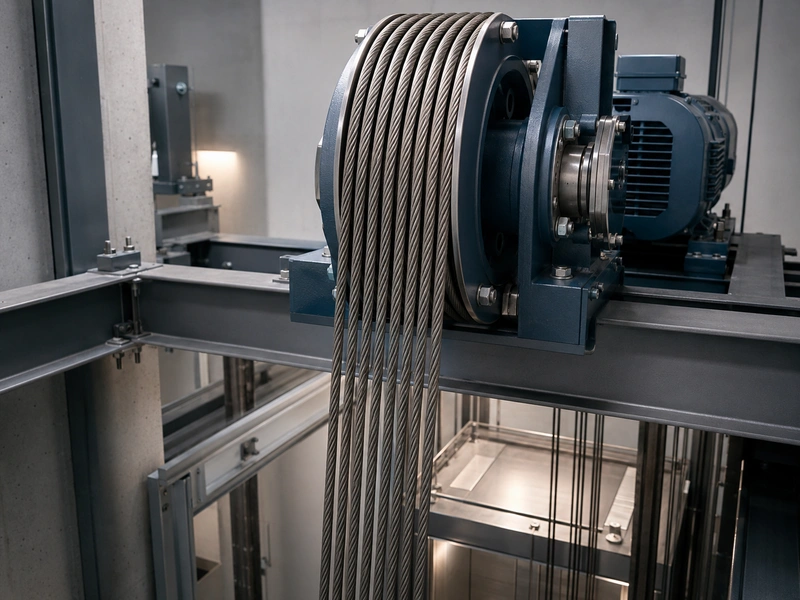
Passenger Elevators
Passenger elevators need stable traction, controlled stretch, low vibration, and quiet running. Rope selection should balance ride quality with bending fatigue, abrasion resistance, and the expected number of starts.
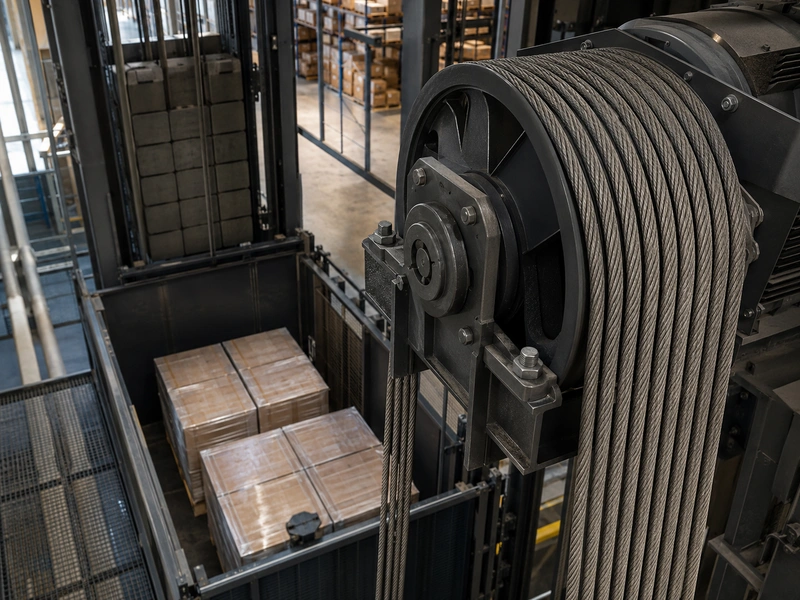
Freight And Cargo Elevators
Freight elevators place greater emphasis on load capacity, diameter stability, wear resistance, and dependable performance under changing loads. Confirm the car capacity, counterweight, duty cycle, rope count, and minimum breaking force before selecting the rope.
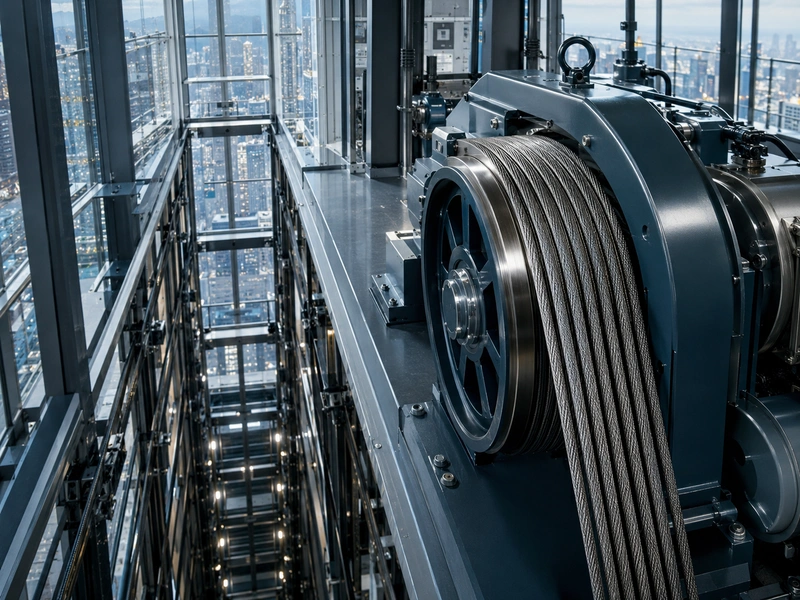
High-Rise And High-Speed Elevators
Long travel, higher speed, and frequent use increase the importance of low elongation, diameter stability, bending endurance, and strength-to-diameter performance. Mixed-core, steel-core, nine-strand, or other high-performance constructions may be considered only after the full drive data is reviewed.
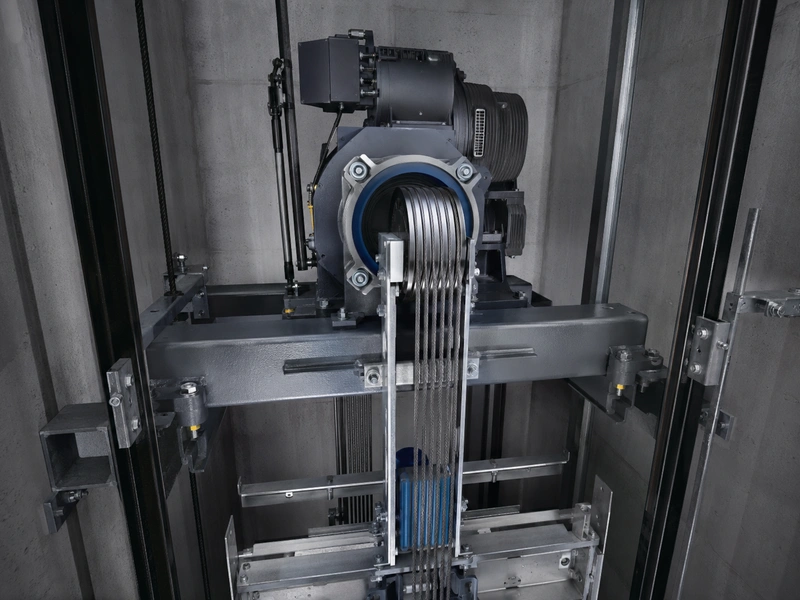
Machine-Room-Less Elevators
Compact MRL systems can combine smaller sheaves, tighter space, and demanding bend cycles. The rope, groove profile, D/d ratio, traction requirements, and approved elevator design must be checked as one system.
Modernization And Replacement Projects
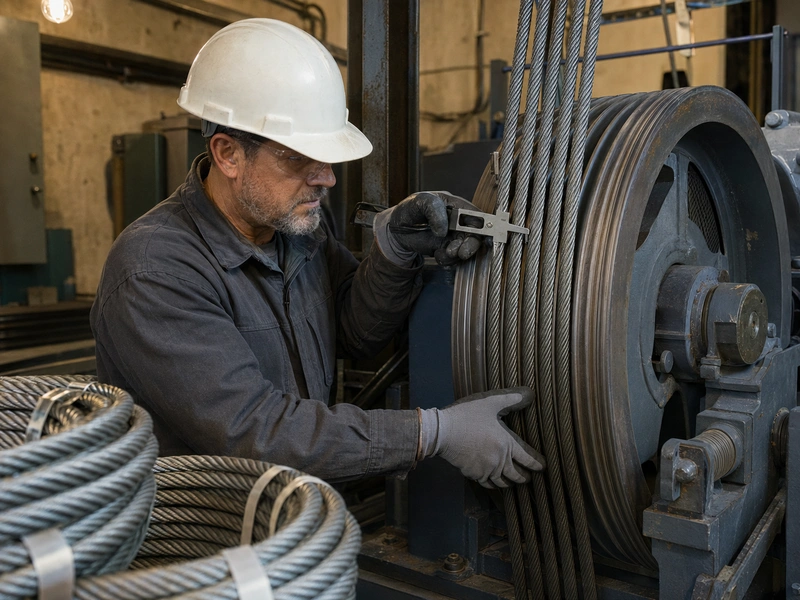
A replacement rope must match more than the nominal diameter. Identify the existing construction, core, grade, lay, breaking force, rope count, length, and termination, then inspect sheave condition and confirm the current OEM and code requirements.
Governor And Compensating Systems
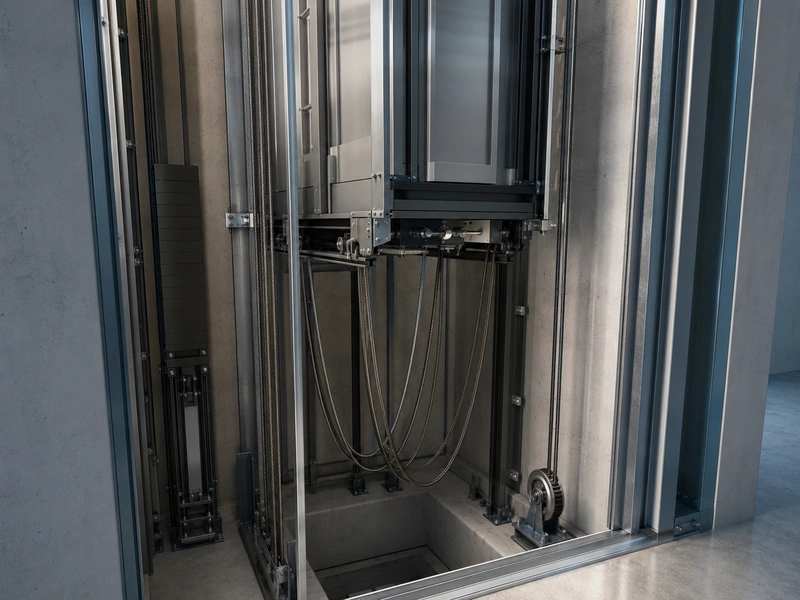
Governor and compensating ropes serve different functions from hoist ropes and may require different constructions, grades, finishes, and lubrication rules. State the rope function clearly so it is not treated as a standard traction-rope order.
How To Select Elevator Wire Rope?
Elevator wire rope selection is a system decision, not a diameter-only purchase. The rope must work with the traction sheave, deflection sheaves, terminations, car and counterweight loads, roping ratio, travel, speed, and maintenance program.
1. Define The Rope Function And Elevator Duty
Begin with the rope function: hoist or suspension, governor, compensation, or another approved elevator application. Record the elevator type, rated load, rated speed, travel height, starts per day, roping ratio, drive arrangement, and whether the project is a new installation or a replacement.
2. Confirm Diameter, Rope Count, Length, And Breaking Force
Use the elevator layout, crosshead data plate, rope tag, OEM documentation, or an approved specification to confirm the nominal diameter, quantity, length, and required minimum breaking force. Measure an existing rope only as a cross-check because wear and service loading can reduce its diameter.
3. Match Construction To Wear And Bending Demand
Seale constructions use larger outer wires and are commonly chosen where traction-sheave wear is a major service factor. Warrington constructions use mixed outer-wire sizes and can provide a useful balance of flexibility and wear resistance. Filler-wire constructions add metallic area while retaining flexibility. The drive layout and bending history determine which balance is appropriate.
4. Choose A Core That Fits Strength, Stretch, And Ride Requirements
Natural or synthetic fiber cores support the strands, retain lubricant, and are widely used where compliant, comfortable running is important. Steel-reinforced fiber cores and full steel cores can provide higher breaking force, better diameter stability, and lower stretch for more demanding duties. They also change rope stiffness, weight, and sheave interaction, so they must be approved for the installation.
5. Verify Grade, Lay, Finish, And Lubrication
Confirm the specified traction grade or tensile strength, single- or dual-tensile design where applicable, lay direction and type, bright or galvanized finish, and factory lubrication. Do not substitute a higher-strength grade or a different lay without checking traction, sheave hardness, fatigue behavior, and the approved elevator design.
6. Check Sheaves, Grooves, Bends, And D/D Ratio
Record the traction- and deflection-sheave diameters, groove profiles, number of bends, reverse bends, fleet angles, and the ratio between sheave pitch diameter and rope diameter. Worn or mismatched grooves can shorten the life of a correctly specified new rope, so sheave inspection belongs in every modernization or replacement plan.
7. Order A Matched Rope Set With Traceable Documentation
Ropes working in one suspension set should have consistent construction, diameter, stretch behavior, and production identity. Specify the required test certificate, minimum breaking force, standard, traceability, length tolerance, reel identification, surface line, packaging, and any project-specific tags before production.
Selection Rule: Do not choose an elevator rope from construction alone. Confirm the rope against the OEM data, the complete drive geometry, the intended duty, and the codes in force for the project.
Elevator Wire Rope Construction Options
Construction changes how a rope balances abrasion resistance, bending fatigue, flexibility, diameter stability, stretch, and breaking force. The right option depends on the complete elevator design, not on a single feature in isolation.
| Construction | Typical Strength | Selection Context |
|---|---|---|
| 8×19S + FC | Large outer wires support wear resistance; fiber core supports compliant running and lubricant retention. | Common traction-rope starting point for conventional passenger and freight applications; confirm grade, sheaves, and duty. |
| 8×19W + FC | Balanced flexibility and abrasion behavior. | Evaluate where bending demand and general traction duty both matter. |
| 8×25F + FC | Added metallic area with useful flexibility. | Evaluate for traction, governor, or compensation duties when the approved design calls for filler-wire construction. |
| 6×19 or 6×25 Class | Six-strand construction with robust outer strands. | Often found in older systems and selected governor, compensation, or hoist duties; match the exact existing or OEM specification. |
| Steel-Reinforced Fiber Core | Better diameter stability and lower stretch than a conventional fiber core. | Evaluate for mid- to high-rise, heavier-duty, or modernization work requiring controlled elongation. |
| IWRC or Full Steel Core | Higher metallic area, strength, and dimensional stability. | Evaluate for high-rise, high-speed, heavy-duty, or compact systems only when approved for the drive and sheaves. |
| Compacted or Special Elevator Rope | Increased metallic area or modified contact behavior. | Application-specific option for reverse bends, smaller sheaves, or demanding duty; engineering review is required. |
Elevator Wire Rope Specifications To Confirm
| Specification Field | What to Provide | Why It Matters |
|---|---|---|
| Elevator Application | Passenger, freight, service, hospital, observation, industrial, mine, or other approved duty | Establishes the operating environment and performance priorities |
| Rope Function | Hoist, suspension, governor, compensation, or other | Prevents the wrong rope family from being quoted |
| Rated Load and Speed | Car capacity and rated travel speed | Helps evaluate strength, traction, fatigue, and ride requirements |
| Travel and Roping | Travel height, roping ratio, machine location, and reeving layout | Determines rope length, bend cycles, stretch, and system geometry |
| Rope Quantity and Length | Number of ropes and finished length per rope | Defines the matched set and production requirements |
| Nominal Diameter | Metric or imperial size from approved documentation | Controls groove fit, D/d ratio, and breaking-force range |
| Construction | For example, 8×19 Seale, 8×19 Warrington, or 8×25 Filler | Affects wear resistance, flexibility, and fatigue behavior |
| Core | NFC, SFC, steel-reinforced fiber core, IWRC, or approved equivalent | Affects strength, stiffness, stretch, and diameter stability |
| Grade | Traction, EHST, tensile grade, and single- or dual-tensile requirement | Controls breaking force and sheave interaction |
| Lay | Right or left; regular or Lang lay, as specified | Must match the approved drive and termination arrangement |
| Finish | Bright, galvanized, or another specified finish | Addresses corrosion protection and application requirements |
| Minimum Breaking Force | Required value and units | Verifies the load-bearing requirement |
| Sheave Data | Pitch diameters, groove type, groove condition, and sheave hardness, if required | Confirms rope-to-sheave compatibility |
| Bending Arrangement | Number of sheaves, reverse bends, wrap, and deflection | Influences bending fatigue and rope-construction selection |
| Terminations | Wedge sockets, shackles, or other approved termination details | Ensures size and interface compatibility |
| Documentation | Standard, certificate, traceability, marking, and language | Supports approval, receipt inspection, and maintenance records |
| Packaging | Reel size, cut lengths, protection, and delivery identification | Reduces handling damage and installation confusion |
Installation And Maintenance Factors That Protect Rope Life
Correct specification is only the beginning. Sheave condition, handling, installation, tension equalization, lubrication, inspection, and replacement practice all affect rope life and ride quality.
Inspect The Rope Path Before Installation
Check traction and deflection sheaves, grooves, bearings, guards, and rope clearances before fitting a new set. A new rope will not correct worn grooves, misalignment, or a drive condition that damaged the previous set.
Protect The Rope During Storage And Handling
Keep reels dry, clean, covered, and off the ground. Pay the rope off without lateral pulling, kinking, uncontrolled rotation, or dragging over sharp edges. Follow the elevator wire rope manufacturer and elevator OEM instructions for seizing, cutting, unreeling, and termination.
Equalize Tension And Monitor Early Stretch
Unequal tension increases rope and groove wear and can disturb ride quality. Use approved tension-measuring methods, set the complete rope set consistently, and recheck it at the intervals required by the OEM, elevator wire rope manufacturer, and local code.
Use Only Approved Lubrication And Inspection Criteria
Use a lubricant that is compatible with the rope and traction system, and never apply field lubricant where the OEM or rope manufacturer prohibits it. Wire rope inspection and discard decisions must consider broken wires, wear, diameter reduction, corrosion, deformation, elongation, traction, and the applicable code—not one symptom alone.
What To Send For A Fast, Accurate Quote
A complete inquiry helps our engineers verify compatibility and quote the correct rope without repeated follow-up. Send the existing rope identification and the elevator data together whenever possible.
• Elevator manufacturer, model, project name, and installation country
• Rope function, number of ropes, nominal diameter, and length per rope
• Construction, core, grade or tensile strength, lay, finish, and minimum breaking force
• Rated load, rated speed, travel height, roping ratio, and machine arrangement
• Traction and deflection sheave diameters, groove details, and known D/d ratio
• Termination type, required standard, certificates, marking, and packaging
• Clear photos of the rope tag, crosshead data plate, rope surface line, terminations, and rope cross-section when identification is incomplete
• Delivery destination, required quantity, target date, and whether the order is for a complete matched replacement set
Why Powerful Machinery For Elevator Wire Rope
Powerful Machinery combines wire rope manufacturing, application support, and export supply in one source. We help buyers move from an existing rope sample or lift data sheet to a confirmed, production-ready specification.
Application Led Specification Support
We review the rope function, lift duty, construction, core, grade, diameter, sheave data, and project standard before confirming the production specification.
Consistent Manufacturing And Diameter Control
Controlled wire quality, strand geometry, closing, lubrication, and final inspection support consistent diameter, breaking force, surface condition, and set-to-set performance.
Custom Production And Project Documentation
Specify diameter, core, grade, lay, finish, length, identification, test documents, packaging, and delivery sequence for OEM, distributor, modernization, or maintenance programs.
Reliable Export Supply
Consolidated production, clear reel identification, export packaging, and responsive quotation support help international buyers keep installation and replacement projects on schedule.
Elevator Wire Rope Selection FAQs
What Is The Best Wire Rope For An Elevator?
There is no single best rope for every elevator. The correct choice depends on rope function, rated load, speed, travel, roping ratio, sheaves, bends, construction, core, grade, environment, and the approved OEM and code requirements.
What Is The Most Common Elevator Wire Rope Construction?
Eight-strand 8×19-class ropes are widely used for elevator traction service, including Seale and Warrington constructions. That does not make them interchangeable. Confirm the exact wire rope construction, wire rope core type, grade, lay, diameter, and breaking force for the installation.
How Do 8×19S And 8×19W Elevator Ropes Differ?
An 8×19 Seale rope uses larger outer wires that favor wear resistance at the sheave. An 8×19 Warrington rope uses alternating outer-wire sizes to balance flexibility and abrasion behavior. The machine, groove, bending arrangement, and duty determine which construction is suitable.
Should I Choose Fiber Core Or Steel Core Elevator Rope?
Fiber cores provide strand support, lubricant retention, and compliant running. Steel-reinforced or full steel cores can raise strength and diameter stability while reducing stretch, but they also change stiffness and sheave interaction. Use the core approved for the elevator design.
How Is Elevator Wire Rope Diameter Selected?
Use the nominal diameter in the approved elevator documentation, crosshead data plate, rope tag, or OEM specification. Check it against the required breaking force, groove geometry, and D/d ratio. An in-service rope measurement is useful for condition assessment, not as the only basis for ordering.
Can One Rope In An Elevator Set Be Replaced?
Replacing a single rope can create differences in diameter, stretch, and traction within the set. Follow the elevator OEM, rope manufacturer, and applicable code; many projects require the suspension ropes to be replaced as a matched set.
When Should Elevator Wire Rope Be Replaced?
Wire rope replacement is based on inspection and the applicable criteria for broken wires, wear, diameter reduction, corrosion, deformation, elongation, traction, and other damage. A qualified elevator professional must make the decision under the OEM requirements and the code in force.
Which Standards Apply To Elevator Wire Rope?
Common references include ISO 4344, EN 12385-5, ASME A17.1/CSA B44, and ASME A17.6, but the applicable standard and edition depend on the installation country, authority having jurisdiction, elevator design, and contract. State the required standard in the inquiry and confirm it before production.
Get The Elevator Rope Specification Right Before Production
Send us the elevator type, rope function, diameter, construction, core, grade, lay, rope count, length, and required standard. If the existing specification is incomplete, include clear rope and data-plate photos so our team can help identify the missing details.
Request Your Elevator Wire Rope Quote
Don’t let inferior wire rope components compromise your productivity. Contact our industry specialists today to discuss your specific needs and get a quote for rigging solutions that work as hard as you do.