You rely on lifting shackles to create strong, secure connections in every rigging and lifting operation. These components support the safe movement of heavy loads across construction, marine, and cargo industries. Selecting the right shackle type ensures your team works safely and efficiently.
Trusted by professionals worldwide, Powerful Machinery delivers certified lifting shackles that meet strict industry standards.
Shackle Type | Description | Common Uses |
|---|---|---|
Made from galvanized steel, suitable for side pulling and fastening loads. | Multiple-leg industrial lifting. | |
Bow Shackles | Larger O-shaped body, made from stainless steel or titanium. | Suitable for handling multiple loads from angles. |
Twist Shackles | Similar to D-shaped but with a 90-degree twist, made from stainless steel. | Ideal for rotating loads safely. |
Wide Body Shackles | Designed for attaching synthetic slings, made from galvanized steel. | Used in tie-downs and rigging applications. |
Bolt Type Shackles | Made from steel alloys, offers secure connections for permanent attachments. | Suitable for industrial lifting requiring load movement. |
Pin Type Shackles | Easy to set up, made from various steel alloys. | Suited for quick assembly and disassembly. |
Key Takeaways
Choose the right type of lifting shackle based on your load and rigging setup to ensure safety and efficiency.
Always check the working load limit (WLL) of shackles before use to prevent accidents and equipment failure.
Inspect shackles regularly for wear and damage to maintain safety during lifting operations.
Select shackles made from suitable materials for your environment, such as stainless steel for marine applications.
Consult with experts to ensure you choose certified shackles that meet industry standards for safety and reliability.
Lifting Shackles Overview
What Are Lifting Shackles?
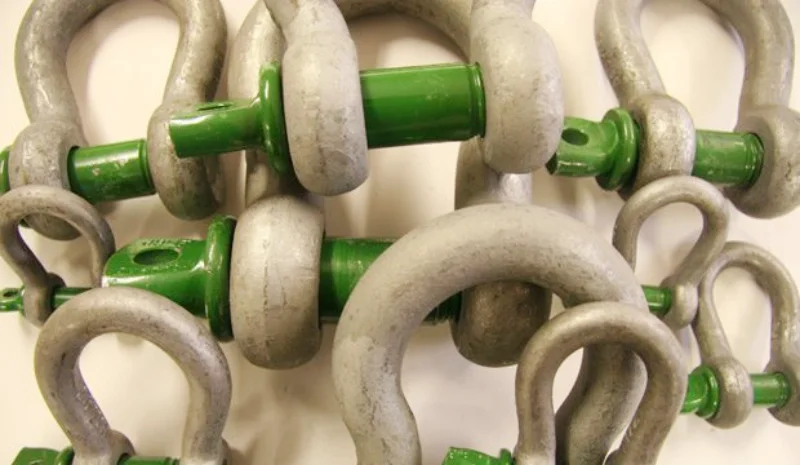
You use lifting shackles to connect lifting equipment, slings, and loads in rigging operations. These components act as strong links that hold everything together during lifting, pulling, or securing tasks.
Each shackle consists of a body and a pin, which you can open and close to attach or detach from chains, ropes, or lifting points. The design allows you to create secure connections that handle heavy weights safely.
Lifting shackles come in different shapes and sizes. You select the right type based on the load, the angle of pull, and the specific rigging setup. The main goal is to ensure that every connection remains strong and reliable throughout the operation.
When you choose certified lifting shackles, you reduce the risk of accidents and equipment failure.
Tip: Always check the load rating and certification before using any shackle in your lifting setup.
Key Applications and Industries
You find lifting shackles in many industries that require safe and efficient material handling. Construction sites use them to lift steel beams, concrete panels, and heavy machinery. In the marine sector, you rely on shackles for mooring, towing, and cargo handling on ships and docks.
Transportation and logistics companies use them to secure loads during transit.
Powerful Machinery stands out as a trusted supplier of certified lifting shackles. With over 20 years of experience, the company provides high-performance solutions for demanding environments. You benefit from their strict quality control, international certifications, and the ability to customize shackles for unique project needs.
Common industries using lifting shackles:
Construction
Marine and offshore
Transportation and logistics
Mining and heavy industry
Choosing the right lifting shackles ensures safety, efficiency, and compliance in every lifting operation.
Anatomy of a Shackle
Main Parts Explained
You work with shackles every day in rigging and lifting operations. Each shackle features two main components: the body and the pin. The body forms the main shape, which can be a bow or a dee. The bow shape gives you more space for multi-leg slings, while the dee shape suits straight-line pulls.
The pin acts as the closure, locking the shackle and securing your connection. You choose from screw pins, bolt types, or round pins depending on your application.
Part | Function |
|---|---|
Body | Forms the main structure; handles the load. |
Pin | Secures the connection; allows opening/closing. |
You rely on the body to withstand the force of the load. The pin must fit tightly to prevent accidental opening. Powerful Machinery designs shackles with precision, ensuring each part meets strict safety standards.
Tip: Always inspect the pin for wear or damage before each use. A compromised pin can lead to failure during lifting.
Sizing and Fit
You select the right shackle size by matching it to your sling diameter, pin diameter, and the thickness of the connection point. Proper sizing ensures the shackle fits securely and distributes the load evenly.
If you use a shackle that is too small, you risk overloading and damaging the equipment. Oversized shackles may not seat properly, causing instability.
Always respect the working load limit (WLL) of your shackles. This value tells you the maximum weight the shackle can safely support.
Make sure the WLL meets or exceeds the weight of your load. This prevents failure and keeps your team safe.
Pay attention to the angle of the load. Side loading or angled pulls can reduce the WLL, increasing the risk of shackle failure.
You benefit from Powerful Machinery’s certified shackles, which display clear markings for WLL and sizing. This helps you make quick, informed decisions on the job site. When you match the shackle size and fit to your rigging scenario, you maintain safety and efficiency in every lift.
Types of Lifting Shackles
When you select lifting shackles for your rigging setup, you need to understand the main types of lifting shackles and their unique features. Each type serves a specific purpose, and choosing the right one ensures safety and efficiency in your lifting operations.
Powerful Machinery offers a complete range of certified shackles, including options for customization to fit your project needs.
Bow (Anchor) Shackles
Bow shackles, also known as anchor shackles, feature a large, rounded “O” shaped bow. This design gives you extra space inside the shackle, making it ideal for connecting multiple sling legs or handling loads from different directions. You often use bow shackles when you need flexibility in your rigging arrangement.
The wide bow allows for side loading, but you must always consider the reduction in working load limit (WLL) when the load angle changes.
The rounded shape helps distribute force evenly, reducing the risk of sideloading issues.
Bow shackles and anchor shackles are often used interchangeably because of their similar design.
Note: Bow shackles work best when you need to connect more than one sling or when the load may shift during lifting.
You can find bow shackles in Powerful Machinery’s product line, available in various sizes and finishes. Each shackle undergoes strict testing to ensure it meets international standards for safety and performance.
Dee (Chain) Shackles
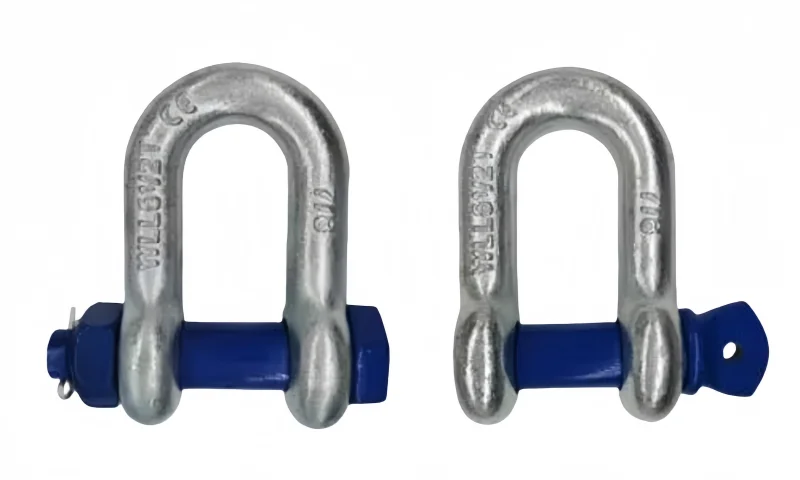
Dee shackles, sometimes called chain shackles, have a narrow, “D” shaped body. This compact design makes them perfect for straight-line pulls and applications where space is limited. You use dee shackles when you need a secure connection for a single sling or chain.
Advantages | Limitations |
|---|---|
Compact and narrow body, ideal for limited space | Not suitable for side loading |
Made from durable materials for heavy loads | Narrow design limits wide lifting straps |
Reliable for straight line lifting | |
Easier to maintain compared to other shackles | |
Efficient for small to medium-weight loads | |
Excellent for precise load alignment |
You should choose dee shackles when you want precise load alignment and a reliable connection for straight lifts. Powerful Machinery manufactures dee shackles from high-strength materials, ensuring durability and consistent performance in demanding environments.
Specialty Shackles (Wide Body, Subsea, Piling, Twist)
Some lifting operations require specialty shackles designed for unique challenges. Powerful Machinery offers a variety of specialty shackles to meet these needs.
Shackle Type | Unique Characteristics | Applications |
|---|---|---|
Wide Body Shackles | Increased surface area, larger bow radius to prevent kinking, improves D/d ratio. | Used with high-capacity synthetic or wire rope slings. |
Sheet Pile Shackles | Easy-opening pin that remains attached to prevent loss during use. | Used for pulling sheet piling. |
Subsea Shackles | Engineered for underwater use, corrosion-resistant materials and coatings. | Offshore, marine, and subsea lifting operations. |
Twist Shackles | 90-degree twist in the body, aligns the pin and bow at right angles. | Rotating or aligning loads in specific orientations. |
Wide-body shackles help prevent damage to synthetic slings by increasing the contact area and reducing stress.
Sheet pile shackles make it easier to handle piling operations, especially when you need to avoid losing pins on site.
Subsea shackles resist corrosion and perform reliably in harsh marine environments.
Twist shackles allow you to rotate or align loads, giving you more control during complex lifts.
Tip: Specialty shackles provide solutions for unique lifting challenges. Always match the shackle type to your application for the best results.
Certified Designs and Customization Options
Powerful Machinery’s lifting shackles stand out because of their certified designs and flexible customization options. Each shackle meets or exceeds major international standards, such as ISO9001 and TUV Rheinland. You benefit from:
Chemical analysis and proof-load testing for every shackle.
Reliable pin mechanisms and strong materials for secure connections.
Custom-engineered solutions tailored to your project requirements.
Clear markings for working load limits and traceability.
You can request custom sizes, finishes, and branding to fit your specific lifting needs. Regular inspections and proper training further enhance safety, helping you prevent accidents and maintain compliance.
Reminder: Certified lifting shackles give you confidence in every lift. Customization ensures you always have the right tool for the job.
By understanding the different types of lifting shackles and choosing certified, customizable options from Powerful Machinery, you ensure safe, efficient, and reliable lifting operations in any industry.
Shackle Pin and Closure Types
When you select a lifting shackle, the pin and closure type play a critical role in both safety and usability. Each pin style offers unique advantages for different rigging scenarios. Powerful Machinery provides a full range of certified shackles, allowing you to match the right pin type to your application.
Screw Pin
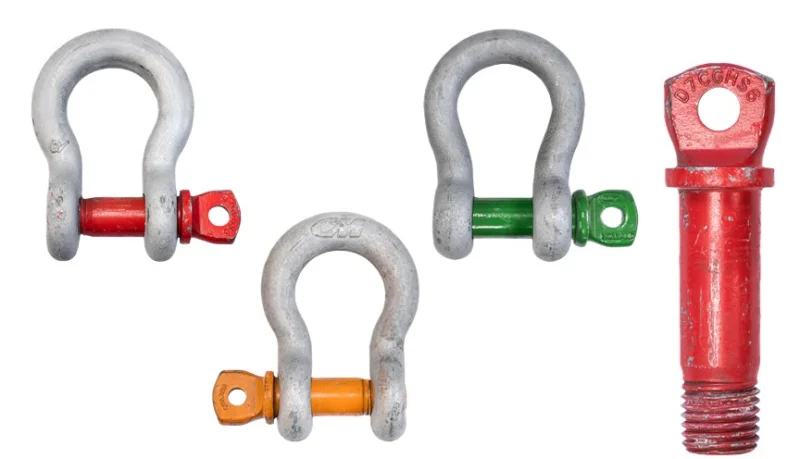
Screw pin shackles feature a threaded pin that you can easily install or remove by hand. This design makes them ideal for temporary connections and quick assembly tasks. You often use screw pin shackles when you need to set up and take down rigging frequently.
Advantages:
Fast installation and removal without tools.
Convenient for short-term lifting or shifting loads.
Limitations:
Not recommended for permanent setups or high-vibration environments. The pin may loosen over time.
Tip: Always check the tightness of screw pins before each lift. Vibrations can cause them to unscrew unexpectedly.
Bolt Type
Bolt-type shackles use a bolt, nut, and cotter pin to secure the connection. This system provides the highest level of security, making it the preferred choice for permanent or long-term installations. You rely on bolt-type shackles for heavy lifts, offshore platforms, and high-vibration environments.
Feature | Bolt-Type Shackle |
|---|---|
Security | Nut and cotter prevent accidental opening |
Best Use | Permanent or high-vibration applications |
Maintenance | Requires regular inspection |
You benefit from the peace of mind that comes with a secure connection. The bolt, nut, and cotter system ensures the pin cannot unscrew accidentally, even under extreme conditions.
Round Pin
Round pin shackles use a simple pin secured by a cotter pin. You find these shackles useful for in-line applications such as tie-downs and towing. The round pin design allows for quick setup, but it does not suit multi-leg slings or side-loading situations.
Advantages:
Easy to assemble and disassemble.
Reliable for straight-line pulls.
Limitations:
Not suitable for side loading or complex rigging arrangements.
Note: Use round pin shackles only when the load pulls directly in line with the shackle body.
Choosing the correct pin and closure type ensures your lifting operation remains safe and efficient. Powerful Machinery’s certified shackles offer clear markings and robust designs, helping you make informed decisions for every rigging task.
Material and Finish Options
Choosing the right material and finish for your lifting shackles directly affects their strength, durability, and suitability for specific environments. Powerful Machinery offers a range of options to meet your operational needs, ensuring every shackle delivers reliable performance.
Alloy Steel
Alloy steel shackles provide exceptional strength and toughness. You rely on these shackles when you need to handle extreme loads or operate in harsh conditions. Alloy steel features enhanced mechanical properties, which allow it to withstand high stress and repeated use without deformation.
You often select alloy steel for heavy-duty lifting in construction, mining, and transportation.
Material | Strength and Durability Impact | Applications |
|---|---|---|
Alloy Steel | Withstands extreme loads and harsh conditions; enhanced mechanical properties for strength. | High-load, high-temperature environments. |
Carbon Steel | Offers robust strength and toughness; prone to rust without corrosion resistance. | Heavy-duty lifting, construction, transportation. |
Stainless Steel | Excellent corrosion resistance; protective oxide layer prevents rust. | Marine, chemical processing, and outdoor applications. |
Tip: Always check the working load limit (WLL) stamped on alloy steel shackles before use. This ensures you match the shackle to your lifting requirements.
Galvanized and Powder-Coated
You protect your shackles from corrosion and extend their lifespan by choosing the right finish. Galvanization coats the shackle with zinc, forming a barrier against rust and moisture. This finish works well for outdoor and marine applications, where exposure to water and salt is common.
Powder coating adds another layer of protection, making the shackle resistant to chemicals and abrasion. You benefit from powder-coated shackles in harsh industrial settings.
Galvanization creates a protective zinc layer that prevents rust and corrosion.
Powder coating offers excellent resistance to chemicals and environmental wear.
Both finishes help extend the lifespan of your lifting shackles, reducing maintenance needs.
Note: Select galvanized or powder-coated shackles for environments with high humidity, saltwater, or chemical exposure.
Stainless Steel
Stainless steel shackles deliver superior corrosion resistance. You choose stainless steel when you work in marine, chemical, or outdoor environments. The protective oxide layer on stainless steel prevents rust, even after prolonged exposure to moisture.
While stainless steel offers moderate strength compared to alloy steel, it excels in environments where corrosion is the main concern.
Material | Strength | Corrosion Resistance | Best Applications |
|---|---|---|---|
Stainless Steel | Moderate | Excellent | Marine and harsh environments |
Alloy Steel | High | Moderate | Heavy-duty lifting and construction |
You ensure long-term reliability by matching the shackle material and finish to your specific application. Powerful Machinery provides certified options in alloy steel, galvanized, powder-coated, and stainless steel, helping you achieve safe and efficient lifting operations.
Safety and Compliance
Working Load Limits
You must always know the maximum weight your shackle can handle before starting any lift. This value, called the working load limit, tells you the safe capacity for each shackle. Manufacturers determine this limit through strict testing and by considering the material, shape, and size of the shackle.
Always check the rated load stamped on the shackle.
Choose a shackle with a higher capacity than your actual load.
Allow for a safety margin to prevent overload.
The total weight of your load determines the shackle size you need.
The material and shape also matter. Steel, stainless steel, and alloy steel each offer different strengths. Bow shackles work well for loads from multiple directions, while Dee shackles suit straight-line lifting.
Working Load Limit (tons) | Count |
|---|---|
0.20 | 4 |
0.30 | 6 |
1.00 | 39 |
2.00 | 60 |
5.00 | 27 |
10.00 | 6 |
12.00 | 40 |
120.00 | 5 |
300.00 | 4 |
500.00 | 1 |
800.00 | 1 |
🛑 Tip: Never use a shackle if you are unsure about its rated capacity or if markings are missing.
Industry Standards
You protect your team and equipment by following recognized industry standards. These standards set strict rules for design, testing, and identification.
Certification Body | Standard/Requirement | Purpose |
|---|---|---|
ISO | ISO 8539 | Global safety standards |
ASTM | ASTM A952 | Testing and performance |
OSHA | OSHA 1910 | Workplace safety regulations |
TUV Rheinland, EURO CERT | Product certification | Independent quality assurance |
Shackles must display the manufacturer’s name, rated load, and size.
Minimum design safety factors, such as 5:1 or 6:1, are required.
Manufacturers must proof test shackles to verify strength.
Markings like CE, WLL, material grade, and traceability code are mandatory.
Certificates of conformity and test results should be available upon request.
Remove shackles from service if you notice more than 10% wear or any damage.
By choosing shackles that meet these standards, you ensure every lift is safe and compliant.
Inspection and Maintenance
Inspection Frequency
You must inspect lifting shackles regularly to ensure safety and reliability. Industry guidelines recommend different inspection types and frequencies based on service conditions. The following table summarizes these recommendations:
Inspection Type | Frequency/Details |
|---|---|
Initial Inspection | Before use, all new, altered, modified, or repaired shackles must be inspected by a Designated Person. Written records are not required. |
Frequent Inspection | A visual inspection by the user or Designated Person each day and before each use. No written records required. |
Periodic Inspection | Complete inspection by a Designated Person, not exceeding 1 year. Frequency based on usage and conditions. Written records are not required. |
Normal Service | Yearly |
Severe Service | Monthly to Quarterly |
Special Service | As recommended by a Qualified Person |
You should always follow these intervals to catch problems early and prevent accidents.
Signs of Wear and Replacement
You need to recognize when a shackle is no longer safe to use. Common signs that indicate replacement include:
Any crack: retire immediately.
Permanent deformation beyond OEM limits (spread jaw, bent frame, elongated holes).
Excessive wear: teeth or cam wear at or beyond limit.
Corrosion or pitting in critical sections.
Lock failure or broken springs that cannot be restored to spec.
Nameplate illegible or unknown WLL/serial: remove from service until re-identified by the manufacturer.
If you notice any of these issues, remove the shackle from service right away.
Maintenance Tips
Before a shackle is ever put into service, it must undergo a thorough visual inspection. This isn’t just a casual glance; it’s a hands-on check for any signs of damage or wear that could compromise its integrity.
This practice is so important that OSHA requires a competent person to inspect all rigging equipment, including shackles, each day before use.
You can extend the life of your shackles by following these maintenance practices:
Regularly inspect all lifting slings, fittings, and hardware before each use and before a change in lifting application.
Ensure operators and riggers are trained to identify damage or irregularities that require a sling to be removed from service.
Routine care and proper training help you maintain safe lifting operations and protect your investment in quality shackles.
Choosing the Right Shackle
Selecting the best shackle for your lifting operation requires careful consideration of several factors. You must match the shackle to your application, choose materials that suit your environment, and verify quality and certification.
Powerful Machinery offers certified lifting shackles and expert guidance to help you make the safest and most efficient choice.
Matching Shackle to Application
You need to follow a systematic approach when choosing the right shackle for your project. Each lifting scenario presents unique demands, so you must evaluate your requirements step by step:
Determine the Load Requirements
Identify the Working Load Limit (WLL) needed for your task. Always select a shackle with a WLL that exceeds your maximum anticipated load.Consider the Direction of the Load
Choose the shackle shape based on how the force will be applied. Bow shackles handle multi-directional loads, while Dee shackles work best for straight-line pulls.Choose the Right Pin Type
Select screw pin, bolt-type, or round pin shackles depending on how often you need to assemble or disassemble the connection and the level of security required.Evaluate the Environment
Assess the conditions where you will use the shackle. For example, marine or chemical environments may require corrosion-resistant materials.Match Components Correctly
Ensure the shackle fits properly with slings, hooks, and other rigging hardware. Compatibility prevents wear and maintains safety.
Safety is paramount when using lifting shackles. Inspect shackles regularly, avoid side loading on Dee shackles, ensure proper pin engagement, use mousing for screw pins, and always match the WLL to your load.
Powerful Machinery provides a wide range of certified shackles, including custom-engineered options. You can request specific sizes, pin types, and finishes to fit your application perfectly.
Material and Environment
Environmental conditions play a major role in shackle selection. You must consider factors such as humidity, temperature, and exposure to chemicals or saltwater. These elements can affect the performance and lifespan of your shackles.
For example, in marine environments, high humidity and saltwater accelerate corrosion. Stainless steel or hot-dip galvanized shackles offer better resistance in these conditions.
In chemical plants, you need to identify the specific agents present, as their concentration and temperature can impact material performance. On-site suitability tests help you confirm the best material for your application.
Shackle Material | Safety Factor (SF) | Environmental Condition |
|---|---|---|
Grade 316 Stainless | 5:1 | Superior corrosion resistance |
Grade 304 Stainless | 5.5:1 | Chloride environments |
Marine/Offshore | ≥6:1 | DNV requirement |
Chemical Plants | 5:1 | Accounts for corrosion fatigue |
You should always match the shackle material to your working environment. Powerful Machinery offers a variety of materials and finishes, including stainless steel, alloy steel, and galvanized options, to ensure durability and safety in any setting.
Ensuring Quality and Certification
You protect your team and equipment by choosing shackles that meet strict quality and certification standards. When evaluating suppliers, look for these key indicators:
The certificate should clearly state the standard it conforms to, such as ASME B30.26 or EN 13889.
Review the chemical analysis results of the steel used in the shackles.
Check mechanical testing results, including proof load and minimum breaking strength.
Confirm that the shackle material—carbon, alloy, or stainless steel—is suitable for your application.
Verify that the Working Load Limit (WLL) exceeds your maximum anticipated dynamic load.
Choose shackles that comply with recognized international standards.
Consulting with rigging experts can further improve your selection process. Experts help you comply with safety regulations, assess your specific lifting requirements, and provide tailored recommendations for your project.
Working with reputable providers like Powerful Machinery gives you access to expert guidance, curated equipment selections, and custom solutions for unique challenges.
When you invest in certified, high-quality shackles and consult with professionals, you ensure every lift is safe, efficient, and compliant.
By following these steps for choosing the right shackle, you maximize safety and performance in every lifting operation.
Conclusion
You play a vital role in maintaining safety and efficiency by understanding lifting shackle types, materials, and best practices.
Always use lifting shackles that meet or exceed your working load limit.
Inspect shackles regularly to identify damage before use.
Choose the correct shackle type to prevent injuries and equipment damage.
Feature | Benefit |
|---|---|
Strength and Durability | Withstand extreme lifting conditions |
Compliance with Standards | Guarantee safety and reliability |
Long Product Life | Reduce replacement costs |
Traceability | Provide safety verification |
Versatility | Suit a wide range of lifting needs |
Consulting with lifting equipment experts ensures you receive tailored solutions for complex lifting challenges.
Matching the right shackle to your lift improves stability and safety.
Using the proper type for each application reduces risk.
Regular inspections keep your operations safe and compliant.
Stay current with industry trends and trust Powerful Machinery for certified, reliable solutions.
FAQ
What is the difference between a bow shackle and a dee shackle?
You use a bow shackle for multi-directional loads because its rounded shape allows more movement. You choose a dee shackle for straight-line pulls since its narrow body provides better alignment and strength in one direction.
How do you know if a shackle is certified?
You check for clear markings on the shackle, such as the manufacturer’s name, working load limit (WLL), and certification codes. Certified shackles from Powerful Machinery always display these details for easy verification.
Can you use stainless steel shackles in marine environments?
Yes, you can. Stainless steel shackles resist corrosion from saltwater and moisture. You should select Grade 316 stainless steel for the best performance in harsh marine conditions.
How often should you inspect lifting shackles?
You should inspect shackles before each use and perform a thorough inspection at least once a year. Increase inspection frequency if you use shackles in severe or demanding environments.
Can you customize shackles for specific lifting needs?
Yes! Powerful Machinery offers OEM customization. You can request specific sizes, pin types, finishes, or branding to match your project requirements.