A shackle is a removable metal connector used to join components in a lifting or rigging assembly. It has an open-ended body and a removable pin or bolt that closes the opening. For example, a shackle can connect a sling to a lifting point or join compatible links and fittings in a load path. Its rating and suitability depend on the specific product and the connection in which it is used.
What Does a Shackle Do?
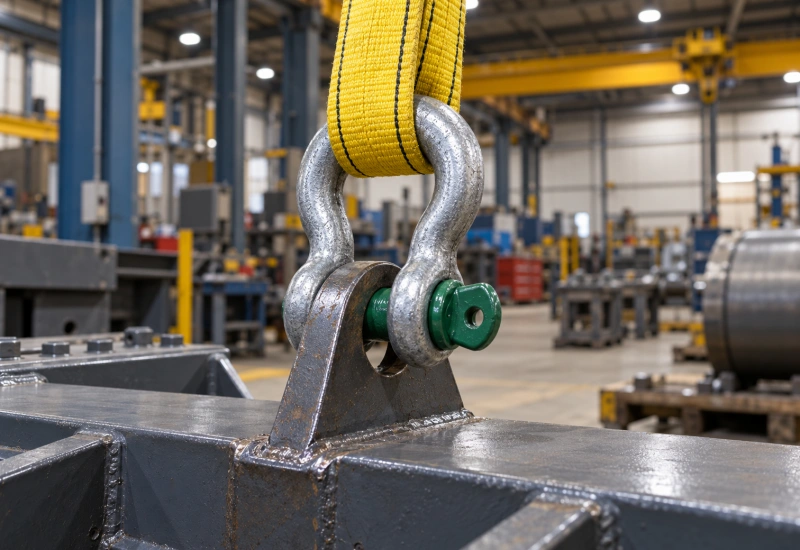
A shackle provides a removable connection between two compatible components. In a lifting arrangement, one side may receive a sling eye while the other connects to a lifting point or suitable fitting. Shackles are also used in material-handling and other rigging connections. The term describes the connector itself; it does not establish whether a particular shackle is rated for lifting.
Before use, identify the marked working load limit (WLL), confirm that the connected components fit correctly, and follow the instructions for the exact shackle. A towing or general-purpose connector should not be assumed suitable for overhead lifting simply because it has a similar appearance.
The Basic Parts of a Shackle
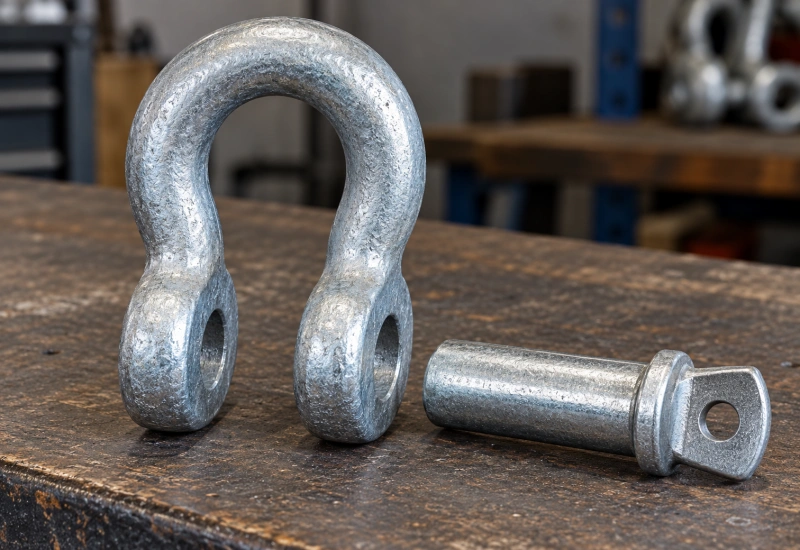
Most rigging shackles have two main components: a body and a removable pin. The body forms the bow- or D-shaped opening. The crown is the curved end opposite the pin, and the two eyes are the ends through which the pin passes.
Depending on the design, the pin may screw into one eye or be retained by a nut and cotter pin. These terms help identify the part being inspected or ordered; the exact closure arrangement depends on the model.
WLL means working load limit: the maximum load assigned to a product under its stated conditions of use. Read the actual marking and product information rather than inferring capacity from the shackle’s size or appearance. For available body and pin configurations, browse the lifting and rigging shackle range.
What Do Bow, Dee, Screw Pin and Safety Bolt Mean?
Bow and Dee describe the body shape. A bow, or anchor, shackle has a wider, rounded body; a Dee, or chain, shackle has a narrower profile. Screw pin and safety bolt describe different pin-retention arrangements. These labels are useful, but they are only the starting point for selection: confirm the exact model’s WLL, dimensions, permitted load direction, and manufacturer instructions.
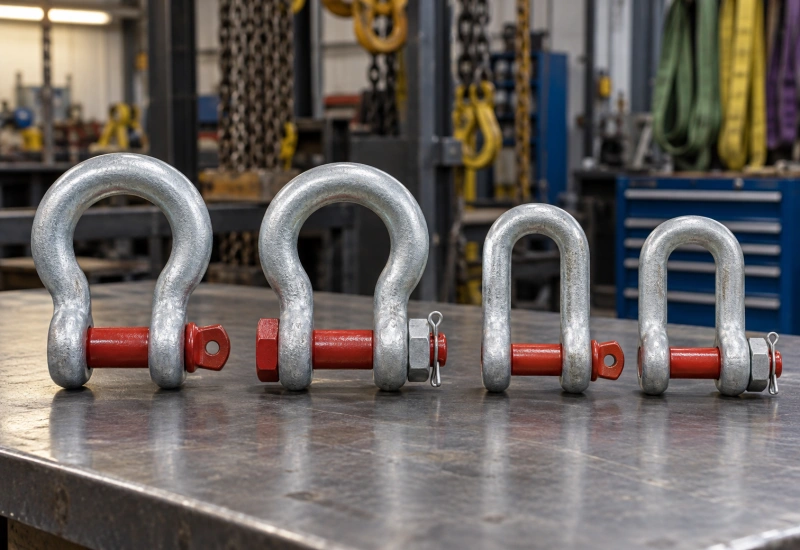
For a more detailed comparison of body shapes and pin configurations, see the guide to types of shackles.
Where Are Shackles Commonly Used?
Shackles may connect a sling to a lifting point, join chain or wire rope fittings, or provide a removable connection in construction, manufacturing, and marine rigging. These examples describe where the hardware may be used; they do not constitute approval for every application. The shackle and each mating component must suit the load, connection geometry, and service environment of the actual job.
If you are assembling a connection, read how to use shackles in a rigging setup for the operating steps. Before placing a shackle into service, use the shackle inspection checklist to review its markings, body, pin, and condition against the applicable instructions.
FAQs
Is a Shackle the Same as a Hook?
No. A shackle is a connector with an opening closed by a removable pin or bolt. A hook is a different fitting with its own design, rating, and operating instructions. Either may form part of a rigging assembly, but they are not interchangeable simply because both connect rigging components.
Is a Bow Shackle Stronger Than a Dee Shackle?
Body shape alone does not establish a higher WLL. Compare the markings and specifications of the actual models and check how the load is applied. A larger-looking bow should not be treated as a capacity increase without supporting product data.
Can Any Shackle Be Used for Lifting?
No. Use a shackle that is identified and rated for the intended lifting application, with a suitable pin, connection fit, and permitted load direction. If its identity or WLL cannot be verified, do not place it in a lifting assembly. For U.S. construction material handling, OSHA 29 CFR 1926.251(f)(1) prohibits using shackles above the rated capacity indicated by the manufacturer-prescribed permanent and legible marking.
What Information Should I Give a Supplier?
Provide the required WLL, body style and pin type, mating-component dimensions, service environment, applicable product standard or model pattern, and documentation requirements. The supplier can then confirm a specific product rather than selecting one based on the generic term “shackle” alone.