A shackle inspection starts with identification and ends with a clear disposition: acceptable for the planned lift, held for further review, or removed from service. Inspect the body and its correct matching pin as one assembly. A clean finish does not establish serviceability if the WLL marking is illegible, the pin is damaged, or the shackle cannot seat correctly in the rigging connection.
The steps below provide a practical field sequence. Use the manufacturer’s instructions, the applicable standard, and your site procedure for the exact model. If you still need to choose a body or pin style, see the separate types of shackles guide. This article covers inspection of an identified shackle; it is not a substitute for product selection or a lift plan.
When to Inspect a Shackle?
Inspect a shackle before it is put into service, as part of the pre-use rigging inspection, and again whenever its condition may have changed, such as after an impact, unusual loading, exposure to heat or chemicals, or a change in the connection. Your site may also require a more detailed scheduled examination based on use, service severity, and the applicable standard.
Any fixed interval should come from those requirements, not from a generic online checklist.
For U.S. construction material handling, OSHA 29 CFR 1926.251(a)(1) requires rigging equipment to be inspected before use on each shift and as necessary during use, with defective equipment removed from service. The same provision does not state that every shackle inspection requires an individual written record. Keep records where the employer’s program, contract, or another applicable requirement calls for them.
Seven Checks Before the Lift
| Check | What to Look For | Action if Uncertain |
| 1 Identity and WLL | Legible manufacturer-prescribed identification and rated load; confirm the model against the planned connection. | Hold the shackle if the required identification or WLL cannot be verified. |
| 2 Body Geometry | Bending, twisting, jaw spread, elongation, cracks, or other signs of unusual loading. | Remove from service if damage is confirmed; refer uncertain dimensional findings for qualified review. |
| 3 Wear and Surface Condition | Metal loss, nicks, gouges, severe corrosion, or pitting at the crown, ears, and bearing surfaces. | Hold and compare with the approved model limit or original dimensions; do not apply a universal percentage. |
| 4 Heat Exposure or Alteration | Weld spatter, arc strikes, heat discoloration, grinding, drilling, or other unauthorized alterations. | Remove from service and seek manufacturer guidance. |
| 5 Pin and Retention | Correct matching pin, straightness, sound threads, full engagement, and nut/cotter pin where specified. | Do not use the shackle with a missing, mismatched, or damaged pin or retention component. |
| 6 Connection Fit and Load Path | The sling eye, lug, or hook fits without pinching; permitted load direction and clearance are maintained. | Hold and revise the connection if it binds or creates an unapproved loading condition. |
| 7 Final Disposition | Confirm the item and planned use against current product data and all inspection findings. | Mark Pass, Hold, or Remove; do not return a rejected item to service through informal repair. |
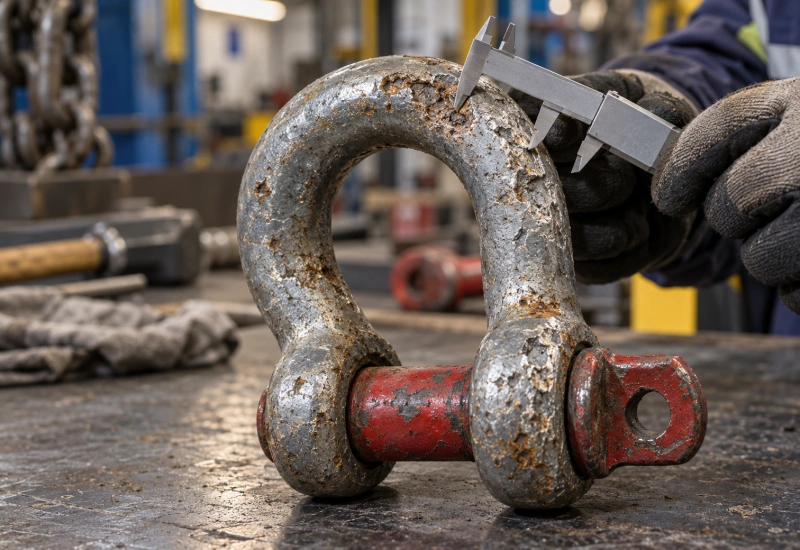
If a condition is borderline, compare the measured dimension with the approved original dimension or manufacturer drawing and the applicable removal criterion. Do not apply the “10% wear” figure from another product or standard unless you have established that it applies to this shackle. A pin that happens to thread into a body is not proof that the parts belong together.
Markings and Identification
Read the rated capacity and required identification on the shackle itself and compare them with the product information. For U.S. construction rigging covered by OSHA 1926.251, the equipment must have permanently affixed, legible manufacturer-prescribed identification indicating the recommended safe working load; shackles must not be used above the marked rating.
The precise marking set for a particular product depends on its specification. A separate hanging tag is not universally required when the necessary identification is permanently affixed to the shackle.
If you cannot identify the body, pin, or rating, hold the item out of service. Do not re-stamp it or assign a capacity based on appearance. For order documentation, verify the model and required records against the purchase specification.
Body, Pin, and Surface Condition
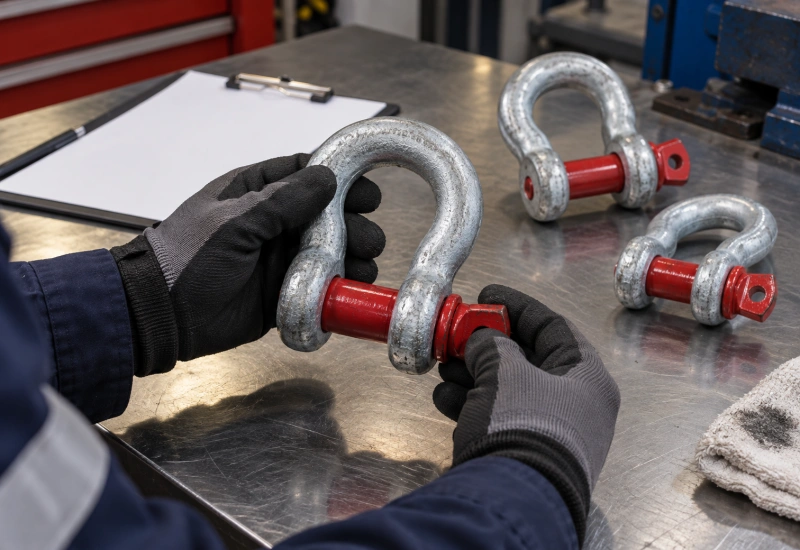
If you need a quick terminology refresher, review the basic parts of a shackle before inspecting the body, pin, and load-bearing areas.
Inspect the areas that carry and transfer load: the crown, straight legs, ears, pin, and threads. Cracks, a bent or twisted body, elongated pin holes, damaged threads, a distorted pin, or missing retention parts require immediate action. Heavy pitting or section loss can be more significant than light surface rust. Clean the shackle only as permitted by the manufacturer so the surface can be inspected without masking a defect.
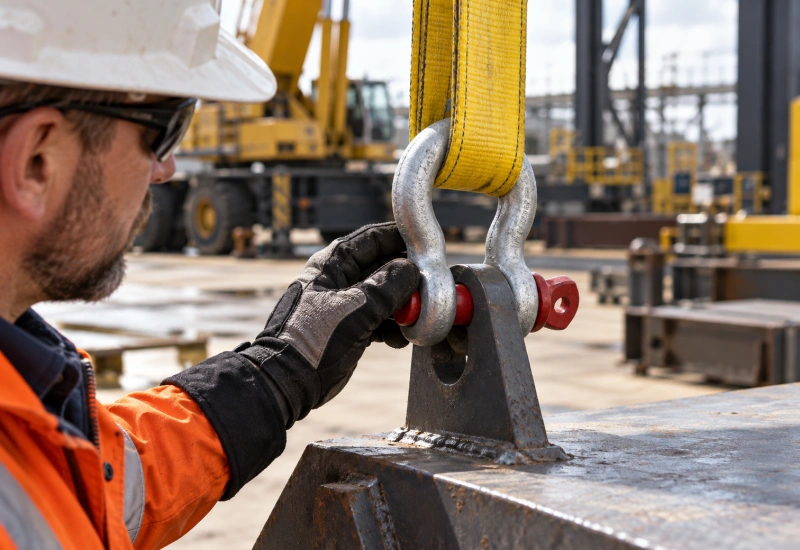
Confirm that a screw pin is fully engaged or that a bolt, nut, and cotter pin are installed as specified. Do not replace a lost pin with a similar-looking part from another shackle. Check that the shackle is correctly seated with the sling or lifting point; an acceptable component can still form an unsuitable connection. For assembly and loading procedures, see how to use shackles.
Hold, Remove, and Record
Use “hold” when the shackle’s identity, dimensions, or product history require confirmation and the item must not be issued for a lift. Use “remove from service” when a defect or applicable rejection criterion is met. Keep the item separated from ready-to-use rigging so it cannot be selected by mistake.
Only the manufacturer or an authorized process should determine whether a nonconforming shackle may be evaluated, repaired, or returned to service; do not weld, bend, or grind it back into shape in the field.
An inspection record can be brief and useful: inspection date, shackle ID or model, location, inspector, observed condition, disposition, and follow-up. Add measured dimensions and photographs when they support a decision. Your company’s record-retention requirements should reflect the governing standard, contract, and site procedure.
Do not confuse separate record requirements for certain chain slings with a universal shackle-log requirement.
ASME B30.26 and OSHA Scope
ASME B30.26 covers detachable rigging hardware used in load handling, including shackles. Use the edition adopted by your project or organization and the manufacturer’s instructions for detailed inspection and rejection criteria. This checklist is an editorial field aid, not an ASME-issued form or a declaration that every Powerful Machinery shackle conforms to a particular edition.
OSHA 29 CFR 1926.251 applies to construction material-handling activities covered by that rule. Its before-each-shift inspection and legible-marking provisions are described above. Requirements differ by workplace, jurisdiction, and application; check the rules that apply to your operation before using this checklist as a compliance procedure.
FAQs
How Often Should Shackles Be Inspected?
Inspect shackles before use under the applicable site procedure and recheck them after events that could affect their condition. For U.S. construction material handling, OSHA 1926.251(a)(1) specifies inspection before each shift and as necessary during use. Set any additional detailed inspection intervals according to the governing standard, service conditions, and manufacturer instructions.
Is 10% Wear Always the Removal Limit?
No universal percentage should be applied without a verified basis. Use the wear criterion and original dimension for the exact shackle and applicable specification. If you cannot establish whether the wear is acceptable, hold the shackle out of service.
Do Shackles Need Separate Tags?
Not necessarily. Required identification must be legible and permanently affixed where the applicable rule or product specification calls for it. A site may use an additional asset tag for tracking, but that tag does not replace the manufacturer-prescribed rated-load marking.
Must Every Pre-Use Inspection Be Written Down?
Not as a blanket rule for every shackle inspection. Keep written records if the governing standard, customer contract, or site program requires them. A simple disposition record is also useful when a shackle is held or removed so the next shift can see its status.
Where Can I Review Replacement Products?
Use the lifting and rigging shackle range to identify available body and pin patterns. Confirm the selected model’s WLL, dimensions, and instructions before it is incorporated into a lifting assembly.