A shackle is a removable connector used between rigging components. If the terms are unfamiliar, this short explanation of shackle meaning and basic parts gives you the context for the comparisons below. To identify the appropriate type, consider two separate features: the shape of the body and the way the pin is secured. Then check the exact model’s working load limit (WLL), dimensions, and manufacturer instructions against the requirements of the planned lift.
If you are ready to compare available products, browse Powerful Machinery’s lifting and rigging shackles.
A bow body with a screw pin, for example, is a different configuration from a Dee body with a safety bolt. Neither the body style nor the pin type determines capacity by itself. The intended load direction and the fit of the connected components are equally important.
The Two Parts That Define a Shackle Type
The body forms the opening where a sling eye, link, lug, or other fitting connects. The removable pin closes the shackle. Names often combine the two features; for example, “screw-pin bow shackle” identifies both body shape and closure type. Bow may also be called anchor, and Dee may be called chain. These terms describe geometry, not a universal rating.
Bow and Dee Shackle Bodies
A bow shackle has a rounded crown and typically more internal space than a comparable Dee pattern. It can be useful when a connection needs room for more than one appropriately sized sling eye or fitting. The load must still bear in the manufacturer-permitted position; a wider bow does not automatically authorize side loading or every multiple-leg arrangement.
Confirm load angle, bearing area, and WLL in the instructions for the exact model. See the available bow shackle models for purchasing details.
A Dee shackle has a narrower, straighter-sided body and is commonly selected for an aligned connection, such as a chain or fitting seated properly within the jaw. It is not a substitute when the assembly requires more crown space. Compare the mating component with the pin diameter, jaw opening, and inside length before selection. For a detailed geometry comparison, read bow shackle vs Dee shackle.
Do not compare WLL based solely on the outline of the body. Two shackles with a similar nominal size may have different ratings, materials, and dimensional requirements. Use the marked WLL and the relevant product data for the actual model.
Shackle Pin Types
A screw pin threads into one ear of the shackle and is convenient when a connection is assembled and removed frequently. Check that the pin belongs to the shackle, engages fully, and is secured according to the manufacturer’s instructions. Movement or vibration can create a loosening risk, so do not assume a screw-pin connection is suitable for an unattended or long-term installation.
A bolt-type or safety-bolt shackle uses a bolt, nut, and cotter pin for positive retention. This arrangement is often selected when the connection remains assembled, or additional pin security is required. Install the nut and cotter pin as specified for the model. The closure does not make a poorly aligned or overloaded shackle safe.
Round-pin and captive-pin shackles are other configurations, but their availability and intended use vary by product. Do not treat a round-pin shackle as interchangeable with a screw-pin or safety-bolt lifting shackle. If a proposed model is not documented for the intended lifting arrangement, obtain the relevant product instructions before use.
Common Body and Pin Combinations
| Combination | Typical Selection Reason | Check Before Use |
| Bow + Screw Pin | Rounded body with a removable threaded pin for connections that require regular assembly. | Crown fit, pin engagement, load direction, and model WLL. |
| Dee + Screw Pin | Narrow body for a properly aligned connection that is opened regularly. | Jaw opening, mating component, pin security, and model WLL. |
| Bow + Safety Bolt | Rounded body with bolt, nut, and cotter-pin retention. | Crown fit, retention components, load angle, and model WLL. |
| Dee + Safety Bolt | Narrow body with bolt, nut, and cotter-pin retention. | Straight alignment, retention components, dimensions, and model WLL. |
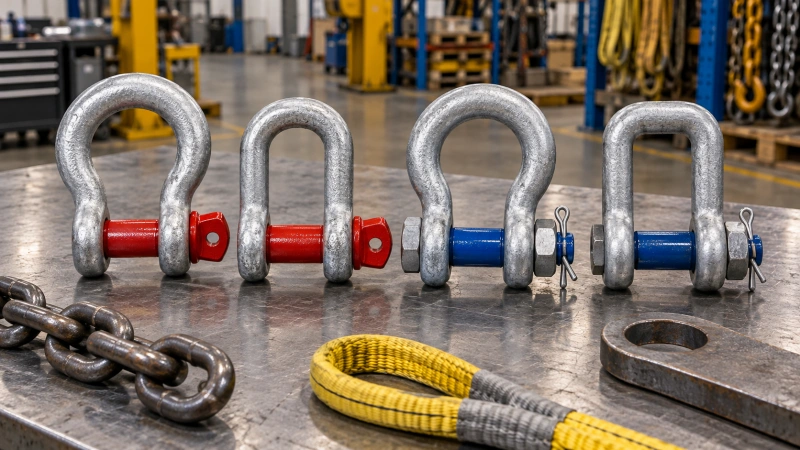
Examples in Powerful Machinery’s current range include G-209 screw-pin anchor (bow), G-210 screw-pin chain (Dee), G-2130 safety-bolt anchor (bow), and G-2150 safety-bolt Dee patterns.
These pattern names help narrow the search; confirm the supplied material, WLL, dimensions, finish, markings, and documentation for the selected product. The individual listings for G-209, G-210, G-2130, and G-2150 provide starting points.
How to Choose a Shackle for Your Connection?
Start with the planned load and the shackle’s marked WLL. Account for the actual sling arrangement and any applicable angle or load-direction restrictions. A working load limit is specific to the product and its stated conditions. Do not infer it from nominal size, shape, or appearance.
Next, check the physical fit. Measure the lifting lug or sling eye, required jaw opening, pin diameter, inside length, and available clearance. A pin that is too large will not fit; a connection that crowds or pinches a sling eye may also be unsuitable. If you need help identifying the relevant dimensions, use the guide on how to measure a shackle; the shackle sizes guide covers sizing concepts separately.
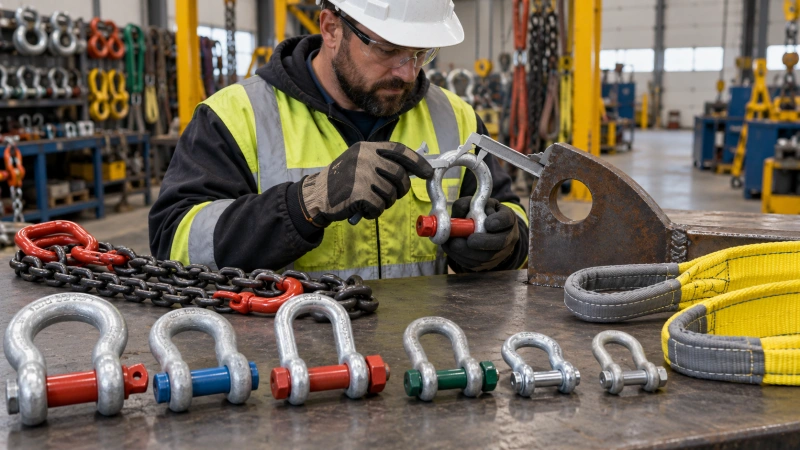
Select the closure according to how often the connection is opened and whether movement, vibration, or the installation period calls for additional pin retention. Then specify the service environment and finish. Galvanized finishes and stainless-steel materials address different corrosion requirements, but the selected material or finish still requires a suitable rating and product specification.
See the shackle material guide if corrosion exposure is part of the selection.
Finally, identify the standard or product pattern required by the job and request the specified markings and documentation package. A general statement that a supplier sells “certified shackles” does not establish that every model meets the same standard or is supplied with the same certificate. Confirm the purchase specification and required documents for the selected item.
Before the Shackle Goes Into Service
Inspect the shackle body, pin, and identification before use. Look for deformation, cracks, wear, corrosion that may affect the component’s integrity, damaged threads, missing retention parts, or illegible markings. Check that the assembled connection can take the intended load without binding or unintended pin rotation.
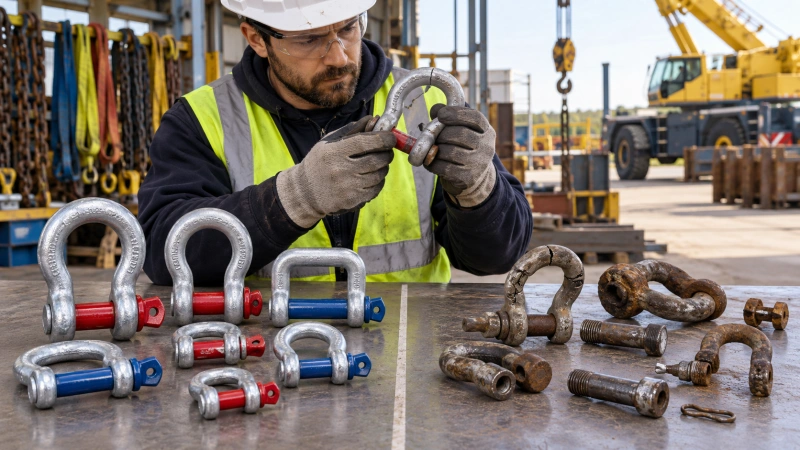
Remove any questionable item from service and follow the applicable inspection procedure; the detailed criteria are covered in the shackle inspection checklist.
Keep the load aligned as required for the selected design. If angled or side loading cannot be avoided, obtain the manufacturer’s documented approval for the exact model and apply any specified WLL reduction before the lift. Do not apply an angle factor from another brand or model to a Powerful Machinery shackle.
FAQs
What Are the Main Types of Shackles?
The main shackle body styles used in lifting and rigging are bow (anchor) and Dee (chain). Each may be offered with a screw pin or a safety-bolt closure. Other specialized designs exist, but their ratings and intended uses must be checked for each model.
Is a Bow Shackle Stronger Than a Dee Shackle?
There is no reliable strength ranking based on body shape alone. Compare the marked WLL and product data for the exact bow and Dee models, then confirm that the selected body style fits the connection and permitted load direction.
When Should I Choose a Safety-Bolt Shackle?
Consider a bolt, nut, and cotter-pin arrangement when the connection remains assembled or the application requires positive pin retention. Confirm the exact product’s suitability for the load, environment, and installation; the bolt does not replace those checks.
Can I Use a Round-Pin Shackle for Lifting?
Only when the exact product documentation permits the intended lifting application. Round-pin designs are not interchangeable with rated screw-pin or safety-bolt shackles, and unsuitable arrangements include side loading or gathering multiple sling legs. Ask for the specific model instructions rather than relying on appearance.
Choosing a Model for a Quote
Send the required WLL, body shape, pin type, connection dimensions, intended load direction, operating environment, material or finish, applicable product specification, quantity, and required documents. Powerful Machinery can use those details to identify suitable options from its shackle range.