Trying to decide between the come along vs hi lift jack? If you need a tool for steady pulling or precise lifting, a come-along gives you more control and safety. A hi-lift jack shines when you want to quickly raise vehicles or heavy objects. Both tools have unique strengths.
Your choice depends on what you need to move, lift, or recover.
Key Takeaways
Choose a come-along tool for steady pulling and precise lifting. It offers high control and safety for tasks like securing loads and lifting objects slowly.
Opt for a hi-lift jack when you need to lift vehicles quickly or recover from tough terrain. It provides height and speed, making it ideal for off-road situations.
Always check the weight capacity of your tool before use. Ensure it matches your vehicle’s weight and the job requirements for safe operation.
Consider the terrain and your vehicle type when selecting a tool. A come-along is compact and portable, while a hi-lift jack is bulkier but offers greater lifting height.
Follow safety guidelines for both tools. Inspect them regularly, use them on stable ground, and avoid standing near moving parts to prevent accidents.
Come Along vs Hi Lift Jack: Quick Comparison
Key Differences
You probably wonder what sets these two tools apart. Let’s break down the main features and specs so you can see how they come along vs hi lift jack stack up against each other.
Feature | Come Along Tool | Hi-Lift Jack |
|---|---|---|
Weight Capacity | Up to 6,000 lbs (varies by model) | 2,000 – 6,000+ lbs |
Lift Height | Limited (usually under 18 inches) | 48 – 60 inches |
Operation | Manual ratchet for pulling/lifting | Lever action for lifting/recovery |
Control | Precise, slow, steady | Quick, less precise |
Portability | Compact, easy to carry | Bulky, longer and heavier |
Safety | High control, less risk | Requires caution, risk of tipping |
Main Function | Pulling, lifting, and securing loads | Lifting vehicles, recovery |
You get more control with a come-along tool. The ratchet lets you move heavy loads slowly and safely. The hi-lift jack gives you speed and height, which is perfect when you need to raise a vehicle or get out of a tough spot fast.
Tip: If you need to pull something out of mud or lift a load with precision, the come along vs hi lift jack comparison leans toward the come along tool. If you want to lift your truck or SUV high enough to change a tire or recover from a ditch, the hi-lift jack wins.
Best Uses
Let’s look at where each tool shines. You want to match the right tool to your job, so check out these common scenarios.
Come Along Tool
Pulling heavy loads across short distances
Lifting objects with steady control
Securing cargo for transport
Construction and industrial lifting
Recovery situations where slow, steady movement is safer
Hi-Lift Jack
Raising vehicles for tire changes or repairs
Off-road recovery for trucks, SUVs, and ATVs
Agricultural equipment maintenance
Industrial and mining operations
Emergencies where you need height and speed
Hi-lift jacks are popular with off-roaders, farmers, and construction crews. You see them used on off-road vehicles, agricultural machines, and industrial rigs. These jacks handle big jobs, especially when you need to lift something high and fast.
The come along vs hi lift jack debate comes down to your needs. If you want steady pulling or precise lifting, you should pick the come-along tool. If you need to lift a vehicle or recover from rough terrain, the hi-lift jack is your best bet.
You only need one tool for most jobs. If you work in construction, transport, or need to secure loads, the come-along tool gives you more control and safety. If you’re an off-roader or deal with heavy vehicles, the hi-lift jack offers height and speed.
Note: Always check the weight capacity before you use either tool. Hi-lift jacks range from 2,000 to 6,000 pounds. For compact cars and SUVs, a 4,000-pound jack works well. For full-size trucks and off-road rigs, you need a jack rated for 6,000 pounds or more.
The come along vs hi lift jack comparison helps you choose the right tool for pulling, lifting, or recovery. You get safety and control with a come-along tool. You get height and speed with a hi-lift jack. Pick the tool that matches your job, and you’ll work smarter and safer.
What is a Come Along Tool?
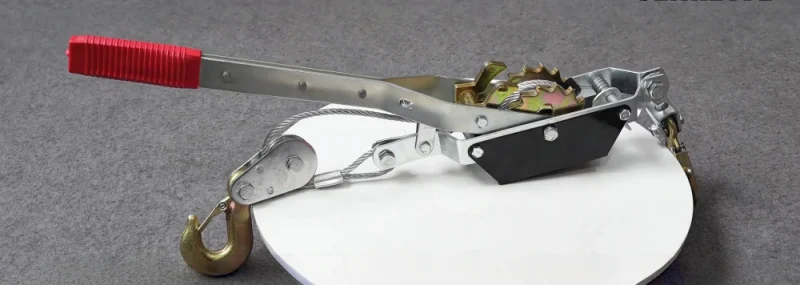
How the Come Along Tool Works
You use a come-along to pull, lift, or secure heavy loads with steady control. The tool features a ratchet mechanism that lets you move objects slowly and safely. You attach the hooks to your load, then crank the handle to tighten the wire rope.
This manual action gives you precise control, which is perfect when you need to avoid sudden movements or keep things stable. Unlike powered winches, a come-along tool relies on your effort, so you can use it anywhere without worrying about batteries or power sources.
Tip: If you want a tool that works in remote locations or harsh environments, a come-along tool is a smart choice.
Main Applications
You can use a come-along tool in many situations. It’s handy for construction, automotive repairs, and industrial lifting. You might pull a stuck ATV out of mud, lift beams on a job site, or secure cargo for transport.
The tool’s compact size makes it easy to carry, so you can bring it along for off-road adventures or keep it in your workshop.
Here’s how come along tools compare to other manual winches:
Feature | Come Along | Winch |
|---|---|---|
Power Source | Manual tool requiring physical effort | Powered by an electric motor, a hydraulic system, or a vehicle engine |
Load Capacity | 2 to 5 tons for light-duty applications | 2 to 20 tons or more for heavy-duty tasks |
Distance of Operation | Short-distance pulling (10 to 30 feet) | Long-distance pulling (up to 100 feet or more) |
Portability | Compact, lightweight, easy to carry | Bulkier, often requires a power source |
Ease of Use | Simple manual operation requires physical effort | Easier to operate with minimal physical effort, but a more complex setup is required |
Advantages of Powerful Machinery’s Come Along Tool
Powerful Machinery’s Come Along Tool stands out for its durability, high load capacity, and ergonomic design. You get a tool that handles up to 3 tons, which covers most lifting and pulling jobs. The ratchet mechanism gives you smooth, precise control.
The heavy-duty hooks and wire rope ensure secure attachment, even in tough conditions. The ergonomic handle reduces fatigue, so you can work longer without discomfort. You also benefit from a compact design that makes storage and transport easy.
Note: Powerful Machinery’s tools meet strict safety standards like CE Marking and ISO 9001, so you can trust their reliability.
Ideal Use Cases
You’ll find the come-along tool useful in these situations:
Pulling vehicles out of mud or snow
Lifting beams or machinery on construction sites
Securing loads for transport
Recovering off-road vehicles
Handling industrial equipment
If you need a tool that’s tough, versatile, and easy to use, Powerful Machinery’s Come Along Tool fits the bill. You get strength, safety, and convenience in one package.
What is a Hi-Lift Jack?
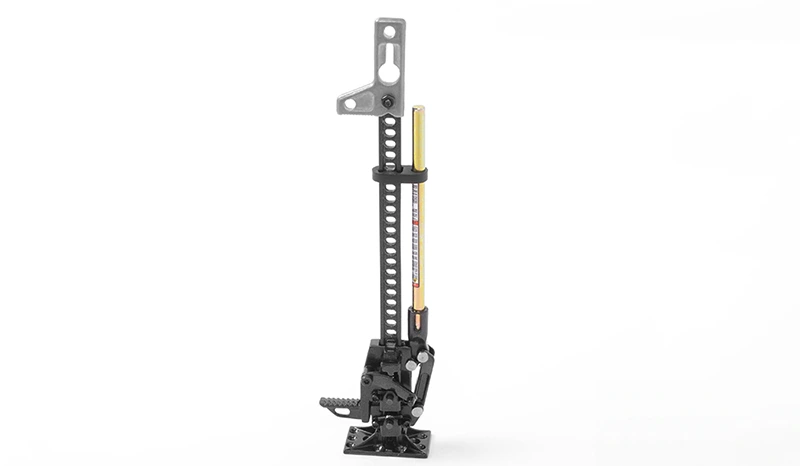
How a Hi-Lift Jack Works?
You might look at a hi-lift jack and wonder how it can lift such heavy things. This jack uses a simple but powerful mechanical system. You pull the handle back and forth, and a ratchet mechanism moves the lifting arm up or down.
This lets you raise or lower your vehicle or equipment with steady control. Some jacks use hydraulic power, but the hi-lift jack works with pure muscle and a clever design.
Mechanical Principle | Description |
|---|---|
Mechanical Jack | Operates by pulling a handle back and forth, which engages a ratchet mechanism to rotate a screw, lifting the load. |
Hydraulic Jack | Utilizes Pascal’s principle to amplify force through liquid pressure, allowing for lifting with less effort. |
You don’t need electricity or batteries. You just need a solid surface and a little elbow grease.
Main Applications
You’ll find a hi-lift jack in many places. Off-road drivers love this jack because it can get a stuck vehicle out of mud or a rut. Farmers and construction workers use it to lift heavy equipment or repair machinery. You can even use a hi-lift jack to break a tire bead if you need to change a tire in the wild.
This jack also comes in handy for emergency roadside fixes and in industrial settings where you need a tough, portable lifting tool.
Hi-lift jacks are popular in automotive, aviation, industrial, and agricultural work. Their versatility makes them a favorite for off-road sports and emergencies.
Pros and Cons
Let’s look at what makes a hi-lift jack great—and where you need to be careful.
Advantages | Disadvantages |
|---|---|
Versatility: Multi-functional tool | Safety Concerns: Risk of accidents |
High Lifting Capacity: Lifts vehicles several feet | Limited Stability: Can be unstable on soft terrain |
Durability: Made from heavy-duty materials | Slow Operation: Slower than hydraulic jacks |
No Power Source Required: Operates mechanically | N/A |
Tip: Always use your hi-lift jack on stable ground and follow safety guidelines to avoid accidents.
Best Scenarios for Use
You want a hi-lift jack when you face tough recovery jobs. Here are some common situations:
Tire in a hole: Use the jack to lift a stuck tire and place rocks or logs underneath for traction.
Rig is off-track: The hi-lift jack helps recover vehicles in remote or tricky spots.
Breaking a tire bead: This jack can help remove a tire from the rim when you’re far from a shop.
Stabilizing a vehicle: You can steady your vehicle to prevent rolling during repairs.
Off-camber situations: The hi-lift jack works well when your vehicle sits at an angle.
Many users prefer the hi-lift jack for its adaptability. You can jack up a stuck wheel, steady your rig, or even winch out of a tough spot. If you need a tool that does more than just lift, this jack is a smart choice.
Come Along vs Hi Lift Jack: Performance Comparison
Vehicle Recovery
You face tough situations when your vehicle gets stuck. Sometimes you need to pull a car out of mud or lift a truck off a rock. The come-along tool gives you slow, steady pulling power. You attach the hooks, crank the handle, and move your vehicle inch by inch.
This method works well when you want control and precision. You avoid sudden jerks and keep your vehicle stable.
The hi-lift jack offers a different approach. You use the jack to lift your vehicle high enough to place rocks or boards under the tires. You can also use the jack as a winch by attaching straps and pulling your vehicle sideways.
Off-road drivers love the jack for its height and speed. You get your vehicle out of deep ruts or holes quickly.
Tip: If you need to recover a vehicle in rough terrain, the jack gives you height and versatility. The come-along tool gives you control and steady movement.
Lifting and Pulling Power
You want to know which tool handles heavy loads better. The come-along tool has a maximum load capacity of 3 tons. You can lift beams, pull machinery, or secure cargo. The ratchet mechanism lets you adjust tension with precision. You avoid overloading and keep your work safe.
The hi-lift jack can lift vehicles weighing up to 6,000 pounds. You raise your truck or SUV several feet off the ground. You use the jack for tire changes, repairs, or recovery. The jack works fast, but you need to watch for stability. You can also use the jack for pulling tasks, but it takes more setup and skill.
Tool | Max Load Capacity | Main Function | Control Level |
|---|---|---|---|
Come Along Tool | 3 tons | Pulling, lifting | High (precise) |
Hi-Lift Jack | 2,000-6,000 lbs | Lifting, recovery | Moderate (quick) |
You get more pulling power with the come-along tool. You get more lifting height with the jack.
Safety and Ease of Use
You care about safety every time you use these tools. The come-along tool gives you steady control. You avoid sudden movements and keep your load secure. You need to inspect the tool for wear and damage. You lubricate the ratchet mechanism to keep it reliable. You store the tool indoors to prevent moisture damage.
The hi-lift jack requires careful handling. Many people think the jack is unsafe, but proper use makes it reliable. You secure your vehicle before lifting. You use stabilizing straps and avoid standing beside or under the jack. You never use the jack for tasks like crawling under vehicles.
You follow the manufacturer’s guidelines for safe operation.
Here are some safety tips for both tools:
Lubricate the jack’s mechanisms regularly.
Store the jack indoors to avoid moisture damage.
Inspect the jack often for signs of wear or damage.
Always follow the manufacturer’s instructions.
Common misconceptions about the hi-lift jack:
Some believe the jack is unsafe.
Some think you need larger tires to use the jack.
Proper maintenance and usage are crucial for safety.
Note: You keep yourself safe by following these practices. You check your tools before every job. You use the right tool for the task.
Portability
You want a tool that fits in your vehicle or toolbox. The come-along tool is compact and lightweight. You carry it easily and store it in small spaces. You bring it along for off-road trips or keep it in your workshop.
The hi-lift jack is larger and heavier. You need more space to store it. You mount the jack on your vehicle or carry it in your truck bed. The jack’s size gives you more lifting height, but it takes up more room.
Tool | Portability | Storage Needs |
|---|---|---|
Come Along Tool | High | Fits in the toolbox |
Hi-Lift Jack | Moderate | Needs a vehicle mount |
You choose the tool that matches your storage and transport needs. If you want easy portability, the come-along tool wins. If you need height and power, you pick the jack.
Choosing the Right Tool
Matching Tool to Your Needs
You want to pick the right tools for your job. Sometimes you need to pull a load slowly and safely. Other times, you need to lift a vehicle fast. You should look at what each jack can do and match it to your needs. Here’s a quick table to help you compare:
Factor | Description |
|---|---|
Capacity | Choose a jack that matches your vehicle’s weight. |
Lift Range / Travel | Make sure the jack can handle the height you need for your terrain or vehicle. |
Size & Weight | Pick a jack that fits in your vehicle or can be mounted easily. |
Terrain | Check if the jack works well on the ground you drive on. |
Your Vehicle’s Limitations | Look at your vehicle specs to see if the jack is compatible. |
Cost | Find a jack that balances quality and price. |
You get more control with a come-along tool for steady pulling. You get speed and height with a hi-lift jack for quick lifts.
Considering Vehicle Type and Terrain
Your vehicle and the ground you drive on matter a lot. If you drive a compact car, you probably need a smaller jack. If you drive a truck or SUV, you need a jack with a higher capacity.
Rocky or muddy terrain calls for a jack that stays stable. You should check your vehicle’s specs before you buy. You also want a jack that fits in your storage space. If you travel off-road, you need a jack that can handle rough ground.
Tip: Always test your jack before you head out. Make sure it works with your vehicle and the terrain you plan to tackle.
Safety Tips
You need to stay safe every time you use these tools. Here are some key safety points to remember:
Keep the jack perpendicular to the load and check all bolts and chains.
Wear gloves and safety glasses to protect yourself.
Stay away from moving parts and use caution when lowering loads.
Make sure the load sits balanced and on stable ground.
Test the jack without a load to confirm it works correctly.
You protect yourself and your gear by following these safety points. You avoid accidents and keep your work smooth.
Real-World Scenarios
Off-Road Recovery Example
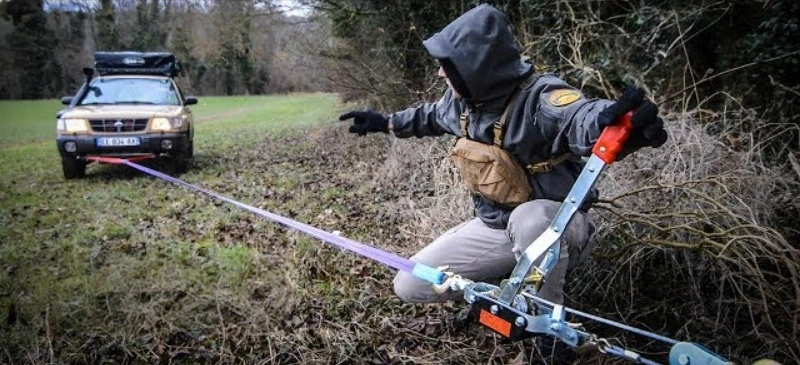
You never know what you’ll face on the trail. Imagine you’re driving your truck through deep sand. Suddenly, your wheels spin, and you’re stuck. Some drivers use traction aids or winches, but you can also reach for a come-along tool.
With the Powerful Machinery’s Come Along Tool, you attach the heavy-duty hooks to a solid anchor point. You crank the handle and pull your vehicle out, inch by inch. This method gives you control and keeps you safe, even when you’re alone.
Here are a few real-life recovery stories:
Jake escaped deep sand by using traction aids and a manual puller, showing how simple tools can save the day.
Overlanding groups often use winches or come-along tools to recover vehicles from mud.
Off-roaders who invest in quality gear, like Powerful Machinery’s Come Along Tool, find recovery easier and safer.
Tip: Always pack a reliable come-along tool for solo adventures. It can turn a tough situation into a quick fix.
Construction and Industrial Use
You see come-along tools and hi-lift jacks on job sites every day. These tools help you lift, pull, and position heavy materials with precision. Powerful Machinery’s Come Along Tool stands out for its strength and ergonomic design. You can use it for everything from installing cabinets to setting up HVAC units.
Application Type | Description |
|---|---|
Cabinet installation | Lifts cabinets for perfect placement |
Window and door installation | Supports accurate fitting |
Flooring installation | Levels of flooring materials |
HVAC equipment installation | Lifts heavy HVAC units |
Framing and decking | Secures framing materials |
You get more control and safety when you use a come-along tool for these tasks.
Emergency Situations
Emergencies call for dependable tools. You might need to lift debris after a storm, rescue someone from a vehicle, or stabilize a structure. Hi-lift jacks, like the First Responder Jack, handle lifting, pushing, and pulling without power. They work well in remote areas and disaster zones.
Feature | Description |
|---|---|
Tool Name | Hi-Lift First Responder Jack |
Lifting Capacity | Up to 4,660 lb |
Versatility | Lifting, pushing, pulling, winching |
Ideal Use | Rescue, extrication, stabilization |
You can also use Powerful Machinery’s Come Along Tool for controlled pulling or lifting in emergencies. Its compact size means you can keep it in your vehicle or toolbox, ready for anything.
Note: The right tool can make all the difference when every second counts.
Conclusion
You now know the main differences between a come-along tool and a hi-lift jack. Come along tools give you versatility for pulling, lifting, and tensioning loads at different angles.
Hi-lift jacks work best for vertical lifting, especially with vehicles. If you want reliable control and flexibility, Powerful Machinery’s Come Along Tool stands out. For tough jobs, you need a tool you can trust. Check out the official site for more details and specs.
FAQ
Can I use a come-along tool for bullet casting projects?
You can use a come-along tool to move heavy molds or equipment during bullet casting. The tool helps you handle materials safely and gives you more control when setting up your workspace.
What’s the best tool for cast bullet shooting preparation?
If you need to lift or pull targets or shooting benches, a come-along tool works well. You get steady movement and precise placement, which makes cast bullet shooting setups easier.
Is a hi-lift jack safe for hunting with cast bullets?
You can use a hi-lift jack to lift vehicles or equipment when hunting with cast bullets. Always check the ground and follow safety tips to avoid accidents in the field.
How do I maintain my come-along tool?
You should inspect the tool for wear and lubricate the ratchet mechanism. Store it in a dry place. Regular maintenance keeps your tool reliable and ready for any job.
Can I use a come-along tool outdoors?
You can use a come-along tool outdoors. It handles tough conditions and works well for pulling, lifting, or securing loads in remote areas.