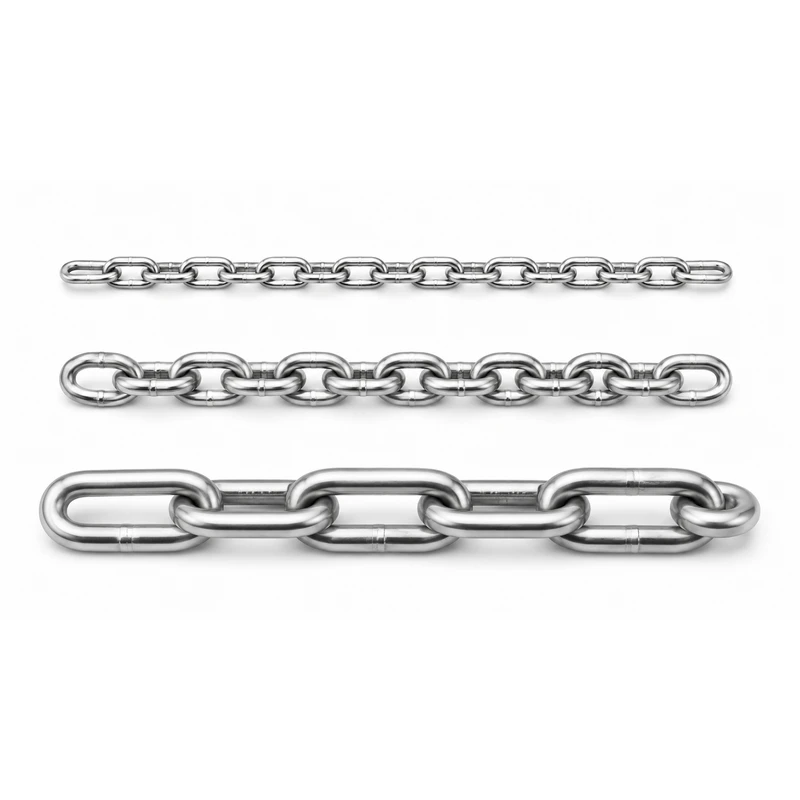
Safe mooring chain setup protects both your crew and vessels. You must avoid common mistakes that cause injuries or fatalities. Between 2016 and 2021, mooring accidents led to 858 injuries and 31 deaths worldwide. To reduce these risks, you need to select certified products like Powerful Machinery’s Mooring Chain.
A high-performance mooring chain setup uses anchors, chains, and shackles that match your specific requirements. Check out the table below to see how certified products enhance safety:
Feature | Description |
|---|---|
High Performance Anchors | Protects crew and vessels during mooring |
Certified by Class Authorities | Guarantees reliability and quality |
Range of Designs | Matches seabed types for safer mooring chain setup |
You should always follow practical, step-by-step instructions to ensure your mooring chain setup remains safe and reliable.
Key Takeaways
Choose certified mooring products to enhance safety and reliability for your crew and vessels.
Select the right anchor type based on seabed conditions to ensure strong holding power.
Regularly inspect and maintain your mooring chain and components to prevent corrosion and wear.
Adjust chain length according to water depth and tidal changes for secure mooring.
Follow a step-by-step installation process and conduct a final safety check to ensure a reliable setup.
Mooring Chain Setup Components
A safe and effective mooring system depends on using the right components. You must select each part carefully to meet ground tackle requirements and ensure long-term reliability.
Anchor Types
Anchors form the foundation of your mooring setup. You can choose from several types, each designed for specific seabed conditions:
Anchor Type | Best For (Seabed) | Key Advantage |
|---|---|---|
Plow-Style | Sand, Mud, Clay | Resets itself easily |
Fluke-Style | Soft Mud, Sand | Highest holding power-to-weight ratio |
Claw-Style | Sand, Rock, Mud | Sets quickly and reliably |
Scoop-Style | Most Seabeds | Fast setting, very high holding power |
Plow-style anchors work well for soft bottoms. Fluke-style anchors offer excellent holding in sand or mud. Claw-style anchors set quickly on many seabeds. Modern scoop anchors provide fast setting and strong holding in most conditions.
Mooring anchors outperform traditional options by holding four to five times more weight and staying secure after installation.
Mooring Chain Options from Powerful Machinery
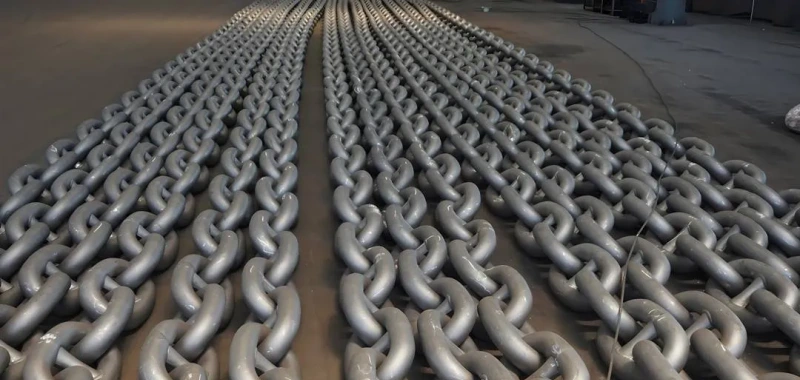
The chain you select must match your vessel size and environment. Powerful Machinery offers a broad range of mooring chains, each with unique features:
Chain Type | Features | Applications |
|---|---|---|
High proof and breaking loads, robust | Large vessels, offshore platforms | |
Flexible, lighter, reduced snagging | Small boats, coastal vessels | |
Adjustable | Versatile sizing for depth and boat size | Various water depths and boat sizes |
Galvanized | Zinc-coated for rust prevention | Saltwater environments |
High Test | Short links, high load-bearing capacity | Large vessels |
Alloy | Durable, wear-resistant | Freshwater and saltwater use |
Powerful Machinery’s chains use galvanized steel or AISI 316 stainless steel. Every chain meets international certifications such as ISO9001, ISO14001, TUV Rheinland, EURO CERT, OSHA, and ASTM. You receive custom-engineered solutions and full support from consultation to production.
Swivels, Shackles, Buoys
You need additional hardware to complete your mooring system:
Swivels prevent the chain from twisting as your boat moves, allowing the anchor to rotate freely.
Shackles connect the chain to anchors and buoys, preventing kinks and allowing 360° rotation. Regular inspection keeps them working smoothly.
Buoys provide a stable connection point and help your mooring system stay flexible and visible.
Tip: Always inspect shackles and swivels for corrosion or wear before each use to maintain safety.
These components work together to create a reliable mooring setup that meets industry standards and keeps your vessel secure.
Build a Mooring: Choosing the Right Chain
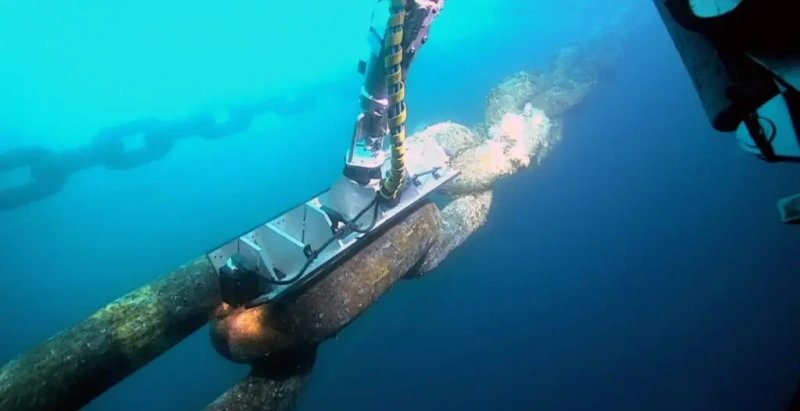
Selecting Powerful Machinery Mooring Chain
You need to select a chain that matches your vessel, environment, and operational demands. Powerful Machinery offers a wide range of mooring chains, each engineered for strength and reliability. You can choose from stud link, studless, galvanized, or alloy chains.
These chains meet international certifications, including ISO9001 and TUV Rheinland, ensuring safety and performance.
When you build a mooring, consider the following factors:
Factor | Description |
|---|---|
Chain Grades | Choose grades for commercial or high-strength offshore applications. |
Size and Dimensions | Diameter ranges from 16 mm to 162 mm; larger sizes suit deeper waters and heavier loads. |
Material and Surface Treatment | Select carbon steel for general use or alloy steel for high performance; coatings resist corrosion. |
Certification and Compliance | International standards guarantee reliability and safety. |
Environmental Considerations | Salinity and temperature affect corrosion rates and protective measures. |
Maintenance Practices | Regular inspections and maintenance extend chain life and performance. |
Powerful Machinery’s customizable options allow you to tailor chain length, material, and surface treatment to your project. You receive expert support from consultation to production.
Determining Chain Size and Material
You must match chain size and material to your boat’s weight and water conditions. Powerful Machinery provides chains in various sizes and materials to suit different vessels and environments.
Boat Length | Recommended Chain Size |
|---|---|
20 – 26 feet | 7/8mm (approx. 5/16″) |
22 feet | 7mm or 8mm |
25 feet | 8mm |
26 feet | 8mm |
30 feet | Minimum 30 feet of chain |
44 lb anchor | 8mm or 10mm |
You can select hot-dip galvanized steel for corrosion resistance and cost-effectiveness. Stud link chains work best for large vessels and high-stress situations. Studless chains are lighter and more flexible, ideal for recreational boats.
Tip: Always choose chain material based on your local water conditions. Galvanized steel resists corrosion in saltwater, while alloy steel offers extra strength for demanding environments.
Anchor and Chain Length Guidelines
You must determine anchor and chain length based on water depth, vessel size, and environmental conditions. Powerful Machinery’s chains adapt to these requirements, ensuring secure mooring.
Yacht Length Overall | Chain Size |
|---|---|
< 6 metres | 6mm |
6 – 8 metres | 7/8mm |
8 – 10 metres | 8mm |
10 – 12 metres | 8/10mm |
12 – 14 metres | 10mm |
14 – 16 metres | 10mm |
16 – 18 metres | 10/12mm |
18 – 20 metres | 12mm |
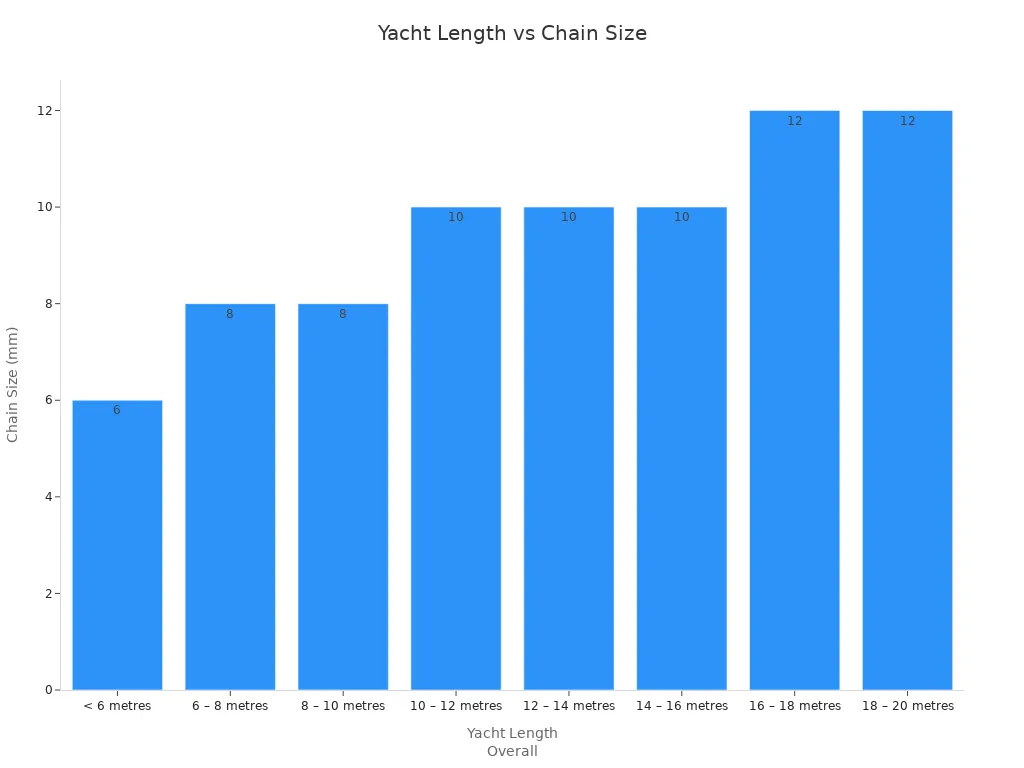
You should use about 1/8 inch of chain diameter for every 8 to 9 feet of your boat’s length. The total anchor rode should be 4 to 7 times the water depth. A scope of 7:1 is ideal for most situations.
The International Association of Classification Societies recommends a minimum anchor chain length of 6 to 10 times the water depth. The Royal Yachting Association suggests a minimum of 4 times the depth.
Environmental conditions also affect your choices. Seabed type determines anchor selection. Sandy areas require lightweight anchors like fluke anchors. Rocky areas need stronger anchors, such as plow or Bruce anchors.
Strong currents or exposed locations demand increased chain length and size. Galvanized steel chains provide excellent corrosion resistance in harsh marine environments.
Note: Always inspect your chain and anchor before installation. Adjust chain length for changing water depths and weather patterns.
You can rely on Powerful Machinery’s certified products and expert support to ensure your mooring system meets all safety and performance standards.
Installation Process & Safety Checks
A safe installation ensures your complete mooring system performs reliably in all conditions. You must follow each step carefully and check every connection before you finish. Use the following guide to assemble your setup, secure all hardware, adjust for water depth, and complete a final safety inspection.
Step-by-Step Assembly
You can assemble your mooring line and chain setup by following these steps:
Open the 1-meter mooring bungee and remove the carabiner and small foam float.
Position the chain and galvanized quick link at the bottom of your setup.
Cut a 1/2-inch nylon braided rope to the length needed to reach the water’s surface.
Tie the nylon rope to the top ring of the mooring bungie using a bowline knot. Secure the knot with a zip tie.
Thread a rope float onto the top of the nylon rope.
Tie another bowline knot to a stainless steel quick link at the top of the rope.
Attach the mooring line to the anchor eye using the chain and galvanized quick link.
Adjust the length of the mooring line so it matches the water depth and expected tidal changes.
Tip: Always double-check each knot and connection before moving to the next step. A secure mooring line prevents accidental slips and keeps your vessel safe.
Secure Connections
You must ensure every connection in your mooring line is strong and reliable. Follow these best practices:
Attach the end of the bottom chain to the anchor using a shackle one size larger than the chain.
If the anchor neck is large, use two shackles to adapt the fit.
Add a 5/8-inch drop shackle to the bottom of the chain for mooring drop purposes.
Connect the other end of the bottom chain to the lower swivel with a shackle one size larger than the chain.
Attach the top chain to the swivel using a shackle one size larger than the top chain.
Secure the top swivel to the ring with a shackle.
Tighten all shackles and wire them with stainless steel seizing wire.
You should inspect shackles, swivels, and connectors for signs of stress, movement, or corrosion. Replace any worn or damaged parts immediately.
Rinse the chain and hardware with fresh water after each use, especially after anchoring in saltwater. Use a soft brush to remove sand and debris, and let everything dry before storing.
Note: Apply a marine-grade lubricant or corrosion inhibitor to all moving parts. This reduces friction and prevents rust, extending the life of your mooring line.
Adjust for Water Depth
You must adjust your mooring line and chain to match the highest expected tide. This keeps your vessel secure during both high and low tides. Use these guidelines:
Use enough chain and line to accommodate the maximum water depth plus tidal changes.
Follow the general rule of a scope of 2.5 to 3 times the maximum water depth for your mooring line.
Track and label your scope intervals to manage deployment more precisely.
Callout: Always check local tide charts before installation. Adjust your mooring line length if you expect seasonal changes in water level.
Final Safety Inspection
Before you finish, complete a thorough safety inspection of your mooring line and chain:
Check for rust or missing galvanizing. Surface rust is normal, but deep corrosion means you need to replace the chain.
Inspect each link for bending or twisting. Any deformation weakens the chain.
Look for thinning at contact points. If you see a loss of more than 10-15% thickness, replace the chain.
Examine all shackles for wear, corrosion, or damage. Replace as needed.
Document all maintenance and inspection activities for future reference.
Chain Grade | Material Type | Safety Factor | Working Load Limit Ratio |
|---|---|---|---|
G30 | Carbon or Mild Steel | 4:1 | 4:1 |
G40 | Carbon or Mild Steel | 3:1 | 3:1 |
G43 | Carbon or Mild Steel | 3:1 | 3:1 |
G70 | Heat-Treated Steel | 4:1 | 4:1 |
G80/G100 | Heat-Treated Steel | 4:1 | 4:1 |
Tip: Only use chains and shackles that meet or exceed the recommended safety factor for your vessel and environment.
By following these steps, you create a mooring line and chain setup that meets industry standards and keeps your vessel secure. Powerful Machinery’s certified products help you build a complete mooring system that stands up to harsh marine conditions.
Maintenance Tips for Powerful Machinery Mooring Chain
Preventing Corrosion
You can extend the life of your mooring chain by following proven corrosion prevention methods. Powerful Machinery chains feature advanced coatings like hot-dip galvanizing, Armorgalv, and Galfan, which create strong barriers against rust. After each use, rinse the chain thoroughly with fresh water.
Use a soft brush to remove sand and debris. Let the chain dry completely before storing it. Apply marine-grade lubricants or corrosion inhibitors to high-stress areas. This reduces friction and protects against rust, especially in saltwater environments. Store your chain in a dry, ventilated area to prevent moisture buildup.
Maintenance Practice | Description |
|---|---|
Regular Inspection | Spot early signs of wear and damage through visual checks. |
Cleaning Procedures | Rinse and clean to stop corrosion and marine growth. |
Lubrication and Corrosion Protection | Apply grease and coatings to prevent rust and reduce friction. |
Proper Storage and Handling | Store in dry, ventilated spaces and avoid tangling. |
Usage Rotation | Alternate chains and reverse ends for even wear. |
Tip: Well-lubricated chains operate smoothly and reduce stress on your windlass and anchor hardware.
Mooring Chain Inspection Schedule
Regular inspections keep your mooring chain safe and reliable. Follow this schedule to catch wear or damage early:
Quick Visual Checks – Inspect your mooring chain every few months for obvious wear or corrosion.
Seasonal Thorough Inspection – At the end of each season, perform a detailed check for damage or weakened links.
Non-Destructive Testing – Use ultrasonic or other NDT methods to detect hidden flaws.
Documentation – Record every inspection to track changes over time.
Professional Assessments – Schedule annual or biannual professional inspections based on your findings.
Mooring Integrity Management – Develop a program to maintain system reliability and safety.
Troubleshooting Common Issues
Common issues with mooring chains include wear, fatigue damage, abrasion, corrosion, marine growth, and operational damage. You may also encounter material defects or excessive tension during storms. To troubleshoot these problems:
Inspect the chain and hardware for visible damage or thinning.
Remove marine growth that can hide corrosion.
Replace any worn or deformed links immediately.
Rotate and reposition chain sections to promote even wear.
Develop a repair plan for potential issues before they become critical.
Powerful Machinery designs its mooring chains for maximum durability. Industry data shows that high-strength alloy chains and advanced coatings help these products withstand harsh marine environments.
If you need support, Powerful Machinery offers expert guidance and fast service to keep your mooring system in top condition.
Conclusion
You ensure safe mooring chain installation by following marine safety guidelines. Use two chain lengths, incorporate a swivel, and select proof coil chains with corrosion resistance. Choose certified products like Powerful Machinery’s Mooring Chain for reliability. Review this checklist for installation and maintenance:
Task | Frequency |
|---|---|
Visual chain inspection | Monthly |
Rinse the chain with fresh water | Seasonally |
Inspect the anchor and connections | Annually |
Replace damaged components | As Needed |
Consult an approved professional mooring installer for expert advice and prioritize safety at every step.
FAQ
What is the best chain type for harsh marine environments?
You should select a high-tensile, galvanized chain. Powerful Machinery offers stud links and alloy chains with corrosion-resistant coatings. These chains perform well in saltwater and withstand heavy loads.
How often should you inspect your mooring chain?
You need to inspect your mooring chain monthly. Look for signs of corrosion, wear, or deformation. Schedule a thorough inspection at the end of each season.
Can you customize chain length and material for your mooring setup?
You can customize chain length and material with Powerful Machinery. Choose options that fit your vessel size, water depth, and operational needs. Customization ensures a secure and reliable mooring.
What makes a permanent mooring system different from a temporary setup?
A permanent mooring system uses certified, durable chains and anchors designed for long-term use. You install it once and rely on it for ongoing vessel security. Temporary setups use lighter materials and require frequent adjustments.
How do you prevent corrosion on your mooring chain?
Rinse your chain with fresh water after each use. Apply marine-grade lubricants and store the chain in a dry, ventilated area. Powerful Machinery chains feature advanced coatings that help prevent rust.