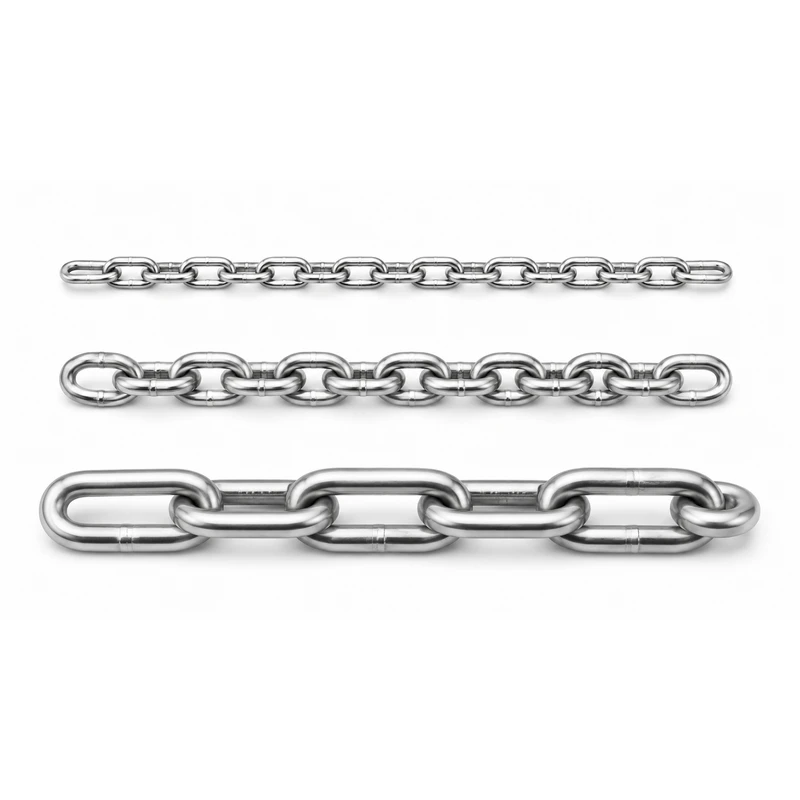
When you compare welded vs weldless chain, the main difference lies in how each link is connected. Welded chains feature links fused for enhanced strength, while weldless chains use interlocking links without welding. This distinction affects performance in real-world applications:
Welded chains are graded for strength and durability, making them reliable for heavy-duty tasks.
Weldless chains are not suitable for rigging or lifting, as their construction limits their load capacity.
Advantage | Weldless Chains | Welded Chains |
|---|---|---|
Reliability | Superior corrosion resistance | Graded for heavy-duty strength |
Hygiene | Easy to clean, seamless design | May have small crevices |
Operational Efficiency | Smooth, quiet operation | Designed for tough environments |
You can trust Powerful Machinery for both types of chains, as the company supplies certified products that meet industry standards.
Key Takeaways
Welded chains provide superior strength and durability, making them ideal for heavy-duty tasks like lifting and towing.
Weldless chains offer flexibility and easy customization, perfect for decorative or light-duty applications.
Always check the load capacity before selecting a chain to ensure safety and prevent failures.
Regularly inspect welded chains for wear and corrosion to maintain their performance and safety.
Choose the right chain type based on your specific application needs to enhance efficiency and safety.
Welded vs Weldless Chain Overview
What Are Welded Chains?

You will find welded chains in many heavy-duty environments. Each link in these chains is permanently joined by welding, which creates a solid and continuous loop. This construction method gives welded chains the strength needed for lifting, towing, and securing loads.
Manufacturers use high-grade materials like super carbon steel to ensure durability and safety. International standards require that welded chains undergo proof testing before leaving the factory.
These tests check for defects and confirm that each chain meets strict working load limits. You should always inspect welded chains regularly to maintain safety and performance.
Feature | Welded Chains | Weldless Chains |
|---|---|---|
Connection | Links are joined by welding. | Links are connected using pins or rivets. |
Strength | Good strength and durability. | Flexible, not for heavy loads. |
Cost | Usually less expensive to produce. | Typically more expensive. |
Durability | Can last long if the welds are of high quality. | Often more durable as there are no welds to fail. |
What Are Weldless Chains?

Weldless chains use interlocking links that do not require welding. Instead, these links connect with pins or rivets, which makes the chain flexible and easy to adjust. You will often see weldless chains in decorative or light-duty applications. Their design allows for quick customization and installation.
Weldless chains are not intended for lifting or heavy loads, but they offer excellent versatility for non-load-bearing uses. You can choose from different finishes and sizes to match your project needs.
Powerful Machinery manufactures both welded chains and weldless chains to the highest specifications. The company follows DIN standards and other international certifications. This commitment ensures that every chain you use is reliable and safe for its intended application.
Strength and Durability Comparison
Load Capacity Differences
When you compare welded vs weldless chain, you notice clear differences in strength and load capacity. Welded chains use welded joints to create a continuous loop. This design gives you higher strength for lifting, towing, and securing heavy loads.
You can rely on welded chains for demanding tasks because each link is fused. Powerful Machinery tests every chain to meet strict international standards, so you know the working load limit before you use it.
Weldless chains, on the other hand, use interlocking links without welding. This design makes them flexible and easy to adjust, but it does not provide the same joint strength as welded chains.
You should not use weldless chains for heavy lifting, pipeline work, or overhead rigging. They work best for decorative or light-duty applications where strength is not the main concern.
Tip: Always check the rated load capacity before choosing a chain for your project. Using the wrong type can lead to failure and safety risks.
Chain Type | Typical Load Capacity | Best Use Cases |
|---|---|---|
Welded Chains | High | Lifting, towing, and securing loads |
Weldless Chains | Low to moderate | Decoration, light-duty hanging |
Durability in Industrial Use
You want chains that last, especially in tough industrial environments. Welded chains offer higher strength and durability for heavy-duty jobs. The welded vs weldless chain debate often centers on how each type handles repeated stress and wear.
Welded chains from Powerful Machinery use high-grade steel and precise welding. This process ensures each link can handle high loads and resist deformation.
Weldless chains excel in resisting fatigue failure. Independent testing shows that weldless chains endure many more load cycles before fatigue sets in. The absence of a heat-affected zone means weldless chains do not have weak points that can lead to cracks or breaks.
This design gives you consistent strength throughout the chain and improved performance under cyclic loading.
Weldless chains show higher resistance to fatigue failure.
Weldless chains last longer under repeated use.
Weldless chains do not have heat-affected zones, so they avoid common weak points.
When you choose between welded vs weldless chain, think about your application. For heavy lifting, welded chains provide higher strength and a more reliable joint strength. For applications with frequent movement or vibration, weldless chains offer better fatigue resistance and longer service life.
Choosing the right chain protects your team and equipment. Always match the chain type to your safety and performance needs.
Applications of Welded and Weldless Chains
Industrial Uses for Welded Chain Slings
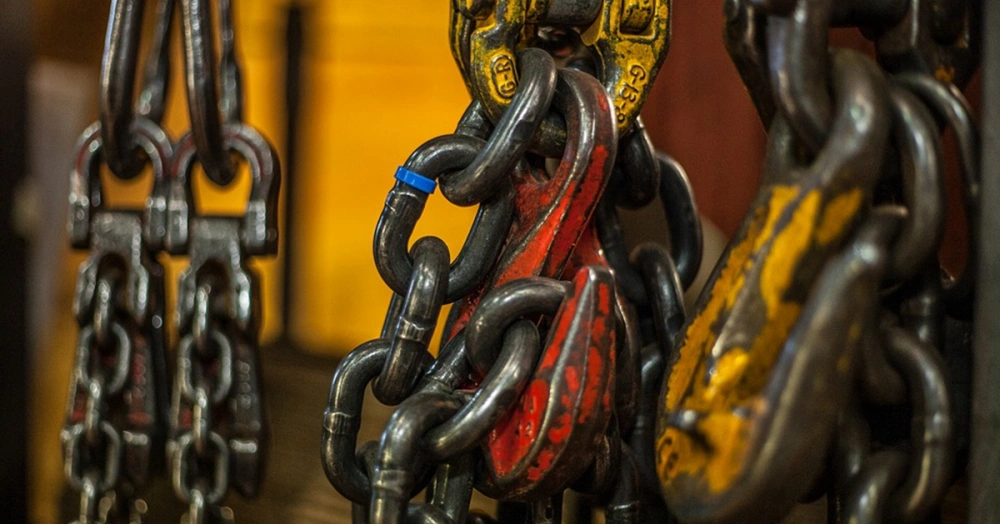
You rely on welded chain slings when you need dependable strength for demanding tasks. These chain sling attachments play a vital role in lifting applications across many industries.
Powerful Machinery offers Grade 80 and Grade 100 welded chains, which you use for heavy lifting in construction, marine, and cargo handling. You can select high-tensile alloy steel chain sling attachments for overhead lifting, securing loads, or moving equipment.
Adjustable leg options allow you to handle different load shapes and sizes.
Sector | Common Applications |
|---|---|
Material Handling | Overhead conveyor systems, drag conveyors, automated storage and retrieval systems |
Mining and Quarrying | Longwall mining systems, material extraction equipment, draglines, bucket wheel excavators |
Agricultural Machinery | Combine harvesters, hay balers, and grain transfer systems |
Marine and Offshore | Anchor systems, mooring lines, trawl nets, deck equipment |
Construction | Lifting, hoisting, and securing materials in cranes and rigging systems |
Forestry and Grain Conveying | Log conveyors, debarkers, and grain handling systems |
Cement and Lumber | Bulk material handling in cement plants and lumber mills |
You see welded chain slings used in these sectors because they deliver reliable performance and safety. You trust these chains for critical operations where failure is not an option.
Decorative and Light-Duty Uses for Weldless Chains
You choose weldless chains for projects that require flexibility and visual appeal. Weldless chain sling attachments work well in decorative and light-duty settings. You use weldless chains to hang signs, create custom displays, or add accents to architectural features.
These chains offer easy customization, so you can adjust length or shape without special tools. You find weldless chain sling attachments in retail, hospitality, and residential environments.
You benefit from weldless chains when you need lightweight solutions. You use them for hanging plants, supporting lighting fixtures, or organizing tools. Weldless chains resist corrosion and provide a clean look, making them ideal for indoor and outdoor decorative projects.
Tip: You should always match the chain sling attachments to your project requirements. For heavy lifting, select welded chain slings. For decorative or light-duty tasks, weldless chains offer the best combination of flexibility and ease of use.
You see Powerful Machinery serving construction, marine, transportation, and cargo handling sectors with certified welded chains. You also find weldless chains in commercial and residential projects where customization and aesthetics matter.
Cost and Value Considerations
Price Differences
You notice the cost difference between welded and mechanical chain slings when you compare their features and applications. Welded chains often cost less upfront because manufacturers use efficient production methods and high-grade materials.
You pay more for mechanical chain slings due to their specialized design and extra components. Weldless chains usually have a higher price tag because their construction allows for flexibility and customization. You must also consider lifetime maintenance costs.
Galvanized chains cost 35% less to maintain than plain steel, which impacts your overall budget.
You see several factors that influence the price of chains. Supplier lead times affect your project schedule and costs. Asian suppliers average 60 days for delivery, while domestic suppliers deliver in 30 days.
Integration compatibility with your existing systems can change installation and operational expenses. Quality assurance processes and after-sales support also play a role in long-term value.
Factor | Description |
|---|---|
Lifetime maintenance costs | Galvanized chains cost 35% less to maintain than plain steel, impacting overall cost. |
Integration compatibility | Compatibility with existing systems can affect installation and operational costs. |
Supplier lead times | Asian suppliers average 60 days for delivery compared to 30 days domestically, influencing costs. |
Quality assurance processes | Prioritizing suppliers with documented quality assurance can reduce long-term costs. |
After-sales support | Technical documentation and responsive replacement part networks can minimize downtime costs. |
Value from Powerful Machinery
You gain value when you choose Powerful Machinery for your chains. The company provides certified products that meet international standards, ensuring you receive reliable performance and safety.
You benefit from rigorous quality assurance processes that reduce the risk of failure and minimize maintenance costs. Powerful Machinery offers a wide range of chains, including welded and weldless options, so you can select the best solution for your needs.
You appreciate the cost difference between welded and mechanical chain slings because Powerful Machinery delivers products with predictable lead times and comprehensive after-sales support. You receive technical documentation and access to replacement parts, which helps you avoid downtime.
You trust Powerful Machinery to supply chains that offer long-term value, durability, and performance in demanding environments.
Tip: You should always evaluate both upfront price and lifetime value when selecting chains for your project. Powerful Machinery’s certifications and customer support help you maximize your investment.
Pros and Cons Summary
Welded Chains
You depend on welded chains when you need reliable performance in heavy-duty environments. These chains offer several advantages that make them a top choice for lifting, towing, and securing loads. You benefit from their solid construction, which means no mechanical components wear out quickly.
Repairs require certified experts, so you know the chain meets strict safety standards after assembly. With regular maintenance, you can expect long-lasting durability.
Here is a quick comparison of the main advantages and disadvantages:
Advantages of Welded Chain Slings | Disadvantages of Welded Chain Slings |
|---|---|
No mechanical components that could wear out more quickly | Takes more time to fabricate or repair due to the heat-treating process |
Repairs are done by experts and certified after assembly | Requires specialized welding equipment and certified manufacturers for repairs |
Offers durability and long-lasting life with regular maintenance | May have longer lead time when ordering due to welding and heat-treating processes |
Note: You should always source welded chains from certified manufacturers like Powerful Machinery to ensure safety and compliance.
Weldless Chains
You choose weldless chains for projects that require flexibility and easy customization. These chains work well in decorative and light-duty applications. You can adjust them without special tools, which saves time during installation. Their lightweight design makes them easy to handle and transport.
Pros:
You enjoy quick and simple customization for different projects.
You find them in various finishes and sizes to match your needs.
You benefit from their lightweight and flexible design.
Cons:
You cannot use weldless chains for heavy lifting or critical load-bearing tasks.
You may see lower overall strength compared to welded chains.
You need to check compatibility with your application to avoid misuse.
Tip: Always match the type of chains to your project requirements for the best results.
Choosing Between Welded vs Weldless Chain
Factors to Consider
When you select between welded vs weldless chain, you need to evaluate several important criteria. Each project has unique requirements, so you must match the chain type to your specific needs. Start by considering the environment where you will use the chains.
If your application involves exposure to chemicals or moisture, you should choose materials and finishes that resist corrosion. Temperature extremes can also affect chain performance. Always check the manufacturer’s guidelines if you expect very high or low temperatures.
Regulatory compliance plays a key role in your decision. You must ensure that your chains meet all relevant industry standards and governmental regulations. This step protects your team and your investment.
Proper use practices matter as well. Select a chain that fits your application and avoid any practices that could damage the links or reduce safety.
Here is a table to help you compare the main criteria:
Criteria | Description |
|---|---|
Environmental Factors | Consider if the chain will be exposed to chemically active environments during use. |
Temperature Limits | High and low temperatures can affect chain performance; consult if temperatures are extreme. |
Regulatory Compliance | Ensure adherence to governmental regulations relevant to the application of the chain. |
Proper Use Practices | Select a chain suitable for the application and avoid practices that could damage the chain. |
Powerful Machinery supports you throughout the selection process. The company’s sales engineers can review your project drawings and recommend the best chain solution. You receive guidance on layout, material selection, and compliance with safety standards.
Mechanical Chain Slings and Alternatives
When to Use Mechanical Chain Slings?
You often face situations where you need more flexibility and repairability than welded chain slings can provide. Mechanical chain slings use pins to connect components, which allows you to modify or repair them quickly. You can swap out damaged parts without waiting for specialized welding.
This feature reduces downtime and keeps your operations efficient.
Here is a comparison to help you understand the differences:
Feature | Mechanical Chain Slings | Welded Chain Slings |
|---|---|---|
Attachment Method | Connected with pins, allowing interchangeability | Permanently welded attachments |
Repairability | Can be modified and repaired by users | Requires certified welders for modifications |
Production Lead Time | Generally shorter due to easier assembly | Longer due to the welding and heat treatment process |
You should choose mechanical chain slings for harsh environments, steel fabrication, recycling, and heavy lifts. These slings offer exceptional durability and heat resistance. You can use them in high-load, high-temperature, and high-humidity conditions.
Their abrasion resistance makes them ideal for rough edges in steel plants or recycling yards. You also benefit from latching hooks that prevent accidental slips, which improves safety during lifting.
The table below shows where mechanical chain slings excel:
Scenario | Advantage of Mechanical Chain Slings | Reasoning |
|---|---|---|
Harsh Environments | Exceptional durability and heat resistance | Suitable for high loads, high temperatures, and high humidity, ensuring reliable performance. |
Steel Fabrication and Recycling | High abrasion resistance | Can withstand rough edges better than synthetic slings, extending service life. |
Heavy Lifts | High strength-to-weight ratio | Allows for compact slings to lift immense weights without complex configurations. |
Safety Concerns | Latching hooks prevent accidental slips | Critical fail-safe feature that enhances safety during lifting operations. |
Corrosive Environments | Options for stainless steel or corrosion-resistant alloys | Provides longevity in environments where other materials would degrade quickly. |
You should always follow the inspection process for chain slings to ensure safety and compliance.
Alternatives from Powerful Machinery
You may need alternatives to mechanical chain slings for specialized lifting or securing tasks. Powerful Machinery offers a wide range of products to meet your needs. You can select high-performance Grade 80 and Grade 100 lifting chains for demanding applications.
Steel wire ropes provide durable solutions for various lifting scenarios. You also have access to rigging hardware, including hooks, shackles, and master links, which help you build custom lifting assemblies. Wire rope fittings ensure secure connections and reliable performance.
Here is a summary of alternative products:
Product Type | Description |
|---|---|
Grade 80 and Grade 100 lifting chains | High-performance chains for lifting applications. |
Steel wire ropes | Durable ropes suitable for various lifting needs. |
Rigging hardware | Includes hooks, shackles, and master links. |
Wire rope fittings | Essential components for secure connections. |
You can trust Powerful Machinery to deliver certified solutions for every lifting challenge. You receive expert support and products that meet international standards.
Conclusion
You now understand that welded chains deliver superior strength for heavy-duty lifting, while weldless chains excel in flexibility and decorative uses. Matching the right chains to your application ensures safety and efficiency.
For reliable results, consult Powerful Machinery. You gain access to certified chains, tailored support, and proven durability. To select the best solution, follow these steps:
Define your main application.
Confirm load capacity and safety factor.
Evaluate environmental conditions.
Match chain size to equipment.
Assess maintenance needs.
Verify compliance with standards.
FAQ
What is the main difference between welded and weldless chains?
Welded chains have links fused for maximum strength. Weldless chains use interlocking links without welding. You should choose welded chains for heavy-duty tasks and weldless chains for light-duty or decorative uses.
Can you use weldless chains for lifting or rigging?
No, you should not use weldless chains for lifting or rigging. Weldless chains do not provide the strength or safety required for load-bearing applications. Always select welded chains for any lifting or securing tasks.
How do you maintain welded chains for long life?
You should inspect welded chains regularly for wear, cracks, or corrosion. Apply lubrication to prevent rust. Store chains in a dry place. Replace any damaged links immediately to ensure safety and performance.
Are Powerful Machinery chains certified for industrial use?
Yes, Powerful Machinery chains meet international safety and quality standards. You can trust their certifications, including ISO9001 and TUV Rheinland, for reliable performance in demanding environments.
Can you customize the chain size or finish for your project?
You can request custom sizes and finishes from Powerful Machinery. The company offers a range of options to match your specific requirements, whether you need corrosion resistance or a particular appearance.