For a permanent boat mooring, chain length is set for the site and the vessel, with ground and riding sections specified separately. Water depth, tides, loads, buoy position, and available swing room all affect the layout. There is no single length that works for every harbor.
How Long Should a Mooring Chain Be? Quick Answer
Start with the site’s mooring plan and local tackle requirements. The ground chain runs from the anchor or deadweight toward the upper assembly; the riding chain leads toward the buoy. Specify the length of each section from its connection points, then check that the buoy and pennant work with the full arrangement at both high and low water. Allow enough reach without exceeding the permitted swing area.
For a replacement, compare the installed chain with the current mooring specification and record each section’s end points before ordering. For a new installation, the site survey and mooring design define those dimensions. Have the proposed layout reviewed by the person responsible for the mooring and follow the harbor’s approval process.
What Is Included in Mooring Chain Length?
A typical single-point boat mooring has an anchor or deadweight, ground chain, riding chain, connecting shackles, a buoy, and a pennant to the vessel. Some layouts also include a swivel or additional chain sections. See our permanent mooring chain setup guide for the connection sequence.
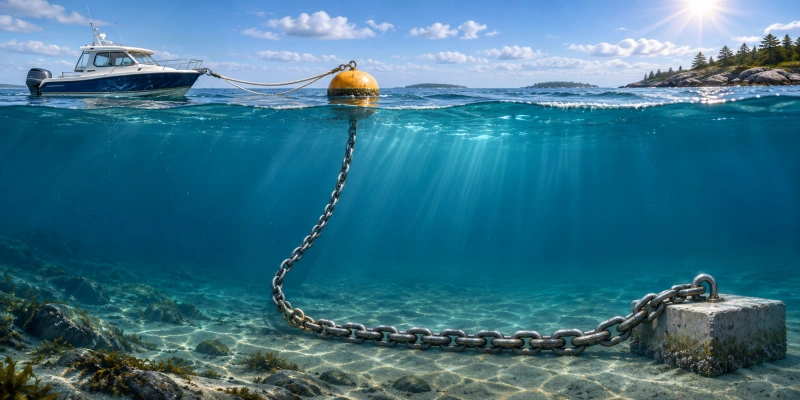
When requesting a quote, state whether a length refers to one chain section or the complete assembly. List the start and end connections for each chain section on the drawing. Give the chain lengths in the required units and specify any finished ends. The rope pennant and buoy are separate components; including them in a single ‘chain length’ figure can lead to an incorrect order.
The buoy’s position and buoyancy, the pennant, and the connection heights affect how the assembly behaves under load. Include them in the layout even when the purchase order covers chain only.
Permanent Mooring vs. Temporary Anchoring
A temporary anchor rode is deployed from the boat and may contain chain, rope, or both. Its scope compares the deployed rode length with the vertical distance from the bow attachment to the seabed. A permanent mooring remains at a fixed site and includes a specified ground tackle arrangement, buoy and pennant.
An anchoring scope ratio cannot give the separate lengths of its chain sections. For temporary anchoring, see our guide to temporary anchor rode length.
What Factors Affect Mooring Chain Length?
Water Depth and Tidal Range
Record the site’s depth, the sounding or survey date, and the datum used. Charted depth and an on-site sounding may use different reference levels, so bring them to the same datum before comparing them. Check the arrangement at the specified high and low water levels: it must reach without overloading the connections and leave the buoy and vessel clear at low water.
Vessel Size and Environmental Loads
Vessel length, beam, draft, displacement, and windage affect the loads and movement the mooring must accommodate. Wind, waves and current add to those demands. Two boats of the same length can load a mooring differently, so provide the vessel particulars and expected conditions rather than selecting chain by boat length alone.
Seabed, Swing Room and Neighboring Moorings
The seabed and the position of the anchor or deadweight shape the route of the ground chain and its contact with the bottom. The layout also needs room for the vessel to swing without reaching neighboring moorings, docks, or channels. Changing chain length to fit a tight space changes the system geometry and calls for a fresh load and clearance check.
Local Harbor Requirements
Check the current marina or harbormaster rules for mooring location, chain and tackle requirements, inspection and swing limits. Record the applicable rules and any approval conditions on the installation drawing. A length specified for one harbor does not automatically apply at another site.
Ground Chain vs. Riding Chain
Ground chain, or bottom chain, is the lower section connected to the anchor or deadweight and may rest on or sweep the seabed. Riding chain, often called top or riser chain, leads from the lower assembly toward the buoy in a two-section layout. Name each section by its connection points on the drawing, since local terminology varies.
The lower chain can wear where it moves against the seabed; the upper chain and connectors move with the buoy and vessel. Inspect links, shackles, and any swivel together. Use the harbor’s inspection requirements and the system maintenance plan to set intervals and replacement criteria. Our mooring chain inspection checklist lists the components to examine.
Specify the size and grade of each section from the design and check that the buoy can support the assembly. Match shackles and other fittings to the adjacent links and the design loads. A replacement that physically fits an existing shackle still needs a capacity and specification check.
How to Plan Mooring Chain Length Step by Step
- Record the site and water levels. Note the location, survey date, depth datum, low and high water levels, and any additional design levels.
- Describe the boat and conditions. Provide length, beam, draft, displacement, windage, and the specified wind, wave, and current conditions.
- Draw the full arrangement. Identify the anchor or deadweight, chain sections, buoy, pennant, shackles, and any swivel. Mark where each chain length is measured.
- Check the available space. Note seabed conditions, swing clearance, nearby vessels and structures, channels, and the current harbor tackle rules.
- Review the proposed layout. Have the responsible marine professional check section lengths, high- and low-water behavior, loads, buoyancy, connections and approval requirements.
- Prepare the order. Specify the reviewed length of each section, diameter, grade, link dimensions, finish, quantity, fittings, and required inspection or test documents.
With those measurements and checks complete, the chain supplier can quote the required sections and fittings.
Mooring Chain Length Planning Checklist
| Input to record | Why the buyer or designer needs it |
| Location, coordinates and applicable harbor authority | Establishes the site and the rules to check. |
| Sounded or charted depth, datum and survey date | Prevents mixing depths measured from different reference levels. |
| Low and high water levels and project allowances | Allows review of reach, buoy position and clearance at both extremes. |
| Vessel length, beam, draft, displacement and windage | Supports the project load and swing assessment. |
| Wind, wave, current and service conditions | Defines the environmental assumptions for review. |
| Seabed, anchor or deadweight and installation layout | Identifies the lower connection and contact conditions. |
| Available swing area and neighboring obstructions | Sets the practical clearance boundary. |
| Ground and riding section end points and lengths | Separates the purchase quantities and assembly geometry. |
| Buoy, pennant, shackles and swivel details | Allows compatibility and complete-system review. |
| Chain grade, finish, inspection, and document needs | Defines the product and evidence to request with the quote. |
Use this checklist to gather the site and purchasing details. Mark missing measurements as pending until the survey or design review supplies them.
Choosing Mooring Chain Size, Grade, and Materials
Length defines each section’s place in the layout; diameter, link dimensions, and grade define the chain being ordered. Specify the product standard and drawing, then check both load capacity and the fit of every shackle and fitting. A grade label by itself is not a complete chain specification.
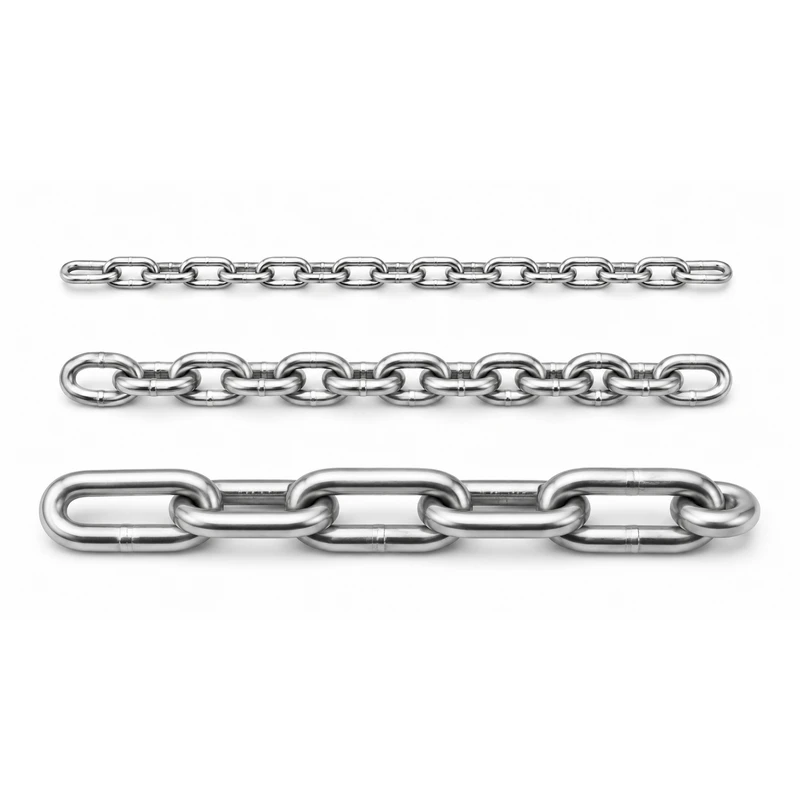
QDPowerful’s catalogue lists DIN 763 and DIN 766 link-chain dimensions. These tables identify possible chain forms, but they do not establish suitability for a particular mooring. For the proposed product, ask for diameter, link pitch, load and test data, material, finish, and matching manufacturer documents.
Compare them with the mooring design and local tackle rules. Our mooring chain grades page explains grade terms; use the product documents to confirm the order.
Select the material and finish for the site’s corrosion and abrasion exposure, and plan how wear will be inspected. Check the adjoining hardware as part of the same assembly.
How Is Offshore Mooring Different?
Offshore moorings for floating units have different line layouts, environmental loads, fatigue requirements, and project documentation. Buyers should send the approved line specification and inspection requirements when requesting offshore chain.
QDPowerful can source selected R3, R3S, R4, R4S and R5 offshore mooring chain through manufacturing partners. Confirm the available grade, dimensions, tests, and classification documents against the specific manufacturer and project before ordering.
What Information Should Buyers Provide When Requesting a Quote?
For a boat or harbor mooring, send the vessel type and dimensions, site location, surveyed depth and datum, tidal range, mooring drawing, and reviewed ground- and riding-chain lengths. Add chain diameter, grade or standard, link dimensions, material and finish, quantities, fittings, delivery destination and required documents.
For offshore enquiries, include the approved engineering specification, class requirements, and inspection scope.
If the design is in progress, identify preliminary dimensions in the enquiry. Send the reviewed chain schedule when it is ready so QDPowerful can quote the available mooring chain specifications and fittings.
FAQs
How much chain do I need for a permanent boat mooring?
Order the reviewed length of each chain section in the site-specific mooring plan. Identify ground chain, riding chain, and any extra sections separately, with their connection points and fittings.
Is a 5:1 or 7:1 scope ratio the same as mooring chain length?
No. Those ratios describe the scope of an anchor rode in temporary anchoring. They do not specify the separate chain sections of a permanent mooring.
What is the difference between ground chain and riding chain?
Ground chain is the lower section leading from the seabed anchor or deadweight; riding chain leads from the lower assembly toward the buoy. The drawing should show the exact connection points.
How does tidal range affect mooring chain length?
Tides change the vertical reach and movement of the mooring. Check chain, buoy, and vessel positions at the site’s design high and low water levels.
How do I choose the right mooring chain diameter and grade?
Use the design loads and local tackle requirements to choose a chain, then check its diameter, link dimensions, grade, test data, and compatibility with the fittings.
Can DIN 766 G30 or G43 chain be used for mooring?
A DIN 766 dimensional designation and a G30 or G43 grade label do not by themselves establish that a specific product suits the mooring. Compare the offered chain’s dimensions, load data, finish, and documents with the approved specification and local rules.
Can QDPowerful supply R3 R4, and R5 offshore mooring chains?
QDPowerful can source selected R3 through R5 grades through manufacturing partners. Supply and documentation depend on the manufacturer and project specification; request the matching grade and inspection records with the quote.
Send your mooring drawing and chain schedule to request a quote for the specified sections, fittings, and documentation.