You see a major shift in the Global Material Handling Equipment Market as businesses demand faster and safer ways to move goods. The market has grown rapidly, reaching $255.80 billion in 2025 and is expected to hit $372.11 billion by 2032.
Year | Market Size (USD Billion) | CAGR (%) |
|---|---|---|
2025 | 255.80 | 5.5 |
2032 | 372.11 | – |
You notice e-commerce sales passing $6.3 trillion in 2024, pushing companies to upgrade their fulfillment centers. Industry 4.0 technologies now connect machines and people, making warehouses smarter and more efficient. These changes open new possibilities and challenges for your business.
Key Takeaways
The global material handling equipment market is projected to grow from $255.80 billion in 2025 to $372.11 billion by 2032, driven by the demand for faster and safer goods movement.
Automation and robotics are transforming material handling, enhancing efficiency and reducing manual labor, making it essential for businesses to invest in these technologies.
E-commerce growth is pushing companies to upgrade their logistics and warehouse systems, leading to increased investments in automated material handling solutions.
Sustainability is becoming a priority, with electric-powered equipment and smart logistics practices helping businesses meet environmental goals while improving efficiency.
Staying informed about market trends and investing in reliable, certified solutions can help businesses remain competitive in the evolving material handling equipment landscape.
Material Handling Equipment Market Overview
Global Material Handling Equipment Market Size
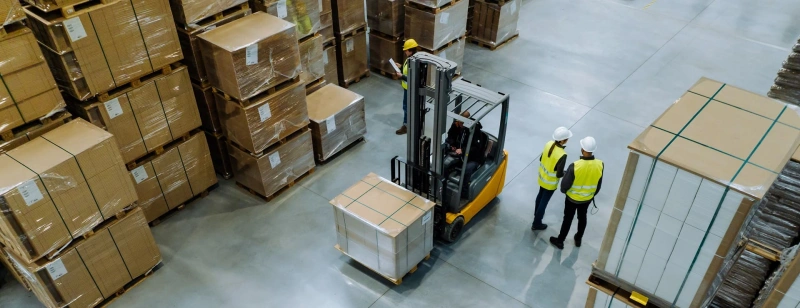
You see the global material handling equipment market expanding at a remarkable pace. In 2025, experts estimate the market size at $262.93 billion. By 2033, projections show it reaching $421.79 billion. This impressive growth reflects the rising demand for efficient and safe movement of goods in industries worldwide.
The market size was $262.93 billion in 2025.
Forecasts predict $421.79 billion by 2033.
The market expects a compound annual growth rate (CAGR) of 6.1% from 2026 to 2033.
You notice that the material handling equipment market covers a wide range of products, from forklifts and pallet jacks to advanced automated systems. These solutions help you improve productivity and reduce manual labor in warehouses, factories, and distribution centers.
The global material handling equipment market continues to grow as more businesses invest in automation and smart technologies.
Regional differences play a key role in market size and growth. The Asia-Pacific region leads the way, followed by North America and Europe. You can see the comparison in the table below:
Region | Market Size Forecast (2025-2030) | Year-over-Year Growth (2025-2030) |
|---|---|---|
Asia-Pacific | Data available in charts/tables | Data available in charts/tables |
North America | Data available in charts/tables | Data available in charts/tables |
Europe | Data available in charts/tables | Data available in charts/tables |
You find that Asia-Pacific dominates due to rapid industrialization and strong investments in logistics infrastructure. North America and Europe also show steady growth, driven by technology upgrades and e-commerce expansion.
Growth Projections and Key Statistics
You will witness strong growth in the material handling equipment market over the next decade. From 2022 to 2030, the market is projected to grow at a CAGR of 7.5%. The market size will rise from $27 billion in 2021 to $46.38 billion by 2030.
This steady increase highlights the importance of automation and digital transformation in the industry.
The market size will increase from $215.97 billion in 2025 to $230.44 billion in 2026, with a CAGR of 6.7%.
By 2030, the market will reach $298.08 billion, growing at a CAGR of 6.6%.
E-commerce warehouse investments and automation in distribution centers drive much of this growth.
In 2024, over 76% of global warehouse facilities had at least one automated handling system.
Electric-powered forklifts made up 62% of total global forklift demand.
You see major market trends shaping the industry, such as the shift toward electric-powered equipment and the adoption of automated systems. These market trends shaping the future of the global material handling equipment market include smart warehousing, robotics, and digital twins.
You can expect even more growth as companies seek to improve efficiency and safety.
You benefit from these advancements by reducing costs, increasing speed, and improving workplace safety. The material handling equipment market will continue to evolve, offering new opportunities for your business. You should stay informed about market trends and invest in the right solutions to remain competitive.
Drivers and Technology
Automation and Robotics
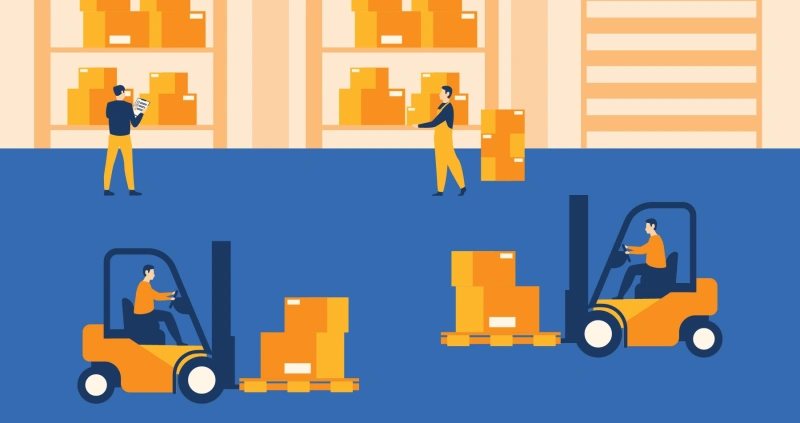
You see automation in material handling, changing the way you manage goods in warehouses and factories. Automation helps you move products faster, safer, and with less manual effort. Many companies now use automated material handling equipment to boost productivity and reduce errors.
You notice that robotics plays a big role in this shift. Robotic material handling solutions, such as palletizing robots, sortation robots, and loading and unloading robots, streamline your operations and improve efficiency.
Automation enhances efficiency and reduces reliance on manual labor in manufacturing and logistics.
The integration of robotics, AI, and IoT is driving the need for automated systems, especially in warehousing and automotive applications.
The warehousing sector is a major consumer of automated material handling equipment, with significant investments in automation and AI-driven solutions.
The demand for rapid logistics solutions in retail and e-commerce is promoting the adoption of automated material handling systems.
Robotic picking systems and automated retrieval systems improve warehouse productivity and order handling.
You see increased demand for automation in automotive manufacturing, where smart robotic material handling equipment and autonomous mobile robots help move heavy parts with precision. Companies invest in advanced material handling systems to streamline logistics and improve inventory management.
You benefit from innovations like robotic grippers, vision systems, and machine learning integration. These technologies allow you to handle a variety of materials and shapes, recognize objects, and adapt to changing conditions.
Powerful Machinery supports your automation journey by offering innovative material handling equipment. Their products, such as hoisting equipment and forklift attachments, can be integrated into automated material handling systems.
You can customize these solutions to fit your workflow, making your operations more efficient and reliable.
E-commerce and Omnichannel Trends
You experience the impact of e-commerce expansion every day. The rapid growth of e-commerce operations has led to a surge in demand for efficient warehouse and logistics solutions. In 2023, U.S. e-commerce sales reached over $1.2 trillion.
This growth pushes you to invest in automated material handling equipment, including automated sorting and retrieval systems, to keep up with higher order volumes and faster delivery expectations.
As online shopping becomes more popular, you need advanced material handling systems to manage increased demand. Companies like yours invest in warehouse automation to support e-commerce operations and omnichannel fulfillment.
Automated material handling helps you process orders quickly, reduce errors, and improve customer satisfaction. You rely on warehouse management systems and intelligent storage solutions to optimize space and track inventory in real time.
Powerful Machinery’s equipment supports your e-commerce operations by providing reliable, customizable solutions for warehousing, logistics, and distribution. Their products help you handle goods efficiently, whether you run a small warehouse or a large fulfillment center.
IoT, AI, and Digital Twins
You see AI, IoT, and digital twins transforming warehouse automation and smart manufacturing. These technologies give you real-time insights and predictive analytics, helping you make better decisions and improve supply chain efficiency.
Recent advancements in AI have further expanded the capabilities of digital twins by helping them learn complex system behaviors, adapt to changing conditions, and make data-driven predictions.
When integrated with digital twin frameworks, AI algorithms process large-scale sensor and operational data to detect system anomalies, optimize control strategies, and automate decision-making processes.
You use IoT devices to collect data from sensors and connected equipment. This data feeds into digital twins, which create virtual models of your physical systems. AI and machine learning analyze this information, providing predictive insights, detecting anomalies, and enabling automated decision-making.
You benefit from increased efficiency, cost savings, and reduced errors. AI-powered systems work faster, with greater precision and minimal downtime, allowing you to process more orders in less time.
AI minimizes errors in picking, sorting, and inventory management, leading to more accurate order fulfillment and reduced waste.
Predictive maintenance reduces equipment downtime and operational costs, while automation decreases reliance on human labor.
AI systems can adapt to growing warehouse sizes or increased order volumes without significant reprogramming or additional equipment.
AI-powered sensors and cameras improve situational awareness, preventing collisions and accidents, while risk assessments identify potential hazards proactively.
You also see better utilization of space, enhanced safety, and improved supply chain efficiency. Smart logistics and warehouse management systems help you optimize layouts and workflows.
Autonomous mobile robots and robotic material handling solutions work alongside your team, making your operations safer and more productive.
Powerful Machinery stays at the forefront of these trends by offering advanced material handling systems that support AI, IoT, and digital twin integration. Their commitment to innovation ensures you have access to the latest technology for smart logistics and smart manufacturing.
Material Handling Equipment Market Segmentation
By Product Type
You see the material handling equipment market divided into several product types. Transport equipment holds the largest share, making up 44.22% in 2025. This includes forklifts, conveyors, and cranes. Positioning equipment, such as hoists and manipulators, grows quickly because automation is rising in many industries.
Storage equipment, like racks and automated storage/retrieval systems, grows at a CAGR of 6.05%. You notice miscellaneous handling equipment, including pallets and bins, also plays a role, though it has a smaller share.
Transport Equipment: 44.22% market share
Positioning Equipment: Strong growth with automation
Storage Equipment: 6.05% CAGR, driven by warehouse automation
Miscellaneous Handling Equipment: Smaller share
Powerful Machinery offers a wide range of material handling equipment. You can choose pallet trucks, hydraulic lift tables, cargo skates, hoisting equipment, and forklift attachments. Customization options let you select platform size, fork dimensions, and load capacity to fit your needs.
By Application
You see the material handling equipment market serving many industries. Durable manufacturing accounts for 44% of usage. You benefit from robotics-based material flow systems, which increase production throughput and reduce downtime. Food and beverage applications represent 29% of the market.
You notice a rise in hygienic conveyors and robotic palletizing, which boost packaging efficiency and expand cold storage automation.
Durable Manufacturing: 44% of usage
Food and Beverage: 29% of usage
You rely on automated material handling and warehouse automation to improve safety and efficiency. Powerful Machinery’s products support manufacturing, logistics, automotive, and e-commerce operations. You can customize solutions for your industry.
By Automation Level
You see automation levels vary across the material handling equipment market. Conveyor systems often use automation, but still need manual placement and retrieval. Automated storage and retrieval systems pick items from shelves with AI and robotics.
Sorting systems automatically sort items, improving efficiency in distribution centers. Flexible automation allows you to reconfigure operations quickly. Robotic arms handle items with precision, and automated guided vehicles transport materials. Collaborative robots work with humans to boost efficiency.
Conveyor Systems: Automated, with some manual tasks
Automated Storage and Retrieval Systems: AI-driven, varying complexity
Sorting Systems: Automated, efficient distribution
Flexible Automation: Dynamic operations
Robotic Arms: Precise handling, adaptable
Automated Guided Vehicles: Mobile, repetitive tasks
Collaborative Robots: Work with humans
You see trends like robotics and AI-driven systems enhancing operational efficiency. E-commerce drives demand for automated material handling and warehouse automation. Companies deploy automated guided vehicles and robotic arms to streamline logistics.
You benefit from AI, IoT, and predictive analytics, optimizing system performance. Sustainability influences market segmentation, and advancements in technology push the material handling equipment market forward.
Powerful Machinery supports your automation journey with products that integrate AI, robotics, and warehouse management systems. You can customize equipment for automated material handling and warehouse automation, improving productivity and safety.
Material Handling Equipment Regional Trends

Asia-Pacific Market
You see the Asia-Pacific region leading the material handling equipment market. Rapid urban development and a large population drive demand for efficient logistics. Governments in this region support technology and industry, which helps fuel growth.
China stands out as the largest market, with strong production and high demand for equipment. India follows with fast digital expansion and industrial growth. Japan and South Korea contribute advanced automation and technology.
Increasing industrialization and urbanization shape the market.
E-commerce activities surge, creating new opportunities for logistics solutions.
Government investments in infrastructure boost the material handling equipment market.
Powerful Machinery began in China and now serves clients worldwide. You benefit from their expertise and understanding of the Asia-Pacific market’s unique needs.
North America Insights
You notice North America holds a significant share of the material handling equipment market. The United States leads, driven by innovation and a strong manufacturing base. Automation adoption rates are high, with 62% of warehouses using automated systems.
E-commerce continues to grow, pushing companies to invest in advanced solutions.
North America’s market share reached 29% in 2024.
The U.S. accounts for most of this share, while Canada also plays a key role.
Industries like mining, construction, and logistics drive further growth.
You see, Powerful Machinery’s products meet the needs of North American clients who demand quality and reliability.
Europe Developments
You find Europe’s material handling equipment market focused on automation and sustainability. The region holds about 30% of the global market. Germany and France lead with strong manufacturing and logistics sectors.
Europe’s market size reached 60,000.0 in 2024.
Regulatory frameworks promote green technology and safety standards.
Companies invest in modernizing warehouses and adopting smart technologies.
You see a shift toward digitalization and Industry 4.0, which supports future growth and efficiency.
Emerging Markets
You observe new opportunities in emerging markets. Latin America, especially Brazil and Mexico, shows strong potential due to infrastructure upgrades and a growing middle class. The Middle East and Africa invest in modernization, with the UAE and Saudi Arabia leading the way.
Asia-Pacific remains the fastest-growing market.
Latin America and the MEA regions offer untapped potential for the material handling equipment market.
E-commerce expansion and infrastructure projects drive demand.
Powerful Machinery’s global reach allows you to access reliable solutions in both established and emerging markets.
Competitive Landscape
Leading Companies
You see many strong players in the material handling equipment market. These companies shape the industry with their advanced products and global reach. Some of the leading names include:
Beumer Group GmbH And Co. KG
Daifuku Co. Limited
KION Group AG
Toyota Industries Corporation
Honeywell International Incorporated
SSI Schäfer Group GmbH
Jungheinrich AG
Crown Equipment Corporation
Hyster-Yale Materials Handling Incorporated
Mitsubishi Caterpillar Forklift America Incorporated
Mecalux S.A.
Liebherr Group
Swisslog Holding AG
Action Construction Equipment Limited
TGW Logistics Group GmbH
Viastore Systems GmbH
WITRON Logistik And Informatik GmbH
Cimcorp Automation Limited
Columbus McKinnon Corporation
Elettric80 S.p.A.
Hanel GmbH And Co. KG
Hapman LLC
Hytrol Conveyor Company Incorporated
Jervis B. Webb Company
KITO Corporation
KNAPP AG
These companies hold significant market share and drive innovation in the material handling equipment market. You can learn from their strategies and product offerings to stay competitive.
Innovations and Alliances
You notice that innovation and partnerships play a big role in the material handling equipment market. Companies invest in new technology and form alliances to meet changing customer needs.
KION Group AG partnered with a top software provider to add advanced analytics and machine learning to its warehouse management systems. This helps improve inventory control and efficiency.
Hyster-Yale Materials Handling, Inc. started a sustainability program to cut its carbon footprint by 30% by 2030.
Toyota Industries Corporation expanded its electric forklift line to support green initiatives.
Crown Equipment Corporation launched a new series of automated guided vehicles for high-density storage, meeting the rising demand for automation.
These actions show how the material handling equipment market keeps evolving. You benefit from better products, smarter systems, and more sustainable solutions.
Powerful Machinery Advantages
You gain unique advantages when you choose Powerful Machinery in the material handling equipment market. The company stands out with global delivery support and over 20 years of export experience in every major region.
Region | Delivery Support | Export Experience |
|---|---|---|
North America | ✔ | 20+ years |
Europe | ✔ | 20+ years |
Asia-Pacific | ✔ | 20+ years |
Middle East | ✔ | 20+ years |
You save money with direct-from-manufacturer pricing. Every product goes through strict testing for safety and quality. In-house engineers help you design custom lifting solutions for your needs. Advanced manufacturing equipment ensures you get reliable results every time.
Powerful Machinery holds certifications like ISO9001, ISO14001, TUV Rheinland, EURO CERT, EAC, Tested Safety, OSHA, ASTM, China Classification Society, and Korean Register. These achievements give you confidence in the quality and safety of your material handling equipment.
Challenges and Opportunities
Investment and Integration
You face many challenges and opportunities when you invest in advanced material handling equipment. High capital investment requirements can make automation difficult for small and medium-sized businesses. Upfront costs for automated warehousing systems often range from $2 million to $15 million.
Extended payback periods, sometimes lasting up to seven years, can slow your return on investment. Economic uncertainty and rising interest rates in 2024 and 2025 have increased financing costs. Throughput limitations may prevent smaller operators from justifying automation.
You also deal with technical complexity when integrating robots, conveyors, and storage systems. Compatibility issues between old and new technologies can delay deployment and add costs.
Challenge | Description |
|---|---|
High Capital Investment | Upfront costs create barriers for SMEs. |
Extended Payback Periods | Returns may take 4-7 years. |
Economic Uncertainty | Financing costs have risen. |
Throughput Limitations | Small operators rely on manual warehousing. |
You see that legacy systems create technical debt. Integration issues can compromise functionality and delay the adoption of smart logistics solutions. Powerful Machinery helps you overcome these challenges by offering customizable equipment and expert support for seamless integration.
Workforce and Cybersecurity
You notice that automation brings workforce challenges. Employees may resist automation because they fear job displacement. Open communication about role changes and upskilling opportunities helps you build trust. Involving frontline workers in system design reduces turnover and speeds up adoption.
You must invest in training programs to prepare your team for new warehousing technologies.
You also face cybersecurity risks. Connected automated material handling systems are targets for cyberattacks. You protect sensitive data by segmenting networks, using role-based access controls, and conducting regular penetration tests. Increased connectivity through IoT devices raises data security concerns.
You implement encryption, regular audits, and employee training to safeguard your warehousing operations. Adopting a zero-trust security model enhances protection for smart logistics systems.
Sustainability and Smart Warehousing
You see new opportunities as companies pursue sustainability targets and smart warehousing practices. Many businesses adopt electric forklifts to reduce environmental impact and boost productivity. Smart charging systems and energy management tools optimize energy consumption.
Automation technologies like Automated Guided Vehicles streamline workflows, cut energy usage, and increase efficiency. Green logistics initiatives help you meet sustainability targets and improve operational performance.
You benefit from Powerful Machinery’s commitment to quality, safety, and innovation. Their material handling equipment supports green logistics and smart warehousing, helping you achieve your sustainability goals. You gain reliable solutions that enhance efficiency and safety in your warehousing operations.
Tip: Embrace automation and smart logistics to stay competitive and meet sustainability targets in the evolving material handling equipment market.
Future Outlook
Emerging Trends
You see the material handling equipment market entering a new era. The future brings exponential growth in global ecommerce and logistics networks. You notice technological advancements in robotics and sensor integration. Automation becomes essential for reducing human error and boosting productivity.
You experience rising demand for warehouse automation as companies seek safer and more ergonomic workplaces. Optimized inventory management in manufacturing plants drives further growth.
Exponential ecommerce growth shapes logistics strategies.
Robotics and sensor integration transform automation.
Warehouse automation reduces human error.
Workplace safety and ergonomic efficiency become priorities.
Inventory management optimization supports manufacturing growth.
Digital Transformation
You witness digital transformation reshaping the material handling equipment industry. Automation enhances operational efficiency and reduces labor costs. The integration of IoT, AI, and automation improves customer satisfaction in retail and manufacturing.
You see supply chains digitalize, adopting Industry 4.0 principles. Automated solutions drive growth in emerging markets as modern logistics infrastructure becomes necessary.
“Dematic, a traditional supplier of material-handling equipment, set out to reinvent its value proposition by embedding IoT and data analytics into its sensors along conveyor lines. This digital technology shift repositioned them from a product provider to a valuable supply chain optimization partner.”
You recognize that digital transformation is not just a trend. Companies invest in integrated platforms that unify data across equipment and sites. This shift sets new benchmarks for efficiency, safety, and sustainability. You understand that maintaining competitiveness requires embracing automation and AI-driven solutions.
Sustainable Solutions
You see sustainability shaping the future of material handling equipment. Automation supports green logistics by reducing energy consumption and waste. Electric-powered forklifts and smart charging systems help you meet environmental targets.
AI-driven energy management tools optimize workflows and cut costs. You benefit from smart warehousing practices that enhance efficiency and safety.
Sustainable Solution | Impact |
|---|---|
Electric Forklifts | Lower emissions, higher productivity |
Smart Charging Systems | Optimized energy use |
AI Energy Management | Reduced costs, improved efficiency |
Green Logistics | Environmental compliance |
You prepare for the future by adopting automation, AI, and sustainable practices. You position your business for continued growth and resilience in a rapidly changing market.
Conclusion
You see the material handling equipment market growing fast. Automation, e-commerce, and smart technologies drive this change. Regional trends shape your business strategy.
Leading companies push innovation. You face challenges like investment and integration, but you find opportunities in sustainability and smart warehousing.
Monitor new technologies and market shifts.
Invest in reliable, certified solutions from Powerful Machinery.
Stay proactive. Adapt your operations to stay competitive and achieve long-term success.
FAQ
What is material handling equipment?
You use material handling equipment to move, lift, or store goods in factories, warehouses, or job sites. This equipment includes pallet trucks, lift tables, hoists, and forklift attachments.
How does automation improve material handling?
Automation helps you move goods faster and more safely. You reduce manual labor and errors. Automated systems, like robotic arms and conveyors, increase productivity and make your workplace more efficient.
Can you customize material handling equipment?
Yes, you can customize equipment to fit your needs. You choose platform size, load capacity, or special attachments. Powerful Machinery offers expert advice and custom solutions for your workflow.
Why should you buy from the material handling equipment manufacturer?
You save money and get better support when you buy directly. You receive high-quality products, fast quotes, and options for customization. Direct purchasing ensures you meet your safety and performance standards.