Stainless steel resists corrosion through a passive surface film, while hot-dip galvanizing protects steel with zinc. Start with the vessel’s required chain standard, dimensions, grade, load documentation, and windlass fit. Then compare exposure, inspection needs, and cost. QDPowerful supplies both types of anchor chain; confirm the specification for your order before purchasing.
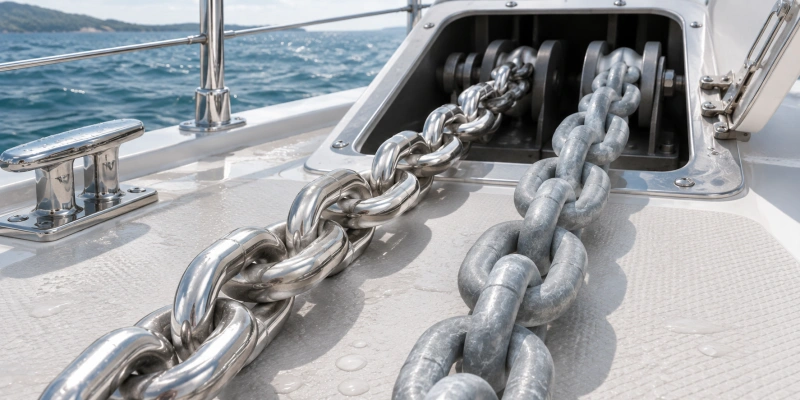
Stainless vs Galvanized Anchor Chain at a Glance
| Decision factor | Stainless steel | Hot-dip galvanized steel |
| Corrosion protection | Passive film on the alloy; localized attack remains possible in seawater. | Zinc coating protects the steel; wear and coating loss need attention. |
| Load capacity | Check hidden crevices, deposits, pitting, wear, and deformation. | Verify the specified chain grade, dimensions and test data. |
| Windlass fit | Match link dimensions and chain standard to the gypsy. | Match link dimensions and chain standard to the gypsy. |
| Inspection focus | Check hidden crevices, deposits, pitting, wear and deformation. | Check coating condition, rust, wear and deformation. |
| Buying decision | Compare actual quotations and service conditions. | Compare actual quotations and service conditions. |
These are material-level comparisons. Chains with the same nominal diameter can differ in link dimensions and rated performance.
How Each Material Resists Saltwater Corrosion
Chromium in stainless steel helps form a thin passive film. Yet seawater trapped at link contact points or beneath deposits can lead to pitting and crevice corrosion. A clean-looking exterior may conceal local attack. Check the proposed alloy against the actual exposure and connection design; no stainless grade is corrosion-proof in every marine setting.
Hot-dip galvanizing adds a zinc coating to steel. Zinc provides a barrier and can offer sacrificial protection at small damaged areas. The condition of that coating changes with abrasion, immersion, water chemistry, and service time. Inspect the areas where links bear against one another and where the chain runs over the gypsy or lies in the locker.
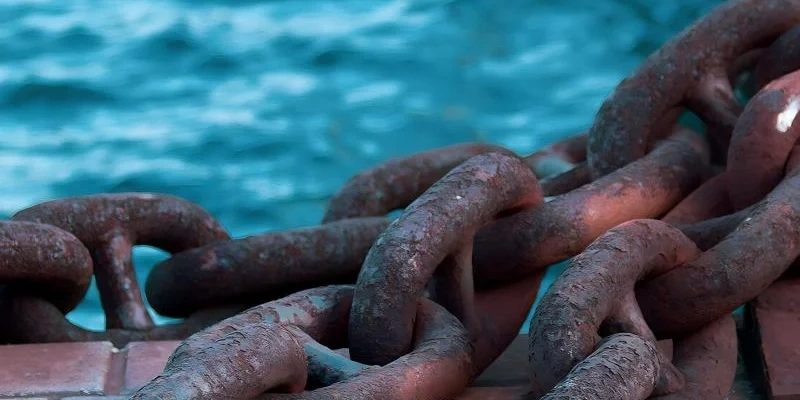
Rust or coating damage calls for a closer assessment; appearance alone does not establish the remaining load capacity.
Actual service life depends on exposure, abrasion, and inspection. See the anchor chain materials guide for other material choices.
Strength Depends on the Chain Specification
Neither material label establishes a chain’s strength. “Stainless” covers a family of alloys, while “galvanized” describes a zinc coating on steel. The chain’s grade, dimensions, and manufacturing standard set the strength requirements; product-specific test records show whether the offered chain meets them.
Ask for the applicable chain standard and grade, nominal diameter, proof test load, and minimum breaking load for the offered product. Proof test load is applied during a specified test; minimum breaking load is a separate strength requirement.
Neither figure is a permissible working load by itself. Where an operating load limit is needed, establish it under the vessel’s design rules and the requirements of the complete anchoring system. See the anchor chain grades guide for an explanation of grade terminology.
A load value listed for one chain design or material cannot be assigned to another. Request a datasheet and test documents for the exact chain offered, including its material, grade, and dimensions.
Check Windlass Fit Before Changing Materials
The chain must engage the windlass gypsy correctly. Check the windlass maker’s chain and gypsy specification, then compare the applicable chain standard, nominal diameter, link pitch, width, and tolerances. The same nominal diameter does not guarantee a fit. For an existing vessel, provide the windlass make, model, and gypsy identification when requesting a replacement.
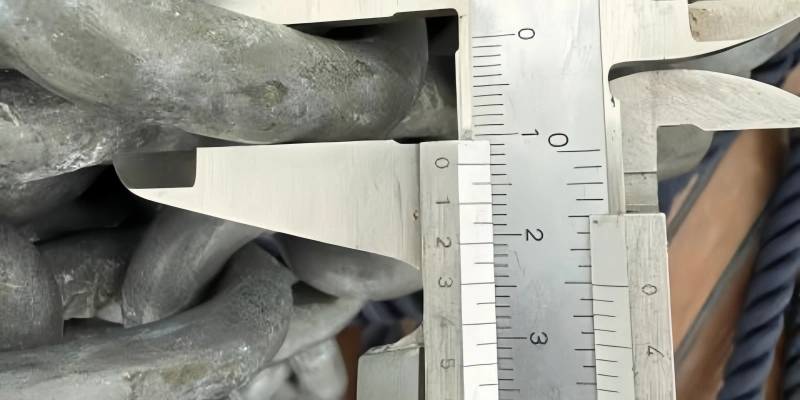
Check the connecting hardware, anchor interface, locker and stowage arrangement. If the assembly combines stainless and galvanized components, have the connection reviewed for galvanic corrosion risk. The anchor chain sizing guide explains chain dimensions in more detail.
Inspection and Replacement
Follow the vessel’s maintenance plan, equipment maker’s instructions, and applicable inspection rules. Inspect again after abnormal loading or suspected damage. Examine the chain beyond the length visible on deck, especially link contact surfaces, welds, fittings and sections that repeatedly pass through the windlass.
- For stainless steel, look for pitting, discoloration that warrants closer examination, crevice attack under deposits, deformation, and section loss.
- For galvanized steel, look for worn or missing zinc, rust, abrasion, deformation, and section loss.
- For either chain, measure suspected wear against the applicable specification and inspect connectors and the anchor end as part of the same system.
Do not set a replacement date solely from the material. If damage is suspected or acceptance criteria are not met, take the affected chain out of service pending a qualified assessment under the vessel’s procedure. See when to replace anchor chain for further inspection considerations.
Compare Purchase Cost With the Full Service Requirement
Compare quotations only for chains that meet the same system requirements. Stainless steel may cost more initially, but price depends on the proposed grade, dimensions, quantity, and market conditions. Consider inspection, corrosion management, replacement logistics and downtime alongside the purchase price. Do not assume a fixed service life or payback period.
A visible yacht installation may favor the appearance of stainless steel. An existing galvanized system may favor a like-for-like replacement, provided the chain meets its specifications. Neither appearance nor coating can compensate for an unsuitable rating or poor gypsy fit.
Which Option Fits Your Application?
On an existing vessel, use the approved chain specification and gypsy calibration as your starting points. For a new build, assess the proposed chain against expected exposure and inspection access. Wet lockers and deposits increase concern about crevice corrosion in stainless steel; repeated abrasion makes the condition of a galvanized coating important.
Stud-link and studless constructions are separate choices from material. The types of anchor chain guide explains these designs. Specify the one required for the vessel; availability in each material must be confirmed.
What to Send in an Anchor Chain RFQ
For a quote on either material, send the details below. We will check the available alloy or coating specification, dimensions, load data, and documents for the proposed chain.
- Vessel or project application, operating waters, and applicable rules or class requirements.
- Stud link or studless design; required chain standard and nominal diameter.
- Link pitch and width, plus the windlass make, model and gypsy identification if fitted.
- Requested material grade or galvanizing requirement, chain length and quantity.
- Required grade, load documentation, test reports and any project-specific certification.
- Connector and anchor interface details, delivery destination and required date.
Browse the anchor chain product range or send the specification to our team for a material-specific quotation. We will confirm availability and the documents applicable to the offered chain.
FAQs
Is stainless steel always better for saltwater?
No. Even marine stainless grades can suffer localized corrosion at wet crevices. Compare the specified chain and its exposure with a suitable galvanized alternative.
Is stainless chain stronger than galvanized chain?
Not necessarily. Compare grade, dimensions, documented proof, and minimum breaking loads for the specific chains.
Can I put either chain through my existing windlass?
Only if its calibration and link dimensions match the gypsy specification. Check the windlass maker’s requirements before changing chain.
How often should an anchor chain be replaced?
There is no universal interval. Follow the vessel’s inspection and acceptance criteria, including limits for wear, corrosion, and damage.
Can I combine stainless and galvanized components?
It depends on the connection and exposure. Electrical contact between dissimilar metals in seawater can accelerate corrosion of the less noble component. Check the connector specification and inspect contact areas.