You may hear one driver say lever binders are banned in a certain state while another insists the DOT still allows them. Both claims can sound believable because three different things are often mixed together: federal cargo-securement rules, state enforcement, and private company policy.
So, are lever binders illegal? No current federal regulation bans them simply because they use an over-center lever mechanism. You can use a lever chain binder when the binder, chain, anchor points, and complete tiedown system meet the applicable Federal Motor Carrier Safety Regulations. A carrier, shipper, terminal, jobsite, or customer may still prohibit lever binders under its own safety policy.
Below, you will see where the legal line is, what federal rules require, and how an otherwise legal binder can become noncompliant. This is general information, not legal advice. Rules can change, so verify the requirements for your route, cargo, vehicle, and workplace.
Key Takeaways
- Lever binders are not prohibited by a blanket U.S. federal rule.
- You must use cargo-securement components that are in proper working order and strong enough for the load.
- Your tiedown system must remain secured against loosening, opening, or releasing while the vehicle is in transit.
- The working load limit of the complete system is controlled by its weakest component.
- A private company can ban lever binders even when federal or state law does not.
- Claims that a particular state has banned lever binders should be checked against an official statute, regulation, or enforcement bulletin before you rely on them.
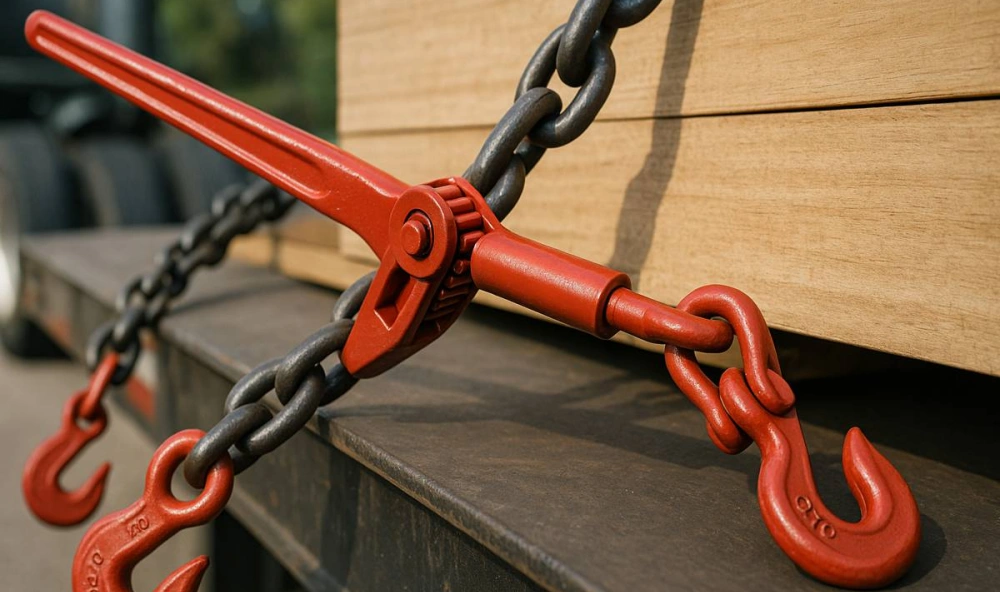
Are Lever Binders Illegal in the United States?
No. Under current federal cargo-securement rules, lever binders are not illegal as a product category.
The Federal Motor Carrier Safety Administration regulates how cargo is secured on commercial motor vehicles in interstate commerce. Its rules focus on the performance and condition of your securement system. They do not create a general prohibition on lever-type load binders.
That distinction matters. A lever binder can be legal to own and use, yet your specific setup can still violate the rules. For example, you can be cited if the binder is damaged, the chain is undersized, the aggregate working load limit is too low, the handle can release, or you fail to inspect the load as required.
You should therefore ask two separate questions:
1. Is this type of binder legally permitted?
2. Is this particular binder and tiedown arrangement compliant for this load?
The first answer is generally yes. The second depends on your equipment, cargo, setup, inspections, and any additional rules.
Are Lever Chain Binders Legal Under Federal Rules?
Yes, provided your complete securement system satisfies the applicable Federal Motor Carrier Safety Regulations.
Section 393.104 requires tiedowns and related components to be in proper working order. Components that are damaged or weakened cannot be used when the damage would adversely affect performance. The same section also requires each tiedown to be secured so it does not become loose, unfasten, open, or release in transit.
Section 393.106 requires cargo to be firmly immobilized or secured. It also establishes the basic aggregate working-load-limit requirement: your tiedown system must generally have a combined working load limit of at least one-half the weight of the cargo being secured.
These requirements apply whether you tension the chain with a lever binder, ratchet binder, or another suitable device.
Does “DOT Approved” Mean the Government Approved the Binder?
Not exactly. “DOT approved” is widely used in product descriptions, but it can give you the wrong impression.
Federal agencies do not normally issue an individual approval certificate or stamp for every load binder model. Instead, the regulations establish performance, condition, working-load-limit, and securement requirements for the components and the complete system.
Evaluate the binder from verifiable product information, not a vague label. Confirm:
- the manufacturer and model;
- the binder’s marked working load limit;
- the compatible chain size and grade;
- legible identification and warning markings;
- instructions for use, inspection, and removal from service; and
- evidence that the product was designed and tested to the stated specification.
A properly marked binder from a traceable manufacturer makes it easier for you, your customer, and an inspector to verify that the equipment is suitable for the load.
What Federal Cargo-Securement Rules Require From You?

Inspectors evaluate the complete tiedown system: chain, hooks, binder, anchor points, attachments, cargo contact points, and en-route condition.
The following requirements are the most relevant when you use lever type load binders.
1. Keep Every Component in Proper Working Order
You should inspect the binder before each use. Do not use it when you find damage that could reduce its strength or prevent it from operating correctly.
Warning signs include:
- a bent or twisted handle;
- cracks, gouges, or visible deformation;
- stretched, opened, or distorted hooks;
- excessive wear at load-bearing points;
- damaged threads, pins, rivets, or pivot joints;
- severe corrosion;
- illegible working-load-limit markings; or
- a mechanism that does not close and hold as intended.
Follow the manufacturer’s cleaning, lubrication, inspection, and removal criteria. Do not improvise field repairs.
2. Prevent the Binder From Opening or Releasing
Federal rules require tiedowns to remain secured against loosening, unfastening, opening, or releasing while the vehicle is in transit.
With a lever binder, you need to close the handle completely and follow the manufacturer’s method for retaining or securing it. The correct method can depend on the binder design. Do not assume that wire, tape, or an improvised strap automatically makes an unsafe setup compliant.
Position the binder so the handle and body are not exposed to impact from the cargo, tires, road debris, or nearby equipment. The binder should not bear against a sharp edge or sit where normal cargo movement could force the handle toward the open position.
3. Calculate the Working Load Limit by the Weakest Component
Your securement system is only as strong as its lowest-rated part.
Under Section 393.108, the working load limit of a tiedown is determined by the lowest working load limit of any component in the assembly. That can include the chain, binder, hook, connector, or anchor point.
A high-capacity binder does not raise the rating of lower-rated chain. The same rule applies to a lower-rated hook, fitting, or anchor point.
You should match the binder to the chain size and grade specified by the manufacturer. If you need help selecting a suitable combination, use our guide to choosing the correct chain binder size.
4. Meet the Aggregate Working Load Limit
For most cargo, the combined working load limit of the tiedowns used to secure an article or group of articles must be at least 50% of the cargo weight.
Suppose you are securing a 20,000-pound machine. Your applicable tiedowns must provide an aggregate working load limit of at least 10,000 pounds. This is a simplified illustration; the exact calculation can depend on whether tiedowns are attached directly to the cargo, pass over the cargo, and how the securement system is configured.
Calculate capacity from the complete tiedown, not the binder alone.
If your chain is unmarked, federal rules may assign it the working load limit of Grade 30 proof coil chain. That can reduce the capacity you are allowed to claim even when you believe the chain is a higher grade. Using clearly marked Grade 70 transport chain helps you document the intended rating.
5. Use the Required Number of Tiedowns
Meeting the working load limit is not always enough. You must also use the minimum number of tiedowns required for the cargo’s length, weight, and configuration.
Heavy vehicles, equipment, and machinery weighing 10,000 pounds or more are subject to additional requirements under Section 393.130. In general, you need at least four tiedowns, attached as close as practicable to the front and rear of the equipment, unless a more specific rule applies.
Cargo-specific rules may apply to logs, metal coils, concrete pipe, automobiles, heavy equipment, flattened vehicles, roll-on/roll-off containers, and other commodities. You should check the relevant section before you load.
6. Inspect and Recheck the Load During the Trip
A compliant setup at the loading point can become noncompliant after the cargo settles or the vehicle travels over rough roads.
Under Section 392.9, a commercial driver generally must inspect the cargo and securement devices within the first 50 miles after beginning a trip. The driver must then reexamine the load when changing duty status, after driving for three hours, or after driving 150 miles, whichever occurs first.
Some sealed or inaccessible loads are treated differently. Do not assume an exception applies; plan inspection stops and retension when necessary.
Federal Requirements at a Glance
| Requirement | What It Means for You |
| Proper working order | Remove damaged or weakened binders, chains, hooks, and fittings from service. |
| Secure against release | Close and retain the binder so the tiedown cannot loosen, open, or release in transit. |
| Weakest-component rule | Rate the tiedown by its lowest-rated component, not by the binder alone. |
| Aggregate WLL | Provide the required combined capacity, generally at least half the cargo weight. |
| Minimum tiedown count | Use enough tiedowns for the cargo’s size, weight, orientation, and commodity rule. |
| En-route inspections | Check the load within the first 50 miles and at the required intervals afterward. |
What States Are Lever Binders Illegal?
There is no dependable official list showing that lever binders are categorically illegal in specific U.S. states. In the authoritative federal and state materials reviewed for this article, we did not find a current statewide statute that simply bans all lever binders by name.
That does not mean every use is allowed everywhere. States can enforce cargo-securement rules, regulate particular commodities, or set operating requirements. Ports, mines, utilities, rail facilities, and construction sites may also impose stricter rules.
Online claims frequently name states such as Michigan, Colorado, California, or New York without citing a current statute or administrative rule. You should not treat a forum post, product blog, training slide, or company memo as proof of a statewide ban.
Before you haul, verify the rule through an official source.
How to Check a State Requirement?
Use this four-step process:
1. Check the state DOT, motor-carrier enforcement agency, highway patrol, or commercial vehicle division.
2. Search the state’s current statutes and administrative code for cargo securement, load binders, chain binders, snap binders, and tiedowns.
3. Ask whether your cargo is covered by a commodity-specific rule or permit condition.
4. Obtain any carrier, shipper, terminal, or jobsite requirement in writing.
When a customer says, “lever binders are illegal here,” ask for the exact citation. You may discover that the restriction is a company policy, a contract condition, an employee safety rule, or a preference for ratchet binders rather than a law.
Why a Legal Lever Binder Can Still Be Rejected?
A company does not need to wait for a government ban before adopting a stricter safety rule.
Some carriers, shippers, terminals, and jobsites prohibit lever binders because the handle stores energy as it moves over center. If the operator loses control, the handle can move rapidly and cause a struck-by injury. Releasing a heavily tensioned binder can create a similar hazard.
A private restriction can apply even when the binder is legal. The policy may reflect:
- worker-injury history;
- insurance requirements;
- customer contracts;
- union or site safety rules;
- standardization of driver training;
- concern about improvised handle extensions; or
- a preference for the more controlled take-up and release of a ratchet mechanism.
You should therefore confirm acceptance before arriving at the loading point. A legally compliant lever binder will not help you if the facility refuses to load or unload a vehicle equipped with one.
When Using a Lever Binder Becomes Noncompliant?
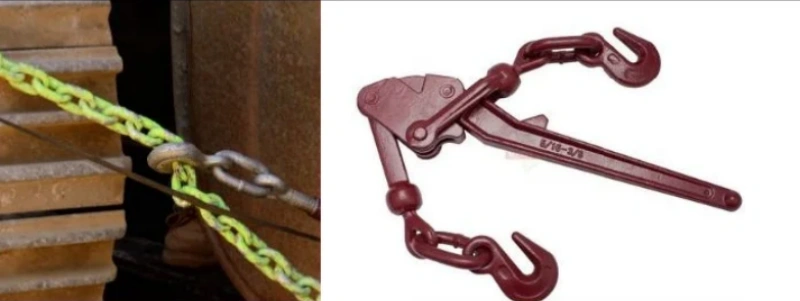
Lever binders are not illegal by design, but the way you use one can violate cargo-securement rules. The most common problems are practical rather than theoretical.
The Binder or Chain Is Damaged
A cracked, bent, badly worn, or severely corroded component can no longer be trusted to deliver its marked capacity. If the damage adversely affects performance, remove the component from service.
The Binder and Chain Are Mismatched
A binder designed for one chain size or grade should not be forced onto another. Mismatched hooks may not seat correctly, and the complete tiedown may have a lower rating than you expect.
The Working Load Limit Is Too Low
You can use several strong-looking chains and still fail the aggregate working-load-limit calculation. Verify the marked capacity of each component and calculate the tiedown rating correctly.
The Handle Can Open or Release
A lever binder that is not fully closed, properly positioned, and retained according to the manufacturer’s instructions may release during transit. That directly conflicts with the requirement to prevent loosening, opening, or release.
You Use Too Few Tiedowns
One high-capacity chain does not replace the minimum number of tiedowns required by the general or commodity-specific rules. Capacity and tiedown count are separate requirements.
You Skip En-Route Inspections
Cargo can settle, chains can lose tension, and anchor points can shift. If you do not perform the required inspections, an initially compliant load can become unsafe and expose you to enforcement.
You Use the Binder for Overhead Lifting
A load binder is a cargo-tensioning device. It is not an overhead lifting device unless the manufacturer has specifically designed, rated, and identified it for that purpose. Do not use a conventional lever binder as a hoist, lifting clamp, or sling component.
For a broader explanation of binder applications and limitations, see what a load binder is.
Lever Binder vs Ratchet Binder: Which Should You Choose?
Both lever binders and ratchet binders can be used in a compliant cargo-securement system. The better choice depends on your operating conditions, training, customer requirements, and risk controls.
| Factor | Lever Binder | Ratchet Binder |
| Legal status | Not federally banned by type | Not federally banned by type |
| Tensioning action | Fast over-center lever action | Progressive screw-and-ratchet action |
| Handle movement | Wider arc with stored-energy recoil risk | More controlled, incremental movement |
| Take-up range | Usually shorter | Usually longer |
| Policy acceptance | Sometimes restricted by companies or sites | More commonly accepted where recoil is a concern |
| Best fit | Trained users who need quick operation and have confirmed acceptance | Users who prioritize controlled tensioning and broad policy acceptance |
Do not choose on speed or price alone. Consider take-up, working space, operator position, manufacturer instructions, and facility rules.
For a detailed product-by-product discussion, read our guide to lever binders vs. ratchet binders. You can also review the main types of chain binders before standardizing your fleet.
Can You Use a Cheater Bar on a Lever Binder?
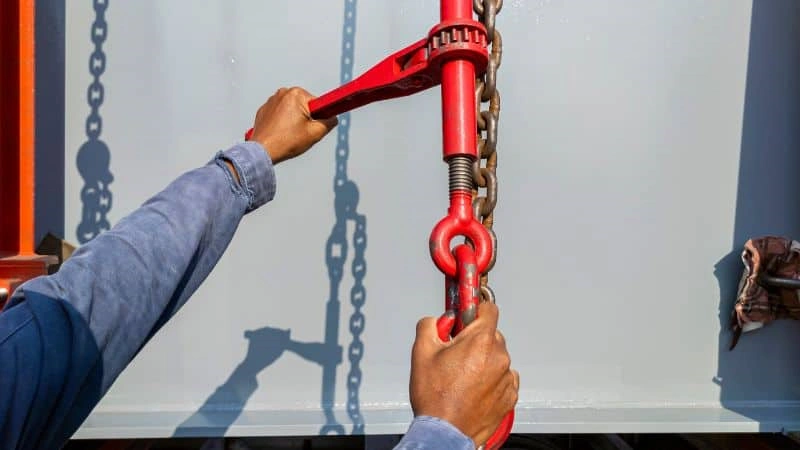
An improvised pipe or handle extension can expose you to serious risk. It increases leverage beyond the force the operator could apply with the designed handle, can overload the binder or chain, and puts more stored energy into the system.
You should not use a cheater bar unless the binder manufacturer expressly permits a purpose-built extension for that exact model and provides instructions and capacity limitations. Never assume that a piece of pipe is acceptable because it fits over the handle.
Even without a rule using the words “cheater bar,” an improvised extension can damage equipment, create excessive tension, and violate instructions or site policy. Use a correctly sized binder with its designed handle.
Your Lever Binder Compliance Checklist
Before you move the vehicle, confirm each item below:
- You have checked the current rules for the route, cargo, and vehicle.
- The carrier, shipper, terminal, and jobsite accept lever binders.
- The binder is made for the chain size and grade you are using.
- The working load limit is legible on the binder and chain.
- Every chain, hook, binder, connector, and anchor point is in proper working order.
- The complete tiedown rating is based on the weakest component.
- The aggregate working load limit and minimum tiedown count are sufficient.
- The hooks are correctly seated and loaded in the intended direction.
- The binder is completely closed, correctly positioned, and retained against opening.
- No handle extension or field modification is being used.
- The chain is protected from edges that could cut or abrade it.
- You have planned the first inspection within 50 miles and later rechecks.
- You will remove any questionable component from service instead of trying to repair it under load.
For operating guidance, read how to use chain binders. The legal overview in this article does not replace the manufacturer’s instructions or hands-on training.
FAQ
Are Lever Binders DOT Approved?
The phrase “DOT approved” is not a precise description of how load binders are regulated. Federal rules establish requirements for cargo securement, component condition, working load limits, and performance. You should evaluate the marked rating, compatibility, traceability, instructions, and complete tiedown system rather than relying on an approval claim.
Are Snap Binders Illegal?
“Snap binder” is another common name for an over-center lever binder. It is not subject to a blanket federal ban merely because it uses that mechanism. Your use must still meet cargo-securement rules, and a company or jobsite may prohibit it.
What States Are Lever Binders Illegal In?
We did not find a current authoritative statewide list that bans lever binders by name. Because state codes, permit conditions, and enforcement guidance can change, you should verify the requirements with the relevant state commercial-vehicle authority and obtain private-site rules in writing.
Do You Have to Secure a Lever Binder Handle?
Your tiedown must be secured so it cannot loosen, unfasten, open, or release in transit. Follow the binder manufacturer’s instructions for closing, positioning, and retaining the handle. Do not rely on an improvised method that interferes with inspection or safe release.
Are Lever Binders Allowed for Heavy Equipment?
They can be, provided the complete system meets the heavy-equipment securement requirements. Equipment weighing 10,000 pounds or more generally requires at least four tiedowns, in addition to adequate working load limit and proper attachment. Check Section 393.130 and any equipment-specific instructions.
Are Ratchet Binders Required by Law?
No general federal rule requires you to use a ratchet binder instead of a lever binder. A carrier, shipper, customer, or jobsite may require ratchet binders under its own policy. You should check before loading.
Can You Use a Lever Binder With Grade 70 Chain?
Yes, when the binder is designed and rated for the chain’s size and grade, and the complete tiedown meets all working-load-limit and securement requirements. Do not assume the chain’s Grade 70 rating applies to the entire assembly if another component has a lower working load limit.
Final Answer: Are Lever Binders Illegal?
No blanket federal rule makes lever binders illegal in the United States. You can use them when your binder, chain, hooks, anchor points, tiedown count, working load limit, and inspection practices comply with the applicable cargo-securement rules.
The confusion usually comes from private safety policies, unverified state-ban claims, or noncompliant use. Before every haul, you should verify the law, confirm the customer’s policy, inspect the equipment, calculate the complete tiedown capacity, and make sure the binder cannot open or release in transit.
As a rigging hardware manufacturer, Powerful Machinery can help you specify load binders for your target chain size, working load limit, finish, marking, packaging, and OEM requirements. Compliance still depends on selecting and using the complete securement system correctly.