A hand winch, also called a manual winch or hand-crank winch, winds a line onto a drum as you turn a handle. Before use, confirm that the exact model is rated for the job, inspect the winch and line, and check its mounting and the load connection. Take up slack gradually, then crank while watching the line and load. Plan how you will stop, support, and release the load before you begin.
Winches intended for pulling and those approved for lifting can have different limits and controls. This guide covers general operating principles. Follow the instructions supplied with your specific model; if its rating, intended use, mounting method, or release procedure is unclear, ask the supplier or a competent supervisor before operating it.
Before You Use a Hand Winch: Check the Type and Rating
Start with the task. Are you pulling a load across a surface, moving it up an incline, or lifting it vertically? These are different applications. A winch with a pulling rating is not automatically suitable for holding or lifting a suspended load.
Use a winch for lifting only when its manufacturer explicitly rates the exact model and installation for that application. Keep people out of the area beneath a suspended load, and never use a hand winch to lift people.
Read the nameplate and manual for the rated capacity, permitted direction of pull, line specification, drum capacity, required anchor wraps, and operating limits. Check how the rating applies to the amount of line on the drum; line pull can change as layers build up.
The winch, line, hook, mounting, anchor, and any pulley must all suit the anticipated force. For a dragged or inclined load, starting resistance, slope, friction, and pulley routing matter as well as weight. If you cannot establish the load and the ratings of the system, do not start pulling.
Identify how your model holds and pays out the line. A load brake, ratchet, and free-spool mechanism serve different functions; one model may have more than one of them. Their control procedures are not interchangeable. If you need an introduction to the parts, see what a hand winch is and how a hand winch works. Powerful Machinery also lists the HWV manual winch and GR hand winch, but their product pages do not provide a complete release procedure for a specific unit. Obtain that unit’s manual before use.
Hand Winch Pre-Use Inspection Checklist
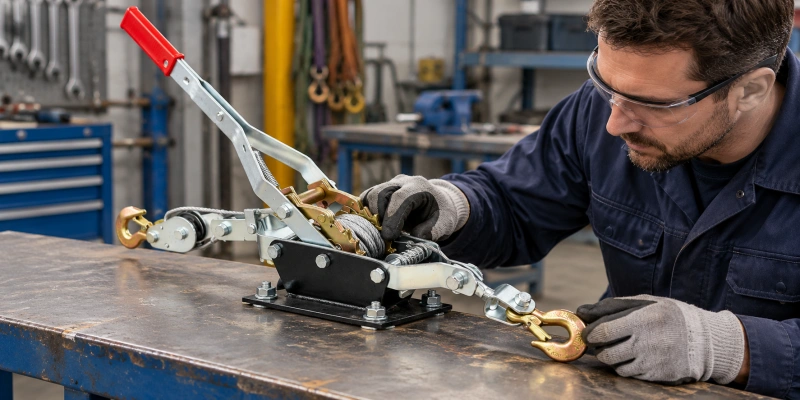
Inspect the complete system before each use, while it is unloaded and safe to examine. First, confirm the model, rating label, and operating instructions are available and legible. Check the frame and drum for cracks, distortion, heavy corrosion, or interference.
Check the handle, fasteners, gears, and guards where fitted. Check the brake or ratchet only if your model has one, using the manufacturer’s unloaded functional-check procedure. If it fails to engage, slips, jams, or behaves differently from the manual, remove the winch from service.
Examine the accessible line and its drum attachment. For wire rope, look for broken wires, kinks, crushing, birdcaging, abrasion, and corrosion; for webbing or strap, look for cuts, abrasion, and damaged stitching. Check the end fitting and any hook for distortion or damage, and confirm that a fitted hook latch functions.
Never knot a damaged line or splice it without an approved procedure. Remove suspect components from service for assessment under the winch and line manufacturers’ instructions.
Finally, inspect the mounting structure and bolts, the attachment point on the load, the planned line path, and the space in which the load will move. Remove bystanders from the work area. Wear the protection required by the site and the task; gloves help when handling wire rope, but they do not make it safe to touch a moving line. If any component has an unknown rating or visible damage, stop and resolve it before operating.
How to Anchor a Hand Winch Safely?
A strong winch on a weak mount is a weak system. Install the base on a structure that can carry the expected pulling force and any forces created by the line direction. Use the mounting points, fastener type, and installation method specified for the winch. Tighten and inspect the fasteners as the manufacturer directs. Do not assume a sheet-metal panel, temporary rail, timber post, or vehicle fitting is suitable simply because you can bolt the winch to it. If the structure or its capacity is unknown, have it assessed before use.

Position the winch so the line approaches the drum within the manufacturer’s permitted fleet angle and winds in the specified direction. Excessive side pull can pile the line against a flange and impose unintended forces on the drum and mounting.
If you need to change the direction of pull, use a compatible, adequately rated pulley and anchor arrangement. Assess the force at every connection; a direction-changing pulley can place a different force on its anchor than the tension in one line segment.
Keep the route clear of sharp edges and obstructions. Establish a place for the operator to stand clear of the line of pull, the drum, the moving load, and possible recoil if a tensioned line fails. Do not let someone steady the line by hand near the drum. Before cranking, check that the mounting has not moved, the load has a clear travel path, and everyone knows where to stand.
How to Use a Hand Winch Step by Step?
1. Secure the Winch
Mount the winch as specified for its model and inspect the installation. Confirm that the structure, bolts, and base can carry the planned force. Keep the operator’s position and handle sweep clear. If the winch is already installed, check its fasteners and structure before relying on them.
2. Inspect and Position the Winch Rope
Use only the line type and size approved for the winch. Confirm that it is secured to the drum, runs in the required direction, and has no visible damage. Pay out as the model’s instructions allow, leaving the required anchor wraps on the drum. Route the line clear of sharp edges and moving machinery.
3. Attach the Load Correctly
Connect the hook or approved fitting to a suitable, adequately rated point on the load. Do not hook the wire rope back onto itself or attach it to a thin, damaged, or unverified part. Check that the connection cannot slip off as the load changes position. Where a hook has a latch, close it; the latch does not add capacity to the hook.
4. Take Up Slack Slowly
Stand in the planned operating position and turn the handle in the direction specified by the manual. Take up slack gradually. Pause as the line becomes taut and inspect the line path, hook, mounting, and load. If anything shifts, binds, or looks unstable, stop cranking. Keep people clear; stabilize and unload the system according to the model’s instructions before correcting the setup.
5. Crank Smoothly and Monitor the Rope
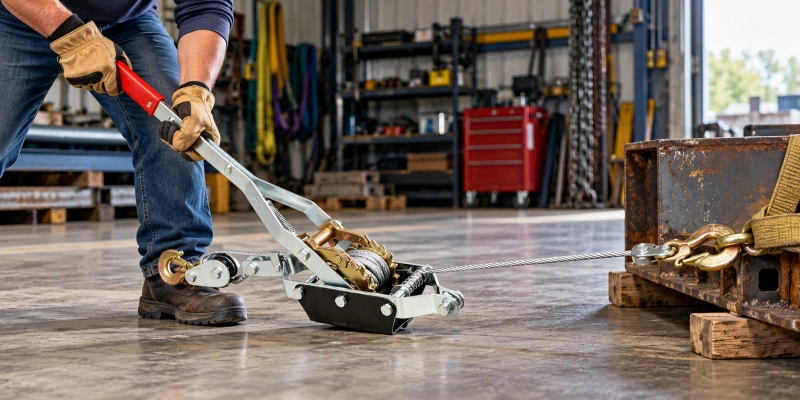
Turn the handle steadily. Avoid jerking the load or extending the handle for extra leverage. Watch for uneven buildup, crushing, or piling against a drum flange; follow the model’s winding instructions. Keep hands and clothing away from the drum, gears, and tensioned line. If effort rises sharply or the load stops moving, do not force the handle. Reassess the load path and required force.
6. Stop and Hold the Load
Stop at the planned position and confirm that the model’s holding mechanism has engaged as its instructions describe. Keep control of the handle until you have confirmed the load is stable. If the load must remain in place, provide the independent support, blocking, or restraint required for the application. Do not assume every hand winch is an approved long-term holding device or transport tie-down.
7. Release Tension According to the Winch Design
Use the exact lowering or payout procedure for the model and task. If you cannot confirm it, do not improvise with the brake, pawl, or free-spool control. The release section below explains the distinction.
How to Release a Hand Winch Safely?
There is no single release action for all hand winches. An approved brake winch may lower a load by controlled reverse cranking, while a ratchet pulling winch uses a different procedure. A free-spool feature may be intended only for an unloaded drum. Follow the manual for the exact unit and its application; do not borrow a procedure from another model.
Before payout or lowering, confirm the path is clear and the load will remain controlled. Where the task requires independent support or restraint, put it in place before transferring tension away from the winch. Keep hands off the line and away from pinch points.
Do not disengage a mechanism to make a loaded drum turn freely. If the winch will not operate as its manual describes, stop, keep people clear, and have the setup assessed.
For GR and HWV units, obtain the operating manual for the exact model and configuration before planning a loaded lowering or payout operation. The product pages alone do not establish the steps for that operation.
Common Hand Winch Mistakes to Avoid
- Choosing by load weight alone. Check the required line pull, the working drum layer, and every component’s rating. A lifting task needs explicit lifting approval for the model and installation.
- Using an unverified mount or direction-changing pulley. Check the load on each anchor in the actual line arrangement, not only the winch’s stated capacity.
- Continuing after poor spooling or a sudden rise in effort. Stop and find the cause before the line piles against a flange or a stalled handle is forced.
- Standing in the line path or guiding it by hand. Set the operator position before tensioning; never reach toward a moving drum.
- Adding a handle extension or jerking the load. Extra leverage and shock loads can exceed the planned forces.
- Using free-spool or releasing a pawl under tension without an approved procedure. Confirm how the exact model controls the load during payout or lowering.
If manual cranking does not suit the task, compare a hand winch with an electric winch. For a portable lever-operated tool, compare a hand winch and a come-along. Check the selected equipment’s rating and instructions before use.
Hand Winch Maintenance and Storage
After use, check the line, hook, drum, handle, mounting, and holding mechanism for new damage or unusual wear. Remove dirt and moisture, then rewind the line neatly using the manufacturer’s method. Keep fingers away from the drum while respooling.
If a line has been bent sharply, crushed between wraps, or exposed to damaging conditions, have it inspected before the next operation.
Lubricate only the points and at the intervals given for the particular model. Keep lubricant off friction surfaces when the manual requires them to remain dry. Do not use a fixed monthly lubrication or test schedule as a substitute for the manufacturer’s maintenance instructions and site requirements.
Replace worn components with approved parts and have repairs and function checks carried out by competent personnel. Store the winch in a clean, dry place where its rating label and instructions remain available. If you cannot confirm that a brake or ratchet works correctly, remove the winch from service.
Hand Winch Safety Checklist
- Confirm the exact model is approved for pulling or lifting as intended.
- Read its rated capacity, line specification, and operating instructions.
- Check the frame, mounting, handle, drum, line, hook, and fitted holding mechanism.
- Confirm the anchor, fasteners, load connection, and any pulley suit the force.
- Align the line with the drum and keep the load path clear.
- Leave the model-required anchor wraps on the drum.
- Keep people clear of the line, drum, and moving load.
- Take up slack and crank smoothly; stop if effort or spooling changes.
- Secure the load independently where the application requires it.
- Release tension only by the model’s specified procedure.
Hand winches and rigging equipment should be selected and operated by trained, competent people. Misuse can cause serious injury. If your site procedure and the exact equipment manual differ from this general guide, follow the applicable equipment instructions and have the conflict assessed before use.
FAQs
What Is the Safest Way to Use a Hand Winch?
Use a model rated for the job, inspect the full setup, and plan both movement and release before cranking. Keep people out of the line and load path. Follow the exact model’s instructions; no procedure removes every risk.
How Do You Anchor a Hand Winch?
Use the prescribed mounting points and fasteners on a structure assessed for the actual line direction and force. Check the mount when the line first becomes taut. Do not use an anchor whose capacity is unknown.
Can a Hand Winch Be Used for Lifting?
Only if the exact model, mounting, and complete system are approved and rated for that lifting task. A pulling rating alone is insufficient. Never lift people with a general hand winch.
How Much Weight Can a Hand Winch Pull?
Use the model’s rating at the applicable drum layer and assess the required line force, including slope and starting resistance. The line, fittings, mount, and any pulley also need suitable ratings. A load’s weight alone is not the answer.
How Do You Release a Manual Hand Winch?
Use the exact model’s payout or lowering sequence while maintaining control of the load. A free-spool function does not imply it can be engaged under tension. If the procedure is unavailable, stop and obtain it from the manufacturer.
How Much Wire Rope Should Remain on the Drum?
Follow the anchor-wrap requirement in the manual for the exact model and line attachment. A number quoted on one product page must not be applied to every winch.
What Are the Most Common Hand Winch Mistakes?
Common mistakes include using a pulling winch for an unapproved lift, relying on a weak anchor, forcing a stalled handle, and releasing a holding mechanism without a model-specific procedure. The section above explains when to stop.
How Should a Hand Winch Be Maintained?
Follow the model’s inspection and lubrication schedule. Clean and dry the line after use, check for damage, and remove a winch with a faulty brake or ratchet from service. Do not lubricate friction surfaces unless the manual instructs you to.