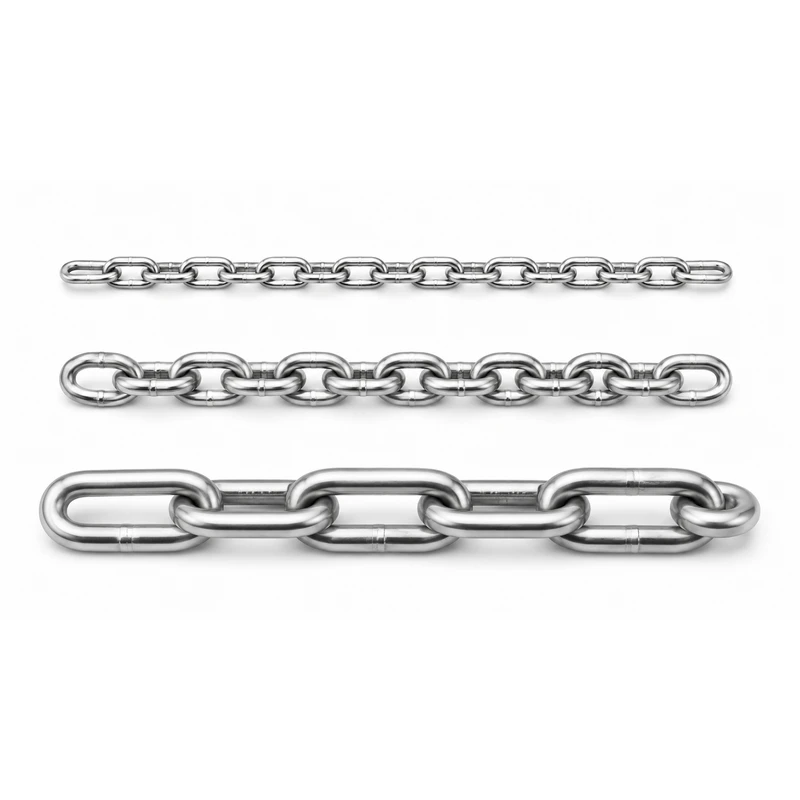
A chain block is a hand-operated chain hoist used to lift and lower a freely suspended load, typically in a vertical line. The main types and configurations differ by rated load, overall size, headroom, suspension arrangement, and load-chain reeving. Electric and air chain hoists belong to the broader chain-hoist family, while a lever hoist is a separate manual hoist design.
If you already know the load, lift, headroom, and suspension requirements, compare our manual chain block range. If you are still defining the application, use the guide below to narrow the options before requesting a quotation.
What Is a Chain Block?
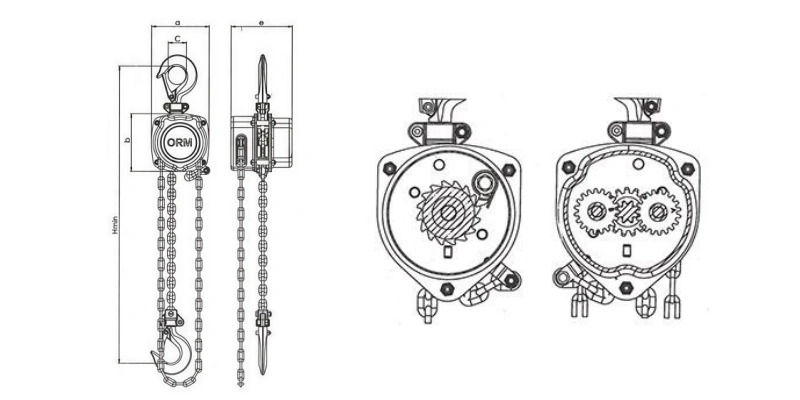
A manual chain block has two separate chains. The operator pulls the hand chain to turn the internal gearing. The gearing drives the load sheave, which moves the calibrated load chain through the hoist body to raise or lower the bottom hook. A load brake controls descent and holds the suspended load when the hoist is operating correctly and used within its rated load.
The load chain is a matched, calibrated machine component designed for the hoist’s load sheave; it is not a general-purpose chain selected by grade alone. Do not replace it with transport chain, sling chain, or any chain that has not been approved for the exact hoist model. See how a chain block works for the operating sequence and chain block components for the main parts.
Main Types of Chain Blocks
Standard Hand Chain Block
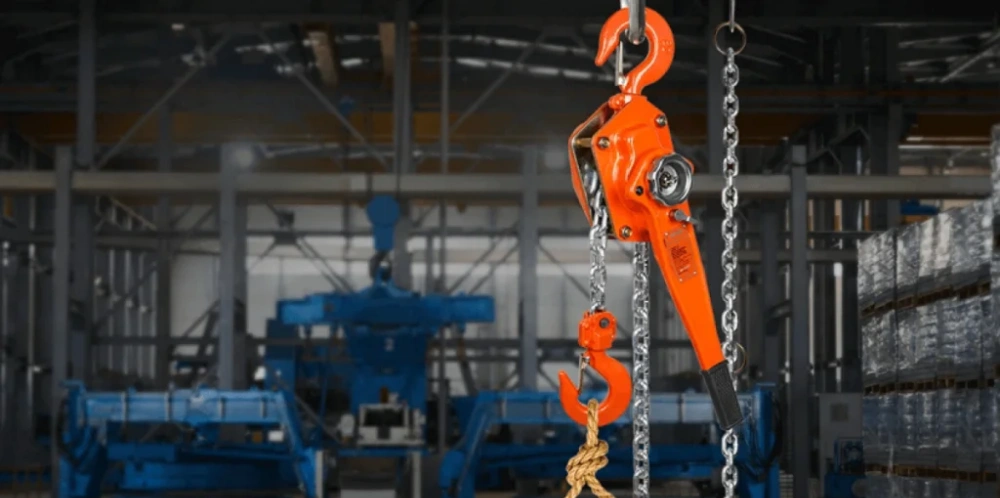
This is the most common chain block configuration: a hook-suspended manual hoist with a separate hand chain and load chain. It is suited to intermittent vertical lifting where no power supply is available, and the operator can stand in a safe position while pulling the hand chain.
For a closer look at portability, power-free operation, and controlled load handling, review the benefits of a hand chain hoist.
Typical applications include equipment installation, maintenance, workshop lifting, and temporary lifting points. Rated load alone is not sufficient for selection. The required lift, minimum headroom, hand pull, hook dimensions, hoist weight, duty classification, and supporting structure must also suit the application.
Compact and Mini Chain Block
A compact or mini chain block is designed to reduce hoist weight and closed headroom at lighter rated loads. It can be useful for field service, restricted access, and short-lift maintenance when the suspension point and complete suspended load are within the unit’s rating.
Compact design does not reduce the need for operating checks. Confirm the marked rated load, available headroom, required lift, hook fit, and approved operating environment for the exact mini chain hoist.
Heavy-Duty and Higher-Capacity Chain Block
A heavy-duty chain block is a product-family description, not a different operating principle. Higher-capacity models may use multiple load-chain falls, larger components, and a larger hoist body as part of the manufacturer’s design. Multiple falls distribute the load through the reeving system, but they also affect load-chain travel, hand-chain travel, hoist weight, and headroom.
Do not alter the reeving or treat the number of falls as a user-selectable safety upgrade. Compare the rated load, standard lift, minimum headroom, hand pull, load-chain configuration, and net weight for the exact model. The current HSZ-CB heavy-duty chain block page lists rated loads from 0.5 t to 10 t; confirm the final configuration and supporting documents in the approved quotation.
Low-Headroom and Trolley-Mounted Configurations
A hook-suspended chain block can hang from a fixed lifting point or from a separately selected trolley. Some installations use a close-coupled or integrated trolley arrangement to reduce the vertical distance between the runway and the load hook. These are suspension and installation configurations rather than different lifting mechanisms.
Check the complete assembly, not the hoist alone. The beam, trolley, suspension connection, clearances, end stops, and supporting structure must be suitable for the rated load and intended travel. A compact hoist body does not guarantee adequate headroom for the complete installation.
Special-Environment Chain Blocks
Do not assume that a standard painted chain block is suitable for corrosive, marine, potentially explosive, high-temperature, low-temperature, clean-room, food-processing, or other special environments. Coatings alone do not establish suitability. Specify the exposure, temperature range, hazardous-area classification where applicable, cleaning chemicals, and inspection conditions so the supplier can confirm an appropriate model and the required documentation.
Chain Block Types Compared
| Type or Configuration | Operation | Typical Reason to Choose It | Confirm Before Selection |
| Standard Hand Chain Block | Pull hand chain | Intermittent vertical lifting without power | Complete suspended load, lift, headroom, hand pull, suspension, duty |
| Compact or Mini Chain Block | Pull hand chain | Lower hoist weight or restricted headroom at lighter rated loads | Rated load, closed headroom, hook fit, environment |
| Heavy-Duty or Higher-Capacity Model | Pull hand chain; reeving is model-specific | Higher rated loads or a more robust product family | Load-chain falls, hand pull, chain travel, headroom, unit weight |
| Trolley-Mounted Configuration | Hoist operated by hand chain; trolley travel may be push or geared | Move the suspended load along a suitable runway | Beam range, trolley rating, clearances, end stops, supporting structure |
| Special-Environment Model | Model-specific | Service outside normal indoor industrial conditions | Written environmental approval, materials, temperature limits, inspection plan |
Related Hoists That Are Not Chain Blocks
Lever Hoist

A lever hoist uses a ratcheting lever handle rather than a continuous hand chain. It can be suitable for short-stroke lifting, tensioning, or positioning when the exact model and its instructions permit the service. It should not be described as a hand chain block. Use the chain block and lever block comparison when the application involves restricted access, load positioning, or possible non-vertical service.
Electric Chain Hoist
An electric chain hoist uses an electric motor and controls to drive the load chain. It is typically considered when lifting cycles are frequent, lift distances are longer, or manual hand-chain operation would be inefficient. Selection should also address power supply, duty rating, control voltage, lifting speed, enclosure or protection rating, suspension, and operating environment. Browse electric chain hoists when the application requires powered lifting.
Air Chain Hoist
An air chain hoist uses compressed air as its power source. It may be considered where a suitable compressed-air supply is available or where an electric motor is not preferred. Rated air pressure and consumption, duty, control arrangement, exhaust, noise, and any hazardous-area requirements must be confirmed for the specific model. Do not assume that every air hoist is approved for use in a hazardous location.
How to Choose the Right Chain Block?
Calculate the Complete Suspended Load
Add the load itself and every item suspended below the hoist, including lifting beams, slings, shackles, clamps, and other attachments. Select a hoist whose marked rated load is at least equal to the complete suspended load. If the total falls between standard ratings, move to the next suitable rated model and recheck the rest of the installation. Never estimate the load by appearance, and never exceed the marked rated load.
Define Lift and Headroom Separately
Lift is the vertical distance the load hook must travel. Headroom is the minimum closed distance required between the upper suspension point and the lower hook. A longer load chain does not solve inadequate headroom, and additional lift increases chain length and hoist weight. Measure both values at the actual work location.
Match the Suspension and Supporting Structure
State whether the hoist will be suspended from a fixed lifting point, beam clamp, trolley, crane, or another approved support. Confirm the connection dimensions and rated load of the complete load path. Avoid side-loading hooks, point-loading a hook tip, twisting the load chain, or allowing the load to bear against the hoist body.
Consider Operating Frequency and Operator Effort
A hand chain block can be practical for occasional, controlled lifts. Frequent cycles, long lift distances, high rated loads, or restricted operator access may make a powered hoist more suitable. Compare the manufacturer’s duty classification and specified hand pull rather than assuming that all manual hoists require the same operating effort.
Specify the Environment and Destination Market
Tell the supplier whether the hoist will be used indoors, outdoors, in a marine or saltwater atmosphere, in dusty areas, around chemicals, or at unusual temperatures. Also state the destination country and required documentation. Ask for model-specific declarations, test records, manuals, and traceability documents applicable to the order. A company quality-management certificate does not, by itself, demonstrate that a particular hoist complies with every product requirement.
Powerful Machinery Model Examples
The figures below are selected data from the current manual chain block category. Rated loads are expressed in metric tonnes (t), not US short tons. Use the data to create a shortlist, then confirm the exact model, lift, dimensions, load-chain configuration, test requirements, documentation, and availability in the approved quotation.
| Model | Rated Load (t) | Standard Lift (m) | Minimum Headroom (mm) | Net Weight (kg) |
| MINI-0.25 | 0.25 | 2.0 | 215 | 3.5 |
| MINI-0.5 | 0.5 | 2.5 | 255 | 4.5 |
| SK-1 | 1 | 2.5 | 270 | 10 |
| SK-2 | 2 | 2.5 | 380 | 14 |
| SK-3 | 3 | 3.0 | 470 | 24 |
| SK-5 | 5 | 3.0 | 600 | 36 |
| SK-10 | 10 | 3.0 | 700 | 68 |
For an additional model-specific reference, review the HSZ-C model specifications for rated capacity, standard lift, minimum hook distance, hand-chain pull, load-chain falls, load-chain diameter, and weight data.
Inspection and Use
Before each use, check the identification and rated load, suspension, hooks and latches, load chain, hand chain, brake function, and condition of the supporting structure. Remove the hoist from service if it is damaged, operates abnormally, has a twisted or damaged chain, has an unreadable rating, or has not received a required inspection.
Inspection intervals and acceptance criteria must follow the manufacturer’s instructions and the rules applicable at the worksite.
Plan the lift so personnel remain clear of the suspended load. Center the hoist over the load for normal vertical lifting, take up slack gradually, and avoid shock loading. Do not use a standard chain block for lifting people, pulling a load sideways, or any other special service unless the manufacturer has approved that exact use.
Use the chain block inspection checklist and the guide on how to use a chain block as supporting references, while treating the model manual and site procedures as the controlling instructions.
After use, fully lower and remove the load, clean the hoist as permitted by the manual, address any moisture or contamination, and store it so the chains cannot tangle or corrode. The chain block storage guide provides a practical storage sequence.
Chain Block Selection Checklist
- Complete suspended load, including rigging and below-the-hook attachments
- Required vertical lift and minimum available headroom
- Top suspension, bottom-hook fit, and supporting structure
- Fixed lifting point or trolley travel, including beam dimensions
- Expected operating frequency, lift distance, and operator access
- Indoor, outdoor, corrosive, dusty, high- or low-temperature, or hazardous-area conditions
- Destination market, required standards, declarations, test records, and manual language
- Quantity, delivery location, packaging, spare parts, and service expectations
When these details are ready, send your lifting requirements for model confirmation and a technical quotation.
FAQ
What Are the Main Types of Chain Blocks?
The main manual configurations include standard hook-suspended, compact or mini, higher-capacity or heavy-duty, trolley-mounted, low-headroom, and special-environment models. Rated load and the number of load-chain falls are design specifications within these families, not interchangeable accessories.
Is a Chain Block the Same as a Chain Hoist?
In common industrial usage, chain block usually refers to a manual hand chain hoist. Chain hoist is the broader term and can include hand-chain, electric, and air-powered hoists. Product naming varies, so confirm the operating method and specification rather than relying on the product label alone.
Is a Lever Block a Type of Chain Block?
No. A lever block, or lever hoist, is a related manual hoist operated by a ratcheting lever handle. A chain block is operated by pulling a hand chain. The two designs may overlap in rated load, but their controls, required working space, and permitted applications differ.
Can a Chain Block Pull Horizontally?
Do not use a standard chain block for horizontal pulling or non-vertical lifting unless the manufacturer explicitly approves the exact model and setup for that service. ASME B30.16 describes ordinary hoist service as the vertical lifting and lowering of freely suspended, unguided loads and treats non-vertical lifting as special-purpose service outside its normal provisions.
How Do I Choose Chain Block Capacity?
Determine the complete suspended load, including below-the-hook equipment and rigging. The hoist’s marked rated load must not be less than that total. Then verify lift, headroom, suspension, duty, environment, and documentation before selecting the final model.
Can a Chain Block Be Used Outdoors?
Only when the manufacturer confirms that the specific model is suitable for the expected exposure and the inspection, maintenance, and storage plan addresses moisture, corrosion, contamination, and temperature. A general corrosion-resistant description is not sufficient for marine or other severe-service environments.