A chain block requires a maintenance plan suited to its model, service conditions, and operating history. Routine care helps prevent dirt, corrosion, and inadequate lubrication from interfering with operation, but maintenance cannot make a damaged hoist safe. If you identify a defect, abnormal operation, or evidence of overloading, remove the unit from service and have it assessed through the approved inspection or repair process.
This guide covers hand-chain-operated chain blocks, also called manual chain hoists. If you need a brief explanation of the mechanism first, read what a chain block is. Always follow the instructions supplied for the exact model; they are the controlling source for maintenance.
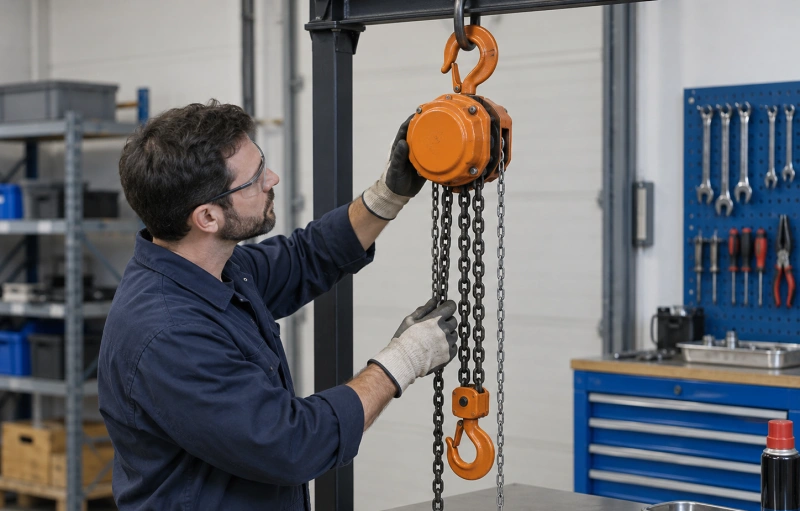
What Chain Block Maintenance Covers?
Preventive maintenance includes approved cleaning, lubrication, corrosion protection, minor actions specifically permitted by the manufacturer, and accurate recordkeeping. Inspection determines whether the hoist is acceptable for continued service. Repair restores a defective unit and may involve disassembly, replacement parts, and testing by qualified personnel.
The three activities support each other but should not be confused. Use the chain block inspection checklist when examining the unit. If the hoist fails an inspection or operates abnormally, follow the chain block repair and return-to-service guide instead of continuing routine maintenance.
| Task | Purpose | Boundary |
| Maintenance | Preserve condition and control contamination or corrosion. | Perform only actions allowed by the current model instructions. |
| Inspection | Determine whether the hoist remains acceptable for service. | Use defined acceptance criteria and a person authorized for the required inspection level. |
| Repair | Correct defects and establish fitness for service return. | Use qualified personnel, approved parts, records, and any required testing. |
Set the Maintenance Schedule From Actual Service
Do not copy a fixed monthly or annual interval from another hoist. The owner should set the schedule based on the manufacturer’s instructions, frequency of use, load spectrum, operating environment, previous findings, and applicable workplace requirements. Shorten the interval when the hoist is exposed to heavy use, shock loading, abrasive dust, moisture, chemicals, unusual temperatures, or recurring defects.
Review the schedule after an overload, impact, extended period out of service, environmental exposure, modification, or repair. Record why the interval changed. A calendar date alone is not sufficient when operating conditions have changed.
| Trigger | Maintenance Response | Inspection or Escalation |
| Before use or shift | Confirm the unit is clean enough to inspect and operate. | Complete the required pre-use checks before lifting. |
| After exposure to wet, dirty, or corrosive conditions | Remove contamination using the approved method, then dry and protect the unit. | Inspect for corrosion, contamination ingress, and impaired operation. |
| Planned service interval | Perform the model-specific cleaning and lubrication tasks. | Complete the inspection level assigned by the owner’s program. |
| After long-term storage | Check the storage condition and restore approved lubrication if required. | Inspect the unit before returning it to service. |
| After overload, impact, abnormal noise, or repair | Do not treat the condition as routine maintenance. | Remove the hoist from service and obtain a qualified assessment and any required testing. |
Complete Pre-Use Observations Before Maintenance
Start with the hoist unloaded and in a stable position. Confirm that the nameplate and rated-load marking are legible and that the unit is the correct equipment for the planned lift. Look for damage, missing parts, unauthorized alterations, or contamination that would prevent a proper inspection.
- Check the top and bottom hooks, latches, and suspension for visible deformation, cracks, gouges, heat damage, or abnormal movement.
- Examine the load chain for twists, kinks, corrosion, damaged welds, nicks, apparent stretching, or links that do not engage smoothly with the load wheel or sheave.
- Check the hand chain for free movement, damage, and correct seating. Confirm that it is not knotted or routed around an obstruction.
- Look for loose, missing, or damaged covers, fasteners, and guards. Do not tighten or replace safety-related parts without the approved procedure.
- Operate the unloaded hoist only as the instructions permit. Stop if movement is rough, the chain jumps, the mechanism binds, or the brake response is abnormal.
The chain block components guide can help identify assemblies, but the model manual controls the inspection points and discard limits.
Clean the Hoist Without Contaminating the Mechanism
Remove the chain block from lifting service before cleaning. Wipe loose dirt from the exterior and chain using the method and materials approved for the model. Avoid aggressive solvents, abrasive tools, and cleaning methods that can remove markings, damage protective finishes, or force water and grit into the enclosure.
Dry the unit before storage or inspection. Do not open the gear case or brake enclosure as routine operator maintenance unless the manufacturer’s instructions authorize the task and specify the required competence. Never apply oil, grease, or cleaning fluid to brake friction surfaces unless the exact service procedure requires it.
Lubricate the Load Chain Correctly
Use the lubricant specified for the exact chain block and operating environment. Remove loose abrasive material from the load chain first. Apply lubricant in the quantity and at the locations specified in the manual, paying particular attention to the bearing surfaces between links when the instructions call for it. Remove excess lubricant that could collect grit or drip onto the load.
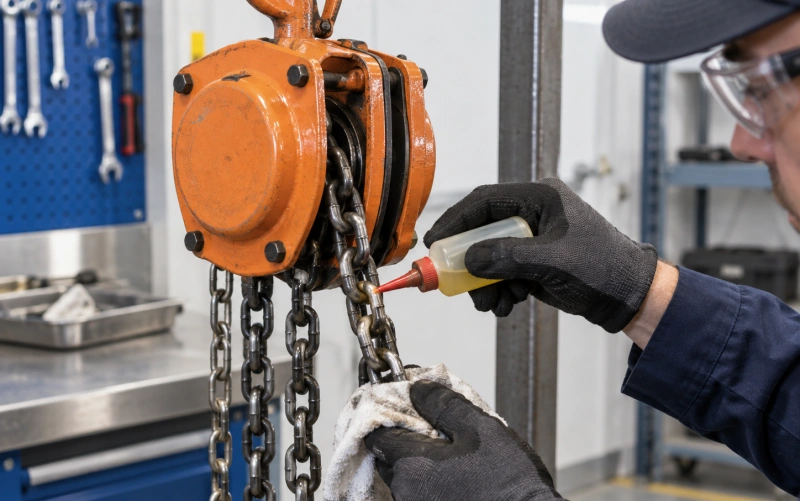
Do not assume that one oil is suitable for every chain, temperature, or workplace. Food-handling, cleanroom, very-low-temperature, marine, and hazardous-atmosphere applications may require a different lubricant or a specially approved hoist. Lubricate the hand chain, brake, and enclosed gears only when the model instructions explicitly require it.
Check the Main Components
Load Chain
Keep the load chain clean, correctly reeved, and free from twists. Examine the full working length that can be safely accessed. If a link is cracked, deeply nicked, deformed, heavily corroded, heat-affected, or outside the model’s discard criteria, remove the hoist from service.
Do not weld, heat, straighten, grind, plate, or splice a hoist load chain. Replace it only with the approved calibrated load chain and follow the model procedure for installation and verification.
Hooks, Latches, and Suspension
Hooks should rotate or articulate as designed and retain their intended shape. Check the throat area, tip, saddle, shank, attachment, and latch. A latch helps retain the load or rigging attachment within the hook opening; it does not increase the hook rating or correct improper rigging. Do not straighten, weld, heat, or grind a damaged hook. Use the manufacturer’s limits for wear, throat opening, and twist.
Hand Chain and Operating Wheel
The hand chain should travel freely and remain correctly engaged with its wheel. Look for damaged links, excessive corrosion, twists, and obstructions. Rough travel or repeated jumping can indicate contamination, chain damage, misalignment, or an internal fault. Stop using the hoist if cleaning the accessible surfaces does not restore normal unloaded travel.
Brake and Operating Feel
A brake problem is not a routine lubrication task. If the load drifts, the hand chain behaves abnormally, the hoist will not lift or lower correctly, or operation changes suddenly, remove the unit from service. Do not adjust the brake, replace friction parts, or perform a load test without the correct technical procedure and authorization.
Housing, Fasteners, and Markings
Check the housing, covers, fasteners, guards, and nameplate for damage or missing parts. Keep identification and warning labels legible. A dented cover can interfere with internal components even when the hoist still moves. Missing or loose load-bearing fasteners require approved parts, specified torque values, and the prescribed service procedure.
Protect the Chain Block During Storage
Clean and dry the unit before storage. Keep it in a protected location where the chain, hooks, and housing cannot be struck, contaminated, or exposed to standing water or corrosive chemicals. Store the load chain without knots or twists and keep it off the floor. For a more complete storage plan, use the chain block storage guide.
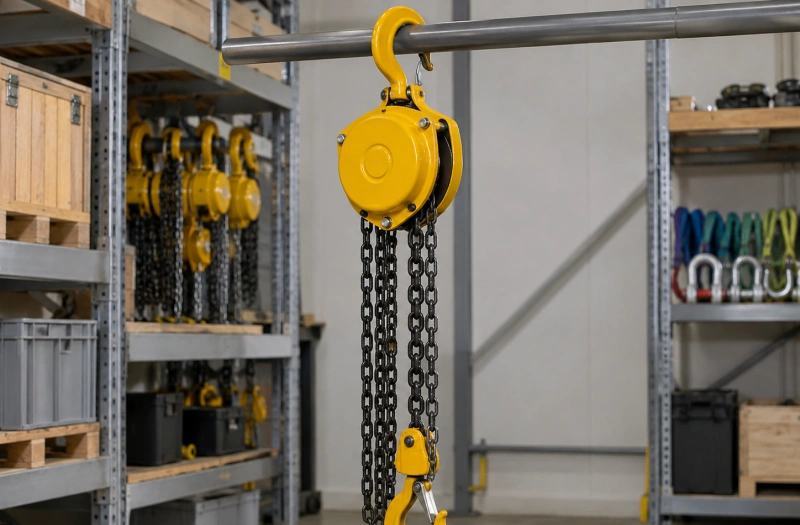
Follow any model-specific temperature, humidity, preservation, and long-term storage instructions. Inspect the hoist before returning it to service, especially after extended storage or a change in environment.
Keep Useful Maintenance Records
A maintenance record should allow another qualified person to identify the unit, understand what was found, and see why it was released for service or withheld from service. Keep records under the asset or serial number rather than relying on a general workshop log.
- Asset ID, manufacturer, model, rated load, lift, and location.
- Date, service conditions, and reason for the maintenance action.
- Observed condition, inspection result, and any stop-use decision.
- Cleaning method, lubricant, and approved parts used.
- Name and authorization of the person who performed and reviewed the work.
- Required follow-up, next review date, and return-to-service decision.
Know When Maintenance Becomes Repair
Remove the chain block from service when you find a crack, deformation, serious corrosion, a damaged or misreeved load chain, abnormal brake behavior, missing safety-related parts, unreadable identification, evidence of overloading, or any condition outside the approved criteria. Mark or isolate the unit so that it cannot be returned to use by mistake.
A qualified person should decide whether the unit can be cleaned, adjusted, repaired, or retired. Use approved model-specific parts and retain the repair record. The inspection and testing required before return to service depend on the defect, the work performed, the manufacturer’s instructions, and the applicable rules.
Contact Powerful Machinery with the model and fault details when you need a technical service path.
Maintenance Planning for Powerful Machinery Chain Blocks
The current Powerful Machinery manual chain block range includes SK, MINI, and several HSZ product families. Use the nameplate and model page to identify the exact unit before ordering lubricant, load chain, hooks, or other parts. A shared family name does not establish that parts or maintenance limits are interchangeable.
The supplied catalogue does not establish current model-specific lubricants, wear limits, torque values, internal service procedures, or return-to-service test procedures for these families. Confirm those details in the approved manual or technical documentation for the exact model before publishing a specification or performing the work.
FAQ
How Often Should a Chain Block Be Maintained?
Set the interval based on the manufacturer’s instructions, service conditions, frequency of use, operating history, and applicable workplace requirements. Increase attention after heavy use, contamination, corrosive exposure, abnormal operation, or an extended period out of service. Do not apply one monthly or annual interval to every hoist.
What Lubricant Should I Use on a Chain Block?
Use the lubricant approved for the exact model, load chain, and operating environment. Do not substitute a generic oil without confirming compatibility. Keep lubricant away from brake friction surfaces unless the service instructions specifically require it.
Can I Wash a Chain Block With Water?
Do not assume water washing is acceptable. Use the cleaning method specified in the model instructions. The hoist must be dry, free from harmful residue, and inspected before it returns to service.
Can a Damaged Load Chain Be Repaired?
Do not weld, heat, straighten, grind, or splice a damaged hoist load chain. Remove the hoist from service and use the approved calibrated replacement chain and model-specific procedure if replacement is authorized.
Should I Test a Chain Block After Maintenance?
The required checks depend on the maintenance performed. Routine cleaning may require only the inspection and functional checks defined by the instructions, while repair or replacement of a load-bearing or braking part may require additional testing. A qualified person should determine the method and acceptance criteria.
What Records Should I Keep?
Record the asset and model, date, operating conditions, findings, maintenance performed, lubricant or parts used, person responsible, follow-up action, and release decision. Keep the record with the unit history.