



Cargo Skates Manufacturer for Heavy Duty Machinery Moving

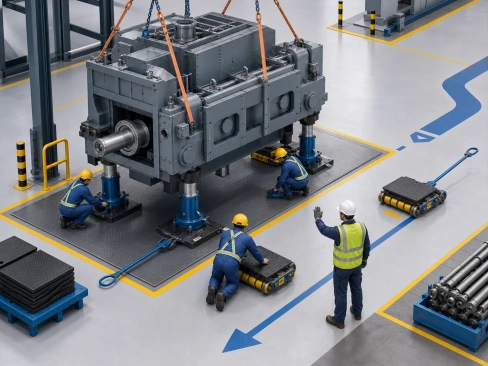
Cargo skates move heavy loads with ease. Steel wheels handle concrete, nylon glides on smooth floors. Connect skates with a steel pipe for stable transport. Get a quote for cargo trolley from Powerful Machinery today.

Why Choose Powerful Machinery as Your Cargo Skate Manufacturer

Powerful Machinery is a cargo skates manufacturer supplying heavy-duty load moving skates, steerable skates and cargo trolleys for factories, warehouses and equipment movers.

red check
Built for Heavy-Load Safety

Reinforced steel frames and smooth rollers help move machinery with better stability and control.

red check
Custom Options for Real Jobs

Choose load capacity, wheel material, size, and skate type to match your floor and equipment.

red check
Factory-Direct Support

Get practical product advice, fast quotations, and stable supply from a material handling equipment maker.

red check
Easy Machine Moving

Low-profile designs help position cargo skates under heavy machines in tight working spaces.

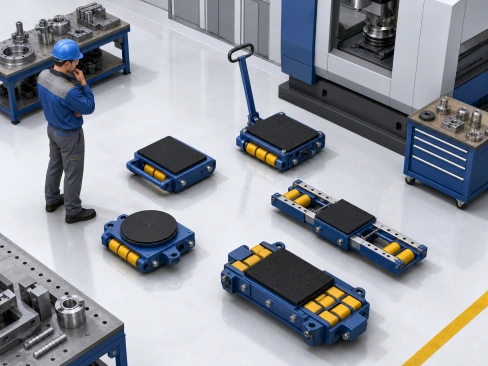
Our cargo skates​ support lifting and rigging operations across diverse applications. Our selection includes:

steerable skates​

Steerable Skates​

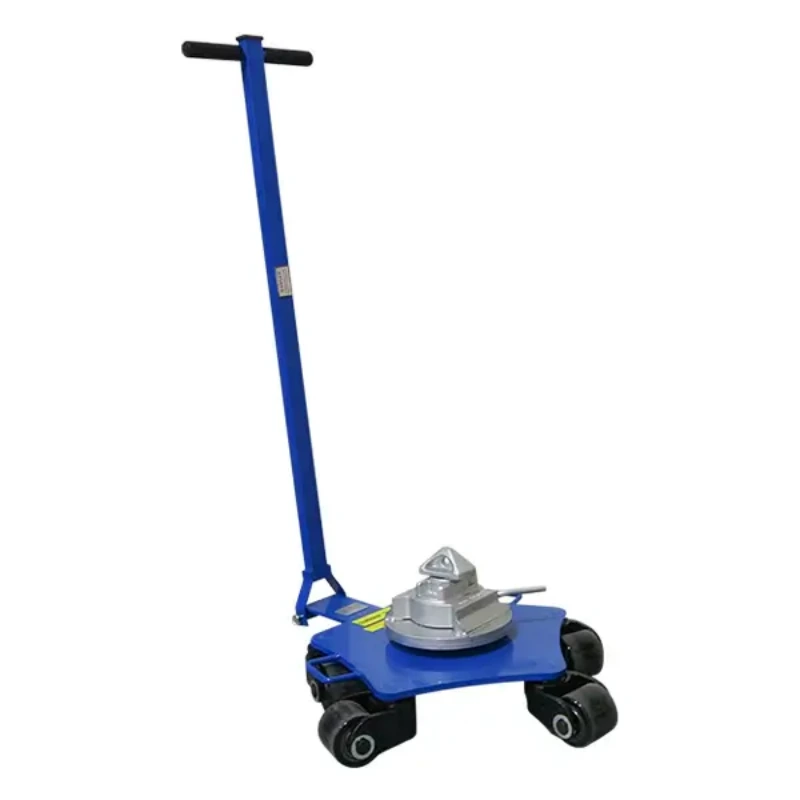
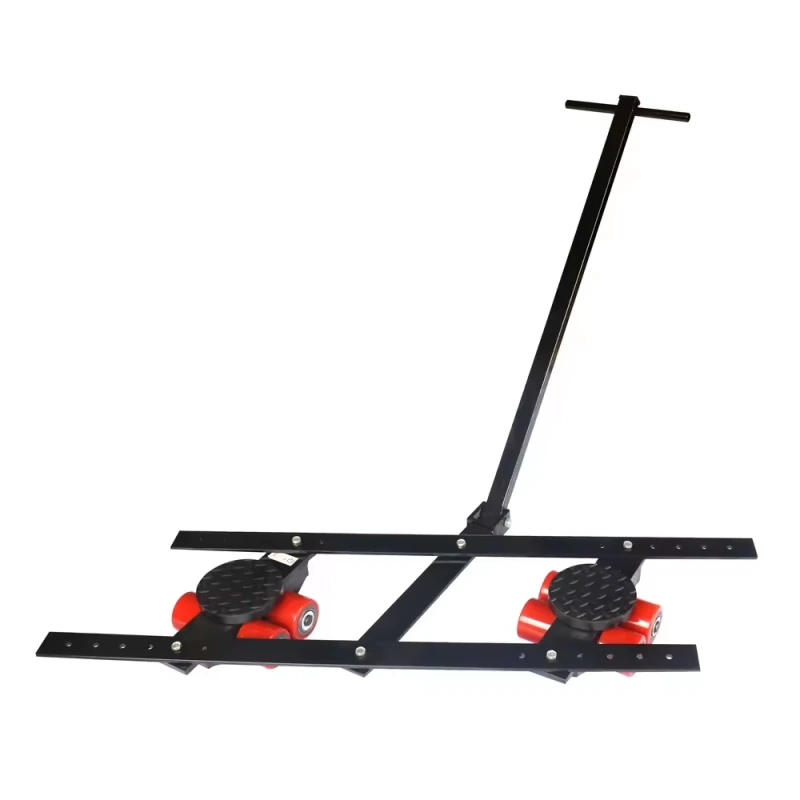
Steerable skates with swivel plate let you move heavy machinery easily, guiding loads through tight spaces and around corners with a steering handle.

load skates

Load Skates

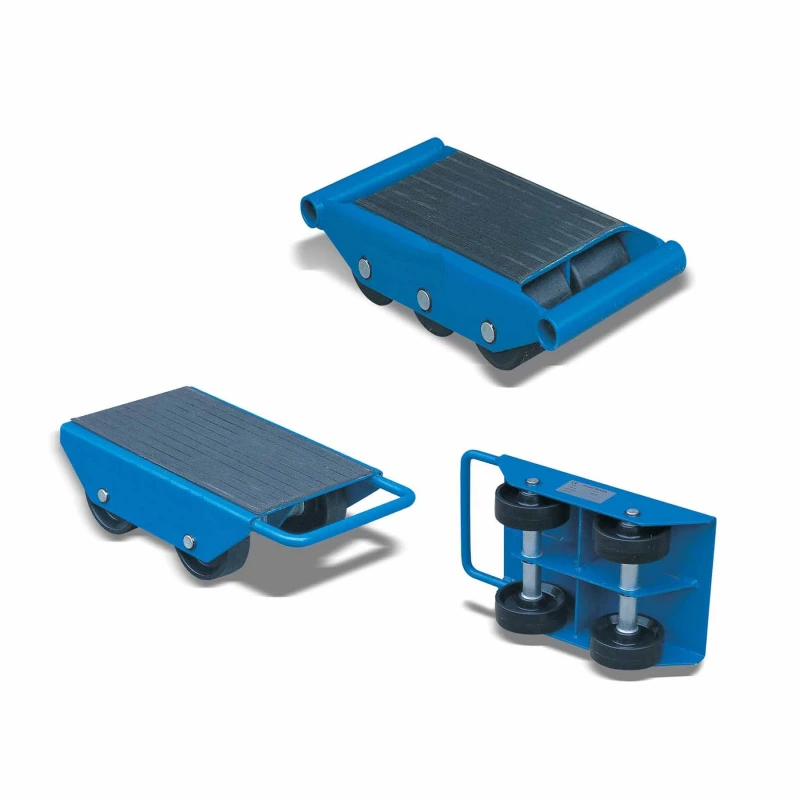
Fixed load skates move heavy items in a straight line, often paired or combined with steerable skates for better control and safe transport.

heavy duty roller skates

Our heavy-duty cargo trolleys handle high-capacity loads easily, making heavy material transport safe, stable, and efficient in any industrial setting.

low profile skates

Low Profile Skates

Our low-profile skates fit under machinery with minimal clearance, ensuring safe, stable, and effortless movement of heavy loads.

container skates

Container Skates

Container skates move heavy shipping containers safely, with mounting points for stable, easy transport in ports or industrial sites.

adjustable cargo skates

Adjustable Cargo Skates

Adjustable cargo skates with telescopic bars let you customize width to move heavy loads safely and efficiently in any workspace.

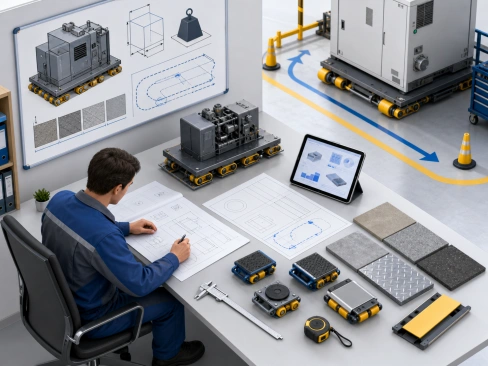
Custom Cargo Skates Manufacturing Process

project requirement collection

Project Requirement Collection

load capacity calculation

Load Capacity Calculation

cargo skates type selection

Cargo Skates Type Selection

wheel material selection

Wheel Material Selection

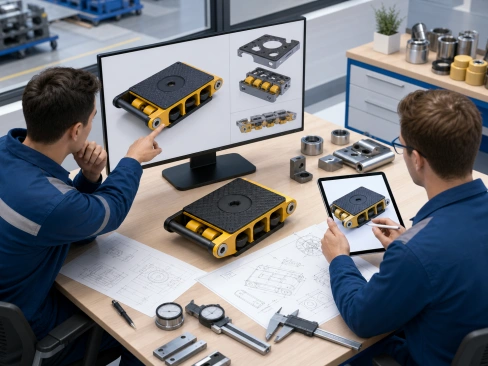
structure design and drawing confirmation

Structure Design and Drawing Confirmation

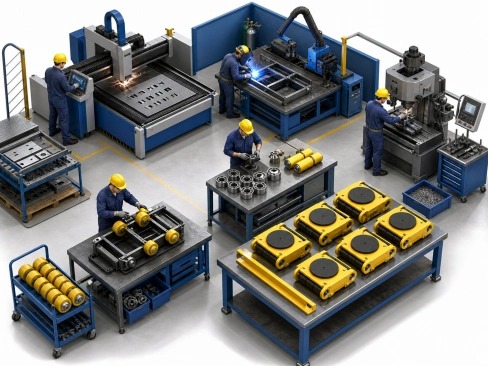
production and assembly

Production and Assembly

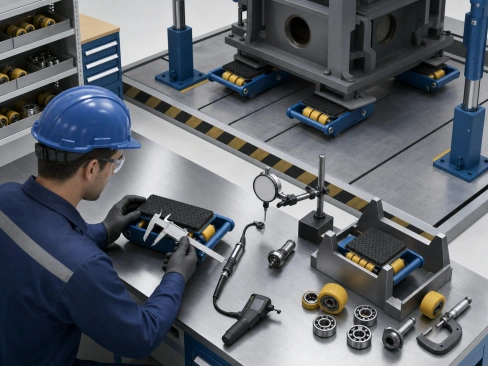
quality inspection and load testing

Quality Inspection and Load Testing

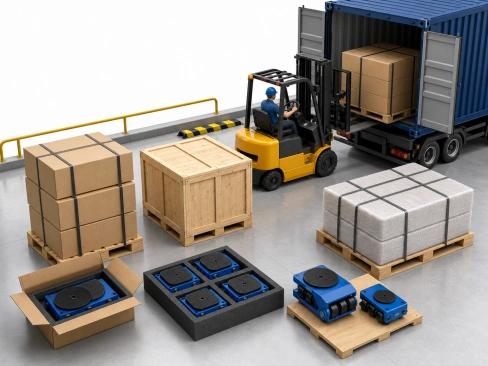
packaging and delivery

Packaging and Delivery

installation and use guidance

Installation and Use Guidance

after sales support

After-Sales Support

NEED HELP WITH YOUR MACHINERY MOVING SKATES ORDER?

Let us help! Reach out today and get recommendations on materials and sizing from our experts.

in person
BY PHONE

Give us a call for personalized assistance and place your order over the phone.

CALL US

email
VIA EMAIL

Email us with your specs and our team will confirm your order promptly.

SEND EMAIL

cargo transport trolley​

Guide to Cargo Skate​

Our guide to cargo skate​s helps you understand cargo skate​ types, applications, and selection tips so you can choose safe, reliable cargo skate​.

What Are Cargo Skates and How Do They Work?

Cargo skates provide a reliable method to move large machinery or heavy equipment across floors safely. Each skate supports a portion of the load, reducing floor stress and preventing tipping. Steel wheels handle rough surfaces while nylon wheels glide on smooth floors.

Multiple skates can connect with bars to create stability. Steering handles allow precise direction control. Using cargo skates increases workplace efficiency while minimizing the risk of damage or injury.

Selecting the right cargo skate ensures safe and efficient movement of heavy loads while protecting both equipment and flooring. Key factors to consider include:

  • Wheel material: Steel wheels handle concrete or rough surfaces. Nylon wheels glide smoothly on polished floors.

  • Load weight: Match skate capacity to the weight of the machinery or equipment being moved.

  • Adjustability: Adjustable skates allow flexibility for irregular or oversized load widths.

  • Floor inspection: Check for debris, cracks, or damage to ensure smooth operation.

  • Hybrid surfaces: Combining steel and nylon wheels accommodates areas with mixed flooring.

  • Safety and efficiency: Correct skate selection reduces wear, prevents accidents, and ensures smooth, uninterrupted movement.

Cargo skates are designed to transport machinery weighing tens of tonnes when used in coordinated sets. Connecting multiple skates with steel bars distributes weight evenly and stabilizes loads. Reinforced plates, anti-slip surfaces, and load-rated wheels allow handling of generators, metal presses, and industrial equipment safely. Adjusting skate positioning according to uneven weight ensures stability. Heavy-duty cargo skates increase operational efficiency while preventing damage to both machinery and flooring.

Using cargo skates safely protects workers, heavy machinery, and industrial flooring. Proper preparation and controlled handling reduce operational risks and improve overall efficiency. Follow these essential safety measures:

  • Inspect equipment before use: Check wheels, axles, frames, and connecting bars for wear, cracks, or looseness.

  • Respect load capacity: Keep the load within the rated capacity of the cargo skates to prevent structural failure.

  • Ensure even weight distribution: Position skates correctly under the load to maintain balance and stability.

  • Wear protective gear: Use gloves, steel-toe boots, and other appropriate safety equipment during operation.

  • Clear the transport path: Remove debris, oil, and obstacles to prevent slipping or sudden stops.

  • Use steerable skates for control: Steering systems provide better direction management in narrow or complex spaces.

  • Move loads gradually: Transport heavy equipment in controlled increments to maintain stability and avoid sudden shifts.

Applying these cargo skate safety practices minimizes accidents, prevents equipment damage, and ensures safe operation in industrial and construction environments.

Understanding the difference between fixed cargo skates and steerable cargo skates helps improve load control, safety, and operational efficiency when moving heavy machinery in industrial environments. Each type serves a specific purpose:

  • Fixed cargo skates: Designed for straight-line movement, these skates provide strong stability over long distances and support consistent load tracking.

  • Steerable cargo skates: Equipped with swivel plates or steering handles, these skates allow precise direction control around corners, narrow aisles, or confined spaces.

  • Combined configuration: Using fixed skates at the rear and a steerable skate at the front improves maneuverability and balance during transport.

  • Steel connecting bars: Linking multiple skates distributes weight evenly and synchronizes movement, reducing the risk of tipping.

  • Operational efficiency: This hybrid setup enhances control, protects heavy equipment, and optimizes material handling in factories, warehouses, and port facilities.

Adjustable cargo skates feature telescopic bars that modify the distance between skates, allowing accommodation of irregularly sized or oversized machinery. Secured telescopic bars prevent tipping and improve stability during transport. Using adjustable skates reduces the number of sets required for varying loads, saving cost and space.

Their modular design integrates easily with other lifting tools. Adjustable cargo skates enhance safety, speed, and flexibility, making them ideal for dynamic industrial or manufacturing environments.

Cargo skates can operate outdoors when configured correctly for surface conditions and load requirements. Selecting the proper wheel type and preparing the transport path ensures safe and efficient movement of heavy equipment in construction sites, ports, and industrial yards. Consider the following factors:

  • Choose the right wheel material: Steel wheels perform well on rough concrete and asphalt. Nylon wheels suit smooth paved outdoor surfaces.

  • Avoid unstable terrain: Loose gravel, sand, or highly uneven ground can reduce stability and damage wheels.

  • Use wider skate configurations: Wider setups improve load distribution and increase balance on outdoor surfaces.

  • Inspect the transport route: Check for cracks, slopes, oil, water, or debris before moving heavy loads.

  • Protect the load: Secure and cover equipment to prevent environmental exposure during transport.

  • Schedule regular maintenance: Clean and inspect cargo skates after outdoor use to extend service life and maintain performance.

Proper cargo skates maintenance ensures long service life, stable performance, and safe movement of heavy machinery. Routine inspection and preventive care reduce downtime and protect industrial equipment investment. Follow these essential maintenance steps:

  • Inspect wheels and axles regularly: Check for cracks, flat spots, misalignment, or excessive wear that may affect load stability.

  • Lubricate moving parts: Apply appropriate lubrication to axles and rotating components to reduce friction and extend lifespan.

  • Tighten bolts and telescopic bars: Secure all fasteners and adjustable connecting bars to maintain structural integrity.

  • Replace worn wheels promptly: Damaged or heavily worn wheels reduce load balance and increase operational risk.

  • Clean after heavy use: Remove dirt, metal debris, oil, and dust to prevent performance issues.

  • Store in dry conditions: Keep cargo skates in a clean, moisture-free environment to prevent rust and corrosion.

  • Apply protective coatings: Use anti-rust paint or surface protection to enhance steel durability in industrial environments.

Choosing the right cargo skates manufacturer directly impacts safety, efficiency, and long-term operating costs. These cargo skates stand out through engineering strength, modular design, and direct factory support tailored for industrial and logistics professionals. Key advantages include:

  • Reinforced steel construction: Thick steel plates and precision welding increase durability under heavy load conditions.

  • Anti-slip load surface: Enhanced grip design improves stability and reduces the risk of load shifting.

  • Modular configuration options: Adjustable and steerable cargo skates adapt to different machinery sizes and weight distributions.

  • Integrated lifting compatibility: Designed to work seamlessly with jacks and other lifting equipment for controlled positioning.

  • Direct manufacturer support: Fast quotations, technical guidance, and readily available spare parts ensure operational continuity.

  • Industrial-grade reliability: Built for warehouses, factories, construction sites, and port logistics operations.

This combination of strength, flexibility, and responsive factory service delivers a more reliable cargo skates solution than standard market alternatives.

Custom cargo skates provide engineered solutions for complex heavy load handling requirements. Tailored design improves safety, precision, and workflow efficiency in demanding industrial environments such as factories, shipyards, and logistics hubs. Customization options include:

  • Custom wheel types: Selection of steel, nylon, or polyurethane wheels based on floor condition and load weight.

  • Specified dimensions and load capacity: Design adjustments to match machinery size, footprint, and total tonnage.

  • Dedicated mounting points: Integrated fixing structures for secure positioning under specialized equipment.

  • Telescopic connecting bars: Adjustable width systems to support oversized or irregular loads.

  • Reinforced steel plates: Strengthened structures for extreme-duty applications.

  • Steering handles or swivel systems: Precision control for narrow aisles or confined spaces.

  • Automation integration: Compatibility with semi-automated or fully automated material handling systems.

  • Engineering support consultation: Technical assessment to address uneven weight distribution and irregular load shapes.

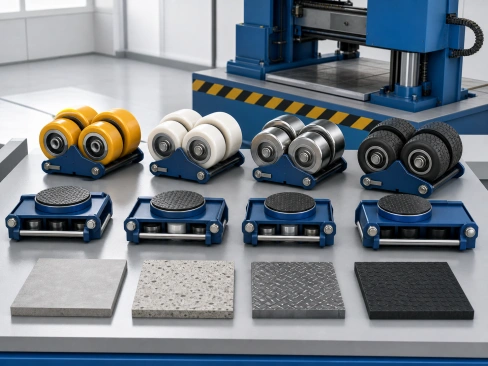
As a cargo skates manufacturer, we recommend that you choose the wheel material according to your floor type, load weight, moving distance, work environment, and equipment value. The wheel material directly affects rolling smoothness, floor protection, noise level, service life, and operator control.
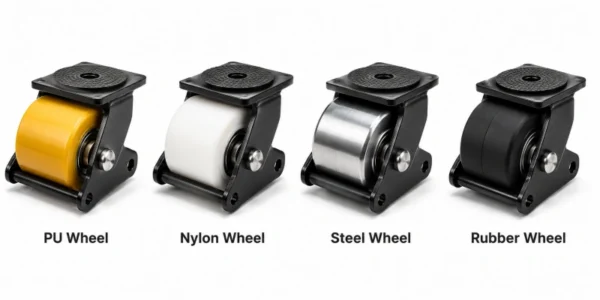
cargo skates wheel material

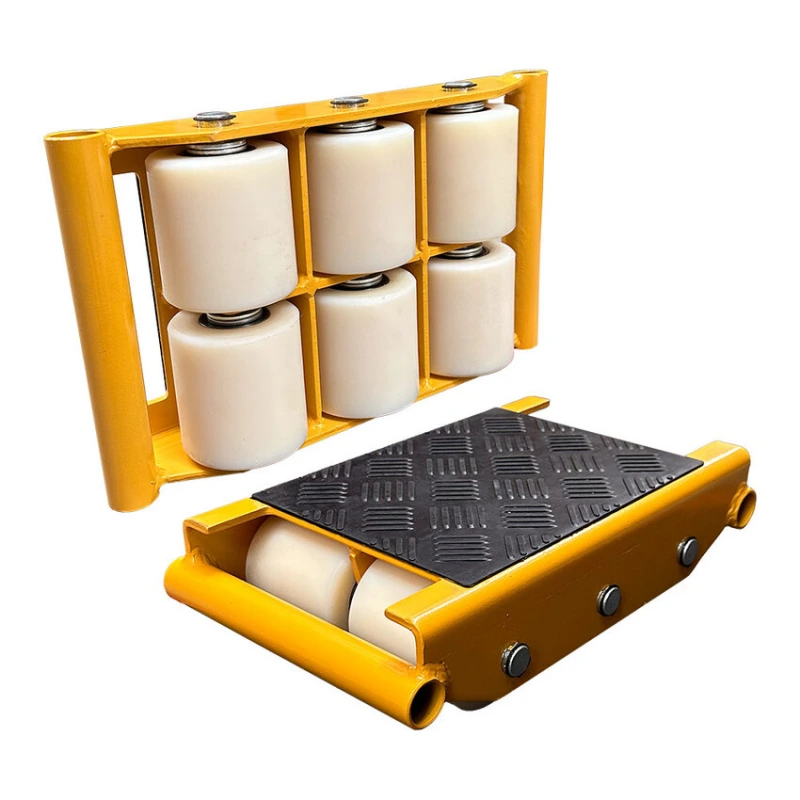
For most factories, warehouses, and machinery moving jobs, PU wheels are the most practical choice. PU means polyurethane. PU cargo skates work well on concrete floors, epoxy floors, painted floors, tile floors, and clean workshop floors. You get strong load support, smooth rolling, lower noise, and better floor protection. You can use PU wheel cargo skates for CNC machines, injection molding machines, transformers, packaging machines, molds, dies, industrial equipment, and production line relocation.

You should choose nylon wheels when you need low rolling resistance and strong wear resistance on a hard, smooth floor. Nylon wheels roll easily under heavy loads, which helps your team move equipment with less pulling force. Nylon cargo skates work best on smooth concrete floors, steel plates, and hard workshop floors. You should avoid nylon wheels on soft or expensive floor coatings because nylon wheels have a harder surface than PU wheels.

You should choose steel wheels for very heavy loads, harsh working conditions, and rough industrial sites. Steel wheel cargo skates suit steel mills, shipyards, heavy machinery plants, outdoor maintenance areas, and large equipment installation projects. Steel wheels handle high pressure and impact better than softer wheel materials. You should use steel plates or track plates under steel wheels when you need to protect the floor. Steel wheels can damage epoxy floors, painted floors, and decorative concrete.

You should choose rubber wheels for lighter loads, short-distance movement, and low-noise working areas. Rubber wheels give strong grip and good floor protection. Rubber wheel cargo skates suit lighter equipment, clean workshops, and indoor positioning work. You should not use rubber wheels for very heavy industrial loads because rubber can deform under high pressure.

Before you place an order, you should check these points:

  • What floor will you use: concrete, epoxy, steel plate, tile, rough ground, or outdoor ground?
  • What total weight will you move?
  • Will you move the load in a straight line or turn in a narrow area?
  • How long will the moving distance be?
  • Will your team use the cargo skates once, weekly, or every day?
  • Does your floor need strong protection?
  • Does your site have oil, dust, water, heat, floor joints, or slopes?

As a cargo skates manufacturer, we recommend that you never choose cargo skates only by the machine nameplate weight. You need to consider total load weight, weight distribution, center of gravity, floor condition, safety margin, and the number of cargo skates under the load.

Many buyers think a 20-ton machine only needs cargo skates with a total rated capacity of 20 tons. Real machinery moving work needs more safety margin. A machine may carry more weight on one side because of a motor, gearbox, hydraulic unit, control cabinet, mold base, or heavy frame. One cargo skate may carry much more weight than the others during movement.

Use this practical capacity selection method.

1. Confirm the real total weight

You should check the machine manual, nameplate, packing list, equipment drawing, or supplier document. You should include all parts that stay on the machine during movement, such as oil, tooling, fixtures, accessories, base plates, and mounted components.

2. Check the support layout

Most machinery moving jobs use 3-point support or 4-point support.

A 3-point support layout gives stable contact on many factory floors because three points can touch the floor more easily. A 4-point support layout works well for large and wide equipment, but uneven floors can place too much weight on one cargo skate.

3. Add a safety margin

You should not use cargo skates at 100% of rated capacity in real working conditions. We usually recommend a safety margin of 25% to 50% for normal factory movement. You should use a higher safety margin when the load has a high center of gravity, uneven weight distribution, long moving distance, rough floor, turning movement, or high equipment value.

Example:
You need to move a 20-ton machine. You plan to use 4 cargo skates. Simple calculation gives 5 tons per cargo skate. Real movement may place more weight on the motor side or front side. You should not choose 4 pieces of 5-ton cargo skates. You should consider a total rated capacity of 30 tons or higher, depending on the floor and machine structure.

4. Check the center of gravity

Tall machines, narrow equipment, presses, electrical cabinets, and vertical tanks need extra attention. A high center of gravity increases the risk of tilting during movement. You should place cargo skates under strong load-bearing points, keep the moving speed low, and use a wider support layout when possible.

5. Check the floor bearing capacity

Cargo skates carry heavy loads through wheels, so the wheel contact area creates high pressure on the floor. Weak concrete, old floors, epoxy coatings, mezzanine floors, container floors, and temporary work platforms may need steel plates to spread the load. A stronger cargo skate cannot solve a weak floor by itself.

6. Match the capacity with the cargo skates type

You can choose different cargo skates according to your moving method:

  • Fixed cargo skates for straight-line movement
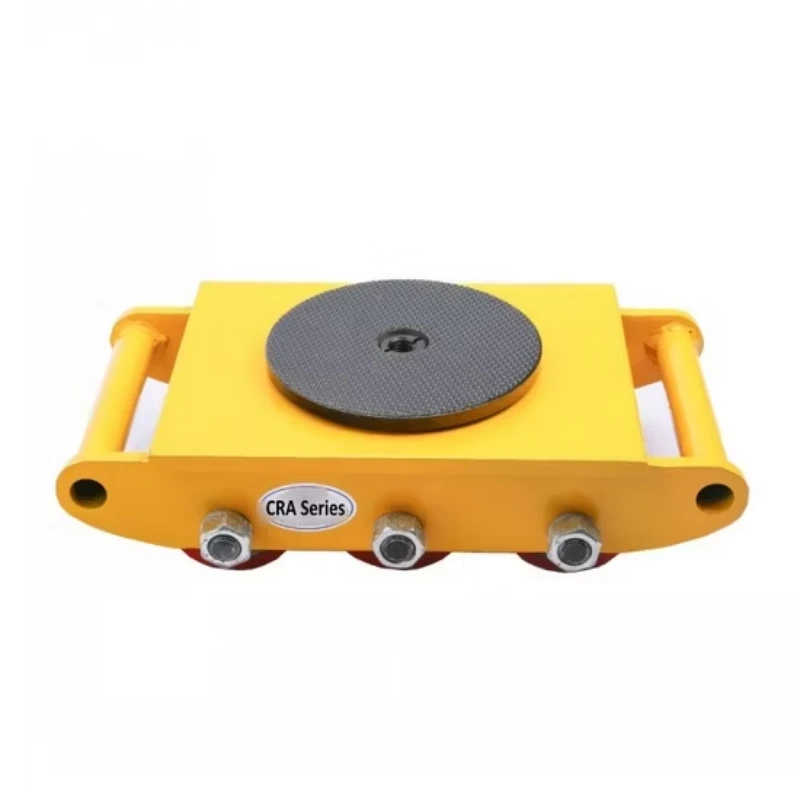
  • Rotating cargo skates for 360-degree positioning and narrow spaces
  • Steerable cargo skates for controlled machinery relocation
  • Adjustable cargo skates for equipment with different widths
  • Heavy-duty cargo skates for large machines, molds, transformers, and steel structures

You should choose a higher capacity model when your project involves valuable equipment, uneven floors, frequent use, turning movement, or uncertain weight distribution. A correct capacity choice helps you reduce equipment damage, floor damage, downtime, and safety risks.

When you contact our factory, you can share the machine weight, machine size, floor condition, moving route, and turning space. We can help you select a suitable cargo skates capacity before production or shipment.

As a cargo skates manufacturer, we recommend that you follow a safety checklist before every machinery moving job. Cargo skates help your team move heavy equipment with less force, but safe movement depends on correct selection, correct placement, trained workers, and a clear moving route.

1. Confirm the load weight

You should know the real equipment weight before you choose cargo skates. Do not guess. Check the machine manual, equipment drawing, nameplate, packing list, or supplier document.

2. Check the rated capacity

You should choose cargo skates with enough safety margin. Do not use cargo skates at full rated capacity during real factory movement. Uneven weight distribution can overload one cargo skate and create a serious safety risk.

3. Inspect the cargo skates

You should check the wheels, bearings, turntable, bolts, welding points, handle, and load plate before use. Do not use cargo skates with cracked wheels, loose bolts, damaged bearings, bent plates, or broken welds.

4. Match the wheel material with the floor

You should choose PU wheels for most indoor factory floors. You can choose nylon wheels for hard and smooth floors. You can choose steel wheels for extreme loads and rough industrial ground. You can choose rubber wheels for lighter loads and low-noise indoor movement.

5. Clean the moving route

You should remove dust, oil, bolts, welding slag, stones, wood pieces, cables, metal scraps, and packaging materials from the route. Small objects can block the wheels and cause sudden load movement.

6. Check the floor condition

You should inspect cracks, gaps, drains, floor joints, slopes, weak coatings, and soft areas. Use steel plates when the floor cannot support concentrated wheel pressure. A smooth and strong floor gives your team better control.

7. Plan the full moving route

You should check door width, turning space, floor slope, ramp angle, height clearance, stopping area, and machine length. Mark the route before lifting the equipment. Keep unrelated workers away from the moving area.

8. Lift from strong structural points

You should lift the equipment with suitable jacks, toe jacks, hydraulic jacks, lifting wedges, or cranes. Place cargo skates only under strong load-bearing points. Do not place cargo skates under thin covers, weak frames, sheet metal panels, or unstable edges.

9. Position the cargo skates correctly

You should align the cargo skates with the moving direction. Keep the load balanced. Keep each cargo skate fully under the load. Keep hands and feet away from pinch points during placement and movement.

10. Control the center of gravity

You should identify the heavy side of the machine before movement. Motors, gearboxes, hydraulic units, control cabinets, and molds can shift the center of gravity. Use a wider support layout or extra cargo skates when the equipment looks top-heavy or uneven.

11. Use the right steering method

You should use steering handles, pull rods, tow bars, or controlled push points. Do not pull the machine from weak parts. Do not let workers stand in front of the moving load.

12. Move slowly

You should move heavy equipment at a slow and steady speed. Fast movement can cause wheel impact, load shift, floor damage, and loss of control. Stop immediately when the load tilts, shakes, or meets resistance.

13. Assign one team leader

You should let one person control the movement. The team should follow clear voice commands or hand signals. Every worker should understand the stop signal before the move starts.

14. Wear proper safety gear

You should wear safety shoes, gloves, helmets, and work clothes. Never put hands, feet, or tools under the load. Never stand between the load and a wall, machine, column, or fixed object.

15. Inspect the cargo skates after use

You should check the wheels, bearings, bolts, welds, turntable, and handle after every job. Replace worn parts before the next movement. Clean the wheels when they pick up oil, dust, metal chips, or debris.

This cargo skates safety checklist helps your team reduce risk during machine moving, factory relocation, equipment installation, mold handling, transformer moving, and heavy load positioning. You can send our team your load weight, floor type, moving route, turning space, and safety requirements. We can recommend the right cargo skates model and wheel material for your working site.

Have More Questions of Cargo Skates?

Have more questions about cargo skates? Our team provides expert advice on cargo skate load capacity, wheel selection, customization, and safe operation. Get fast technical support and reliable solutions for your material handling euipment projects.


Get in touch
Download Product Catalog

After downloading the product catalogue, our dedicated technical experts will provide you with one-on-one service.