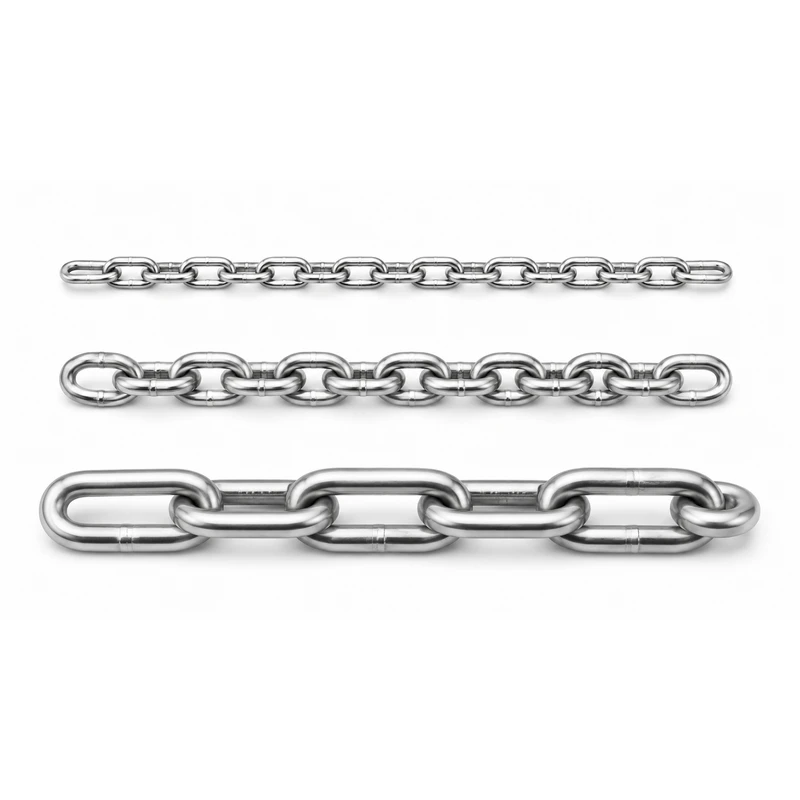
Choosing between a chain hoist and a wire rope hoist is not a matter of picking a universal “light-duty” or “heavy-duty” winner. Both can lift freely suspended material loads, and their rated capacities overlap. The key difference is the lifting medium and how that medium is handled and stored: a chain hoist passes load chain over a pocketed load sheave, while a wire rope hoist winds wire rope onto a grooved drum and may route it through one or more sheaves in the reeving system.
That difference affects lift height, hoist envelope, hook path, speed options, inspection and maintenance requirements, crane integration, and total cost of ownership. For an industrial purchasing decision, compare the exact models against the application rather than relying on a fixed tonnage cutoff.
This guide mainly compares electric chain hoists with electric wire rope hoists. Manual chain hoists are a separate power and duty category, so they are discussed separately rather than treated as directly equivalent to powered wire rope hoists.
Quick Answer: Chain Hoist or Wire Rope Hoist?
An electric chain hoist is often a practical starting point when the application calls for a compact suspended-load package, moderate lift height, straightforward vertical travel, and a configuration that fits the available space. A wire rope hoist is often considered when the project calls for greater lift height, higher operating speeds, demanding duty, integration into higher-capacity crane systems, or a rope-drum arrangement that better suits the crane design.
Neither statement is a universal rule. A high-duty chain hoist may be better suited to an application than an incorrectly selected wire rope hoist, and a low-headroom wire rope design may fit a building better than a particular chain-hoist model. The final choice should be based on rated load, load spectrum, lift height, duty, speed, headroom, hook approach, hook path, environment, power and control requirements, and service support.
For product-level specifications, compare Powerful Machinery’s electric chain hoists with its wire rope hoists.
Scope: Electric Chain Hoist vs Electric Wire Rope Hoist
The term “chain hoist” can include hand-chain-operated units, lever-operated units, and powered chain hoists. These machines do not share the same speed, duty, or operating method. For a like-for-like industrial comparison with an electric wire rope hoist, the sections below use an electric chain hoist as the primary chain-hoist reference.
Manual hand-chain hoists still make sense where electrical power is unavailable or where lifting is occasional and operator-controlled. They should be selected according to their own rated load, lift, required hand-chain pull, inspection, and service requirements rather than the powered-hoist comparison below.
Chain Hoist vs Wire Rope Hoist: Quick Comparison
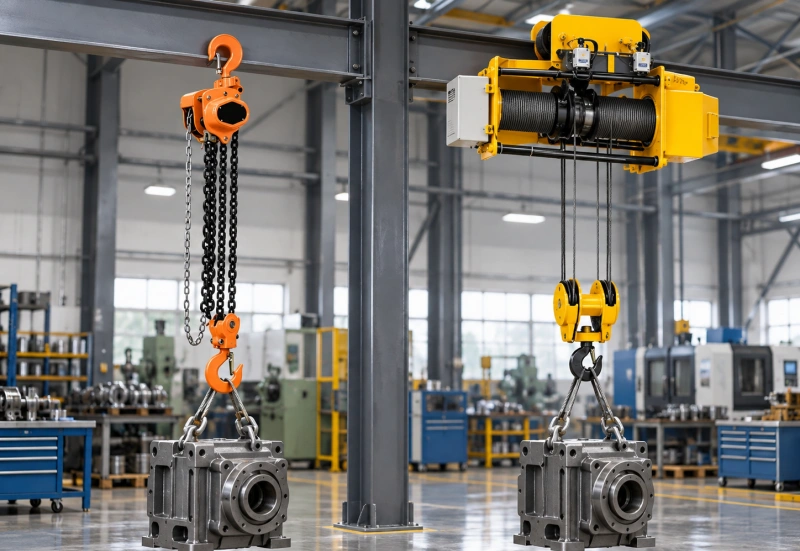
| Selection Factor | Electric Chain Hoist | Electric Wire Rope Hoist |
| Lifting Medium | Welded load chain passes over a pocketed load sheave; unloaded chain is typically collected in a chain container or otherwise managed as designed. | Wire rope winds onto a grooved drum and may run through sheaves in the lower hook block and reeving system. |
| Rated Capacity | Model-specific. Common in lower-to-medium industrial capacity ranges, but no universal upper cutoff applies to the category. | Model-specific. Commonly available in higher-capacity crane packages, although the capacity ranges overlap with chain hoists. |
| Lift Height | Greater lift height requires more load chain and adequate chain storage; chain mass and chain-container volume become important layout considerations. | Wire rope is stored on the drum, making wire rope hoists a practical starting point for long-lift applications when drum capacity and reeving are sized appropriately. |
| Duty and Speed | Available in multiple duty and speed configurations. Selection must match the manufacturer’s published duty rating and the actual load spectrum. | Often offered in high-duty crane systems and broad speed configurations. Selection still depends on the exact duty rating, not on the lifting medium alone. |
| Headroom and Approach | Compact layouts are common; low-headroom trolley configurations are also available. Verify the actual headroom and end-approach dimensions. | Standard and low-headroom layouts are available. Drum, trolley, and reeving geometry affect the hoist envelope and end approach. |
| Hook Path | The load chain does not spool laterally across a drum, so there is no drum-induced hook drift. | Single-reeved designs can have some lateral hook drift as the rope winds on or off the drum; double-reeved true-vertical-lift designs are available where required. |
| Maintenance Focus | Load chain, load sheave, chain guide or container, hooks, brake, gearbox, and trolley where fitted. | Wire rope, rope guide, drum and grooves, sheaves, hooks, brake, gearbox, and trolley where fitted. |
| Environment | Suitability for outdoor, corrosive, dusty, or hazardous environments depends on the exact model, enclosure, coating, electrical protection, and project specification. | The same principle applies: environmental suitability must be specified and confirmed for the exact hoist. |
| Cost / TCO | Often economical for compact and lower-to-medium-capacity applications, but price varies with duty, lift, trolley, and controls. | Initial system cost can increase with capacity, duty, reeving, crane integration, and controls; compare total lifecycle requirements. |
How Do the Two Hoists Lift the Load?
Electric Chain Hoist
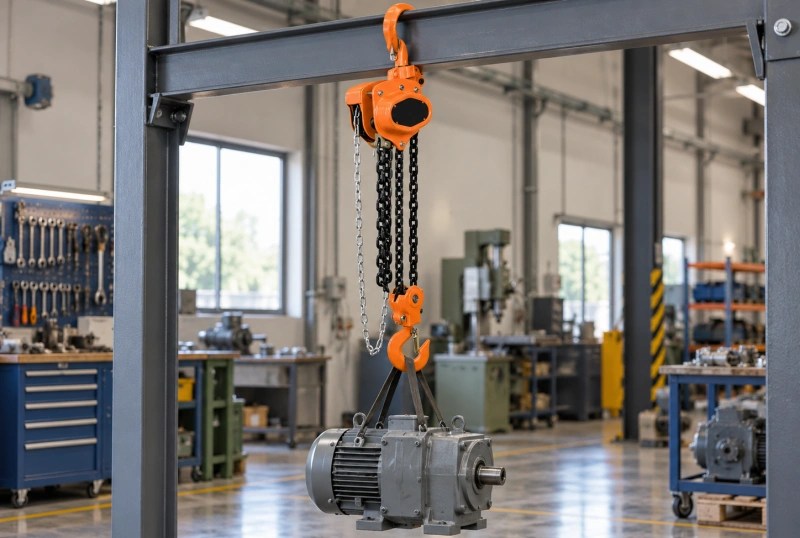
In an electric chain hoist, the motor and gearbox drive a pocketed load sheave that engages the load chain. The chain moves through the hoist as the load rises or lowers, while the unloaded chain is collected or otherwise managed on the opposite side, commonly in a chain container. The brake and control system stop and hold the load according to the hoist design.
Because the load chain passes over the load sheave rather than spooling laterally across a drum, the hook path is not affected by drum-induced lateral drift. This can be useful when a straight vertical hook path is important, although load sway, trolley motion, and the rigging arrangement still need to be controlled.
Electric Wire Rope Hoist
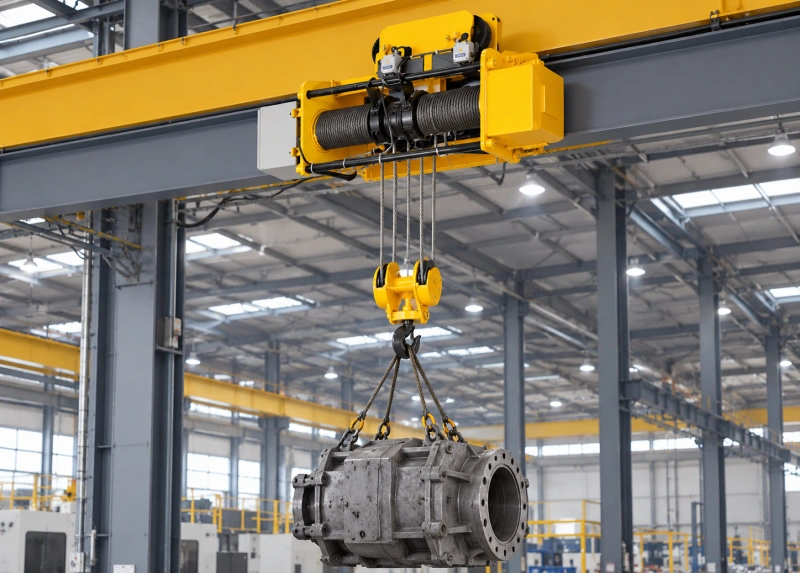
An electric wire rope hoist raises the hook by winding steel wire rope onto a grooved drum. Depending on the reeving arrangement, the rope may pass through sheaves in the lower hook block before returning to the drum or to a fixed anchorage point. The drum, rope guide, sheaves, and reeving geometry therefore become part of the selection and maintenance requirements.
A single-reeved wire rope hoist may produce some horizontal hook movement as the rope travels across the drum. Where true vertical lift is required, a double-reeved configuration can keep the hook centered as the ropes wind symmetrically. This requirement should be specified in the RFQ rather than assumed from the term “wire rope hoist.”
Key Differences That Matter in Selection
1. Rated Capacity and Load Spectrum
Do not use a rule such as “chain hoists are below 2 tonnes” or “wire rope hoists start above 7.5 tonnes.” Those thresholds are not universal. Manufacturers offer overlapping capacity ranges, and the correct selection is based on the rated load of the exact hoist after the total suspended load has been defined.
Selection also requires the load spectrum: how often the hoist lifts near rated load, how long it runs, how many starts occur, and how the load varies through the shift. A capacity value without the duty profile is not sufficient to specify an industrial hoist.
2. Lift Height and Chain/Rope Storage
Increasing lift height changes the chain-management and equipment-layout requirements. A chain hoist needs enough load chain for the required travel and a safe way to manage the unloaded chain. As lift height increases, chain mass and chain-container volume become more important considerations.
A wire rope hoist stores the rope on its drum. This is one reason wire rope designs are commonly considered for long-lift crane applications. The drum and reeving still have to be designed for the required lift, rope size, and number of falls, so “wire rope” does not automatically mean unlimited lift.
3. Duty Cycle and Lifting Speed
Both technologies are available in powered industrial versions, and both have model-specific duty limits. A useful RFQ should state starts or lifting cycles per hour, operating time, typical load, peak load, required hoisting speed, and any required travel speed. Compare those inputs with the manufacturer’s published duty classification and thermal limits.
Wire rope hoists are commonly used in high-throughput overhead crane systems and are often available with higher hoisting speeds or multi-speed packages. Electric chain hoists are also available with multi-speed or variable-speed control. The lifting medium alone does not determine speed or positioning performance.
4. Headroom and Hook Approach
Available building height can matter as much as capacity. Both chain and wire rope hoists can be supplied in standard or low-headroom trolley layouts, but the actual headroom dimension and end approach vary by model.
Compare the dimensional drawing with the actual beam, runway, crane geometry, obstruction zones, and required high-hook position. Avoid statements such as “chain hoists always need less headroom”; a purpose-built low-headroom wire rope trolley may fit better than a particular chain-hoist model.
5. Hook Path, Reeving and Positioning
For tooling, dies, fixtures, or assembly work, define whether the hook must travel on a true vertical line. A chain hoist does not create drum-induced hook drift because the load chain passes over the load sheave instead of winding along a drum.
With a wire rope hoist, a single-reeved layout may allow some horizontal hook movement as the rope winds. Double-reeved true-vertical-lift designs can eliminate that drum-related drift. Precise load placement still depends on hoisting speed, control method, operator technique, load stability, and trolley or crane motion, so “wire rope is more precise” is too broad to be a useful rule.
6. Environment and Protection
Do not choose between chain and wire rope simply by labeling one “indoor” and the other “harsh environment.” Outdoor exposure, dust, moisture, corrosive atmosphere, temperature, washdown, hazardous-area classification, and electrical protection have to be specified for the exact hoist.
Confirm enclosure and IP-rating requirements, coatings and materials, motor and brake suitability, controls, lubrication, storage, and inspection requirements for the project environment. A standard indoor model should not be assumed suitable outdoors simply because its lifting medium appears robust.
7. Inspection and Maintenance
The two hoist types have different wear and inspection points rather than a simple “low maintenance vs. high maintenance” ranking. For a chain hoist, the maintenance program commonly addresses load chain wear, elongation, deformation, corrosion, lubrication, chain tracking, the load sheave, hooks, brake, and other load-bearing components. For a manual chain block inspection process, see the chain block inspection checklist.
For a wire rope hoist, inspections may include broken wires, diameter reduction, external wear and corrosion, kinking, crushing, and other rope distortion, together with the rope guide, drum and grooves, sheaves, end connections, hook, brake, and drive components. The wire rope inspection guide provides more detail on rope condition.
Inspection frequency is not a universal number that can be copied from a comparison article. Use the manufacturer’s instructions, the standard or regulation that actually applies, service severity, equipment history, and the site inspection program.
8. Purchase Cost and Total Cost of Ownership
Initial equipment cost can favor a compact electric chain hoist when the required capacity, lift, and duty fit the design. Wire rope systems can involve a larger hoist-and-trolley package, more reeving components, and more complex crane integration. That does not mean the chain option is always less expensive over the equipment’s service life.
Total cost of ownership should include the required crane or beam structure, lift height, chain or rope replacement, inspection labor, spare parts, downtime, control system, travel equipment, service availability, and expected operating intensity. A higher initial cost may be justified when it better matches the required duty, lift, and production demands.
Advantages and Limitations
| Type | Practical Advantages | Practical Limitations to Check |
| Electric chain hoist | Compact suspended-load architecture; straightforward vertical load path; no drum-induced hook drift; broad suspension and trolley choices; often cost-effective when the application fits the model range. | Long lift increases chain length, mass, and storage requirements; duty and speed limits are model-specific; load chain and chain-engaging components require the correct inspection and replacement criteria. |
| Electric wire rope hoist | Well suited to many crane systems; long-lift and high-duty or high-capacity configurations are widely available; broad reeving, speed, and trolley options; true-vertical-lift designs can be specified. | The rope, drum, rope guide, and sheaves add inspection points; reeving geometry matters; single-reeved designs may have hook drift; system cost and complexity can increase with capacity, duty, and controls. |
Industrial Applications: When Each Type Makes Sense
Use the scenarios below as starting points, not as substitutes for a model-specific engineering review or RFQ evaluation.
| Application Situation | Reasonable Starting Point | What Must Still Be Verified |
| Workshop or workstation crane; moderate lift; compact package is important | Electric chain hoist | Rated load, duty, lift, headroom, trolley travel, speed, and environment. |
| Production line with repeated lifting | Compare high-duty chain-hoist and wire-rope-hoist options | Actual starts per hour, operating time, load spectrum, speed, controls, thermal limits, and duty rating. |
| Long lift in a high-bay building or crane system | Wire rope hoist is often a practical starting point | Drum capacity, reeving, hook approach, speed, duty, and access for wire rope inspection. |
| Fixture, die, or assembly work requiring straight vertical hook travel | Chain hoist or true-vertical-lift wire rope hoist | Hook-path tolerance, low-speed or VFD control, rigging stability, and trolley or crane motion. |
| Integration into a larger-capacity overhead crane system | Wire rope hoist is commonly considered | Do not assume suitability by capacity alone; verify crane class, duty, reeving, structure, and exact model data. |
| Occasional lifting with no electrical supply | Manual chain hoist may be more appropriate | This is outside the powered comparison; verify operating effort, lift, rated load, and manual-hoist inspection requirements. |
| Outdoor, corrosive, dusty, or hazardous location | Either type, only when properly configured | Exact environmental rating, materials and coatings, enclosure, electrical protection, hazardous-area classification, and maintenance plan. |
How to Choose: Application Checklist
Before requesting a chain hoist or wire rope hoist quotation, define the application in engineering terms. A useful RFQ includes:
- Maximum total suspended load, including below-the-hook devices, fixtures, and any other load-bearing attachments.
- Required vertical lift and the lowest and highest required hook positions.
- Available headroom, end approach, and beam or crane geometry.
- Required starts or lifting cycles per hour, operating hours per shift, typical load, and peak-load pattern.
- Required hoisting speed, low-speed positioning requirements, and trolley travel speed, if applicable.
- Whether true vertical lift or a defined hook-path tolerance is required.
- Power supply, pendant or radio-control requirements, and any automation interface.
- Trolley, monorail, single-girder, double-girder, or fixed-suspension arrangement.
- Indoor or outdoor conditions, temperature, dust, humidity, corrosion, washdown, or hazardous-area requirements.
- Applicable local regulations, customer standards, required documentation, inspection program, spare parts, and service requirements.
If the equipment category itself is still uncertain, start with our types of lifting equipment guide before narrowing the specification.
Standards and Safety Boundaries
ASME B30.16 covers overhead underhung and stationary hoists, including hand-chain-operated, electric-powered, and air-powered chain and wire rope hoists used for vertical lifting and lowering of freely suspended, unguided material loads. Its scope also indicates that special-purpose applications, such as nonvertical lifting or lifting personnel, fall outside the volume’s normal coverage.
For electric equipment, ASME HST-1 addresses electric chain hoists, and ASME HST-4 addresses overhead electric wire rope hoists. Both standards describe vertical material-handling service with freely suspended loads and exclude lifting or supporting people from their normal scope.
In the United States, OSHA requirements depend on the equipment and workplace. For example, 29 CFR 1910.179 contains inspection provisions for overhead and gantry cranes, including hoist-chain and running-rope inspections. Do not apply those intervals to every standalone hoist application without first confirming that the regulation and equipment context apply.
Whatever jurisdiction applies, never exceed the exact hoist’s rated load, do not use damaged equipment, and follow the manufacturer’s installation, operating, inspection, and maintenance instructions. For a broader inspection-program reference, see our lifting equipment inspection guide.
Chain Hoist vs Wire Rope Hoist FAQ
Is a Wire Rope Hoist Always Better for Heavy Loads?
No. Wire rope hoists are widely used in high-capacity and demanding crane systems, but the capacity ranges overlap. The correct choice depends on the rated capacity and duty rating of the exact model, together with the required lift, speed, headroom, and crane configuration.
Is a Chain Hoist Always Slower Than a Wire Rope Hoist?
No. Speed is model-specific. Wire rope hoists are often available in high-speed and high-duty packages, but electric chain hoists also come in single-speed, multi-speed, and variable-speed configurations. Compare the published hoisting speed and duty rating for the models being quoted.
Which Type Is Better for a Long Lift?
A wire rope hoist is often a practical starting point for a long-lift application because the rope is stored on a drum. A long-lift chain hoist requires additional load chain and adequate chain storage. The final choice still depends on the required lift, capacity, hoist envelope, duty, and exact product design.
Which Hoist Gives More Precise Positioning?
Positioning performance depends on hoisting speed, controls, load stability, trolley or crane motion, and hook path. Chain hoists inherently avoid drum-induced hook drift. A single-reeved wire rope hoist may have some hook drift, while a double-reeved true-vertical-lift wire rope design can keep the hook centered. Specify the positioning requirement instead of choosing by technology label alone.
Which Hoist Requires Less Maintenance?
There is no useful universal answer. Chain and wire rope hoists have different wear components and inspection tasks. Service severity, lift, load spectrum, environment, maintenance quality, and the exact design determine the actual maintenance burden.
Can Both Chain and Wire Rope Hoists Be Used Outdoors?
Only when the exact model and configuration are suitable for the outdoor conditions. Confirm enclosure and electrical protection, corrosion protection, temperature range, controls, lubrication, and storage and inspection requirements with the manufacturer.
How Often Should a Chain or Wire Rope Hoist Be Inspected?
Use the manufacturer’s instructions together with the regulation, standard, and site program that apply to the equipment. Inspection intervals can change with service severity, environment, equipment history, and jurisdiction. A generic comparison page should not impose one fixed interval on every hoist.
Get the Hoist Specification Right Before You Buy
A sound decision between a chain hoist and a wire rope hoist starts with the application data, not with a tonnage slogan. Send the rated load, lift height, headroom and hook approach, required hoisting and travel speeds, duty profile, beam or crane arrangement, power supply, control method, environment, and any true-vertical-lift requirement.
Powerful Machinery can then compare suitable electric chain hoist configurations with wire rope hoist configurations against the same specification, making the trade-offs visible before the equipment is ordered.