A snatch block works by guiding a rope or wire rope around a grooved sheave. Depending on how you rig it, the block can change the direction of pull, create mechanical advantage, or do both. The important distinction is this: a fixed snatch block usually redirects the line without multiplying force, while a moving block in a double-line setup can provide a theoretical 2:1 mechanical advantage.
Friction and the actual line angle reduce the real-world gain.
Once you understand the line path, you can predict what the block will do, estimate the load at its attachment point, and choose equipment that matches your rope, winch, and application.
Key Takeaways
- You can use a fixed snatch block to redirect a line around an obstacle, but direction change alone does not give you mechanical advantage.
- You can approach a 2:1 mechanical advantage when the snatch block moves with the load and two parts of line support that moving block.
- The attachment point may carry up to about twice the line pull when the two rope legs leave the block in nearly the same direction.
- You must select the block by its working load limit, compatible rope diameter and type, sheave size, attachment style, and environment—not by winch rating alone.
- You should inspect the block, rope, anchor, and connectors before use and keep everyone outside the line of fire.
What Is a Snatch Block?
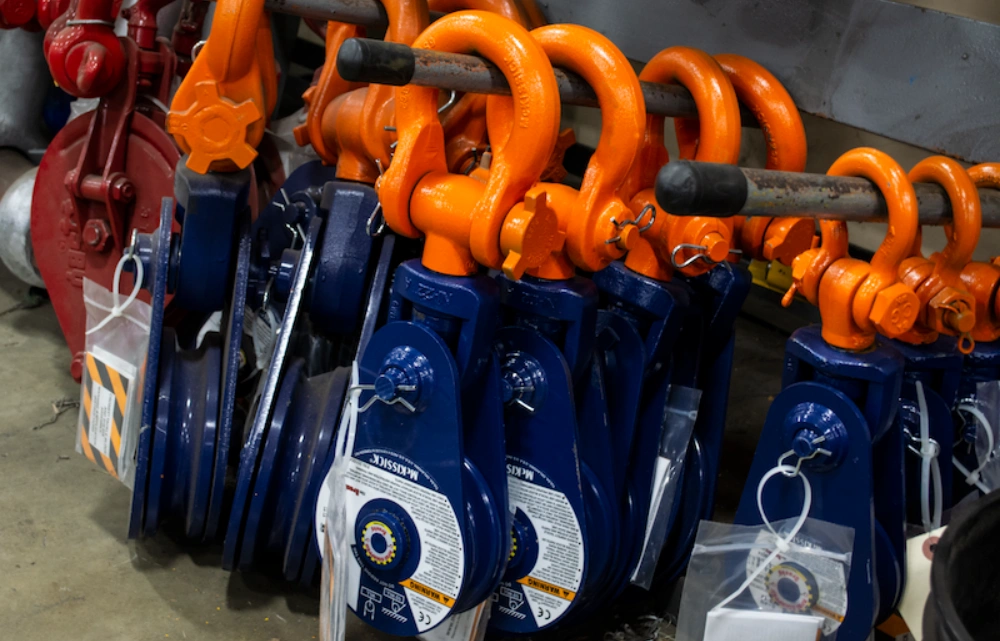
A snatch block is a pulley block with an opening side plate or gate. Instead of feeding the entire rope end through a closed block, you open the side, place the line into the sheave groove, and secure the plate or pin. This makes the block faster to add or reposition in an existing rigging system.
The main parts are the sheave, axle or pin, side plates, bearing or bushing, and an attachment point such as an eye, hook, or shackle. Each part must suit the load and the line you plan to use. If you want a deeper comparison of the designs, see snatch block vs. pulley.
| Part | What it does | What you should check |
| Sheave | Supports and guides the line through the groove | Groove profile, diameter, wear, and free rotation |
| Side plates / gate | Let you place the line into the block | Full closure, straight plates, secure latch or pin |
| Axle and bearing | Allow the sheave to rotate under load | Lubrication, play, binding, corrosion, and heat |
| Attachment | Connects the block to the anchor or load | WLL, alignment, latch or pin security, and side loading |
How Does a Snatch Block Work?
The sheave changes the path of the line while the tension travels through the rope. In an ideal system, tension is approximately equal on both sides of the sheave. What happens next depends on whether the block stays fixed or moves with the load, and on where you secure the dead end of the line.
1. A Fixed Snatch Block Changes Pulling Direction
When you attach the block to a stationary anchor, run the winch line through it, and continue to the load, the block acts as a redirect. You can pull from a safer or more practical position, route the line around an obstruction, or align the pull with the load path.
This fixed configuration normally gives you a 1:1 theoretical mechanical advantage. The winch still provides roughly the same line pull; the block changes the direction of that pull. Because the sheave introduces friction, the force reaching the load will be slightly lower than the winch-line tension.
| Remember A snatch block does not double pulling power simply because the line passes around its sheave. Mechanical advantage comes from the reeving arrangement and the number of line parts supporting a moving load. |
2. A Moving Snatch Block Can Create a 2:1 Advantage
For a double-line pull, you attach the snatch block to the load, route the winch line around the sheave, and secure the free end to a rated anchor near the winch. The block moves with the load. Two parts of line now pull on the moving block, so the ideal pulling force at the load is twice the tension in one line part.
If the load resistance were 4,000 lb, a perfect 2:1 system would require 2,000 lb of line pull. Real systems need more because the sheave bearing, rope bending, line angle, surface conditions, and winch drum layers all introduce losses. You should never use the theoretical advantage as permission to exceed the working load limit of the block, rope, connector, anchor, or winch.
3. Multiple Parts of Line Increase Mechanical Advantage
With additional correctly placed blocks, you can create more supporting line parts. The ideal mechanical advantage equals the number of tensioned line parts that directly support the moving block or load. More parts of line reduce the input force, but they also increase rope travel, setup complexity, friction, and the number of components that must be rated and inspected.
For example, an ideal 3:1 system moves the load about one unit for every three units of rope you pull. In practice, you should follow a qualified lift or recovery plan instead of assuming that adding another sheave automatically creates another unit of mechanical advantage.
Common Snatch Block Configurations
| Configuration | Block location | Ideal advantage | Best use |
| Direction change | Fixed to a rated anchor | 1:1 | Redirecting a line or improving pull alignment |
| Double-line pull | Attached to and moving with the load | 2:1 | Reducing required line pull and winch load |
| Compound system | Fixed and moving blocks | Depends on supporting line parts | Higher-force pulls planned by a qualified person |
How Rope Angle Changes the Load on the Block?
The load on a snatch block is the combined effect of the tension in both rope legs. That load can be greater than the pull on a single line. If both rope legs have approximately the same tension, you can estimate the resultant block load with:
| Estimated block load Block load = 2 × line tension × cos(included angle ÷ 2) |
Here, the included angle is the angle between the two rope legs as they leave the block. When the legs run almost parallel in the same direction, the attachment sees close to twice the line tension. As the included angle opens, the resultant load decreases. This simplified relationship assumes equal tension and does not replace the manufacturer’s load-angle chart or a rigging calculation.
| Included angle between rope legs | Approx. load factor | Block load at 2,000 lb line tension |
| 0° | 2.00 × line tension | 4,000 lb |
| 60° | 1.73 × line tension | 3,460 lb |
| 90° | 1.41 × line tension | 2,820 lb |
| 120° | 1.00 × line tension | 2,000 lb |
| 150° | 0.52 × line tension | 1,040 lb |
This is why you must rate the anchor, shackle, hook, sling, and block for the resultant load—not just the winch’s nominal line pull. Shock loading, unequal line tension, fleet angle, and side loading can increase risk beyond a simple static calculation.
How to Choose the Right Snatch Block?
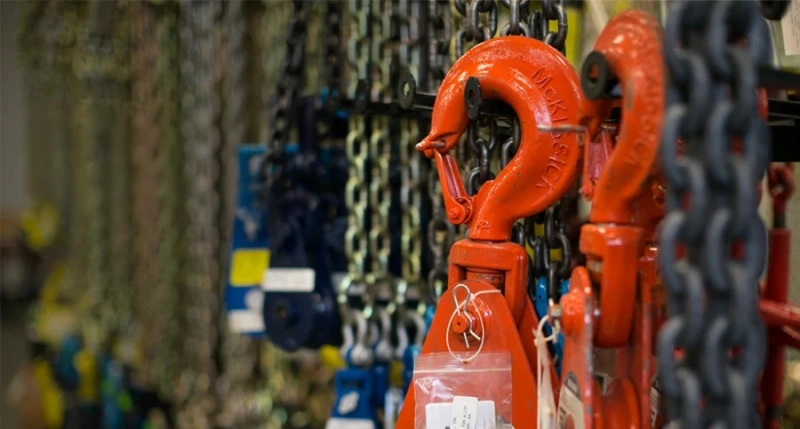
Start with the complete system rather than choosing a block by size or price. You need enough capacity for the calculated block load and enough compatibility to keep the rope seated and supported.
- Working load limit: Calculate or verify the maximum load at the block, including the line-angle factor. Apply the design factor and operating limits required by your procedure and the manufacturer.
- Rope type and diameter: Match the sheave groove to your wire rope or approved synthetic rope. A groove that is too small pinches the line; a groove that is too large gives poor support.
- Sheave diameter: A larger sheave bends the rope less sharply. Follow the rope and block manufacturer’s minimum sheave-to-rope diameter guidance, especially for repeated cycles.
- Attachment type: Choose an eye, shackle, hook, or swivel arrangement that aligns with the load. Do not side-load a hook or shackle that is designed for in-line loading.
- Bearing and duty cycle: Bushings may suit simple or intermittent work, while roller bearings can reduce friction for frequent operation. Confirm the manufacturer’s intended service.
- Environment: For marine, mining, or corrosive service, check the material, coating, lubrication, temperature limits, and maintenance requirements.
- Lifting approval: A recovery accessory is not automatically suitable for overhead lifting. Use only equipment that is identified, rated, and documented for your intended operation.
You can review available capacities and attachment styles in the snatch block product range.
How to Rig a Snatch Block Safely?
Your exact procedure depends on whether you are winching, pulling, or lifting. The steps below are a planning overview; they do not replace the block manufacturer’s instructions, a lift plan, or supervision by a qualified person.
- Define the load path. Decide whether you need only a direction change or a moving-block mechanical advantage.
- Calculate the forces. Determine line pull, ideal mechanical advantage, expected friction losses, and the resultant load at every block and anchor.
- Verify every rating. Check the block, rope, winch, anchor, shackles, hooks, slings, and connection points for the intended direction of loading.
- Inspect the equipment. Look for cracked or bent side plates, a worn groove, loose pins, damaged latches, corrosion, binding, excessive sheave play, and rope defects.
- Place and secure the line. Open the side plate, seat the rope fully in the groove, close the plate, and secure the retaining pin or latch exactly as instructed.
- Align the system. Keep the rope in the sheave groove, avoid side pull, and make sure connectors can articulate without bearing on an edge.
- Tension slowly. Remove slack, pause at low tension, and confirm that the rope, block, anchor, and load remain aligned.
- Control the work area. Keep people away from the bight, the load, the block, and the projected path of a failed line or fitting.
For a more detailed operating sequence, use the dedicated guide on how to use a snatch block.
Common Mistakes to Avoid
- Assuming every snatch block setup doubles pulling power.
- Selecting the block only from the winch rating and ignoring the load-angle factor.
- Using a rope diameter or rope construction that does not match the sheave groove.
- Allowing the rope to ride a flange, rub a side plate, or enter at an excessive fleet angle.
- Attaching the block to an unrated anchor or side-loading the hook, eye, or shackle.
- Mixing recovery equipment with overhead lifting equipment without confirming approval and ratings.
- Standing inside the rope bight or near a tensioned line.
- Using a bent, cracked, seized, unlabeled, or heavily corroded block.
Inspection and Maintenance
Before each use, check the identification and working load limit, side plates, sheave groove, axle, retaining parts, attachment point, and free rotation. Inspect the rope as well; a sound block cannot make a damaged line safe. Remove the equipment from service if you find cracks, deformation, missing parts, severe corrosion, a seized sheave, an unreadable rating, or wear beyond the manufacturer’s limit.
After use, clean dirt, salt, and grit from the block. Lubricate only at the points and intervals specified by the manufacturer. Store the block dry and protect it from impact. For frequent, severe, or overhead service, keep documented periodic inspections and have repairs performed only by an authorized or qualified party.
Where Snatch Blocks Are Used?
You see snatch blocks in construction, marine work, mining, forestry, vehicle recovery, material handling, and industrial pulling systems. The principle stays the same, but the equipment category and safety requirements can differ. A compact recovery block for synthetic winch rope is not interchangeable with a heavy industrial block intended for wire rope and lifting service.
Choose a product built for your specific line, duty cycle, attachment, and environment. If you work with crane ropes or other running wire ropes, you can also review Powerful Machinery’s crane wire rope range and rigging hardware range.
FAQ
Does a snatch block always double pulling power?
No. A fixed snatch block used only to change direction is normally a 1:1 system. A moving snatch block with two supporting parts of line can approach a theoretical 2:1 advantage, with real performance reduced by friction and line geometry.
What is the difference between a snatch block and a pulley?
A pulley is the grooved wheel that guides the line. A snatch block is a block assembly designed so you can open a side plate or gate and place the line onto the sheave without threading the rope end through the entire system.
Can you use a snatch block with synthetic rope?
Yes, if the manufacturer approves the block for that rope type and diameter. The sheave and side plates must be smooth, correctly sized, and free from burrs or damage that could cut or abrade the rope.
How do you calculate the load on a snatch block?
For equal tension in both rope legs, a simplified estimate is 2 × line tension × cos(included angle ÷ 2). Use the manufacturer’s load-angle chart and your approved rigging method for final selection.
Can you use a vehicle-recovery snatch block for overhead lifting?
Not unless the product is specifically identified, rated, and documented for overhead lifting. Recovery capacity claims and lifting working load limits are not interchangeable.
What size snatch block do you need?
Choose from the maximum calculated block load, rope type and diameter, minimum sheave diameter, attachment style, duty cycle, and environment. If any of those inputs are unknown, have the system reviewed before use.
Choose a Snatch Block for the Whole System
A snatch block is simple to look at, but its effect depends on the complete line path. When you distinguish a fixed redirect from a moving 2:1 setup, account for the rope angle, and rate every connection for the actual load, you can build a safer and more efficient rigging system.
Powerful Machinery supplies single- and double-sheave snatch blocks with multiple attachment and finishing options for industrial and marine service. Send us your line pull, rope type and diameter, required configuration, attachment preference, environment, and applicable standard. We will help you identify a suitable block and provide the product data you need for review.