
Lifting Chains
Powerful Machinery manufactures alloy steel lifting chains for overhead lifting, sling fabrication, industrial rigging, and OEM supply.
Choose Grade 80, Grade 100, or Grade 120 chain by working load limit, nominal diameter, applicable standard, and operating conditions—not by appearance alone. We support standard and custom lengths, bulk orders, traceable production batches, and the quality documents your project requires.
Send us the load, required chain grade, diameter or target WLL, length, quantity, destination market, and any coating or documentation requirements. Our team will confirm a suitable product route and flag any specification that needs engineering review. For a technical overview before you order, compare our lifting chain grades and lifting chain sizes.
Lifting Chain Grades
Chain grade identifies a strength class; it does not replace the WLL on the product data or certificate. Grade 80 remains a widely used baseline for overhead lifting. Grade 100 raises the capacity available at a given nominal diameter in many systems, while Grade 120 is used where lower assembly weight or higher performance justifies a specialized chain-and-component system.
| Grade | Commercial Position | Typical Buying Reason | Check Before Ordering |
|---|---|---|---|
| Grade 80 | Established alloy lifting grade | Broad availability and familiar component systems | Required WLL, standard, size, and component grade |
| Grade 100 | Higher-capacity option at the same nominal diameter in many systems | Reduce chain weight or increase capacity | Manufacturer WLL table and Grade 100 component compatibility |
| Grade 120 | High-performance lifting system | Weight-sensitive, demanding, or specialized lifting applications | System-specific WLL, profile, temperature limits, and certification |
Do not treat color as proof of grade. Check permanent markings, traceability, the manufacturer’s data, and the certificate supplied with the order. See the full lifting chain grade guide when you need a deeper comparison.
Lifting Chain Sizes & Working Load Limits
Choose chain size from the required WLL and the conditions of the lift. Diameter affects capacity, weight, link dimensions, and compatibility with hooks, coupling links, pockets, or shortening devices. The figures below are a compact sample from Powerful Machinery’s published Grade 80 product data; use the exact data sheet and certificate for the chain supplied.
| Nominal Diameter | Inside Length | Grade 80 WLL | Approx. Weight |
|---|---|---|---|
| 6 mm | 18 mm | 1.12 t | 0.80 kg/m |
| 8 mm | 24 mm | 2.00 t | 1.40 kg/m |
| 10 mm | 30 mm | 3.15 t | 2.20 kg/m |
| 13 mm | 39 mm | 5.30 t | 3.80 kg/m |
| 16 mm | 48 mm | 8.00 t | 5.70 kg/m |
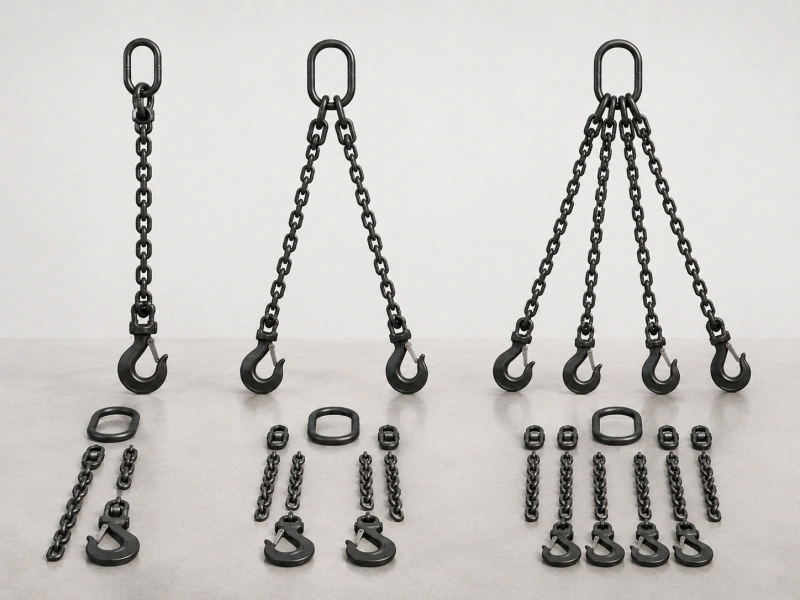
Important: Published chain WLL is not automatically the capacity of a multi-leg sling assembly. Hitch, leg angle, load distribution, fittings, temperature, wear, and other service conditions can reduce the permitted load. Never exceed the WLL stated by the manufacturer for the supplied product and configuration.
For more dimensions and selection context, review lifting chain sizes and the explanation of chain working load limit. If you are unsure, send the maximum load and application details instead of guessing a diameter.
How to Choose a Lifting Chain?
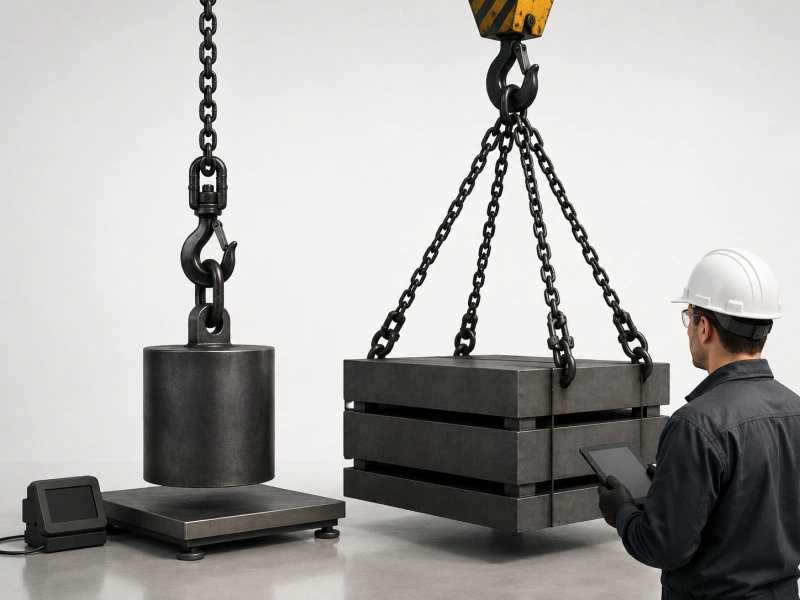
1. Start With the Maximum Load and Required Wll
State the maximum load the chain will carry and whether the chain will be used as raw cut length, in a vertical lift, or as part of a fabricated sling. Include any dynamic loading, unusual load distribution, or lift geometry that may affect selection. The rated capacity should come from the manufacturer’s data for the actual product and use—not a breaking-force estimate.
2. Select the Grade as a Complete System
Choose Grade 80, 100, or 120 according to the required capacity, handling weight, standard, and compatible fittings. A higher grade can improve the capacity-to-weight ratio, but the final rating is limited by the lowest-rated compatible component in the load path. If you are comparing grades, use the same nominal diameter and the same manufacturer’s WLL basis.
3. Confirm Diameter, Pitch, and Connection Fit
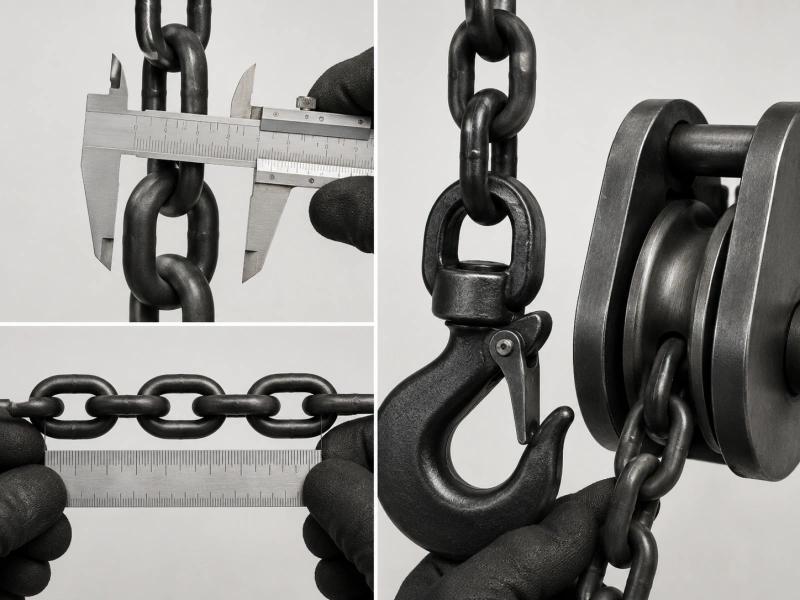
Nominal diameter alone may not confirm fit. Provide the required inside length, inside width, chain pocket dimensions, hook or connector type, and any tolerance that matters. This is especially important when replacement chain must engage with an existing hoist, pocket wheel, clutch, or proprietary component.
4. Describe the Environment and Duty Cycle
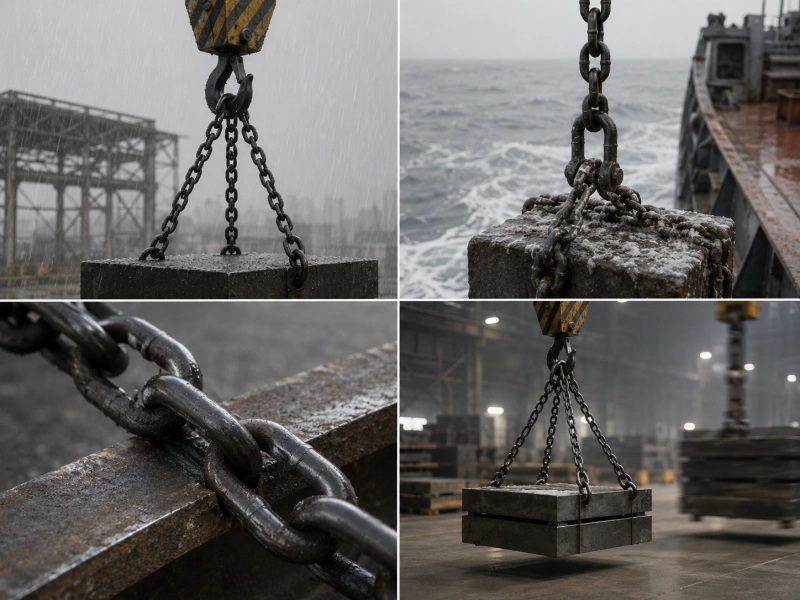
Tell us about temperature, chemicals, salt water, outdoor exposure, abrasion, sharp edges, repeated shock, and lift frequency. These conditions can affect material, finish, inspection interval, and permitted WLL. A coating may help with corrosion control, but it does not make an alloy lifting chain suitable for every chemical or high-temperature environment.
5. Name the Standard and Documents You Need
Tell us about temperature, chemicals, salt water, outdoor exposure, abrasion, sharp edges, repeated shock, and lift frequency. These conditions can affect material, finish, inspection interval, and permitted WLL. A coating may help with corrosion control, but it does not make an alloy lifting chain suitable for every chemical or high-temperature environment.
Standards & Certification
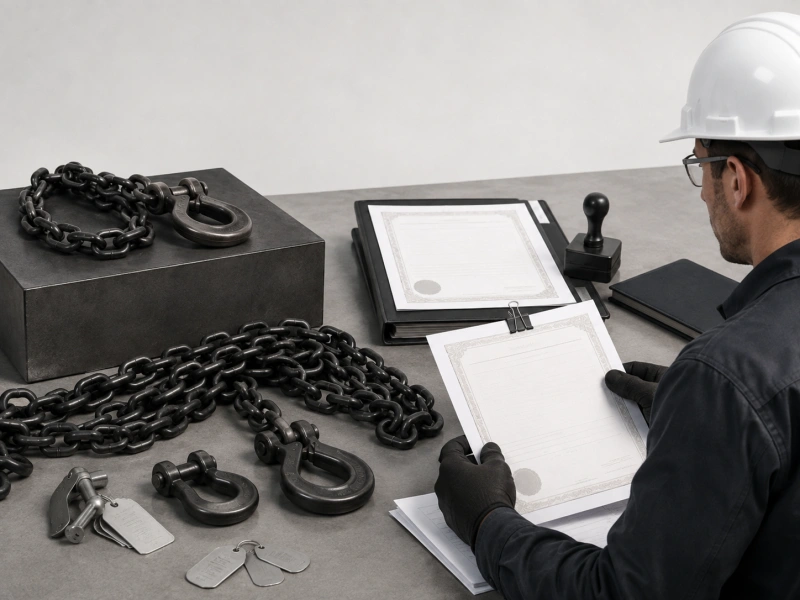
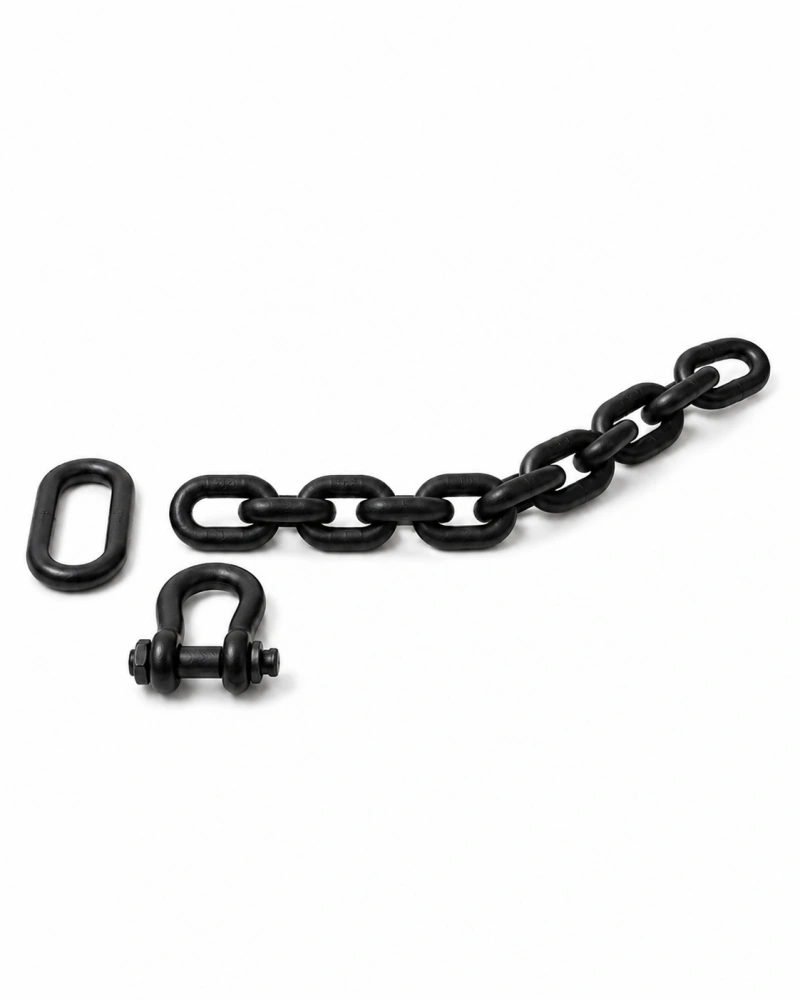
A useful lifting-chain quotation does more than name a grade. It states the product standard, nominal size, WLL, proof-test basis, minimum breaking force where applicable, marking, finish, and documentation supplied. For European short-link lifting chain, EN 818-2 is a common product standard.
North American projects may refer to ASTM or NACM product requirements together with sling-use rules such as ASME B30.9 and OSHA requirements. The correct set depends on the product, destination, and how the chain will be used.
Ask for the documents your quality team actually needs:
– Certificate of conformity or test certificate
– Material or mill certificate, when specified
– Proof-load or batch test record
– Heat-treatment record, when required by the project
– Batch, heat, or traceability identification
– Product marking and WLL confirmation
– Inspection or acceptance criteria referenced in the order
Send these requirements before pricing is finalized. Retrospective certification may not be possible once material has been cut, finished, packed, or separated from its production batch. Read our guide to lifting chain certification for the difference between product documents, periodic inspection, and site recertification.
Lifting Chain Inspection & Safety
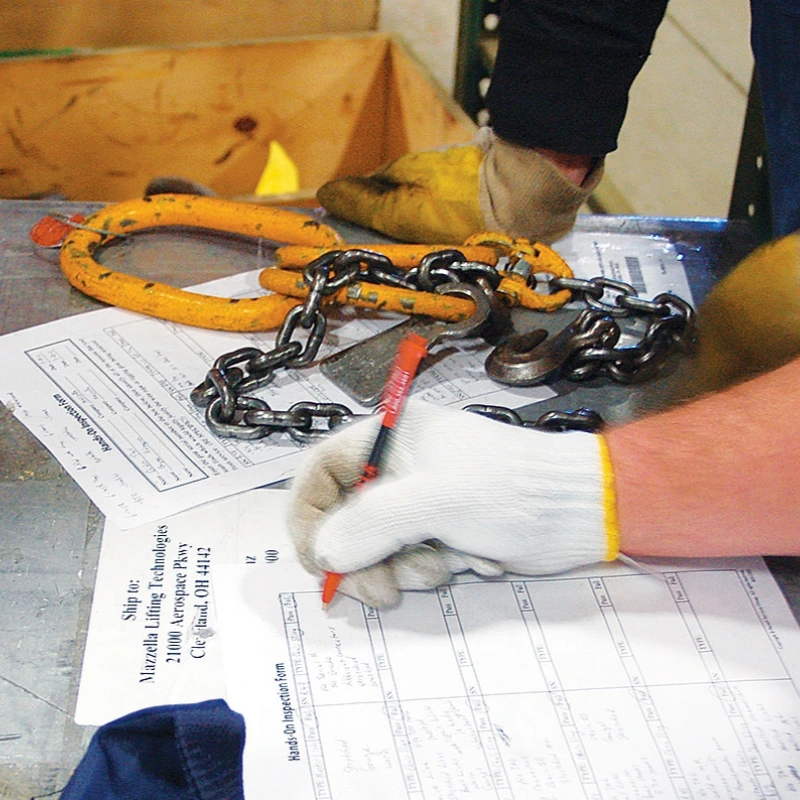
Inspect lifting chain before use and at the intervals required by your procedure, service conditions, and applicable rules.
Remove the chain from service and follow the manufacturer’s criteria if you find cracks, bent or twisted links, visible elongation, heat damage, severe corrosion or pitting, illegible identification, or wear beyond the stated limit. Do not weld, heat, plate, or repair lifting chain unless the manufacturer and applicable procedure permit it.
Selecting the right lifting chain is only the first step; ongoing inspection and traceability are essential for safe operation. Use the detailed lifting chain inspection guide for inspection points, records, and removal criteria, and keep the original product data with the chain’s traceability documents.
Need a Complete Chain Sling Assembly?
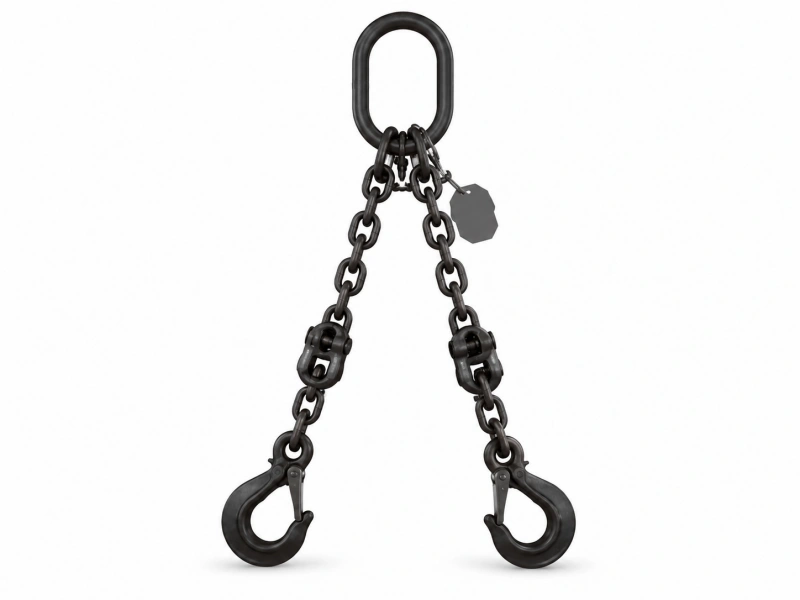
Raw lifting chain is only one part of a finished sling. If your lift needs chain legs, a master link, coupling links, shortening devices, hooks, an identification tag, and a rated assembly, explore our chain slings.
Send the load, hitch, leg count, angle, reach, connection dimensions, and service conditions so the complete assembly can be selected and documented as one system.
Why Choose Powerful Machinery for Lifting Chains?
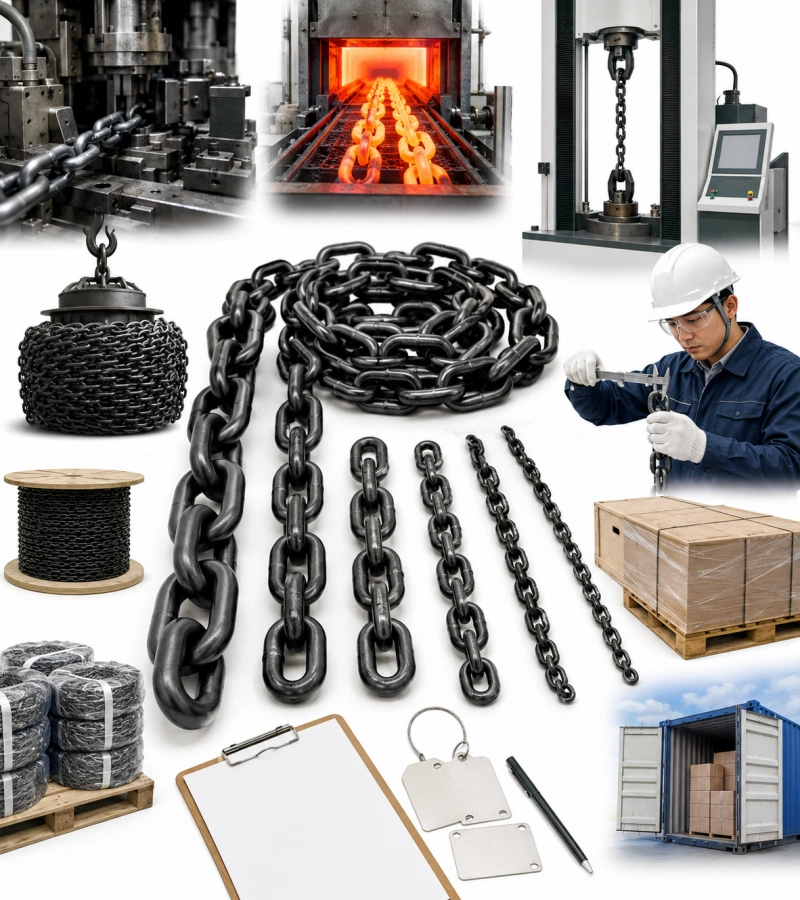
Powerful Machinery combines in-house chain manufacturing with heat treatment, testing, traceability, and export supply. That gives buyers one place to discuss grade, link dimensions, finish, custom length, packaging, marking, and quality documents before production starts.
We supply standard requirements and OEM programs for distributors, rigging companies, fabricators, equipment manufacturers, and industrial buyers.
What you can include in your inquiry:
– Grade 80, Grade 100, or Grade 120 requirement
– Nominal diameter, pitch, inside width, and total length
– Target WLL and the standard used to establish it
– Surface finish, color, marking, and packaging
– Quantity, cut lengths, reels, drums, or bulk supply format
– Certificate, testing, traceability, and inspection needs
– Destination, delivery date, and any third-party acceptance requirement
We will quote against the information provided, identify open points, and state the product basis in the offer. For replacement chain or a nonstandard application, attach a drawing, data sheet, or clear dimensions. That is faster and safer than asking the factory to match a photo.
Lifting Chain FAQs
Which Grade of Chain Is Suitable for Overhead Lifting?
Use an alloy lifting grade approved for the intended overhead-lifting application, commonly Grade 80 or Grade 100, and Grade 120 where a compatible high-performance system is specified. Do not use a lower transport or tie-down grade simply because its breaking strength looks high. Confirm the chain marking, product standard, WLL, and certificate.
Is Grade 100 Lifting Chain Stronger Than Grade 80?
Yes. In many lifting-chain systems, Grade 100 provides about 25% more WLL than Grade 80 at the same nominal diameter. Use the manufacturer’s table for the exact product, because ratings and available sizes must be confirmed rather than inferred from the grade name alone.
How Do I Choose a Lifting-Chain Size?
Start with the maximum load and required WLL, then confirm grade, link dimensions, connection compatibility, environment, and standard. If the chain will become part of a sling, include the hitch, angle, leg count, and fittings because the finished assembly rating may differ from the straight chain rating.
Can You Supply Certificates With Lifting Chain?
Certification and test-document options depend on the product and order. State whether you need a certificate of conformity, material certificate, proof-load record, batch traceability, or third-party inspection in the RFQ so availability and cost can be confirmed before production.
Can Lifting Chain Be Supplied in Custom Lengths or Finishes?
Yes, standard and custom lengths, markings, packaging formats, and selected finishes can be quoted. Finish selection must suit the grade, standard, and environment; it should never be used as the only way to identify a lifting chain.
What Information Do You Need for a Quotation?
Send grade, nominal size or target WLL, total length or supply format, quantity, finish, applicable standard, certificate needs, destination, and delivery requirement. Add service temperature, corrosion or chemical exposure, and connection dimensions when they affect selection.
What Is the Difference Between Lifting Chain and Tie-Down Chain?
Lifting chain is designed, tested, marked, and rated for supporting suspended loads. Tie-down chain is intended to restrain cargo during transport and may use different grades and design criteria. See the full lifting chain vs tie-down chain comparison before selecting chain for overhead use.
Send Us Your Lifting Chain Requirements
For a useful quotation, include the maximum load, grade, diameter or target WLL, length, quantity, standard, finish, service conditions, destination, and documentation needs. Powerful Machinery will confirm the product route, identify missing details, and quote the chain against a stated specification.