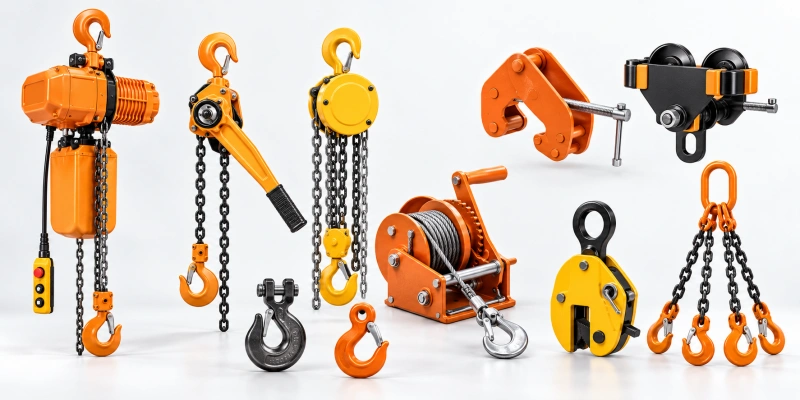
The eight UK manufacturers below make different types of lifting equipment, from overhead cranes to slings and lifting beams. Start with the product your project needs. Then check which parts each firm makes, how the finished equipment is tested, and what documents come with your order.
Compare the Manufacturing Focus
| Manufacturer | UK manufacturing evidence | Products to compare | Likely project fit |
| Street Crane | Crane and hoist manufacture | Overhead cranes; wire rope and chain hoists | Fixed industrial lifting systems |
| William Hackett | Alnwick lifting division | Manual hoists; chain sling systems | Hoist and chain-assembly sourcing |
| Hoist UK | In-house design and workshop fabrication | Bespoke handling structures and lifting accessories | Industrial and entertainment projects |
| REID Lifting | UK portable-system manufacture | Aluminium gantries and davits | Portable lifting and access |
| Penny Engineering | UK design and production | Vehicle-mounted cranes; goods lifts | Vehicle and building handling |
| SpanSet UK | Cheshire manufacturing plant | Lifting and load-control equipment | Slings and load restraint |
| Modulift | UK fabrication and test facility | Modular spreader beams | Below-the-hook heavy lifts |
| SectionLift | In-house engineering and testing | Lifting beams; gantries; jib cranes | Custom lifting structures |
How This Shortlist Was Selected
Each firm documents UK manufacturing, fabrication, or design-to-production work on its own website. The list is grouped by product type; it is not a ranking. For a specific order, check who will make the equipment and where the work will take place.
8 UK Manufacturers by Product Type
Street Crane
Street Crane makes overhead cranes and hoists in the UK. Its documented range includes crane systems, wire rope hoists and chain hoists, making it a candidate for a fixed industrial lifting installation. Give the engineering team the load, span, available headroom, duty, and building constraints. For a crane project, ask which elements Street manufactures, which parts the installation partner supplies and who accepts the completed system.
William Hackett
William Hackett states that its Alnwick lifting division manufactures and distributes chain sling systems and a manual hoisting range. Its WH C4 chain hoist is described as designed, manufactured, and proof load tested in the UK.
For a manual hoist or chain assembly, request the exact model, WLL, lift height, application limits and documents for your configuration. That proof-load claim applies to the WH C4; check other models separately.
Hoist UK
Hoist UK combines design, its own workshop fabrication, equipment supply, installation and testing. Its workshop description names steel and aluminium welding, plasma cutting and CNC machining. Those workshop capabilities matter most for bespoke lifting and handling projects. Hoist UK also distributes hoists made by other firms.
Ask the quotation to name the maker of each bought-in component and state who is responsible for the finished design.
REID Lifting
REID Lifting identifies itself as a UK designer and manufacturer of portable aluminium gantry and davit lifting systems. Its range addresses work where a fixed runway is impractical, or equipment must move between locations. Specify whether the system will lift materials or people.
Check the anchor and floor conditions, assembly procedure, transport size and accessories. Confirm the approved configuration and rated capacity for the precise model rather than assuming the same rating across the family.
Penny Engineering
Penny Engineering describes UK design and manufacture of vehicle-mounted cranes, goods lifts and winch systems. Its vehicle lifting line is a different buying problem from an overhead factory crane: vehicle integration, payload and mounting are part of the specification.
For a goods lift, provide travel, landing arrangement, intended load and building layout. Ask who will handle design, installation and commissioning.
SpanSet UK
SpanSet UK says it designs and manufactures lifting and load-control equipment at its Cheshire factory. Its range is most relevant here for lifting slings, textile systems and load-control equipment. Identify the load shape, attachment points, sling angle, abrasion or edge exposure and working environment. Check the WLL for the specified sling assembly and hitch, rather than relying on the product family name.
Modulift
Modulift documents a UK facility with cutting, machining, welding, finishing, inspection and testing for its spreader-beam range. For a below-the-hook lift, give Modulift the required span and lifting-point arrangement.
Its published design-stage proof testing is specific to the described standard and heavy ranges; ask separately whether the individual assembly on your order requires a proof-load test, third-party witness or project-specific calculation.
SectionLift
SectionLift states that it designs, engineers, manufactures and tests lifting beams, spreader beams, gantries and jib cranes in-house. It also makes bespoke structures when standard beam or gantry geometry will not fit.
Send a dimensioned load drawing, centre of gravity, pick points, headroom, and use case. Before ordering, agree the design basis, proposed WLL marking, inspection scope and documentation for the particular device.
What to Check Before Issuing a Manufacturing Enquiry
Define the Lift and the Equipment Boundary
State the load mass and centre of gravity, lift height, travel path, frequency of use and environment. For a beam, give span and pick-point geometry; for a hoist, describe the supporting beam, headroom and duty; for a portable gantry, describe the floor, assembly space and intended movement. Ask the maker to identify the WLL of the complete proposed configuration, not just a single component.
Ask Who Designs, Makes and Tests Each Part
A manufacturer may incorporate bought-in hoists, hooks, controls or slings. Request a component schedule, drawings where appropriate, traceability and the final assembly documents. Agree whether the quoted scope includes a design review, required conformity assessment, proof or functional testing, installation and commissioning. Do not assume every product needs the same test or the same marking.
Check the Applicable UK Requirements
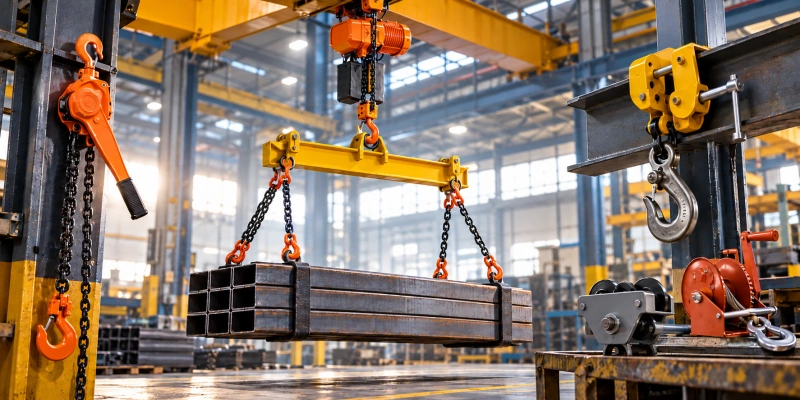
HSE guidance on LOLER thorough examinations addresses equipment in service; PUWER places duties on work equipment suitability and maintenance. Neither is a company “certification”. For machinery supplied in Great Britain, check the applicable government guidance on machinery supply and conformity marking for the product and market. The applicable product rules and documents depend on the equipment, configuration and destination.
When a Wider UK Provider Shortlist Is More Useful
If stock, short-term hire or local examination is your main concern, compare UK lifting equipment companies and service providers by the work they offer. For firms beyond the UK, see our global lifting equipment manufacturer overview.
An Overseas Sourcing Option for UK Buyers
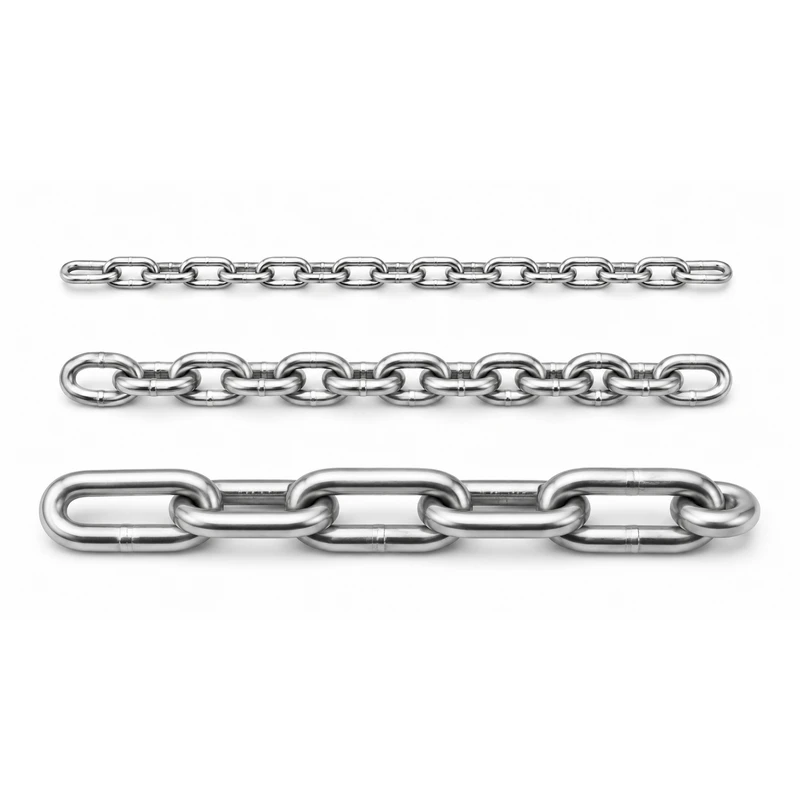
Powerful Machinery is based in Qingdao, China, and is outside this UK manufacturer shortlist. Its product catalogue lists welded chains, Grade 80 and Grade 100 lifting chains, chain slings, wire rope and fittings, hooks, shackles and other rigging accessories.
UK buyers comparing an overseas source can start with the lifting equipment range and send the exact product, quantity, application and required documentation for a quotation. For any quoted item, confirm its manufacturer, specification, documents and applicable UK market requirements.
Manufacturer Questions
Does a UK seller necessarily manufacture the equipment it sells?
No. Check the manufacturer named on the specific product documents and ask which operations the seller actually performs. A company can both make bespoke assemblies and distribute another maker’s hoists.
Which UK firms on this list make hoists?
Street Crane lists hoists within its manufacturing range. William Hackett documents UK manufacture and proof testing of the WH C4 manual chain hoist. Hoist UK also sells hoists from other makers, so check the name on the model quoted.
What evidence should accompany a bespoke lifting beam?
Ask for the agreed design basis, drawing, WLL marking, relevant conformity documentation, instructions, traceability and any test report specified for that device. The manufacturer should explain which documents apply to the exact assembly supplied.
Is LOLER a manufacturing certificate?
No. LOLER governs the use and examination of lifting equipment at work in Great Britain. Product conformity and manufacture must be assessed under the product rules applicable to the equipment.