Selecting the right hoisting equipment ensures both safety and efficiency on your job site. You face a range of choices, from manual hoists for lighter loads to electric chain hoists that deliver speed and power.
Many projects also require wire rope hoists for heavier lifting, hydraulic hoists for specialized tasks, or pneumatic hoists for hazardous environments. Powerful Machinery’s certified solutions help you meet these demands with reliability and strength.
Before you decide, assess your lifting needs, safety requirements, and the environment where you will use different types of hoisting equipment.
Key Takeaways
Selecting the right hoisting equipment enhances safety and efficiency on job sites.
Evaluate load capacity, lift height, and environmental conditions before choosing a hoist.
Regular inspections and maintenance are crucial for safe and reliable hoisting operations.
Powerful Machinery offers custom-engineered solutions that meet specific project needs.
Incorporate advanced safety features like limit switches and emergency stops to protect your team.
Types of Hoisting Equipment
When you evaluate the types of hoisting equipment for your project, you gain access to a range of specialized tools designed for safety and efficiency. Powerful Machinery delivers solutions that meet the demands of construction, marine, and industrial environments.
Manual Hoists
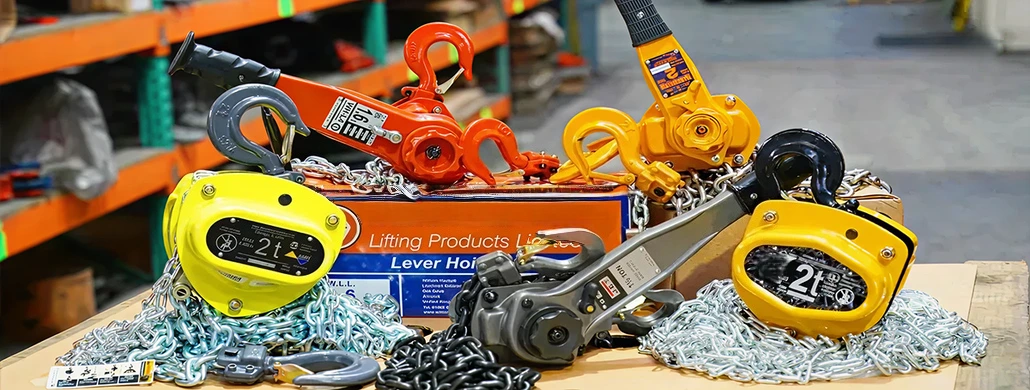
Manual hoists, often called chain falls, give you a cost-effective option for lifting tasks where power sources are unavailable. You operate these devices by hand, using a chain or lever to control the lift.
You can use lever hoists for rigging, pulling, or lifting in any position.
Chain hoists work well in shipyards, factories, and maintenance shops.
Manual hoists suit light to medium loads and offer reliable performance in remote or temporary locations.
Electric Chain Hoists
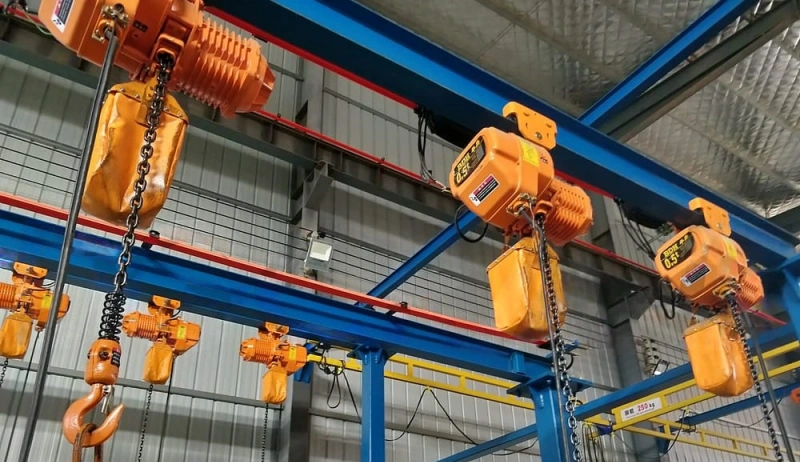
Electric chain hoists provide greater speed and mechanical power compared to manual options. You benefit from their compact size, easy installation, and precise vertical lifting.
Tip: Electric chain hoists integrate seamlessly with overhead crane systems, supporting complex lifting arrangements.
Feature | Electric Chain Hoist | Wire Rope Hoist |
|---|---|---|
Size | Smaller | Larger |
Lifting Height | Greater | Limited |
Positioning Accuracy | More precise | Less precise |
Installation | Easier | More complex |
You can use electric chain hoists for frequent lifting cycles and loads up to 5 tons.
Wire Rope Hoists
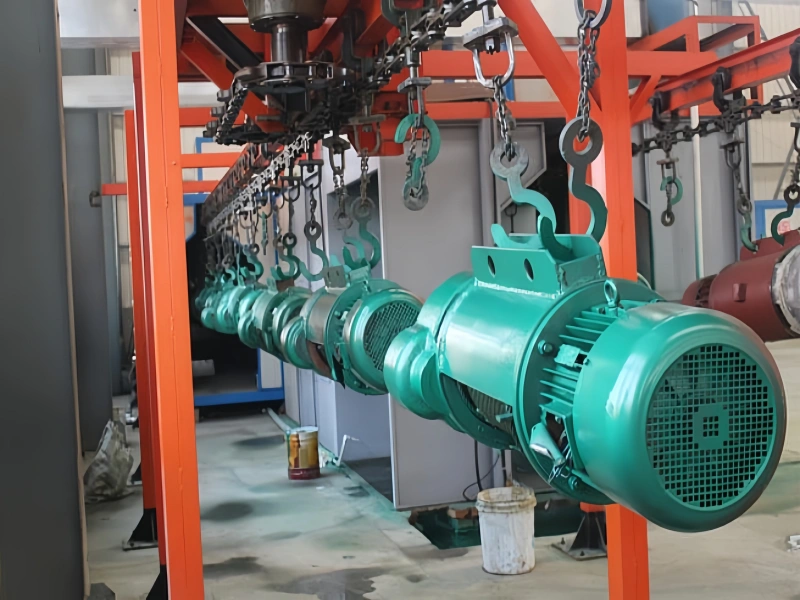
Wire rope hoists handle heavy-duty lifting in construction, shipbuilding, steel manufacturing, and foundries. You choose these hoists when you need high lifting capacity and durability for large materials or machinery.
They excel in environments where you must move heavy loads safely and efficiently.
Air Hoists
Air hoists operate with compressed air, making them ideal for hazardous or explosive environments. You avoid electrical hazards because these hoists lack electrical components.
Air hoists resist dirt, dust, and moisture.
They run continuously without overheating, supporting a 100% duty cycle.
Winches & Trolleys
Winches and trolleys add flexibility to your hoisting system. You can perform complex operations, such as load turning and fine adjustments, with ease.
Feature | Description |
|---|---|
High Operational Flexibility | The main hook lifts heavy loads; the auxiliary hook handles light loads at higher speeds. |
Flexible Operation | The trolley moves horizontally, enabling three-dimensional load movement. |
Wide Adaptability | Compatible with various lifting equipment and environments. |
Hydraulic Jacks & Lifting Tables
Hydraulic jacks and lifting tables give you stable lifting for heavy machinery or materials. You use these tools for precise positioning, assembly, or maintenance tasks.
They support safe, controlled lifting in workshops, warehouses, and construction sites.
Powerful Machinery ensures the reliability and versatility of all types of hoisting equipment through advanced production technology, custom engineering, and rigorous testing. You can trust these solutions to exceed international safety standards and adapt to your unique project needs.
Types of Construction Hoists
When you work on a construction site, you need to understand the types of construction hoists available. Each type offers unique advantages for lifting, positioning, and moving materials safely. Powerful Machinery provides construction hoists that meet strict international standards, giving you confidence in every lift.
Chain Hoists for Construction
Chain hoists give you flexibility and ease of use. You can move them quickly between locations, making them ideal for changing job site needs. Chain hoists handle lighter loads, usually from 1/8 to 5 tons. You often use them for maintenance, assembly, or smaller lifting tasks.
Their simple design means you can set them up fast and operate them with minimal training.
Note: Chain hoists from Powerful Machinery carry certifications like ISO9001 and CE. These certifications ensure you get reliable performance and safety for your construction projects.
Wire Rope Hoists in Construction
Wire rope hoists support heavy-duty lifting in permanent or semi-permanent setups. You choose these hoists when you need to lift large materials or machinery, often between 2 and 30 tons.
Wire rope hoists work well in steel service centers, foundries, and large-scale construction projects. They handle extreme conditions and long work hours without losing efficiency.
Feature | Rope Hoist | Chain Hoist |
|---|---|---|
Application | Used in permanent setups, suitable for heavy loads (2-30 tons) | More flexible, ideal for lighter loads (1/8 to 5 tons) |
Complexity | More complicated, larger, and more expensive | Easier to move, less permanent |
Environment Suitability | Handles extreme conditions well | Less suited for harsh environments |
Usage | Common in factories like steel service and foundries | Found in smaller factories and maintenance work |
Powerful Machinery’s wire rope hoists hold TUV and CE certifications. These marks show that your equipment has passed rigorous safety and quality tests.
Specialized Construction Hoists
Specialized construction hoists include custom-engineered lifts, material hoists, and personnel hoists. You use these for unique tasks, such as transporting workers or oversized materials to high elevations.
Powerful Machinery offers custom solutions that match your project’s exact needs. Each specialized hoist comes with COC and CE certifications, simplifying audits and ensuring compliance with safety regulations.
CE marking confirms that your construction hoists meet essential health and safety standards.
TUV certification means your equipment has undergone advanced testing for reliability.
You can trust Powerful Machinery to deliver construction hoists that fit every application, from routine lifting to complex, high-risk operations. Understanding the applications of construction hoists helps you select the right tool for every stage of your project.
Selecting the Right Hoist for Your Project
Choosing the best hoisting equipment for your project requires a systematic approach. You need to evaluate several factors to ensure safety, efficiency, and long-term value. Powerful Machinery offers custom-engineered solutions that help you meet your unique requirements.
Follow this step-by-step guide to make an informed decision.
Assessing Load Capacity
Start by determining the maximum weight you need to lift. The capacity of your hoist must match or exceed the heaviest load you plan to handle. Overloading a hoist can lead to equipment failure and safety hazards. You should also consider the following:
Check that the ground has enough stability and bearing capacity to support the hoist and its loads.
Manage the configuration of the boom and use outriggers properly for safe operation.
Monitor weather conditions, such as high winds, which can affect side loading and reduce capacity.
Attachments like jib arms or grapples may change the effective lifting capacity.
Inspect the age and maintenance status of your equipment, as these factors impact lifting power.
Ensure proper extension of outriggers and correct counterweight configuration.
By matching the hoist’s capacity to your project’s needs, you prevent safety risks and avoid unnecessary costs.
Considering Lift Height & Headroom
Lift height and available headroom play a critical role in selecting the right hoist. You must ensure the hoist can reach the required elevation without interference from overhead structures.
Limited vertical space may restrict the achievable lifting height and reduce the crane’s capacity. Always provide enough clearance between the hoist and the ceiling to prevent collisions and maximize operational reach.
Tip: Measure your site’s vertical space before installation to avoid costly adjustments later.
Operation Type & Duty Class
You need to match the hoist’s duty class to your project’s workload. Duty class defines how often and how intensively you will use the equipment. The table below outlines common duty classes:
Duty Class | Description |
|---|---|
H1 | Standby or infrequent usage |
H2 | Light service |
H3 | General service, running up to 25% of the work period |
H4 | High volume of heavy loads |
H5 | Heavy service to approach continuous service |
Select a hoist with a duty class that fits your lifting frequency and load demands. This choice extends equipment lifespan and ensures reliable performance.
Power Supply & Environment
Evaluate your site’s power supply and environmental conditions before making a selection. Consider these factors:
Factor | Description |
|---|---|
Power Source | Electric hoists need a stable electrical supply. |
Environmental Conditions | Choose hoists suitable for corrosive, humid, or explosive atmospheres. |
Installation Site Assessment | Assess voltage, environmental challenges, and site layout. |
Decide between single-phase and three-phase power requirements.
Consider exposure to humidity, dust, or outdoor elements.
Check compatibility with your control systems and safety features.
Air hoists from Powerful Machinery work well in hazardous environments where electrical equipment is not suitable.
Budget & Custom Solutions
Your budget influences the type of hoist you select, but investing in custom-engineered solutions can deliver long-term benefits. Consider these advantages:
Durability: Overhead lifting systems use heavy-duty materials for a long service life.
Maintenance Costs: Fewer moving parts mean less frequent maintenance and reduced downtime.
Depreciation: Overhead solutions retain value better than floor-based equipment.
Configuration Flexibility: Customization allows you to meet specific operational needs and boost productivity.
You gain long-lasting durability, lower maintenance costs, and better flexibility with custom solutions from Powerful Machinery.
Note: Selecting the right hoist and matching its specifications to your project requirements improves safety and operational efficiency. You avoid overloading, reduce risks, and ensure predictable lifting operations.
Safety Features and Best Practices
Essential Safety Features in Hoisting Equipment
You must prioritize safety when selecting and operating hoisting equipment. Powerful Machinery integrates advanced safety features into every product to protect you and your team. The table below highlights key safety features you will find in modern hoisting equipment:
Safety Feature | Description |
|---|---|
Braking System | Fail-safe, spring-applied, electromagnetically released brake engages automatically when power is cut. |
Limit Switches | Prevent over-travel by automatically stopping the motor at upper and lower limits. |
Emergency Stop | A prominent button that immediately cuts all power to the motor control circuit is legally required. |
These safety features help you avoid accidents, equipment damage, and costly downtime. You can trust Powerful Machinery to deliver hoisting solutions that meet strict international safety standards.
Safe Operation Guidelines
You play a critical role in maintaining safety on your job site. Follow these guidelines to reduce risks and ensure smooth lifting operations:
Follow OSHA safety regulations for operator certification and equipment use.
Stay alert to hazards such as overloading, equipment failure, and environmental factors.
Conduct regular safety inspections and pre-operational checks before each use.
Provide proper training for all operators.
Never overload hoisting equipment. Secure every load and keep paths clear during lifting.
Tip: Always use the emergency stop if you notice any unsafe condition during operation.
Inspection & Maintenance Tips
You must perform regular maintenance and inspection to keep your hoisting equipment safe and reliable. Hoisting equipment inspections should follow a strict schedule:
Check safety features and basic functions daily before starting work.
Inspect for wear and tear every month.
Schedule a full review by a certified inspector at least once a year.
Increase inspection frequency for equipment in heavy or severe service.
Address issues like worn friction pads, corrosion, or misaligned components immediately.
Test brakes regularly to ensure proper engagement.
Regular maintenance and inspection help you prevent overloading, equipment failure, and accidents. You protect your team and extend the life of your hoisting equipment by following these safety practices.
Applications & Benefits of Powerful Machinery Hoisting Equipment
Industrial & Construction Use Cases
You can rely on Powerful Machinery hoisting equipment for a wide range of applications across high-rise and infrastructure projects. These solutions support you in high-rise building construction, marine operations, and transportation.
You use chain hoists to handle heavy equipment on ships, offshore rigs, and in mines.
You manage pumps and valves in challenging conditions with ease.
You move materials and personnel across different levels on high-rise job sites.
You benefit from strong lifting power for large infrastructure projects.
Explosion-proof chain hoists keep workers safe in hazardous environments.
You apply rigging for safe movement and installation of production line machinery in manufacturing.
Overhead cranes give you access to hard-to-reach areas in high-rise construction.
You use hoists for rigging, pulling pipes, stretching wires, and straightening poles in infrastructure and industrial projects.
These applications show how Powerful Machinery supports your daily operations and helps you complete high-rise building construction safely and efficiently.
Advantages Over Competitors
You gain a competitive edge when you choose Powerful Machinery for your high-rise and infrastructure needs. The table below highlights how these hoists compare to others in the market:
Feature | Powerful Machinery’s Hoists | Competitors’ Hoists |
|---|---|---|
Custom-engineered solutions | Yes | Varies |
Built for safety | Yes | Varies |
Compliance with standards | Yes | Varies |
Project consulting support | Yes | Limited |
You benefit from advanced safety systems, high durability ratings, and custom mounting solutions. These features ensure reliable performance in all high-rise applications. Powerful Machinery hoists meet international safety standards, which gives you peace of mind on every project.
Note: ISO certifications guarantee enhanced product quality, operational efficiency, and market credibility. You also enjoy higher customer satisfaction and strict safety compliance.
Customer Success Stories
You see measurable benefits when you switch to Powerful Machinery hoisting solutions. Clients have reported the following improvements:
Benefit | Description |
|---|---|
Improved rental management | You experience better rental management and centralized file storage. |
Shorter invoice payment times | You process invoices faster, which improves cash flow. |
Increased productivity | Your staff saves about two hours per day on data entry, allowing better resource allocation. |
E-commerce expansion | You have more time to focus on new initiatives, such as launching e-commerce operations. |
Enhanced support | You receive superior support compared to previous vendors. |
You can trust Powerful Machinery to deliver consistent results for high-rise, infrastructure, and industrial applications. These success stories highlight the value and reliability you gain with every project.
Conclusion
You improve project safety and efficiency when you understand the different types of hoisting equipment and match them to your needs. Effective safety practices, such as regular inspections and clear communication, reduce injuries and equipment damage.
Powerful Machinery’s certified solutions deliver reliability and strength for demanding tasks. Consulting with experts offers long-term advantages:
Advantage | Description |
|---|---|
Personalized Recommendations | Experts recommend equipment tailored to your project. |
Cost Savings | You avoid costly mistakes by selecting the right hoist from the start. |
Ongoing Support | Consultants provide continued assistance after purchase. |
You should review safety practices and maintain equipment regularly. This approach ensures compliance, minimizes accidents, and boosts productivity.
FAQ
What factors should you consider when choosing a hoist for construction projects?
You should evaluate load capacity, lift height, and duty class. You must also check the environment and power supply. Each hoist must match the specific requirements of your construction projects. This ensures safety and efficiency on every job site.
How often should you inspect a hoist during construction projects?
You should inspect your hoist daily before use. For construction projects, monthly checks help you spot wear or damage. Schedule a certified inspection at least once a year. Regular inspections keep your hoist reliable and safe for all projects.
Can you use the same hoist for different construction projects?
You can use one hoist for multiple construction projects if it meets the load and environment requirements. Always check the specifications before moving your hoist to a new construction site. This practice keeps your projects safe and compliant.
What safety features should you look for in a hoist for construction projects?
You should look for overload protection, emergency stop buttons, and limit switches. These features protect you and your team during construction projects. Powerful Machinery hoists include advanced safety systems for all construction environments.
Why should you choose Powerful Machinery hoists for your construction projects?
You gain certified reliability and custom solutions for all construction projects. Powerful Machinery hoists meet international standards. You receive expert support and durable equipment. This ensures your construction projects run smoothly and safely from start to finish.