
Industrial Hoisting Equipment Manufacturer
Powerful Machinery supplies hoisting equipment for factories, warehouses, construction projects and maintenance teams. Our range covers manual hoists, electric chain hoists, wire rope hoists, trolleys, winches and pulling tools. Instead of starting with a model number, start with the load, lift height, operating frequency and site conditions. We will help narrow the options and prepare a quotation around the job.
For a useful recommendation, send the rated load, required lift, available headroom, power supply, suspension or beam details, duty cycle, operating environment, quantity and destination. If drawings, test records or market-specific documents are required, include them in the enquiry so they can be reviewed before the order is confirmed.

We manufacture hoisting equipment with high-strength materials and strict testing. Every unit delivers safe lifting performance and dependable reliability in demanding work.
Our modern factory and skilled team produce hoisting equipment at scale. We keep stable quality, manage large orders, and deliver on reliable production timelines.
You get chain hoists, electric hoists, winches, jacks, trolleys, and lifting tools in one place. Our hoisting equipment range supports many industrial lifting tasks.
Our engineers guide product selection and provide fast support. You receive clear technical help, spare parts support, and dependable service after delivery.
Our Hoisting Equipment Range
The product families below solve different lifting and load-positioning jobs. Use the short guide to identify a starting point, then check the linked category for models and specifications. Final selection must be based on the rated capacity and instructions for the exact product supplied.
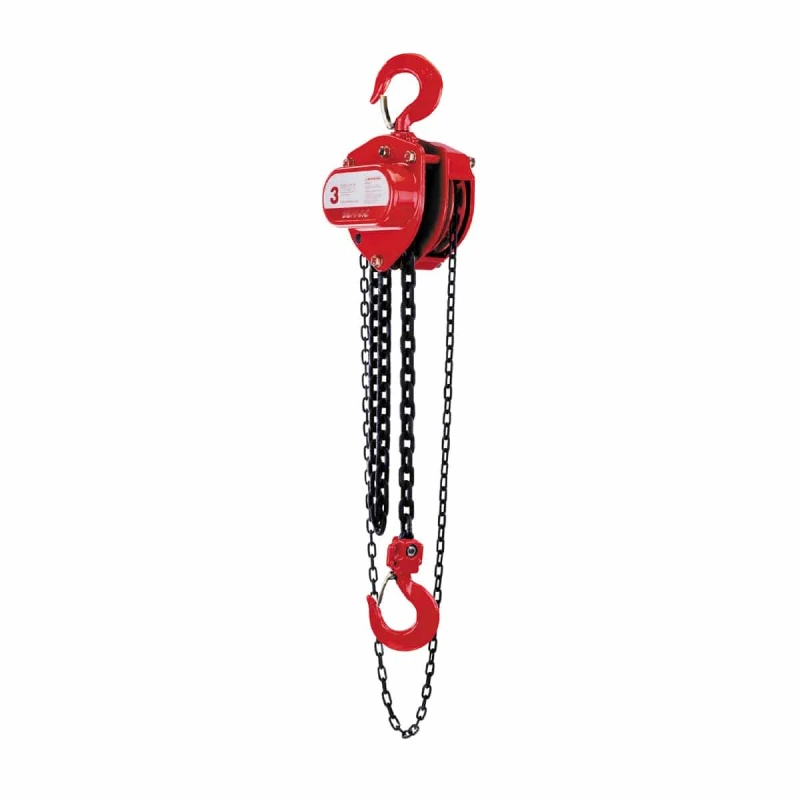
Manual Hoists and Chain Blocks
Choose manual hoists when power is unavailable, lifts are intermittent, or portability matters. For straightforward vertical lifting, our chain block range provides hand-chain-operated options for workshops, installation work and field maintenance. Confirm capacity, lift height, headroom and hand-chain length before ordering.

Lever Hoists and Come-Alongs
A lever hoist is useful where the operator needs close control in a compact space, including approved lifting, tensioning or positioning work. Come-along tools suit shorter pulling and tensioning tasks. Do not assume every pulling tool is approved for overhead lifting; use only the directions and ratings supplied with the selected model.
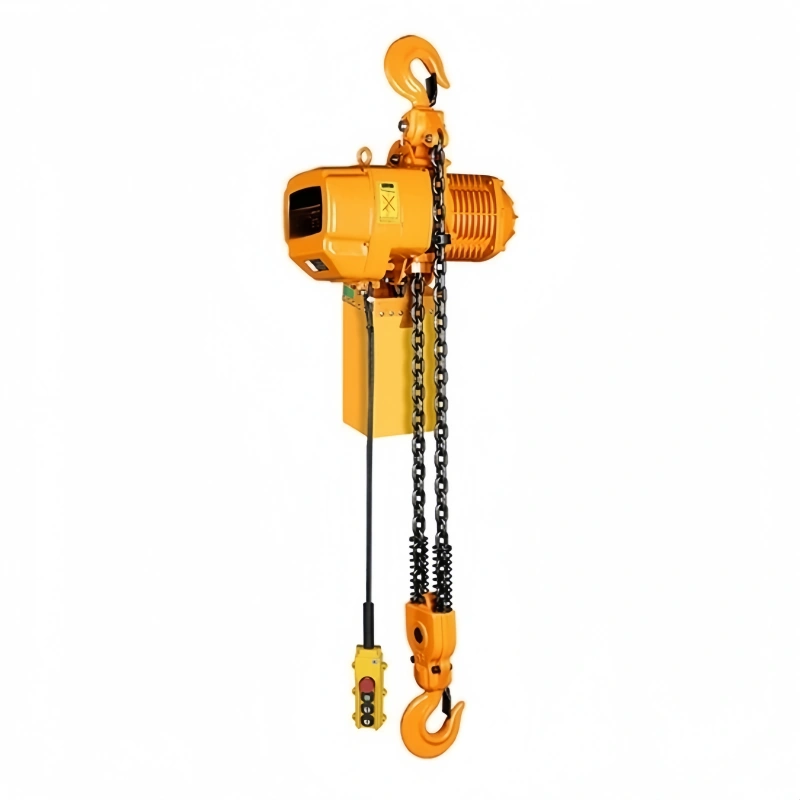
Electric Chain Hoists
For repeated lifts in production, assembly or warehouse work, electric chain hoists reduce manual effort and provide consistent lifting motion. Specify load, lift height, lifting speed, duty requirement, voltage and frequency, control method, suspension and trolley travel. Low-headroom needs should be identified early because they affect the final configuration.

Wire Rope Hoists
Consider wire rope hoists for demanding duty, longer travel, higher lifting speeds or heavier industrial handling where a chain hoist is not the best fit. Selection depends on more than capacity: reeving, drum and rope arrangement, duty class, speed, headroom, trolley design, beam or crane interface and the operating environment all matter.
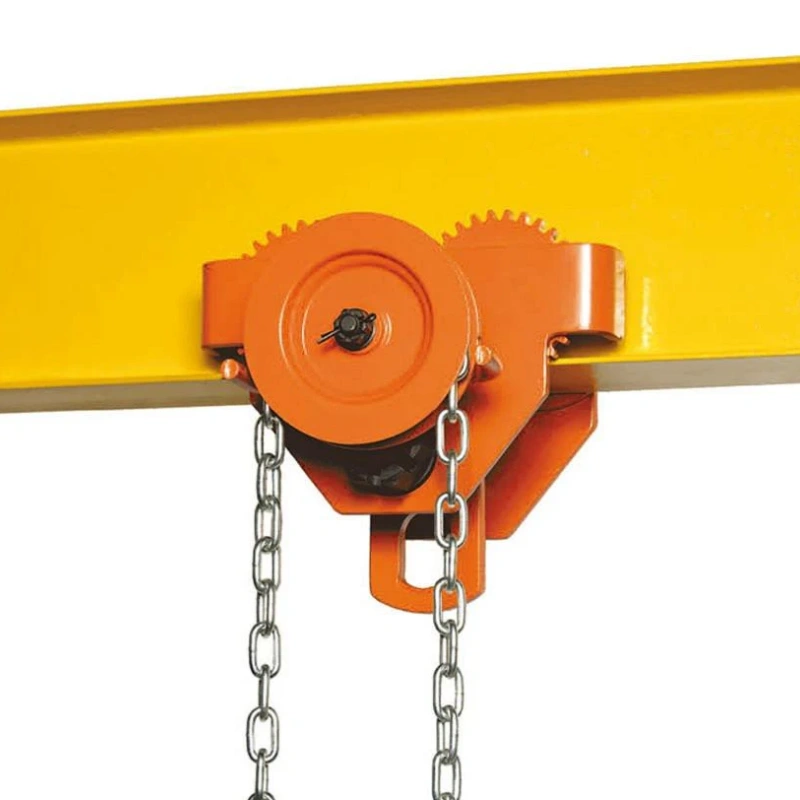
Hoist Trolleys
Add a hoist trolley when the suspended load must travel along a beam. Push, geared and powered travel suit different load levels and operating frequencies. Provide the beam flange width and profile, required travel distance, curve information if applicable, headroom limit, and preferred operating method. For stand-alone beam-travel components, review our manual beam trolleys.
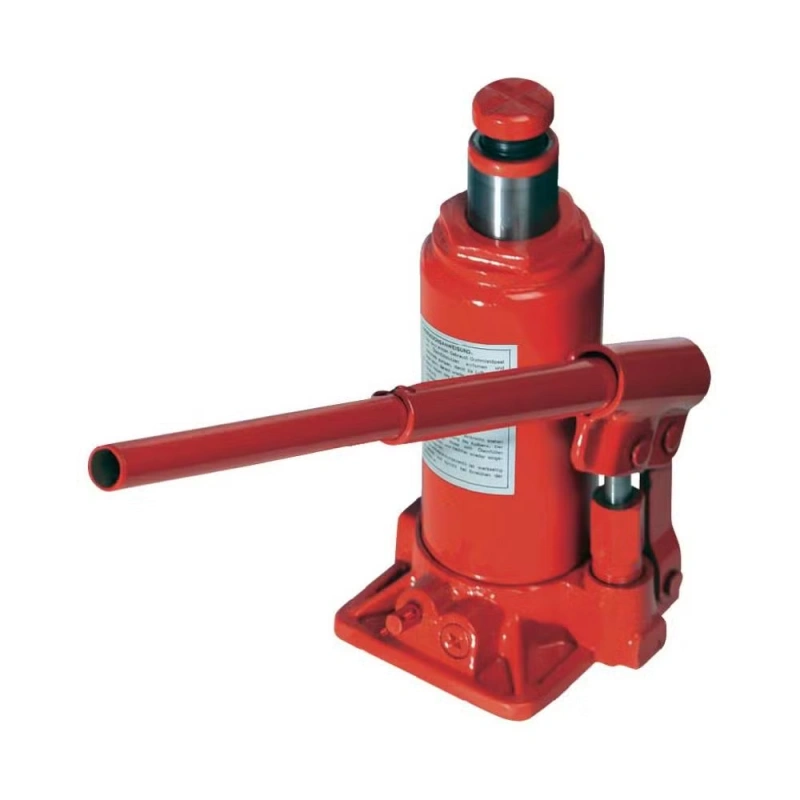
Manual Winches and Pulling Tools
Use a manual winch or puller when the main task is controlled pulling, tensioning or positioning. State the line pull, rope or cable length, drum capacity, mounting orientation and environment. If the load will be lifted vertically, say so explicitly: a device rated only for pulling must not be treated as a lifting hoist.
How to Choose the Right Hoisting Equipment
Start with the movement you need: vertical lifting, horizontal travel, pulling, or a combination. Then match the equipment to the real load and duty. The table below is a routing guide, not a substitute for the product manual or an engineered lift plan.
| Application / Operating Need | Recommended Equipment | Information to Specify |
|---|---|---|
| No power available or occasional vertical lifting | Manual hoist or chain block | Rated load, lift height, headroom and hand-chain length |
| Compact-space lifting or positioning | Lever hoist | Capacity, lift, handle clearance and approved direction of use |
| Frequent production lifting | Electric chain hoist | Duty, lifting speed, voltage/frequency, control method and suspension |
| Demanding duty, higher speed or longer travel | Wire rope hoist | Duty class, reeving, speed, headroom and crane interface |
| Load must travel along a beam | Hoist with trolley | Beam flange width/profile, travel distance, curves and headroom |
| Pulling or tensioning is the primary task | Winch, puller or come-along | Line pull, travel, mounting and whether vertical lifting is required |
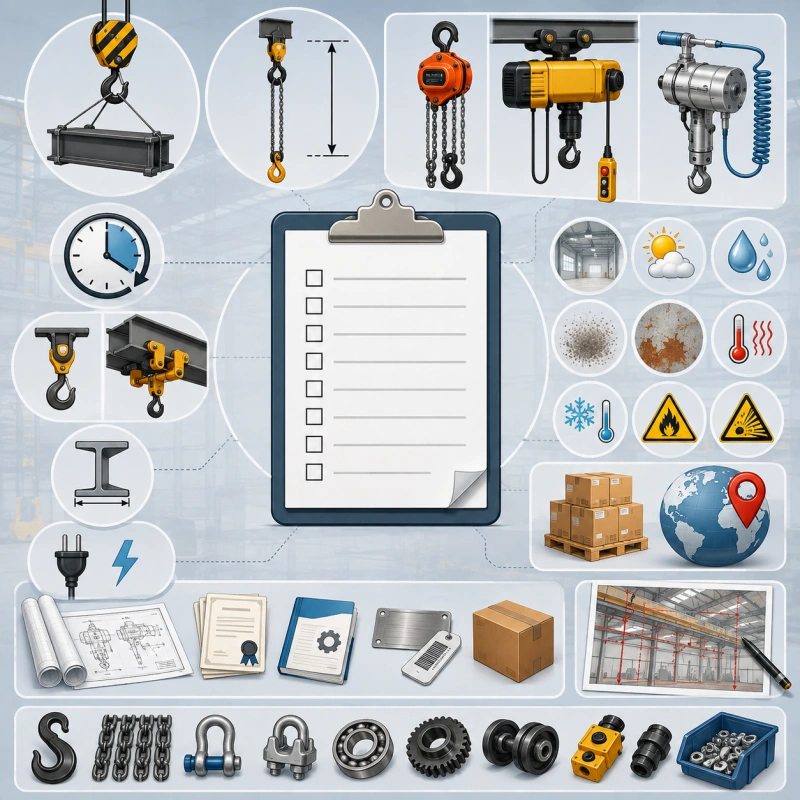
What to Include in Your Hoisting Equipment RFQ
- Rated load and the maximum load that may occur
- Required lift height and available headroom
- Manual, electric or pneumatic preference
- Expected lifts per hour or shift and typical operating time
- Fixed suspension or trolley travel
- Beam profile and flange width
- Site voltage, phase and frequency
- Operating environment: indoor, outdoor, corrosive, dusty, wet, hot, cold or hazardous
- Quantity, destination and delivery schedule
- Required drawings, certificates, test records, manuals, labels, packaging and spare parts
Send the available information through our contact and quotation page. A marked-up photo or drawing is often more useful than a long description when beam geometry, pick points or clearances are unusual.
Manufacturing, Testing and Documentation
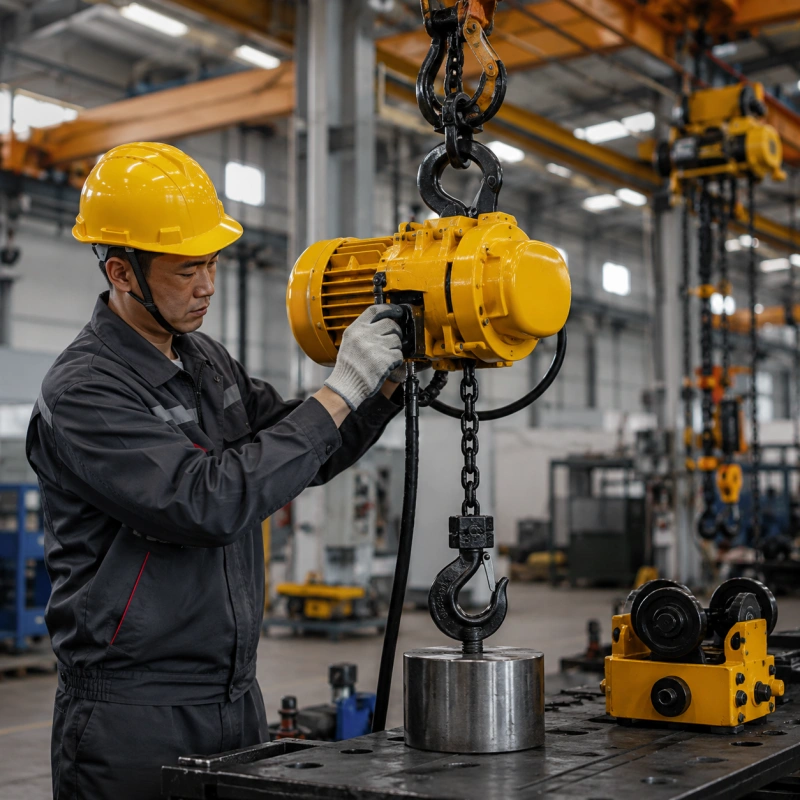
A hoist order is not complete when the model name is chosen. The configuration, rated capacity, chain or rope arrangement, brake and control features, suspension, trolley interface and documentation must match the application. Powerful Machinery uses high-strength materials and controlled testing for its hoisting equipment. For each enquiry, specify the documents and acceptance requirements that matter to your project; availability should be confirmed for the selected model and destination before purchase.
Useful procurement records may include dimensional drawings, operating instructions, parts information, identification and traceability details, and relevant test or conformity documents. Review the exact document package before approval rather than relying on a general website statement. For background, see our guides to load testing for lifting equipment and lifting equipment certification.
OEM and Bulk Hoisting Equipment Supply
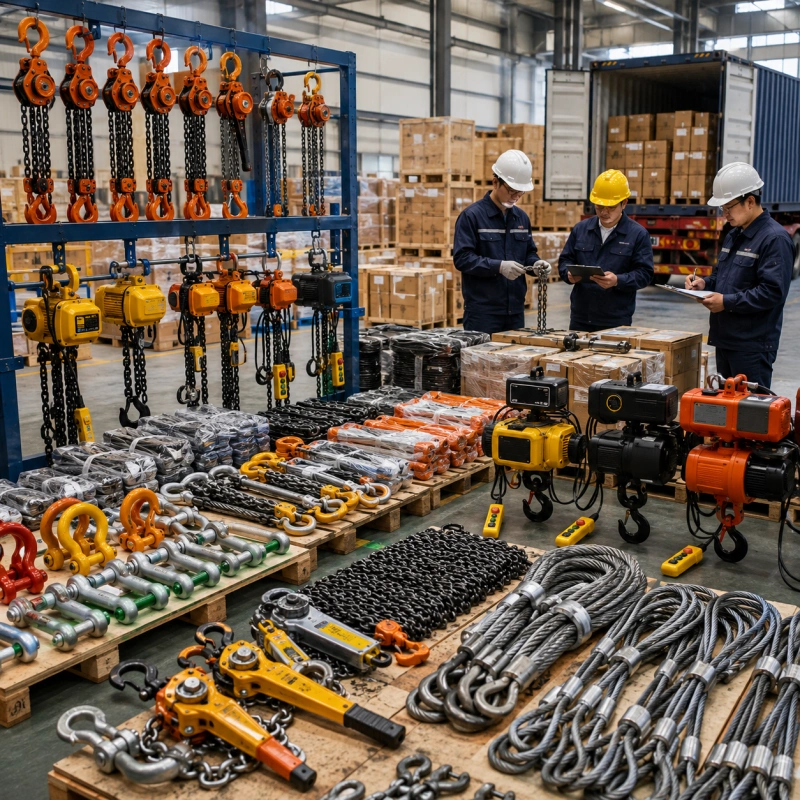
For OEM, distributor and repeat-order programmes, provide the target product family, annual or batch quantity, specification, destination market and required presentation. Our team can review configuration, marking, manuals, packaging, inspection documents, spare-parts needs and delivery schedule with you. Any custom item should be confirmed in the quotation and approved documentation before production. Learn more about the company on our About Powerful Machinery page.
Hoisting Equipment for Industrial Applications
Factories use hoists for machine assembly, maintenance and work-cell handling; see our manufacturing and factories solutions. Warehouses combine lifting with beam travel to position goods and components. Construction teams value portable equipment where access and power are limited; explore construction and infrastructure applications. In every case, the load path, support structure, environment and operating frequency should drive selection—not the industry label alone.
Hoisting Equipment Technical Resources
Need a deeper technical explanation?
- Types of Hoisting Equipment
- Electric Hoist vs. Manual Hoist
- Chain Hoists vs. Wire Rope Hoists
- Lifting Equipment Inspection
- Lifting Equipment Maintenance
These resources carry the detailed educational content so this page can stay focused on product selection and sourcing.
FAQ for Hoisting Equipment
What information is needed to select a hoist?
At minimum, provide the rated load, lift height, headroom, operating frequency, power supply, suspension method and environment. Trolley travel, beam dimensions, speed, controls, documentation, quantity and destination may also change the configuration.
When should I choose a manual hoist instead of an electric hoist?
A manual hoist is often practical for intermittent lifting, field maintenance, limited access or sites without power. An electric hoist is usually the better starting point for repeated lifts, faster cycles and production work. Duty and site conditions still need to be checked.
What is the difference between a chain hoist and a wire rope hoist?
Chain hoists are compact and well suited to many workstation and general industrial lifts. Wire rope hoists are commonly considered for demanding duty, higher speed, longer travel or heavier handling. The correct choice depends on duty class, headroom, speed, travel and system layout—not capacity alone.
Can a pulling tool be used for vertical lifting?
Only when the specific product is expressly rated and instructed for that use. A winch, puller or come-along rated for pulling must not automatically be treated as an overhead lifting device. Confirm the rating, direction of use and manual before the job.
Can lift height, hand-chain length or trolley configuration be changed?
These parameters can often be specified by model. Send the required hook travel, operating level, headroom, beam details and preferred trolley type. The quotation should state the approved configuration and any effect on dimensions, weight, lead time or price.
What documents should I request with hoisting equipment?
Ask for the documents required by your company, project and destination market. Depending on the product, this may include operating instructions, drawings, identification or traceability information, test records, conformity documents and parts information. Confirm the exact package before ordering.
How do I get an accurate hoisting equipment quotation?
Send the RFQ details listed above and attach a drawing or marked photo when the installation is unusual. You can also review the available product families in our lifting equipment catalog. We will use the confirmed requirements to identify a suitable configuration and any points that still need clarification.
Send Us Your Hoisting Equipment Specification
Tell us what must be lifted, how far it must move and where the equipment will work. Include the load, lift height, duty, power, suspension or beam details, environment, quantity, destination and required documents. Our team will review the application and prepare the next questions or quotation.