Rigging equipment inspection begins with a practical question: Is every sling, connector, and attachment safe for this lift? In U.S. construction, OSHA requires rigging equipment used for material handling to be inspected prior to use on each shift and as necessary during use.
Defective equipment must be removed from service. Other inspection intervals and recordkeeping requirements depend on the equipment type and the applicable standard.
If you need to identify a component before inspecting it, start with this overview of rigging equipment and its common types. The checklist below focuses on inspection requirements rather than product selection.
How Often Must Rigging Equipment Be Inspected?
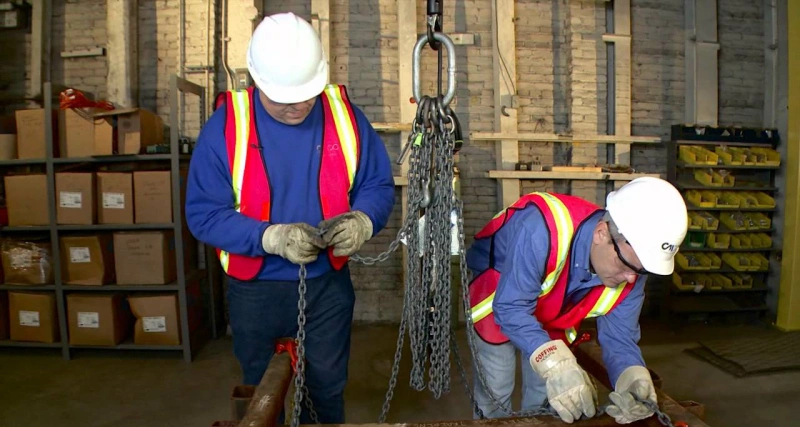
For construction material handling, inspect rigging before use on each shift and again as necessary during use (29 CFR 1926.251(a)(1)). In general industry, OSHA requires slings and all fastenings and attachments to be inspected each day before use by a competent person designated by the employer; service conditions may require additional inspections during use (29 CFR 1910.184(d)).
A change in lift conditions, an impact, suspected overload, or newly visible damage warrants another inspection before the equipment is used again.
A pre-use inspection does not replace a detailed periodic inspection when the applicable equipment rule requires one. Determine the periodic interval based on the sling or hardware type, applicable rule, manufacturer’s instructions, and service conditions. Do not apply a single annual interval to every item in a rigging inventory.
| When | Inspection focus | Rule or decision |
| Before Initial Use / After Repair | Confirm identification, rated capacity, condition, and any product-specific documentation or proof-test requirements. | Apply the applicable standard and manufacturer’s instructions for the specific item. |
| Before Each Shift in Construction | Inspect rigging used for material handling; repeat as necessary during use. | OSHA 29 CFR 1926.251(a)(1). |
| Each Day Before Use in General Industry | A designated competent person inspects slings and all fastenings and attachments; perform additional inspections during use when service conditions warrant. | OSHA 29 CFR 1910.184(d). |
| Periodic, Where Required | Perform the thorough, item-specific inspection and maintain required records. | For alloy steel chain slings under 29 CFR 1910.184(e)(3), the interval may not exceed 12 months; set it based on use frequency, service conditions, lift type, and experience. |
For alloy steel chain slings in general industry, OSHA requires an employer-designated competent person to conduct a thorough periodic inspection and requires the employer to keep a record of the most recent month in which each sling was inspected.
The inspection interval is determined based on frequency of use, severity of service, nature of lifts, and service-life experience, and it may not exceed 12 months. This rule for alloy steel chain slings is not a blanket schedule for web slings, hooks, shackles, or every other rigging component.
Pre-Use Rigging Inspection Checklist
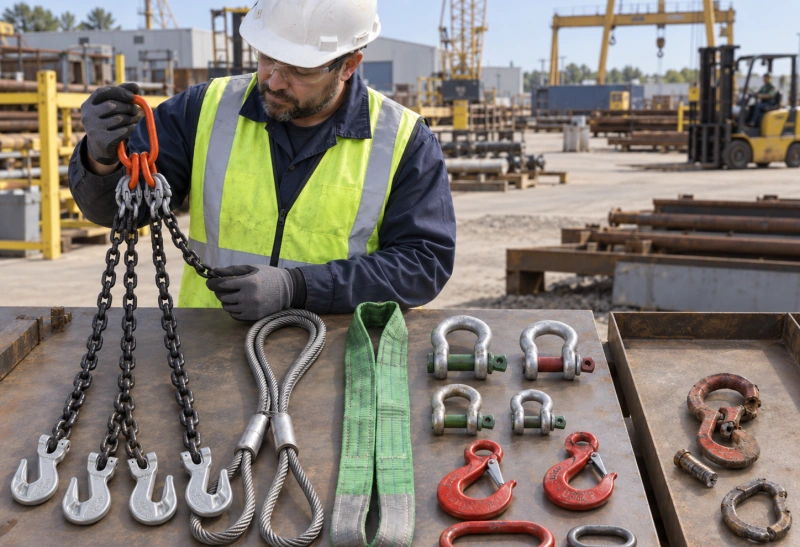
Lay out each item so that its full length and all load-bearing parts are visible. Confirm its identification, rated capacity, planned hitch, and manufacturer’s instructions. Then inspect the following:
- Identification and rating: Verify that required identification or tags are present and legible, and that the item is suitable for the planned load and configuration.
- Slings: Inspect for cuts, broken wires, kinks, crushed sections, heat or chemical damage, excessive wear, and other defects relevant to the sling material.
- Connectors and end fittings: Inspect hooks, shackles, links, and pins for cracks, distortion, wear, damaged threads, loose or missing parts, and improper assembly.
- Use conditions: Evaluate sharp edges, contact points, temperature, chemical exposure, and sling angles against the manufacturer’s instructions. Reinspect when conditions change.
- Action: Tag or segregate suspect equipment, remove defective equipment from service, and have the appropriate person evaluate repair or replacement under the applicable rules and manufacturer’s instructions.
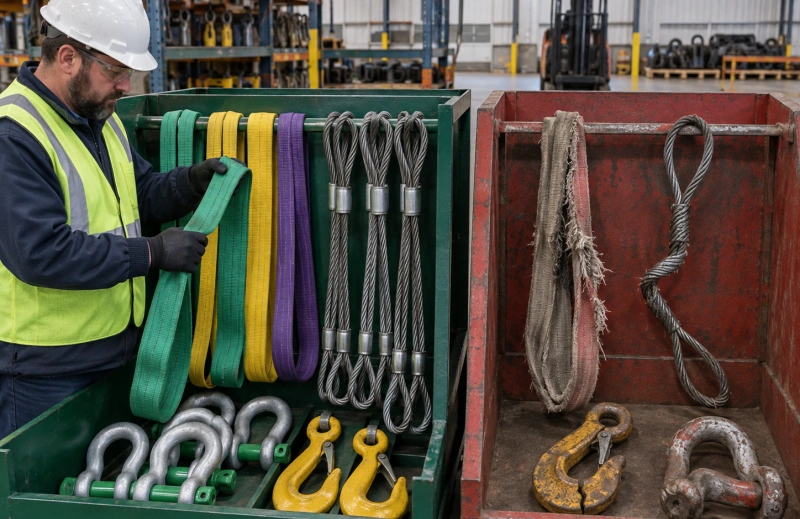
For component-specific rejection criteria, see the rigging hardware inspection guide. For examples of connected components, review chain slings and shackles. The applicable standard and manufacturer’s instructions govern any numeric discard limit.
Who Inspects the Rigging, and What Records Are Needed?
Inspection personnel and documentation requirements vary by rule. OSHA 1910.184(d) requires the employer to designate a competent person for daily sling inspections. For the thorough periodic inspection of alloy steel chain slings, OSHA 1910.184(e)(3) also requires a designated competent person and a record of the most recent inspection month for each sling.
In steel erection, 29 CFR 1926.753(c)(2) requires a qualified rigger to inspect the rigging before each shift. Do not state that every daily inspection requires a written record or that all rigging requires a universal third-party certificate.
An inventory log can still be useful: record the item ID, type, manufacturer, rated capacity, inspection date, observations, action taken, and inspector. Keep any records required by the applicable rule, contract, manufacturer, or site procedure. If identification markings are missing or damage is uncertain, keep the item out of service until it has been evaluated under the applicable requirements and manufacturer’s instructions.
FAQ
Is Every Rigging Item Subject to a 12-Month Inspection Rule?
No. The maximum 12-month periodic interval cited above applies to the thorough periodic inspection of alloy steel chain slings under 29 CFR 1910.184(e)(3). Other equipment is subject to its own applicable requirements and manufacturer guidance. Daily or shift inspections still apply regardless of the periodic schedule.
What Should I Do with Damaged Rigging?
Stop using the equipment and remove it from service. Follow the applicable standard and manufacturer’s instructions to determine whether an authorized party may repair it or replacement is required. Do not return it to service simply because the next scheduled inspection is months away.
Do OSHA and ASME Use One Inspection Rule for All Rigging?
No. OSHA requirements vary by workplace and equipment type. ASME B30.9 addresses slings, while ASME B30.26 addresses rigging hardware. Check the applicable edition and the manufacturer’s instructions for product-specific requirements.
For a broader comparison of how a sling assembly connects to the equipment performing the lift, see rigging and lifting equipment.