
Wire Rope Clamps / Wire Rope Clips Manufacturer
Powerful Machinery manufactures and supplies wire rope clamps, also called wire rope clips, cable clamps, or bulldog grips, for distributors, rigging suppliers, marine hardware brands, construction buyers, and OEM projects. We offer galvanized, stainless steel, forged, malleable, U-bolt, simplex, duplex, and custom wire rope clamp options for secure wire rope fastening and bulk supply.
Why Choose Powerful Machinery as Your Wire Rope Clamps Manufacturer?

Powerful Machinery supplies galvanized, stainless steel, and zinc-plated wire rope clamps, with malleable and forged options available for different duty requirements and application environments.
As a reliable wire rope clamps manufacturer, we focus on consistent dimensions, smooth finish, accurate threads, and repeatable product quality to support long-term B2B purchasing needs.
We support OEM logo, barcode labels, bags, cartons, and pallet packaging, helping distributors, wholesalers, and brands build a professional and market-ready product line.
Before shipment, each order is checked for appearance, size, thread quality, surface finish, and packing accuracy, helping customers reduce receiving issues and maintain stable supply.
WIRE ROPE CLAMP TYPES WE SUPPLY
We supply common wire rope clamp types for different markets and applications.
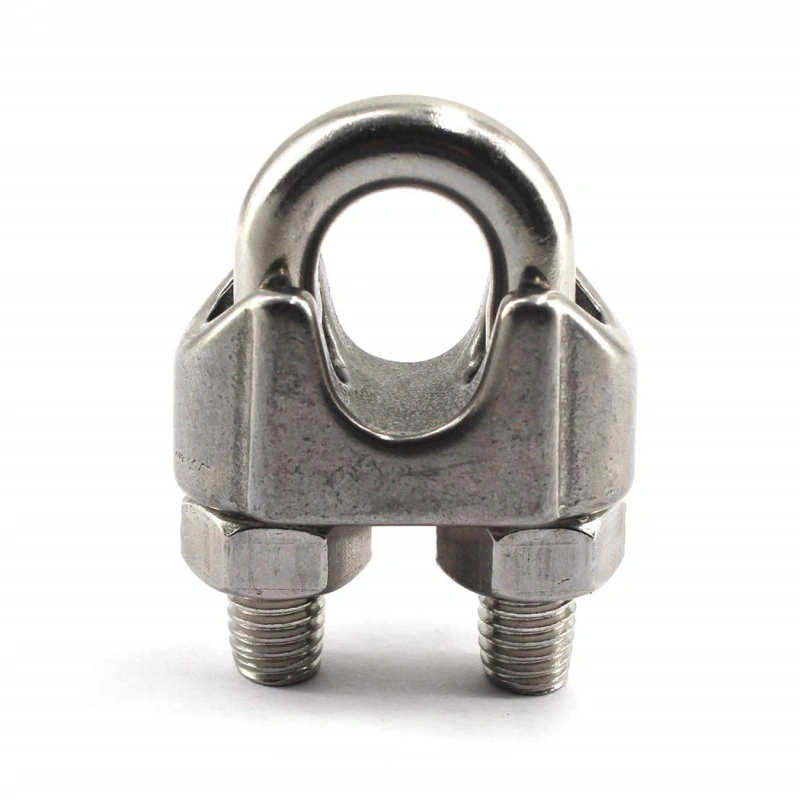
U Bolt Clamp for Wire Rope
Standard clamp with U-bolt, saddle, and two nuts for general wire rope loop fastening.
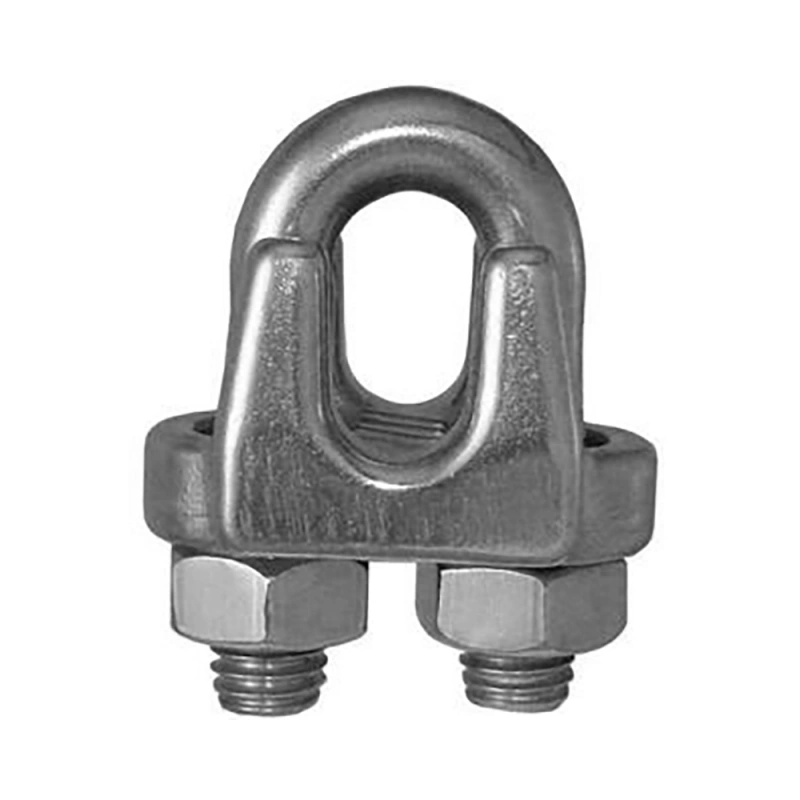
Economical option for light-duty static applications such as fencing, guard rails, handrails, and general hardware use.
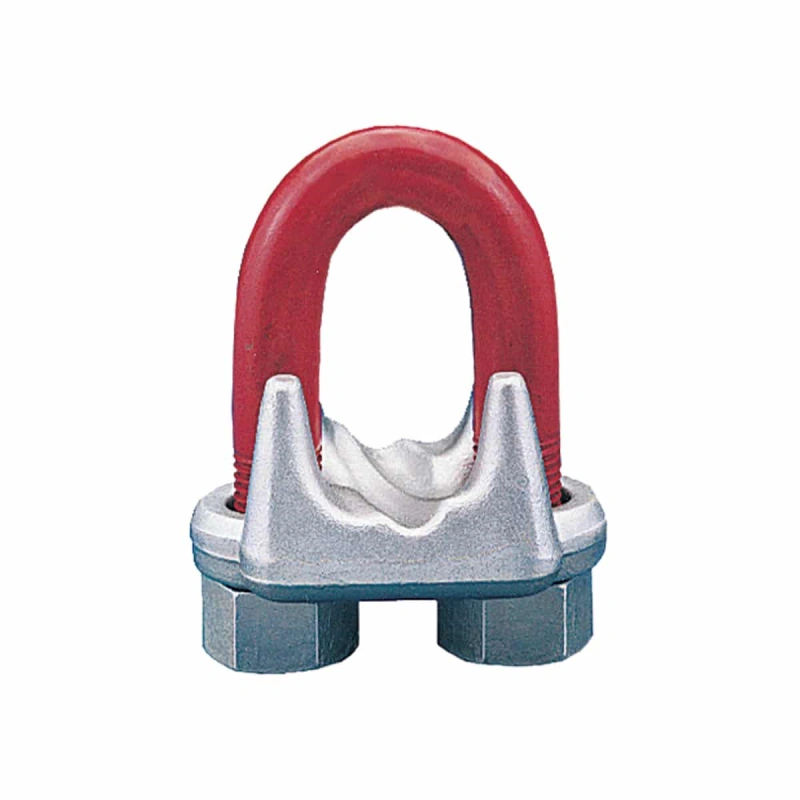
Heavy-duty clamp body for higher-strength industrial and rigging applications when the project specification requires forged construction.
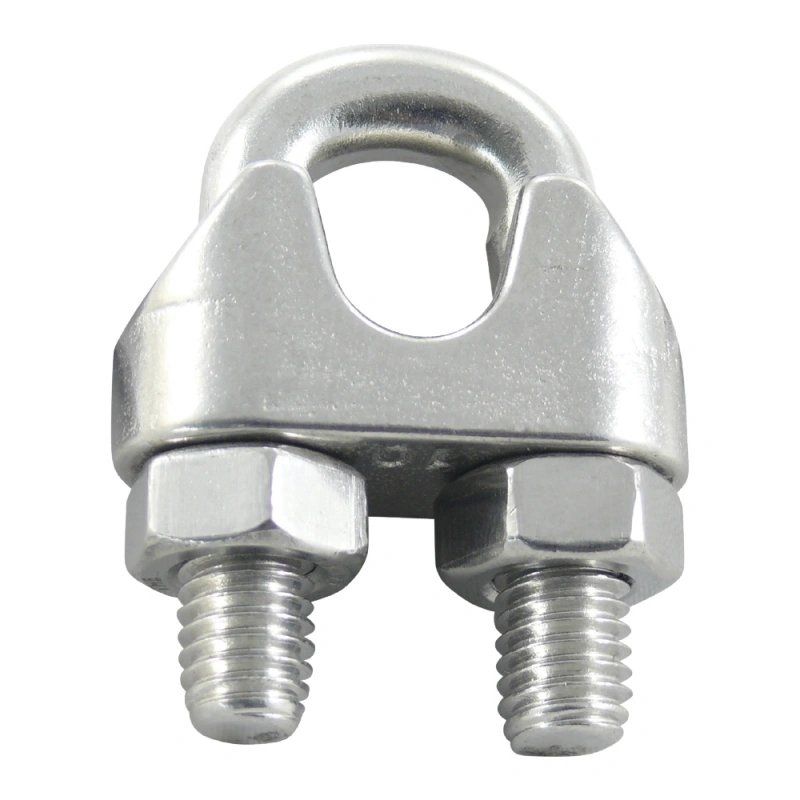
Stainless Steel Wire Rope Clamps
Corrosion-resistant option for marine, outdoor, food, chemical, and coastal environments.
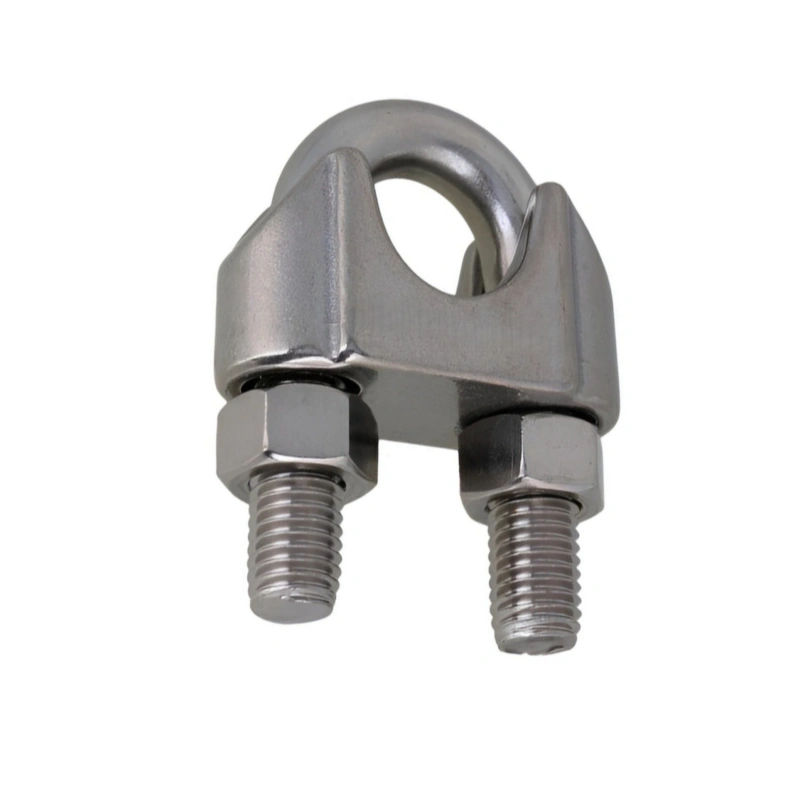
Steel Wire Rope Clamp
Steel wire rope clamp secures loops or joins with a U-bolt, saddle, and nuts for strong, adjustable fastening in rigging, lifting, and structural use.
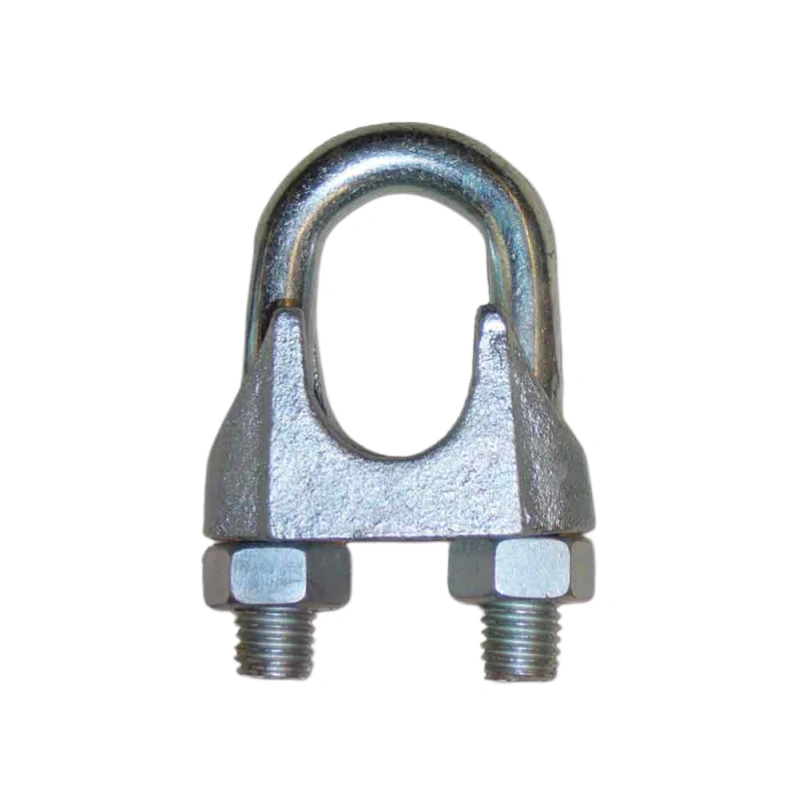
Galvanized Wire Rope Clamps
Zinc-coated steel option for outdoor and general industrial service.
Wire Rope Clamp Size Chart and Bulk Sizes
Powerful Machinery can supply common inch and metric sizes for global buyers. Popular search and order sizes include 1/8 in., 3/16 in., 1/4 in., 3/8 in., 1/2 in., 5/8 in., 1 in., 2 mm, 3 mm, 4 mm, 5 mm, 6 mm, 8 mm, and 10 mm wire rope clamps.
For the most accurate quote, send us:
• Wire rope diameter
• Clamp type: U-bolt, forged, malleable, stainless, duplex, simplex, or flush
• Material and finish
• Standard or drawing
• Quantity per size
• Packing requirement
• Destination port or delivery address
We can prepare a size-by-size quotation and recommend packaging for distributor, retail, or industrial supply.
Common Applications of Wire Rope Clamps
Rigging and Lifting Hardware
Marine and Coastal Projects
Construction and Utility Work
Guard Rails, Fencing, and Cable Railing
Agriculture and Machinery
Industrial Fastening and Hardware Distribution
OEM Wire Rope Clamp Manufacturing and Wholesale Supply
If you are a distributor, importer, hardware brand, rigging supplier, or online seller, Powerful Machinery can support bulk wire rope clamp orders with stable supply and customized packaging. We can quote by product type, size, material, finish, carton quantity, label, barcode, and pallet requirement.
Oem Packaging and Private Label Options
Mixed-Size Orders for Distributors
Carton and Pallet Packing for Export
Product Photos and Specification Support
Custom Drawings or Sample-Based Production Discussions
Factory-Direct Pricing for Repeat Buyers
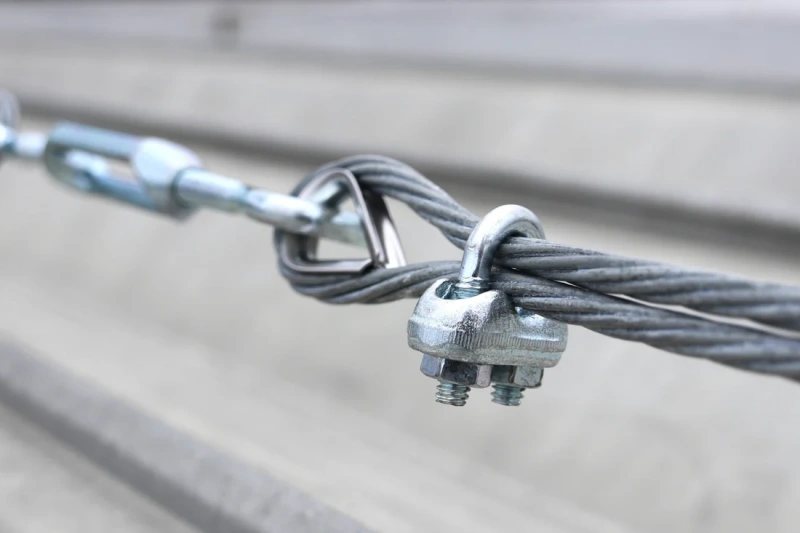
Guide to Wire Rope Clamp
Guide to wire rope clamp covers clamp types, sizes, installation, and selection for reliable wire rope fastening and sourcing.
Wire Rope Clamp Types
Wire rope clamp types vary by material, strength, and structure.
- Forged wire rope clamps
Choose these for heavy-duty applications that need higher strength, stronger bodies, and dependable performance in demanding service. - Malleable wire rope clips
Use these for light-duty applications where cost control and easy sourcing matter more than maximum load performance. - Stainless steel wire rope clamps
Select these for marine, coastal, and chemical environments where corrosion resistance plays a key role. - Galvanized wire rope clamps
Choose these for outdoor and general industrial use where you need reliable rust protection at a competitive cost. - U-bolt wire rope clamps
Use these for standard wire rope fastening where simple installation and wide availability matter. - Duplex wire rope clamps
Choose these when your application needs a clamp design that supports specific rope layouts or connection styles. - Simplex wire rope clamps
Use these for lighter or more compact fastening needs where installation space is limited. - Flush wire rope clamps
Select these when you need a lower-profile clamp design for neat assembly or space-sensitive applications.
Before you choose a wire rope clamp type, check the rope size, working conditions, corrosion risk, installation method, and the quality level your market expects.
How Do Wire Rope Clamps Work?
Wire rope clamps are essential components for securing wire rope assemblies in industrial, marine, and rigging applications. To ensure safe and reliable performance, it is important to understand not only how the clamp works, but also how the complete assembly is specified and installed.
- Wire rope clamps secure rope through controlled gripping pressure.
The clamp works by applying balanced force to hold the wire rope firmly in place without allowing unwanted movement. - The U-bolt fits around the dead end, or short tail, of the rope.
This part of the clamp helps create the clamping force needed to keep the wire rope assembly tight and secure. - The saddle supports the live end of the wire rope.
Proper saddle placement is critical because it helps maintain rope integrity and prevents damage to the load-bearing section. - The nuts tighten the assembly and lock the rope in position.
As the nuts are tightened, the clamp compresses the rope and helps it retain its intended shape and connection. - Wire rope clamps can be used in several common configurations.
These include forming an eye loop, securing a loose tail, or creating an adjustable end connection for various operational needs. - In B2B procurement, a wire rope clamp should never be treated as a basic commodity item.
Performance depends on the total assembly design, not only on the clamp itself. - The holding strength of the connection is influenced by multiple factors.
These include:- clamp size
- wire rope diameter
- rope construction
- number of clamps used
- spacing between clamps
- tightening method
- actual service conditions
- Even a high-quality clamp can fail if installation is poor.
Incorrect assembly practices can reduce holding performance and create safety risks during operation. - Professional buyers usually evaluate the complete system rather than focusing only on unit price.
This approach helps reduce risk, improve reliability, and support long-term operational safety. - For industrial, marine, and rigging applications, installation requirements should be verified before approval.
Buyers should confirm:- installation instructions
- recommended torque practices
- inspection and maintenance requirements
- suitability for the intended service environment
Wire Rope Clamping Method
A proper wire rope clamping method is essential for safe installation, consistent performance, and long-term reliability. For B2B buyers and suppliers, a clear and standardized clamping process helps ensure professional results across different projects, installers, and order volumes.
- Start by matching the wire rope clamp to the correct rope diameter.
Proper sizing is the foundation of a secure connection and helps ensure the clamp performs as intended. - Form the loop or overlap according to the application requirement.
The wire rope should be arranged correctly before any clamps are installed to support a stable and effective assembly. - Use a thimble when wear protection is required.
In applications where the loop is exposed to friction or repeated load contact, a thimble helps protect the rope and extend service life. - Place the first clamp close to the eye of the rope assembly.
Correct positioning of the first clamp is important for maintaining loop shape and securing the connection properly. - Always position the saddle on the live end of the rope.
This is a key installation rule that helps protect the load-bearing side of the wire rope and maintain assembly strength. - Install the remaining clamps with equal spacing.
Consistent spacing supports even load distribution and improves the overall stability of the clamped connection. - Tighten the nuts in a balanced and controlled pattern.
Even tightening helps apply uniform pressure across the assembly and reduces the risk of uneven gripping. - In B2B supply, installation consistency is just as important as hardware quality.
Customers expect repeatable and dependable performance, not results that vary from one installation to another. - Inconsistent clamping methods can make product performance appear unreliable.
When installation practices differ from batch to batch or from installer to installer, performance variations may occur even if the clamp itself remains unchanged. - A professional supplier should provide clear installation support.
This should include:- product drawings
- size charts
- guidance on clamp quantity
- spacing recommendations
- torque instructions
- Clear installation guidance helps customers reduce claims and improve field performance.
Standardized instructions make it easier to achieve consistent installation quality across different job sites and purchasing volumes. - A well-defined clamping method supports correct product use in diverse applications.
This improves customer confidence and helps ensure the clamp is applied properly in real working conditions.
Wire Rope Clamp Installation
A professional wire rope clamp installation process should be simple, clear, and repeatable.
- Begin by checking the condition of the wire rope.
Inspect the rope carefully to make sure it is suitable for installation and free from visible damage, deformation, or excessive wear. - Confirm that the clamp size matches the wire rope diameter.
Correct sizing is essential for safe installation and helps ensure the clamp delivers reliable holding performance. - Form the loop according to the application requirement.
The rope should be arranged properly before installation so the final assembly maintains the correct shape and function. - Install a thimble when additional wear protection is needed.
A thimble helps protect the eye of the rope from abrasion and supports longer service life in demanding applications. - Place the first clamp close to the eye of the assembly.
Proper positioning of the first clamp helps secure the loop and maintain the intended structure of the connection. - Always place the saddle on the live end of the rope.
This is a critical installation principle that helps protect the load-bearing side of the rope and preserve connection strength. - Install the remaining clamps with even spacing.
Equal spacing improves load distribution and helps the full clamp assembly work more consistently. - Tighten both nuts evenly so the saddle sits flat on the rope.
Balanced tightening helps create uniform pressure and reduces the risk of uneven clamping performance. - Apply the correct tightening torque after positioning the clamps.
Proper torque is necessary to achieve the intended grip and support safe, repeatable installation results. - Test the assembly under a controlled load.
A controlled load test helps verify that the installation is secure and performing as expected before actual service use. - Recheck the nuts after the rope has settled.
Wire rope may shift slightly after initial loading, so retightening inspection is important to maintain connection reliability.
How Many Cable Clamps on Wire Rope?
How many wire rope clips to use? It depends on the wire rope diameter, clip material, rope construction, and application. You should not use one fixed number for every job. OSHA guidance shows that the required number of U-bolt wire rope clips increases as rope diameter increases, and non-drop-forged clips usually require more clips than drop-forged clips. OSHA also says you should follow the manufacturer’s recommendations for installation.
A practical reference for U-bolt wire rope clips is:
- 1/2 in. or smaller: 3 drop-forged clips, 4 other-material clips
- 5/8 in.: 3 drop-forged, 4 other-material
- 3/4 in. to 7/8 in.: 4 drop-forged, 5 other-material
- 1 in.: 5 drop-forged, 7 other-material
- 1-1/8 in. to 1-1/4 in.: 6 drop-forged, 7 to 8 other-material
- 1-3/8 in. to 1-1/2 in.: 7 drop-forged, 8 to 9 other-material
You should also watch the rope construction. Powerful Machinery states that its table is based on common 6×19 or 6×37 class wire rope, and for Seale construction or similar large outer wire ropes in 1 inch and larger sizes, you add one more clip. Powerful Machinery also says to match clip size to rope size and retighten after the first load.
If your application is suspension scaffold wire rope, OSHA gives a specific minimum: at least 3 clips, spaced at least 6 rope diameters apart, installed per the manufacturer’s instructions, with retightening after initial loading and inspection at the start of each shift.
How to Tighten Wire Rope Clamps?
Tighten wire rope clamps evenly with a torque wrench, keep the saddle on the live end, and re-tighten after the first load.
A clean step-by-step version for your page:
- Match the clamp size to the wire rope diameter.
- Form the loop or end connection.
- Put the saddle on the live end and the U-bolt on the dead end.
- Snug both nuts evenly.
- Use a torque wrench.
- Alternate between the two nuts until you reach the recommended torque.
- Load the assembly lightly.
- Re-tighten the nuts to the specified torque after the rope seats.
- Inspect and recheck the clamps during service.
What Size Wire Rope Clamp Do I Need?
Our wire rope clamp size guide helps you choose the right wire rope clamp size for safe and effective wire rope installation.
Use this simple rule:
- Measure the rope diameter
- Match the clamp size to that diameter
- Stay in the same system: inch rope with inch clamps, metric rope with metric clamps
- Follow the manufacturer’s table for clamp count, spacing, and torque
Examples
- 1/8 in. wire rope → 1/8 in. wire rope clamp
- 1/4 in. wire rope → 1/4 in. wire rope clamp
- 6 mm wire rope → 6 mm wire rope clamp
What you should check before you buy:
- Rope diameter: this is the first sizing point
- Clamp material: galvanized steel or stainless steel, depending on the environment
- Clamp type: U-bolt, duplex, simplex, flush, or other design
- Application: light-duty, marine, rigging, fencing, railing, or industrial use
- Installation data: required number of clamps, spacing, and tightening torque
One important caution: OSHA says that if manufacturers’ recommendations are available, you should follow them; if U-bolt clip instructions are not available in some regulated cases, OSHA tables are used for number and spacing of clips, not as a shortcut for picking a mismatched clamp size.
Wire Rope Clamp Capacity
Wire rope clamp capacity does not come from the clamp alone. In practice, the holding capacity comes from the full rope termination system: rope diameter, rope construction, clip type, number of clips, spacing, torque, loading method, and service condition all affect the result. OSHA also notes that rated loads depend on factors such as material strength, design factor, hitch type, loading angle, D/d ratio, and fabrication efficiency.
For clip-built assemblies, OSHA says you should follow the clip manufacturer’s recommendations or a qualified person’s guidance for the number of clips, spacing, and torque values. OSHA also says you should place the U-bolt over the dead end, tighten clips evenly to the recommended torque before and after the initial load, and inspect them regularly.
One important limit: OSHA says you should not use wire rope clips to fabricate wire rope slings, except where the application does not allow a prefabricated sling and a qualified person designs the sling for that specific use. OSHA also says do not use slings made with wire rope clips in a choker hitch and do not use malleable cast iron clips to fabricate slings.
Wire Rope Clamp Distance
Wire rope clamp distance usually means the spacing between the clamps and the position of the first clamp on the dead end of the rope. For general installation, Powerful Machinery says to place the first clip one base width from the dead end of the rope. When more clips are required, the remaining clips should follow the maker’s layout and torque instructions.
If manufacturer instructions are not available for some regulated applications, OSHA tables give minimum spacing by rope diameter. For example, OSHA’s table shows minimum spacing of 3 inches for wire rope 1/2 inch or smaller, 3 3/4 inches for 5/8 inch rope, 4 1/2 inches for 3/4 inch rope, and 6 inches for 1 inch rope.
For suspension scaffold use, OSHA gives a more specific rule: install at least 3 wire rope clips and keep them a minimum of 6 rope diameters apart. OSHA also requires installation per the manufacturer’s recommendations, with re-tightening after initial loading.
Wire Rope Clamp vs Ferrule
Wire rope clamps (clips) are removable, adjustable, and installed with standard tools, making them ideal for temporary, on-site, or light-duty use. Ferrules (swage sleeves) are compressed onto the rope using hydraulic tools for a permanent, stronger, and more streamlined connection, ideal for heavy-duty lifting. Clamps are common for guy lines; ferrules for lifting slings.
Wire Rope Clamps (Clips)
Installation: Easy to install using a wrench. No special tools needed.
Reusability: Yes, they can be removed and reused.
Strength: Generally 80–90% of the rope’s capacity, assuming correct installation.
Best Use: Field assembly, rigging, temporary connections, guy lines, and security applications.
Types: U-bolt (standard) and Fist-Grip (heavy-duty, double saddle).
Ferrules (Swage Sleeves)
Installation: Require a specialized swaging or crimping tool to compress the metal onto the wire.
Permanence: Permanent; cannot be reused once swaged.
Strength: Provides high-strength connections, often preferred for lifting.
Best Use: Permanent factory-fitted rigging, safety-critical applications, or where a smooth finish is required.
Materials: Typically aluminum, copper, or steel.
Key Considerations
Safety: Ferrules are generally safer for lifting. Improperly installed clamps can lead to failure.
Inspection: Both require inspection, but clamps specifically require checking bolt tension.
Size: Both must be carefully selected to match the wire rope diameter.
What are wire rope clamps used for?
Wire rope clamps are used to form loops, secure wire rope ends, or connect wire rope sections in field assemblies. They are common in rigging, marine hardware, fencing, guard rails, cable railing, and industrial fastening. The correct clamp type, size, quantity, spacing, and torque must match the application.
How do you install a U-bolt wire rope clamp?
Place the saddle on the live end of the wire rope and the U-bolt over the dead end. Install the required number of clips, space them evenly, tighten nuts evenly to the recommended torque, apply initial load if required, and recheck the nuts after the rope seats.
Can wire rope clamps be used for lifting?
Some projects may specify forged wire rope clips for lifting-related assemblies, but wire rope clips should not be treated as a universal lifting solution. For lifting, suspension, crane, elevator, scaffold, personnel support, or safety-critical applications, follow the applicable standard and manufacturer instructions and use a qualified person.
What is the difference between forged and malleable wire rope clips?
Forged wire rope clips have a stronger forged saddle and are typically chosen for heavier-duty specifications. Malleable wire rope clips are more economical and generally used for light-duty static applications such as fencing, railing, and general hardware.
What information should I send for a wire rope clamp quote?
Send the rope diameter, clamp type, material, finish, standard or drawing, quantity per size, packaging requirements, destination, and any logo or label requirements. Photos or samples can also help confirm the correct product.
Can Powerful Machinery make OEM wire rope clamps?
Yes. Powerful Machinery can support OEM wire rope clamp orders with custom packaging, logo labels, carton requirements, mixed sizes, and specification-based production discussions for distributors and importers.
Have More Questions of Wire Rope Clamps?
Have more questions about wire rope clamps? Contact our team for support on sizes, materials, specifications, installation, and bulk orders. We help you choose the right product for your application.