You face many choices when selecting wire rope for cranes in ports, offshore, industrial, or harbor environments. Each crane application demands specific attention to load, flexibility, and wear resistance. The right wire rope for cranes must match your operational needs and provide reliability every day.
Environmental factors such as temperature, humidity, and exposure to corrosive elements can affect your wire rope selection for cranes. The table below shows how these factors impact your decision:
Environmental Factor | Impact on Wire Rope Selection |
|---|---|
Temperature | Affects performance and longevity of the rope. |
Humidity | Influences corrosion resistance requirements. |
Exposure to Corrosive Elements | Requires selection of ropes with galvanised or stainless steel finishes for better resistance. |
Abrasive Conditions | Necessitates higher abrasion resistance to maintain integrity. |
Marine Environments | Saltwater exposure leads to corrosion; select appropriate materials. |
You must consider critical factors such as structural design, core type, safety, maintenance, and supplier reliability. Powerful Machinery delivers certified crane wire rope solutions that help you achieve safety and performance in every lift.
Key Takeaways
Select wire rope based on load capacity and safety factors. Ensure the working load limit and minimum breaking load meet your crane’s specifications.
Consider environmental factors like temperature and corrosion when choosing materials. Use galvanized or stainless steel ropes for harsh conditions.
Balance flexibility and wear resistance in your wire rope selection. Choose the right strand configuration to match your crane’s operational needs.
Regularly inspect and maintain wire rope to prevent failures. Follow a strict schedule for lubrication and visual checks to extend service life.
Partner with a reliable supplier like Powerful Machinery for quality products and expert support. This ensures safety and efficiency in every lift.
Load & Safety in Wire Rope Selection
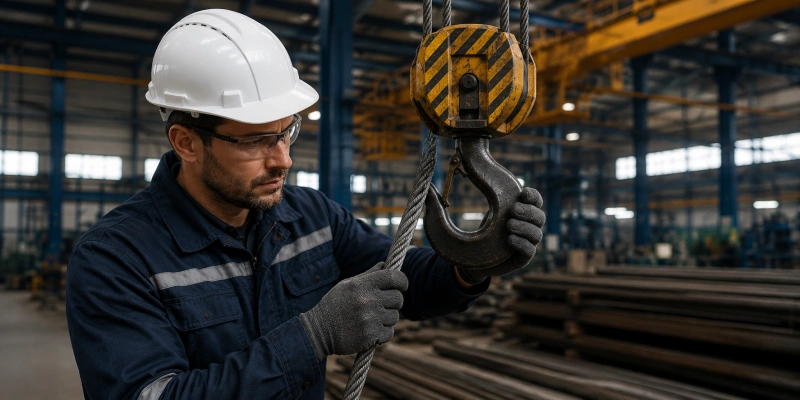
Selecting the right wire rope for cranes starts with understanding how load and safety work together. You must match the strength and diameter of the wire rope to your crane’s specifications and operational demands. This approach ensures every lift meets your safety expectations and supports lifting productivity.
Calculating Load Capacity
You need to calculate load capacity before choosing wire rope for cranes. This process involves more than just knowing the weight you plan to lift. You must consider the working load limit, minimum breaking load, and the safety factor. These elements help you avoid overloading and extend the life of your crane ropes.
Working load limit (WLL) defines the maximum weight your wire rope can safely lift during normal crane operations.
Minimum breaking load (MBL) shows the maximum force the rope can handle before it fails.
Safety factor acts as a buffer, ensuring your wire rope operates well below its breaking strength. For most crane applications, a minimum safety factor of 5:1 is standard, but you may need a 6:1 ratio for high-risk lifts.
Dynamic forces, such as sudden stops or environmental impacts, can increase the actual load on your wire rope. Always account for these when determining your maximum load capacity.
Operating your crane near its maximum load capacity puts extra stress on every component. When you push your wire rope for cranes to its limits, you risk stretching, fraying, or even snapping the cable. Over time, this reduces the lifespan of your equipment and increases the chance of sudden failure.
You protect your investment and your team by staying within recommended load requirements.
Powerful Machinery’s certified Steel Wire Rope and Crane Wire Rope deliver the strength and reliability you need. Each product meets or exceeds international standards, giving you confidence in every lift.
Safety Factors for Cranes
Safety factors play a critical role in wire rope selection for cranes. You must choose a safety factor that matches your application and environment. The table below outlines recommended safety factors for different crane operations:
Safety Factor Type | Recommended Ratio | Notes |
|---|---|---|
Standard lifting operations | 5:1 to 6:1 | Balances safety and efficiency for most cranes. |
High-risk lifting | > 6:1 | Use higher ratios for personnel or critical load lifts. |
Fatigue loading | N/A | Repeated bending reduces the effective safety margin over time. |
Shock loading | N/A | Sudden load changes quickly consume the safety reserve. |
You must also consider your work environment. Offshore cranes face harsh conditions, including saltwater and abrasive particles. These factors can shorten the lifespan of your wire rope for cranes. In marine environments, wire ropes may last only one-third to one-half as long as those used in normal conditions.
Choosing high-grade galvanized steel ropes can increase service life by up to 30% in these settings. Always select a higher safety factor for offshore and port crane operations to account for these challenges.
Choosing the Right Diameter
The diameter of your wire rope for cranes directly affects its strength and load-bearing capacity. As you increase the diameter, the working load limit rises with the cross-sectional area. Even a small increase, such as a quarter-inch, can add a meaningful safety margin to your crane operations.
Steel-wire ropes achieve high load-bearing capacity with a relatively small diameter. The construction of the rope—including materials, wire, and strand structures—provides strength, flexibility, and resistance to rotation, abrasion, fatigue, and corrosion.
When you select the right diameter, you ensure your wire rope meets your load requirements and maintains safety throughout its service life.
Powerful Machinery offers a full range of crane steel wire rope options, including non-rotating and rotation-resistant designs. Each rope is engineered for maximum strength and durability, supporting your lifting productivity and safety goals.
You can rely on Powerful Machinery’s expertise to help you select the best wire rope for cranes, tailored to your specific load requirements and operational environment.
Tip: Always consult your crane’s manual and industry standards before finalizing your wire rope selection for cranes. This step ensures you meet all safety and strength requirements for your application.
Flexibility vs Wear Resistance
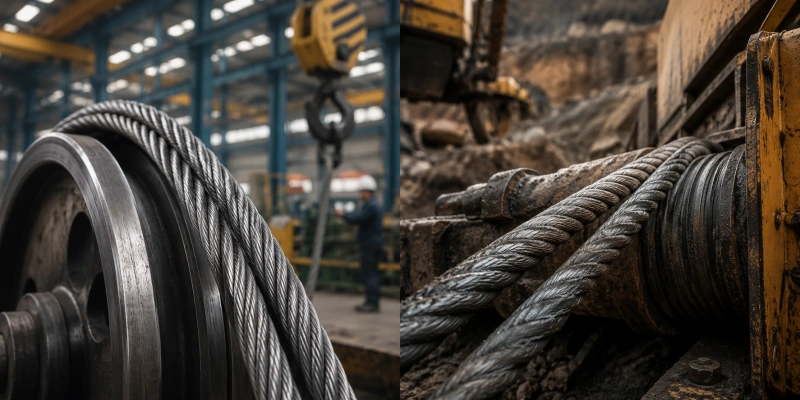
Selecting wire rope for cranes requires you to balance flexibility and wear resistance. You must understand how each factor impacts strength, load, and performance. The right choice ensures optimal performance and extends the service life of your crane.
Strand Configuration Choices
Strand configuration plays a major role in flexibility and strength. Wire rope for cranes with more wires per strand, such as 6×37 or 7×19, offers greater flexibility. This flexibility allows the rope to bend easily over sheaves and drums.
However, you may notice a slight reduction in strength compared to ropes with fewer, thicker wires. For example:
6×37 and 7×19 constructions provide enhanced flexibility but slightly lower strength.
6×19 configurations deliver higher strength and wear resistance, but flexibility decreases.
The core material also matters. An IWRC (independent wire rope core) increases strength and capacity, while a fiber core boosts flexibility.
You must match the strand configuration to your crane’s load and performance needs. Flexibility helps when your wire rope for cranes faces frequent bending, while strength is vital for heavy loads.
Lay Types and Applications
Lay type affects both flexibility and wear resistance in wire rope for cranes. The table below compares long lay and short lay ropes:
Type of Lay | Flexibility | Wear Resistance | Breaking Strength | Elongation | Best Use Cases |
|---|---|---|---|---|---|
Long Lay | Poor | Low | Higher | Lower | Static applications (e.g., guy wires) |
Short Lay | Excellent | Improved (within limits) | Reduced | Higher initial | Dynamic lifting (e.g., hoisting) |
Right-hand lay ropes roll smoothly and resist tangling, making them ideal for crane hoisting lines and lifting harnesses. Left-hand lay ropes withstand spinning and provide better grip, which helps in mooring or anchor lines.
You can also choose compacted strand ropes for increased strength and reduced wear, or rotation-resistant ropes for precise hoisting under heavy load.
Application-Specific Rope Selection
Every crane application demands a specific balance of flexibility, strength, and wear resistance. The table below highlights common wire ropes for cranes and their best uses:
Wire Rope Type | Application | Key Features |
|---|---|---|
6×37 (Galvanized with Synthetic Core) | Subsea lifts | Flexibility, water resistance, corrosion protection |
Rotation-Resistant 34×7 (Stainless Steel) | Lifting heavy objects | Anti-rotation, corrosion resistance |
Plastic-Coated 7×19 (Stainless Steel) | Auxiliary winches | Saltwater barrier, abrasion resistance, flexibility |
8x19S (Stainless Steel) | Drilling rigs | High strength, rotation resistance |
6x25Fi (Stainless Steel) | Production platforms | Corrosion and fatigue resistance |
8×36 (Galvanized) | Offshore support vessels | Strength, flexibility, corrosion resistance |
You should select wire rope for cranes that matches your load, capacity, and operational environment. For dynamic lifting, prioritize flexibility and breaking strength. For static or heavy-duty applications, focus on strength and wear resistance.
This approach ensures your wire rope for cranes delivers the performance and reliability your crane operations demand.
Tip: Always consult with a wire rope expert to confirm your selection meets your crane’s load and performance requirements.
Structural Design & Core Types
Fiber Core vs IWRC
You must decide between fiber core and IWRC when choosing wire rope for cranes. Fiber core gives you maximum flexibility and lighter weight. IWRC, or independent wire rope core, delivers higher strength and crush resistance. Your choice affects load handling, durability, and reliability.
Here is a comparison table to help you understand the differences:
Performance Parameter | IWRC (Steel Core) | Fiber Core |
|---|---|---|
Tensile Strength | Very High | Medium |
Flexibility | Moderate | Very High |
Heat Resistance | Excellent | Weak |
Crush Resistance | Excellent | Poor |
Weight | Heavier | Lighter |
Fiber core works well when you need flexibility and fatigue resistance. IWRC suits heavy-duty crane ropes where strength and crush resistance matter most. You should avoid fiber core in high-heat environments. IWRC gives you longer-lasting crane steel wire rope and better reliability under heavy load.
Tip: Select fiber core for applications needing high flexibility and IWRC for those requiring maximum strength and durability.
Hybrid and Rotation-Resistant Ropes
Hybrid ropes combine steel wires and synthetic fibers. This design gives you a high strength-to-weight ratio and low torque factor. You gain improved flexibility and performance, especially in modern crane operations. Rotation-resistant wire rope for cranes reduces spinning and twisting under load.
This feature increases safety and reliability during lifts.
Using the wrong wire rope can cause premature wear or snapping under heavy load. You protect your team and equipment by choosing hybrid or rotation-resistant crane wire rope. These ropes minimize downtime and enhance operational efficiency.
Powerful Machinery Product Options
Powerful Machinery offers a wide range of wire ropes for cranes. You can select from core types and rotation-resistant designs to match your application. The table below shows common constructions and their rotation characteristics:
Rope Construction Type | Rotation Characteristics | Recommendations |
|---|---|---|
Blue Strand 6 x 19, 6 x 36 | High rotation | Use a swivel to prevent spinning |
Endurance Dyform 8 Lang Lay | High rotation | Use a swivel to prevent spinning |
Endurance 35 LS, Dyform 34LR | Low rotation | Swivel optional |
You can choose wire rope for cranes with IWRC for maximum strength or fiber core for flexibility. Powerful Machinery’s crane wire rope options include hybrid and rotation-resistant designs. These products help you achieve reliable performance, high load capacity, and extended service life.
You ensure safety and reliability in every lift by matching the structural design and core type to your crane’s operational needs.
Note: Consult Powerful Machinery’s technical team for guidance on wire rope selection for cranes. You receive expert advice tailored to your load, flexibility, and performance requirements.
Environmental Resistance for Wire Rope
Corrosion and Abrasion Protection
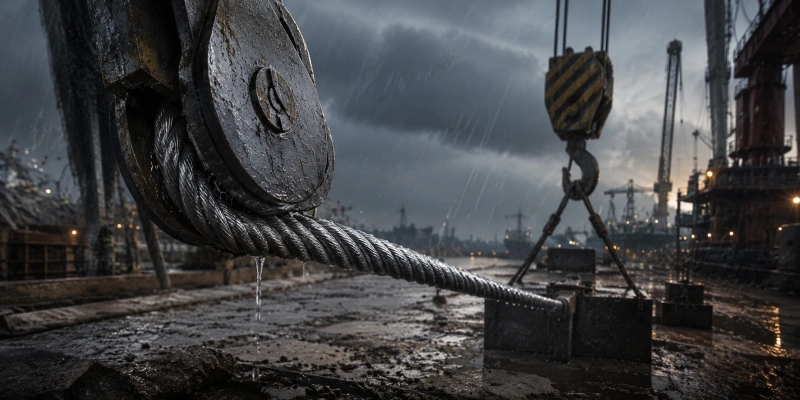
You face harsh conditions when you use wire rope for cranes in ports, offshore, or industrial sites. Corrosion and abrasion can quickly weaken your wire rope for cranes, reducing both flexibility and load capacity. You can protect your investment and improve safety by using proven methods:
High-grade steel ropes with galvanized coatings extend the life of wire rope for cranes by up to 30% in marine and corrosive environments.
Compacted strand wire rope for cranes with plastic-coated cores reduces replacements by 25%. This design boosts durability and keeps your project on schedule.
Plastic coatings serve as a sacrificial layer. They shield wire rope for cranes from abrasives and help maintain flexibility.
Regular lubrication creates a barrier against moisture and contaminants. You should relubricate wire rope for cranes often to minimize friction and wear.
These strategies help you maintain flexibility and load performance, even in the toughest environments.
Material Choices: Galvanized, Stainless, Coated
You must select the right material for wire rope for cranes to achieve the best balance of flexibility, corrosion resistance, and load strength. 316L stainless steel wire rope for cranes stands out in extreme environments.
It resists saltwater, chemicals, and humidity, making it the top choice for coastal or chemical plant operations. Galvanized wire rope for cranes offers a cost-effective solution for indoor or dry settings. However, you need to perform regular maintenance if you use it in harsh conditions.
Coated wire rope for cranes, with marine-grade PVC or polyurethane sheaths, provides extra abrasion resistance and corrosion protection. You gain flexibility and reliable performance with these advanced materials.
Suitability for Ports, Offshore, Industrial
You must match wire rope for cranes to your work environment for maximum safety and efficiency. In offshore and marine applications, stainless steel wire rope for cranes (grades 316 and 316L) delivers the best resistance to saltwater corrosion.
Hot-dip galvanized wire rope for cranes with enhanced zinc coating works well under dynamic load conditions. Coated wire rope for cranes, using marine-grade sheaths, offers superior abrasion resistance and flexibility.
Galvanized steel wire rope for cranes remains a top choice in high-corrosion environments like marine transport and construction. You ensure long service life and consistent performance by selecting the right wire rope for cranes for your specific application.
Tip: Always evaluate your site’s exposure to saltwater, chemicals, and abrasives before choosing wire rope for cranes. The right material and protection strategy will help you maintain flexibility, load capacity, and safety.
Safety Standards & Certifications
Compliance with ISO and Industry Standards
You must select wire rope for cranes that meets strict safety requirements. International standards help you reduce safety risks and ensure reliable performance. These standards guide you in choosing products that deliver consistent quality and durability.
The table below shows key certifications and their purpose:
Certification | Purpose |
|---|---|
ISO 2408 | Specifies the minimum breaking force for safety |
EN 12385 | Ensures safety and performance standards |
ISO 9001 | Guarantees quality management systems |
Wire rope for cranes certified to these standards gives you confidence in every lift. You protect your team and equipment by following safety protocols and industry guidelines.
Inspection and Maintenance Protocols
You must inspect wire rope for cranes regularly to prevent accidents and maintain operational safety. Visual checks before and after each shift help you spot broken wires or kinks. You need to lubricate wire rope for cranes often to reduce friction and wear. The table below outlines recommended inspection routines:
Inspection Type | Frequency | Details |
|---|---|---|
Daily Visual Inspection | Daily | Check for obvious abnormalities before operation. |
Detailed Checks | Weekly | Record wear, broken wires, or deformation. |
Non-Destructive Testing | Monthly | Detect internal defects using specialized equipment. |
Comprehensive Inspection | Quarterly | Conducted by professional institutions for thorough assessment. |
You must follow maintenance schedules to keep wire ropes for cranes in top condition. Lubricate ropes 1-2 times per month under normal conditions. Control loads so they do not exceed 1/6 of the rope’s breaking force. Maintain proper tension distribution to avoid localized overloading.
An active inspection and preventive maintenance program is essential for crane safety and is mandated by OSHA. Timely repairs ensure operational safety and reduce downtime.
Tip: Consistent inspection and maintenance help you avoid unexpected failures and extend the service life of wire rope for cranes.
Powerful Machinery’s Certified Solutions
Powerful Machinery delivers wire rope for cranes that meets global safety standards. You benefit from products certified to ISO 9001, EN 12385, and ISO 2408. The table below highlights certifications held by Powerful Machinery:
Certification | Description |
|---|---|
ISO 9001 | Quality management |
EN 12385 | European safety |
ISO 2408 | Construction standard |
You also find compliance with ASTM and API standards for specialized applications. Powerful Machinery’s commitment to safety ensures you receive wire rope for cranes that performs reliably in demanding environments.
You gain peace of mind knowing your equipment meets international safety protocols and reduces safety risks. You can trust Powerful Machinery to support your maintenance needs and deliver certified solutions for every crane operation.
Maintenance & Replacement Planning
Inspection Schedules
You must inspect wire rope for cranes regularly to maintain safety and performance. Daily inspections are essential, especially in busy or harsh environments. If your crane operates under severe service conditions or approaches replacement criteria, increase inspection frequency to daily or weekly.
Always check ropes that have been idle for a month or more before returning them to service. The table below outlines recommended inspection and replacement guidelines:
Inspection Frequency | Replacement Criteria |
|---|---|
Daily inspections are required, with increased frequency under certain conditions. | Replace if 6 randomly distributed broken wires or 3 broken wires in one strand are found in one lay length. |
Increase frequency to daily or weekly if approaching replacement criteria or under severe service conditions. | Diameter reduction exceeding 7% of nominal diameter requires immediate replacement. |
Inspect ropes that have been idle for a month or more before returning to service. | Any deformation, such as kinking or bird-caging, requires immediate replacement. |
Maintenance Best Practices
You can extend the service life of wire rope for cranes by following best practices for maintenance. Regular lubrication prevents internal wear and corrosion. Use protective coatings to resist corrosion, but always perform frequent inspections. Handle ropes carefully to avoid damage from abrasive surfaces.
Store wire rope for cranes in dry, well-ventilated areas to reduce corrosion risk. Implement load management practices to avoid overloads and minimize stress.
Tip: Document your inspection findings and integrate maintenance activities into your project schedule. This approach helps you avoid disruptions and supports proactive replacement planning.
Replacement Criteria
You must replace the wire rope for cranes when you observe certain signs of wear or damage. The chart below compares broken wire replacement criteria for different rope constructions:
The table below summarizes key conditions that require immediate replacement:
Condition | Description |
|---|---|
Broken wires exceeding allowable concentration limits | Indicates fatigue failure zones. |
Diameter reduction beyond specified thresholds | Reduces load capacity. |
Severe corrosion and pitting damage | Weakens structural integrity. |
Deformation (kinks, birdcaging, strand displacement) | Disrupts load distribution. |
Core failure or internal collapse | Leads to rope instability. |
You should also replace wire rope for cranes if you see advanced corrosion, structural damage, or if the rope reaches its predefined cycle count. Following these criteria ensures safety and keeps your crane operations reliable.
Reliable Supplier & Product Support
Choosing a Trusted Brand
You need a reliable cable supplier when planning crane operations. The right partner ensures quality and reliability in every lift. Powerful Machinery stands out as a trusted brand with a global reputation.
You benefit from their wide product portfolio, which covers steel wire ropes, crane wire ropes, and custom fittings for diverse crane operations.
Consider these factors when evaluating cable supplier reliability:
Factor | Description |
|---|---|
Quality Standards | Suppliers must comply with ISO, CE, or other international certifications for safety and performance. |
Material Reliability | High-grade steel with uniform tensile strength prevents early fatigue and breakage. |
Range of Products | A broad portfolio shows expertise, including ropes for different crane applications. |
Customization Options | Tailored solutions, such as rope diameter, strand patterns, coatings, and terminations, are essential. |
Testing and Traceability | Suppliers should offer load testing, fatigue tests, and traceable manufacturing records. |
After-Sales Support | Technical advice, training, and replacement availability are key for ongoing reliability. |
You secure crane operations by choosing a reliable cable supplier that meets these criteria.
Powerful Machinery’s Service Advantage
Powerful Machinery delivers more than certified products. You receive comprehensive service and support throughout your project. Their team provides:
Boom inspections and tune-ups for optimal performance.
Crane inspections to ensure safety and functionality.
Modernization upgrades to enhance crane capabilities.
On-site delivery and overviews for convenience.
Preventative maintenance to avoid future issues.
Technical support for installation and troubleshooting.
Track replacement and crane repairs.
Welding fabrications for custom crane components.
Wire rope installation and removal.
You minimize downtime and maximize reliability with Powerful Machinery’s expert support. Their quick response to technical issues keeps your crane operations running smoothly.
Technical Support and Custom Solutions
You gain access to technical support and custom solutions when you partner with Powerful Machinery. Their in-house engineers collaborate with you to create tailored wire rope solutions for crane operations.
You receive digital quality certificates and inspection records, ensuring every product meets strict quality standards. Powerful Machinery’s team guides you through selection, installation, and maintenance, helping you achieve safe and efficient crane operations.
Tip: Consult Powerful Machinery’s experts for personalized recommendations. You get the right wire rope for your crane, backed by reliable cable supplier support and technical expertise.
Conclusion
You improve crane safety and efficiency when you focus on proper wire rope selection for cranes and regular maintenance. Consider these key steps:
Choose crane wire rope with high breaking strength and the right core type.
Match materials to your environment for maximum safety.
Partner with a reliable supplier for quality and support.
Schedule ongoing maintenance and inspections to prevent failures.
Powerful Machinery offers certified products and expert advice. Their team helps you meet safety standards, avoid costly mistakes, and build a strong safety culture for every lift.
FAQ
What is the most important factor when choosing crane wire rope?
You must prioritize safety above all else. Select wire rope that matches your crane’s load requirements and operational environment. Always check certifications and consult with experts to ensure you meet industry standards.
How often should I inspect crane wire rope?
You should inspect the crane wire rope daily. Increase inspection frequency if you operate in harsh environments or notice signs of wear. Regular checks help you maintain safety and prevent unexpected failures.
Can I use the same wire rope for different crane applications?
You should not use the same wire rope for every application. Each crane task has unique requirements. Choose wire rope designed for your specific load, flexibility, and safety needs.
When should I replace my crane wire rope?
Replace your crane wire rope when you see broken wires, reduced diameter, or visible corrosion. Immediate replacement ensures safety and keeps your crane operating efficiently.
Does Powerful Machinery provide technical support for wire rope selection?
Yes, you receive technical support from Powerful Machinery. Their experts help you choose the right wire rope, ensuring safety and performance for your crane operations.