To measure a rigging shackle, record its body diameter and pin diameter, then check the clear inside width and clear inside length. Use calipers for the two diameters and compare every measurement with the drawing for the exact shackle model. The marked size and working load limit (WLL) matter as much as the measurements: a caliper can help identify a shackle, but it cannot establish its lifting capacity.
This guide shows you where to place the measuring tool, what to record, and how to use the results when you need a replacement or are preparing a purchase specification. If you already know the dimensions and want to compare available sizes, move to our shackle size guide. Here, we will stay with the measurement process.
What Does Shackle Size Mean?
A shackle has several useful dimensions, but they describe different features. The body diameter is the diameter of the metal section forming the bow or the sides of a Dee shackle. The pin diameter is the diameter of the smooth, load-bearing section of the pin.
The clear inside width and clear inside length describe the space available for the mating component. Overall width and overall length can also matter when the assembly has limited clearance.
For many conventional lifting shackles, the nominal size is associated with the body diameter, while the pin diameter is larger. Do not assume that this relationship or a particular dimension-letter code applies to every product. Check the manufacturer’s drawing.
Likewise, an opening that physically accepts a hook does not establish that the shackle has a suitable working load limit, pin-retention arrangement, or approved load direction.
Before You Pick Up the Calipers
First identify what you are measuring. Is it a bow shackle or a Dee shackle? Does it have a screw pin or a bolt with a nut and retaining device? Look for the manufacturer’s identification, nominal size, working load limit (WLL), and model or batch marking where these are provided. Photograph the markings and both sides of the shackle before cleaning it. A clear photograph can save time if the part later needs to be matched to a drawing.
Clean away loose dirt so the caliper contacts the metal rather than debris. Do not grind, file, or remove a protective coating simply to obtain a reading. Check the body, eyes, pin, and threads for obvious damage. If the shackle is distorted, cracked, severely corroded, missing a required retaining component, or has illegible markings, set it aside for assessment under your inspection procedure.
Measurements taken from a damaged part are a poor basis for ordering an identical replacement, and measuring the part does not return it to service.
A digital caliper is the most useful tool for body and pin diameters. A rule or tape can help with larger clearances, although calipers are easier to position on small openings. Keep the applicable product drawing beside you, note whether it uses millimeters or inches, and record the units with every measurement. If you must convert units, keep the original reading as well as the converted value.
How to Measure a Shackle Step by Step?
Step 1: Record the Shackle Type and Markings
Record the body shape, pin style, visible manufacturer identification, size markings, and the WLL marking if present. Note whether you are measuring a new part against a drawing or identifying a shackle already in service. This distinction matters because wear, corrosion, or deformation can change a measured dimension. Do not use an apparently matching size to replace a missing or illegible WLL marking.
Step 2: Measure the Body Diameter
Place the caliper jaws across the round section of the shackle body, away from the thicker eyes and any raised lettering. On a bow shackle, choose a sound section of the curved body that corresponds to the body-diameter callout in its drawing. On a Dee shackle, a straight section of the body is often easier to measure. Hold the jaws square to the metal rather than at an angle; an angled reading can be misleading.
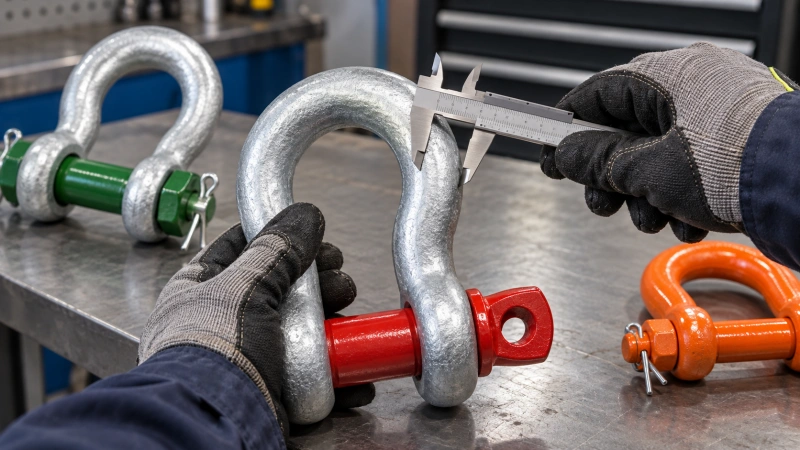
Take a second reading at another accessible location and note any visible difference. If the shackle is used, a worn bearing area may measure smaller than an unworn area. Record both measurements rather than selecting the value that looks closest to a catalogue size. Some drawings identify this dimension with a letter such as P or A, but the letter is specific to that drawing. “Body diameter” is the safer label for field notes.
Step 3: Measure the Pin Diameter
Measure across the smooth shank of the pin where it bears against the connected component. Avoid the head, collar, nut, thread crests, and any chamfered end. Those features can produce a different reading from the load-bearing pin diameter.
If the pin can be removed under the applicable site procedure, measure it separately and keep it identified with its original body. Never swap pins between shackles simply because two measured diameters appear similar.
For a bolt-type shackle, also note the nut and retaining device. For a screw-pin shackle, note the pin style and whether the thread engagement appears sound. These observations help identify the correct replacement configuration; they do not substitute for inspection by a competent person.
Pin diameter is especially important when checking whether the pin will fit a lug, padeye, chain link, or other mating hole without forcing the connection.
Step 4: Measure the Clear Inside Width
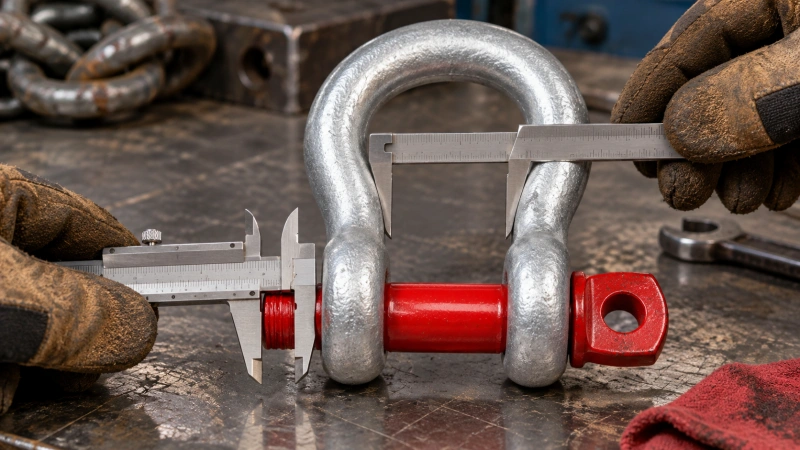
Measure the space between the inside faces of the shackle body at the location shown on the product drawing. A bow shackle can be wider near its crown than at its pin end, so “inside width” needs a stated measurement location.
If your concern is whether a fitting will sit between the eyes, record the clear width at that opening. If the drawing also gives a wider bow clearance, record it separately. Do not treat the largest opening as the available space at every point in the shackle.
Compare the clear width with the thickness of the component that will sit inside the shackle. Leave enough room for the connection to seat as intended without binding, edge contact, or a forced fit. How the components bear against each other is as important as whether they can be pushed together.
Step 5: Measure the Clear Inside Length
With the correct pin in place, measure the usable distance from the inside of the crown to the nearest surface of the pin, keeping the tool aligned with the shackle’s centerline. This indicates the clear space available to the component inside the body.
If the manufacturer’s drawing defines “inside length” from different reference points, follow those points when comparing your measurement with the published figure. A measurement taken from the outside top of the bow will not match a chart value for internal clearance.
On a Dee shackle, the sides remain comparatively narrow; on a bow shackle, the opening curves outward. In both cases, record the actual clear space that affects the mating component. A photograph with the caliper in position can make a technical inquiry much easier to answer than a number without a defined measurement point.
Step 6: Check Overall Fit and Record the Results
If the shackle must fit within a confined assembly, measure its overall height and width as shown on the relevant drawing. A safety-bolt model also needs enough room for the nut and retaining device, while a screw-pin model needs access to install and remove the pin.
Record the dimensions of the lug, chain link, sling eye, or hook that will connect to the shackle. A shackle can match a nominal size yet still be unsuitable for the available space or the way the load bears on the pin and body.
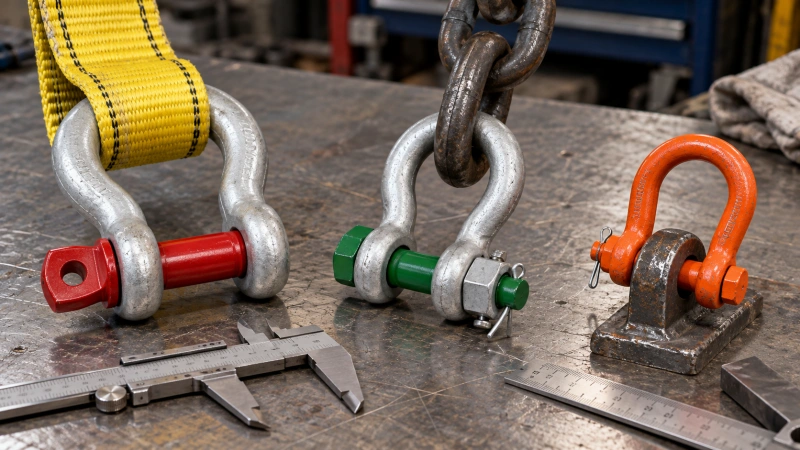
Your measurement record should include the model or closest identified model, body diameter, pin diameter, clear width at the stated location, clear inside length, units, pin type, and any condition concerns. Keep the original photograph and the drawing revision with the record. That small amount of detail prevents “a half-inch shackle” from becoming an ambiguous purchase request.
Bow and Dee Shackles Use the Same Basic Measurements
The measuring sequence does not change much between the two body shapes. Measure the body diameter, pin diameter, clear inside width, and clear inside length on either type. What changes is the geometry you need to describe. A bow, or anchor, shackle has a rounded crown and may provide more room for a connected sling or fitting.
A Dee, or chain, shackle has a narrower profile that can suit a compact, aligned connection. For an overview of these designs, see our guide to shackle types.
Do not assume that a bow shape permits side loading or that two shackles with the same nominal size have the same rating. Load direction, pin style, mating geometry, and any reduction in rating must follow the instructions for the specific product. If the intended connection will not remain within the manufacturer’s approved loading arrangement, resolve that issue before selecting a replacement.
A Worked Example from the G-209 Drawing
The Powerful Machinery G-209 screw-pin anchor shackle shows why each dimension should be identified by name. In the listed 1/2-inch nominal-size row, the drawing gives P as 1/2 inch for the body diameter and B as 5/8 inch for the pin diameter.
The A dimension, measured between the eyes in that drawing, is 13/16 inch. These are three different measurements on the same shackle. Calling the 5/8-inch pin a “5/8-inch shackle” would misidentify the catalogue size.
Use this example to understand the measurement points, not as a conversion formula for other shackles. Another series may use different dimension letters, proportions, materials, and ratings. If you are matching an existing product, compare the measured part with the current drawing for its exact model and check its markings.
If a dimension or marking does not agree, ask the supplier to confirm the correct item rather than assuming a generic tolerance.
Match the Measurements to the Right Product
Start with the manufacturer’s identification and model, then compare the nominal size and actual dimensions. Check the body and pin diameters first, followed by the clearances that affect the mating component. Confirm the pin arrangement and the space needed to install it.
If you are buying for lifting, verify the marked WLL and the product’s intended application from its current technical documentation. The WLL is a manufacturer-assigned rating under stated conditions; it cannot be determined reliably from a measured diameter alone.
Keep capacity selection separate from the act of measurement. Our shackle size guide is the better place to compare size and rating information, while the shackle product range shows available body and pin styles.
For a new application, the procurement specification should also state the load path, mating-component dimensions, service environment, required standard or project specification, quantity, and documentation requirements. A buyer who supplies a drawing or clear photographs will usually receive a more useful technical response than a buyer who provides only a nominal size.
There is no universal “within 5%” rule that makes an unknown or worn shackle safe. Manufacturing tolerances and removal-from-service criteria depend on the exact product and applicable instructions. If a measured value differs from the current drawing, first confirm that you used the same reference points and units.
If the difference remains, treat it as a question for the manufacturer or a competent inspector, not as automatic approval to use the part.
Common Measurement Mistakes
The most frequent mix-up is treating the pin diameter as the nominal shackle size. Another is placing the caliper on the enlarged eye or pin head instead of the body or smooth pin shank. Both errors can make an ordinary product appear to be the wrong size. A third mistake is comparing an overall dimension with a chart’s inside dimension; the two are measured from different reference surfaces.
Watch the units as well. A nominal inch size and a measured millimeter value may look close after rounding, but the product still needs an exact model match. Avoid using a tape measure for a small pin when a caliper is available. Also avoid relying on a worn area as the only body-diameter reading. Record the location of every measurement so another person can reproduce it.
A sound dimensional match does not override a condition problem. If the body or pin is distorted, the threads are damaged, the retaining device is missing, or required markings are illegible, follow the inspection and replacement procedure for that workplace and product. Do not straighten a bent shackle, substitute an unrelated pin, or infer a lifting rating from a similar-looking part.
FAQs
Is a Shackle Measured by Its Pin or Its Body?
For many conventional lifting-shackle series, the nominal size follows the body diameter, while the pin diameter is larger. Measure both and check the exact manufacturer’s drawing before ordering. Pin diameter remains essential for fit even when it is not the nominal size.
Where Should I Measure the Inside Width?
Use the reference points in the product drawing. If you need to know whether a lug or other fitting will fit between the eyes, measure the clear space at that location. On a bow shackle, the crown may provide a different width, so label the measurement location rather than reporting one unexplained “opening” value.
Can I Determine the WLL from the Dimensions?
No. Dimensions help identify a product and assess fit, but the WLL depends on the exact design, material, manufacture, and approved conditions of use. Read the marking and current documentation for that model. If those cannot be confirmed, do not assign a rating from an internet size chart or a visual comparison.
What If the Existing Shackle Has No Readable Markings?
Record photographs and measurements, then have the item assessed under the applicable site procedure. For a lifting application, do not treat an unmarked shackle as equivalent to a marked replacement based on appearance alone. When requesting a new item, send the measurements and connection details so the supplier can identify an appropriately rated product.
Get Help Matching a Shackle
If you are replacing a shackle or specifying one for a new assembly, send Powerful Machinery the model or photographs of the markings, the body and pin measurements, the required clear opening, the mating-component dimensions, the intended load arrangement, and the destination market. Tell us which technical documents your project requires.
We can then discuss an available shackle configuration against the stated requirements. Contact our team with your measurements before placing an order if any dimension or product identification remains uncertain.