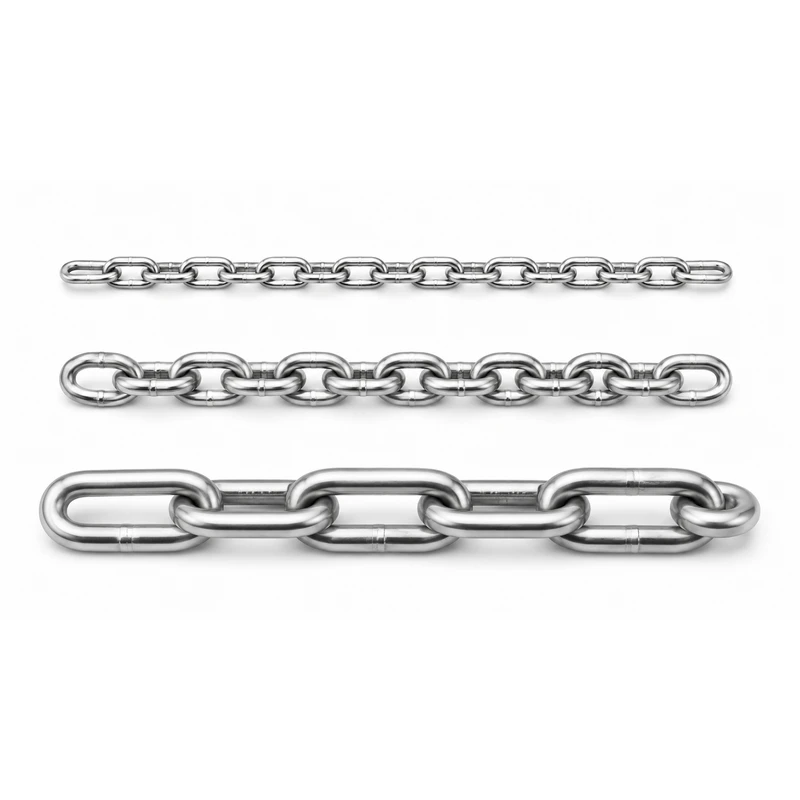
Good chain block storage starts with one rule: store the hoist unloaded, clean, and dry. Keep it where the body, hooks, and chains are protected from impact, contamination, and floor contact. Before the next lift, inspect the hoist and confirm that it operates normally.
These steps apply to a manual chain block, also called a hand chain hoist. Always follow the instructions for the exact model when they differ from this general guidance.
Chain Block Storage Checklist
- Remove the load and take the hoist out of service before storage.
- Wipe away dirt and moisture, and allow wet parts to dry completely.
- Check the load chain, hooks, latches, upper suspension fitting, housing, and hand chain for visible damage.
- Quarantine and identify any hoist that is damaged, has been overloaded, or has operated abnormally.
- Protect and lubricate only the points specified in the manufacturer’s manual.
- Store the hoist in a clean, dry area away from corrosive chemicals, salt spray, abrasive grit, heat sources, and vehicle traffic.
- Support the unit securely and keep both chains off the floor, untwisted, and free from tight knots.
- Record the storage location and inspection status so the correct unit can be traced.
- Inspect and function-check the hoist before returning it to service.
Step 1: Remove the Hoist from Service
Never store a chain block while it is supporting a load. Lower and disconnect the load using the normal operating procedure, then move the hoist to its designated storage location. Do not leave it hanging above a work area where it could obstruct other tasks or be struck by moving equipment.
If the hoist has been overloaded, shock-loaded, dropped, contaminated, or found to operate abnormally, do not return it to general storage as though it were ready for service. Mark it clearly, segregate it from serviceable equipment, and route it for evaluation under the site inspection and repair procedure.
Step 2: Clean and Dry the Hoist
Remove loose dirt from the housing, hooks, and chains with a clean cloth or soft brush. Wipe away water and allow the equipment to dry before covering it or placing it in a case. Trapped moisture around the load chain or inside a closed container can accelerate corrosion.
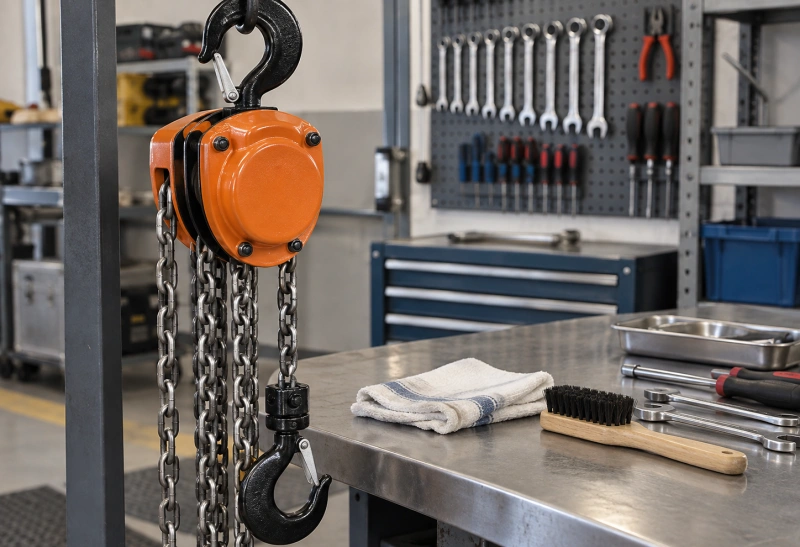
Do not use aggressive solvents, pressure washing, or chemical cleaners unless the manufacturer approves them for the exact model. A cleaner that attacks paint, plating, seals, or specified lubricant can damage the hoist while removing surface contamination.
Step 3: Check for Visible Damage
A storage check is not a substitute for the required inspection program, but it should identify obvious problems before the hoist is put away. Use the site’s chain block inspection checklist and the manufacturer’s manual for the full inspection scope.
Before storage, look for:
- load-chain links that are twisted, stretched, heavily worn, nicked, or corroded;
- upper or lower hooks that appear bent, opened, cracked, or unable to move as designed;
- missing or damaged hook latches;
- loose, cracked, or missing covers and fasteners;
- a damaged hand chain, chain guide, chain stop or end anchorage, or upper suspension fitting;
- an unreadable rated-load marking, identification tag, or warning label; and
- unusual resistance, chain jumping, noise, or abnormal brake behavior reported during the last use.
Do not straighten, weld, grind, or heat a damaged load chain or hook. Inspection, disassembly, and repair must remain within the limits set by the manufacturer and the responsibilities assigned to competent or qualified personnel.
Step 4: Protect the Load Chain as Specified
The load chain may require a light, even film of the lubricant specified for the hoist. The correct product, quantity, and application points depend on the model and service environment, so there is no universal “best” chain-block lubricant or fixed storage interval.
Keep lubricant away from brake friction surfaces unless the manufacturer explicitly instructs otherwise. For service intervals, approved lubricants, and maintenance responsibilities, use the chain block maintenance guide together with the model manual.
Step 5: Choose a Clean, Dry Storage Area
Select a location that keeps the chain block dry, identifiable, and protected from impact. The area should be away from leaks, standing water, corrosive chemicals, salt spray, welding spatter, abrasive dust, and uncontrolled traffic. Control access so equipment that has not been released for service cannot be removed inadvertently.
If a hoist must remain installed outdoors, use only the weather-protection and preservation measures permitted by its manufacturer. A cover can reduce direct exposure, but it does not change the environmental suitability of an indoor-rated hoist or make it suitable for rain, condensation, or a corrosive atmosphere.
Rack, Hook, Shelf, or Case: Which Storage Method Works?
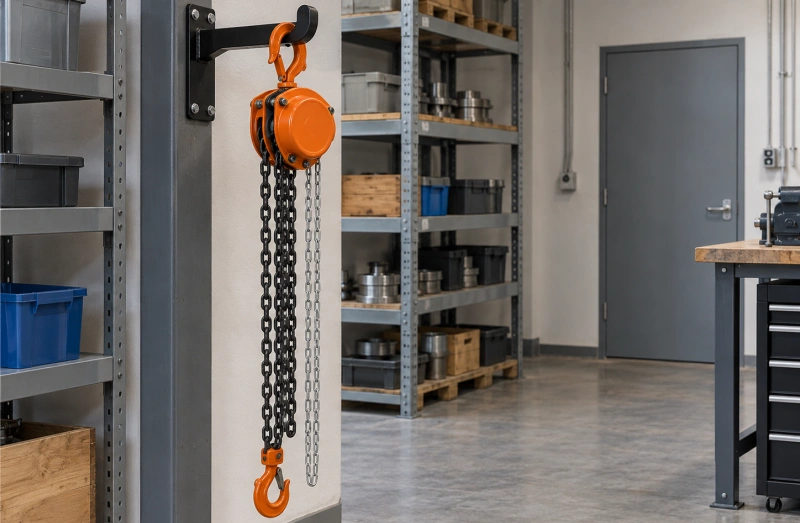
A designated rack, wall-mounted holder, hanging hook, shelf, cabinet, protective case, or purpose-designed stand can all work when the method matches the hoist’s self-weight, size, and suspension design. The essential requirements are secure support, protection from impact, and controlled chain storage.
| Storage Method | What to Check |
| Designated Rack or Hook | Support the unloaded hoist from its approved upper suspension fitting. The rack and its anchorage must safely support the equipment’s self-weight and prevent the unit from being dislodged. Do not support the hoist by the load chain or hand chain. |
| Shelf or Cabinet | Support the hoist body so the hooks and chains are not pinched or trapped under its weight. Use dividers or identification labels to prevent units from becoming mixed or damaged. |
| Protective Case or Container | Use a clean, dry case sized for the hoist. Dry the equipment first, avoid tight chain bends, and do not seal moisture, contaminated rags, or loose debris inside. |
| Portable Stand | Use a purpose-designed, stable stand only when its capacity, stability, and anchorage are suitable for the stored hoist. A lifting stand or tripod is not automatically suitable as a storage rack. |
The chain block’s rated lifting load is not the storage-rack rating. The rack supports the equipment’s self-weight, and its design, stability, and anchorage must be evaluated for that storage duty.
How to Organize the Load Chain and Hand Chain?
Keep the load chain clean, untwisted, and off the floor. Arrange it in loose, supported runs or in a chain container designed for the specific hoist; do not tie tight knots or force the chain into a small box. Keep the hand chain from tangling with the load chain, adjacent hoists, or walkways.
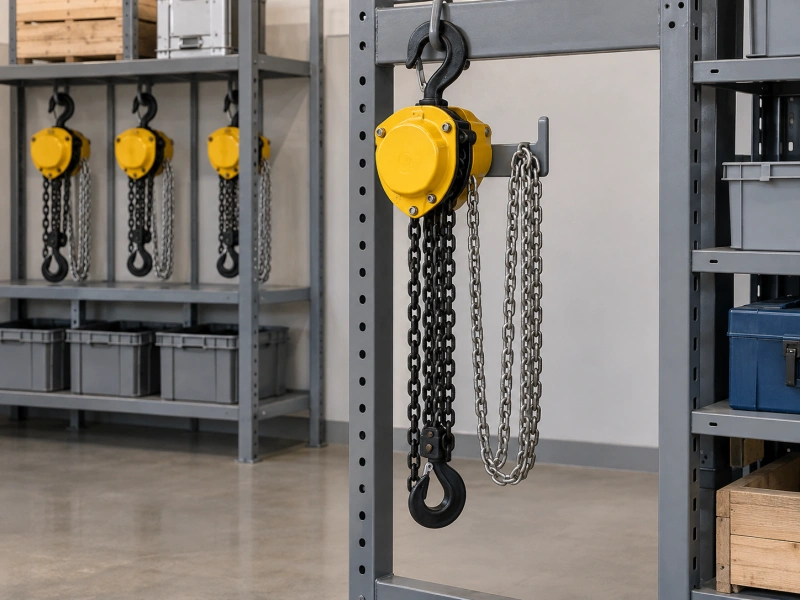
When a damaged part is difficult to identify, review the chain block components before recording the fault. A chain container manages loose chain; it does not replace a clean, dry storage location for the complete hoist.
Transporting a Chain Block Between Sites
Use a case, bin, or secured rack that prevents the hoist from sliding, falling, overturning, or being crushed in transit. Protect the hooks, latches, chain guide, and housing from impact. Do not drag the hoist by either chain, throw it into a vehicle, or place heavy items on top of it.
If rain, seawater, mud, concrete dust, or another contaminant reaches the hoist during transport, clean and assess it before storage. Record any incident that may trigger a more detailed inspection.
Returning a Stored Chain Block to Service
Before the first lift after storage:
- confirm the hoist identification, rated load, and inspection status;
- check the body, upper and lower hooks, latches, load chain, hand chain, upper suspension fitting, and end fittings;
- verify that the chains are correctly seated and reeved, untwisted, and free from damaging corrosion or contamination;
- operate the hoist unloaded through a short travel and confirm smooth chain movement and normal control response; and
- complete any additional inspection required after long storage, abnormal exposure, or a reported fault.
If the hoist fails a check or its condition is uncertain, keep it out of service. Use approved parts and procedures, and follow the site inspection program and the manufacturer’s manual. Where a repair assessment is needed, follow the boundaries in the chain block repair guidance.
Chain Block Storage FAQ
Can I Hang a Chain Block for Storage?
Yes, if the hoist is unloaded and supported from its approved upper suspension fitting on a designated rack or hook. The support and anchorage must be suitable for the stored unit’s self-weight, and the hoist must be protected from being dislodged. Never suspend it by the load chain or hand chain.
Can I Store the Complete Hoist in a Chain Bag?
Only if the bag or case is intended for the complete model and the hoist is clean and dry. A chain container fitted to a hoist is primarily intended to control loose chain; it is not automatically a storage case for the entire unit.
What Lubricant Should I Use Before Storage?
Use the lubricant and application points stated in the manufacturer’s manual. Do not substitute a general-purpose product without approval, and do not contaminate brake friction surfaces.
How Often Should a Stored Chain Block Be Inspected?
There is no single interval that applies to every hoist and environment. Follow the model manual, applicable rules, and the site inspection program. Inspect the hoist before service return, and require additional evaluation after long inactivity, adverse exposure, overloading, impact, or abnormal operation.
Does Proper Storage Replace Maintenance?
No. Storage helps control moisture, contamination, impact, and chain tangling. It does not replace periodic inspection, maintenance, or authorized repair.
Specify the Hoist and Storage Conditions Together
When selecting from our manual hoist range, provide the rated load, lift, suspension type, duty, operating environment, and planned transport and storage method. Send us your lifting requirements so the quotation and documentation can address the actual application.