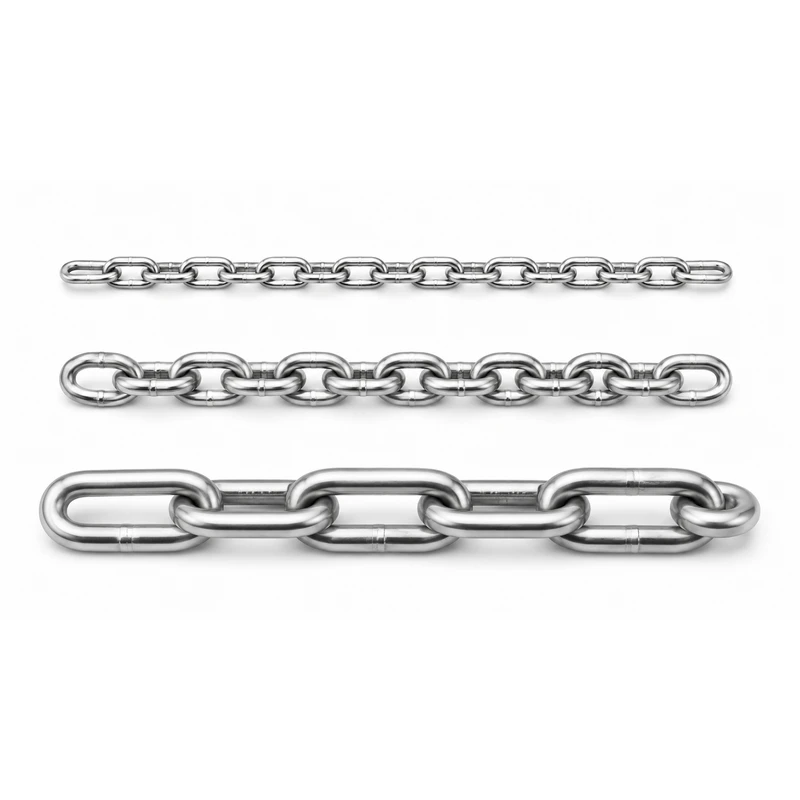
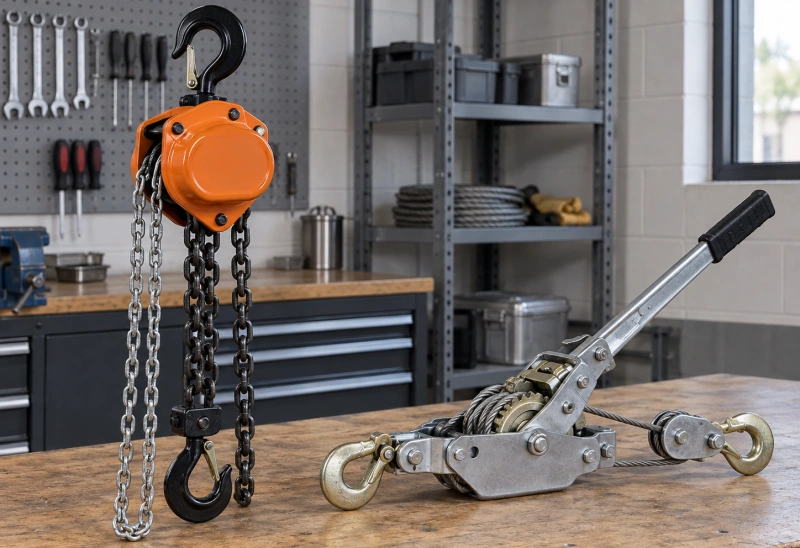
A manual chain hoist, also called a chain block or chain fall, is primarily designed to raise and lower a load by pulling an endless hand-chain loop. A cable-style come-along uses a reciprocating lever and wire rope for controlled pulling, tensioning, or positioning. Some come-alongs may be approved for lifting, but the nickname alone does not establish approval for lifting a suspended load.
This guide compares these two manual devices. It does not compare an electric or air-powered chain hoist, and it does not treat a chain lever hoist as a cable-style come-along. The correct choice depends on the exact marked rating, approved task, usable travel, headroom, operating effort, anchor or suspension points, environment, and model-specific instructions.
What the Names Mean?
“Chain hoist” is a broad term that can describe hand-operated, electric, or air-powered equipment. On this page, it means a manual hand chain hoist: the operator pulls an endless hand-chain loop, the gearing turns a pocketed load sheave, and calibrated load chain moves through the hoist.
“Come along” is a regional trade nickname for a portable, lever-operated pulling or hoisting device. It may use wire rope, chain, or web strap. This page uses the term for a cable-style hand puller. If the product has a lever handle and calibrated load chain, it is normally a lever hoist; use the separate comparison of a come along and lever hoist instead.
If you need the underlying hand-chain terminology first, read what chain blocks are and how they work.
Chain Hoist vs Come Along: Quick Comparison
| Selection Point | Manual Hand Chain Hoist or Chain Fall | Cable-Style Come Along |
| Primary task | Vertical lifting and lowering, as the exact model permits | Pulling, tensioning, and positioning; lifting only when specifically marked and approved |
| Operator input | Continuous pull on an endless hand-chain loop | Back-and-forth movement of a lever handle |
| Load medium | Calibrated load chain over a pocketed load sheave | Wire rope taken up, wound, or reeved through the pulling mechanism, depending on design |
| Direction | Normally suspended for vertical lifting; follow the approved mounting orientation | Often used for aligned horizontal or angled pulling; the approved direction remains model-specific |
| Rating to compare | Rated load or working load limit (WLL) marked on the hoist, as applicable | Approved pulling or hoisting capacity; never substitute breaking force |
| Lift or reach | Specified lift, plus hand-chain drop and load-chain tail clearance requirements | Usable pull or take-up, not simply the loose cable length |
| Headroom | Closed hook-to-hook distance, plus room for hand-chain operation | Body length, hook spacing, cable path, and lever sweep |
| Speed and effort | Continuous hand-chain movement; hand pull and speed vary with gearing, capacity, and number of chain falls | Short movement per lever stroke; reeving may trade travel for mechanical advantage |
| Installation | Rated suspension point, beam clamp, or trolley, as specified | Rated, aligned anchor points and a clear cable path |
| Environment | Confirm chain condition and lubrication requirements, corrosion limits, temperature limits, contamination limits, and any enclosure restrictions | Confirm wire-rope condition, corrosion limits, temperature limits, contamination limits, and termination requirements |
| Main limitation | Not automatically approved for pulling, side loading, or powered duty | A pulling rating does not establish approval for lifting a suspended load |
How a Manual Chain Hoist Works?
The operator pulls one side of the hand-chain loop. Internal gearing multiplies the input and turns the load sheave, which engages the calibrated load chain. In a conventional hand chain hoist, the load-holding brake controls movement and holds the load when hand-chain movement stops. Pulling the opposite side of the hand chain lowers the load through the designed mechanism.
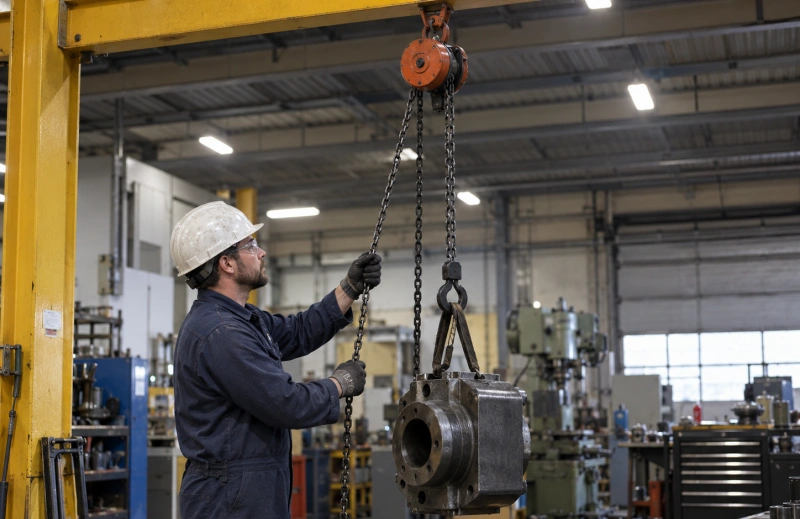
The hand chain is the control input; the load chain supports the load. Neither chain should be wrapped around the load as an improvised sling. The hoist, suspension, hooks, slings, and supporting structure must all be properly rated and aligned for the lift.
Review the available manual chain block models by rated load, lift, minimum headroom, hand pull, number of load-chain falls, chain size, and weight.
How a Cable Come Along Works?
A cable-style come along uses a lever and ratchet or pawl mechanism to take up wire rope and move a load in controlled increments. The exact design may use a drum, pulley arrangement, or another cable path. Single-line and multi-line configurations can change travel, line pull, and anchor reactions, so the product instructions must define the permitted setup.
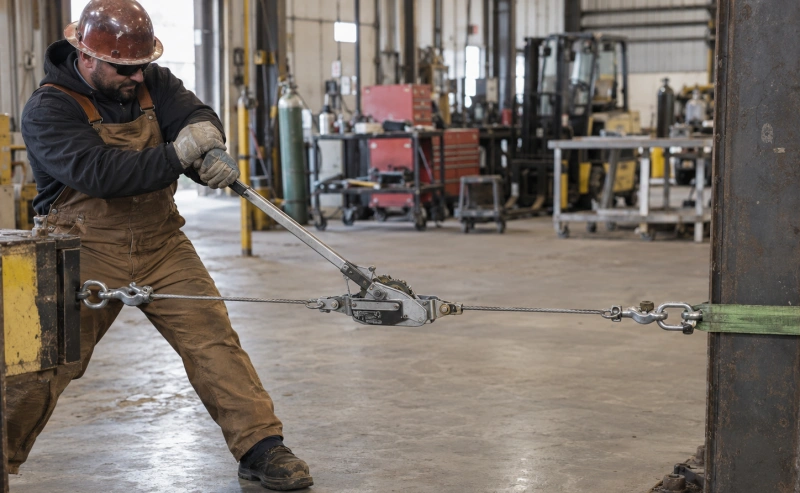
The release sequence is also model-specific. Never force a selector, release a loaded mechanism through a free-spooling or unloaded-release function, or assume that another brand uses the same controls. Keep hands clear of the mechanism and keep people out of the line of tension.
The Powerful Machinery come-along tool range includes ratchet and wire-rope puller formats. Confirm the exact model data before selecting one for pulling or lifting.
The Differences That Matter in Selection
Task and Operating Direction
Choose according to the approved task, not a simple vertical-versus-horizontal rule. A hand chain hoist is normally selected for controlled vertical lifting. A cable-style come-along is commonly selected for pulling or tensioning between aligned anchors. Some lever-operated rope devices may be rated for lifting, but that permission must be stated for the exact product and in its instructions.
Capacity and Rating Language
Compare only ratings that describe the same task. Rated load, pulling capacity, hoisting capacity, working capacity, and breaking force are not interchangeable terms. Breaking force is not a permissible working load. Determine the load or line pull, account for the effect of reeving, and verify the reactions at every hook, anchor, trolley, suspension point, and supporting structure.
Lift, Reach, and Headroom
A hand chain hoist is normally specified by lift and minimum headroom. A cable-style come-along may be specified by cable length, take-up or usable pull, and minimum or maximum hook spacing. Measure the start and finish positions, allow room for the body and controls, and confirm that the device can complete the movement without reaching an end-of-travel condition.
Speed and Operator Effort
A hand chain hoist can provide longer controlled vertical travel, but the operator may need to pull a substantial length of hand chain. A come-along moves the load a short distance with each lever stroke. Actual effort and speed depend on capacity, gearing, reeving, and equipment condition. Never add a cheater bar or handle extension, and never use handle or hand-chain effort as a weighing method.
Installation and Work Area
A hand chain hoist may be suspended from a fixed point, beam clamp, or trolley that is designed and rated for the load. It is not automatically stationary or unsuitable for field work. A cable-style come along normally requires two aligned, rated connection points and a clear cable path. For either tool, prevent side loading, hook-tip loading, twisting, and contact with sharp edges.
Environment and Inspection
Load chain and wire rope exhibit different damage modes. Inspect load chain for wear, elongation, gouges, bent or twisted links, corrosion, and poor engagement with the load sheave. Inspect wire rope for broken wires, kinks, crushing, birdcaging, corrosion, and damaged terminations. Also inspect hooks, latches, markings, fasteners, controls, load-holding or braking mechanisms, and supporting rigging. Apply the rejection criteria and inspection intervals specified for the exact product, service, and jurisdiction.
Which Tool Should You Choose?
| When the Job Requires… | Preferred Starting Point | Condition That Must Be Verified |
| Controlled vertical lifting with useful hand-chain reach | Manual hand chain hoist | Rated support, sufficient headroom, correct hand-chain drop, and an approved lifting setup |
| Aligned pulling or tensioning over short travel | Cable-style come along | Approved line pull, usable travel, anchor reactions, cable path, and release procedure |
| Compact chain-based pulling or positioning | Chain lever hoist | Use the lever-hoist-versus-chain-block guide; do not use this table as the selection basis |
| Frequent or repetitive powered lifting | Electric or air-powered chain hoist | Duty, power supply, controls, suspension, and environment are matched to the application |
| A tool identified only by the nickname “come along” | Do not select yet | Identify the load medium, manufacturer, model, marked rating, task, and operating instructions first |
For the chain-versus-lever decision, use the lever hoist vs chain block guide. For powered duty, compare an electric hoist with a manual hoist.
Powerful Machinery Specification Examples
The live chain-block category currently lists MINI and SK hand chain hoists from 0.25 t to 10 t, with standard lift, minimum headroom, and weight changing by model. A second table lists 0.5 t to 10 t examples with hand pull, number of load-chain falls, and load-chain diameter. These values demonstrate that “chain hoist” does not have one universal capacity, operating effort, or headroom.
The supplied catalogue separately lists SY hand pullers. Its table uses distinct fields for hoisting capacity, working capacity, breaking force, and steel-cable size. For example, the SY10 rows show 500 kg hoisting capacity and 1,000 kg working capacity.
The catalogue wording alone does not define the permitted lifting configuration, inspection criteria, or market-specific conformity status, so it cannot replace the current approved data sheet and manufacturer manual.
Do not compare a chain block rated load with a hand-puller breaking force, and do not publish a combined “typical capacity” range. Model-specific tables should remain on the relevant commercial pages; this comparison article should explain how to read and compare the ratings correctly.
Safety Boundaries
- Use only equipment with legible identification, the correct marked rating, and current model instructions.
- Determine the load or line pull and every support or anchor reaction before applying force.
- Seat attachments in hook saddles and align the hoist, puller, hooks, chain, cable, and rigging with the intended force path.
- Never exceed the marked rating, shock-load the device, use a cheater bar or handle extension, or stand in the line of tension.
- Never lift people, lift loads over people, or use a pulling-only device for lifting a suspended load.
- Never wrap a hoist load chain around the load, knot a chain, kink wire rope, or use the load-bearing medium as an improvised sling.
- Stop operation and inspect the equipment if you observe slipping, load drift, abnormal noise, binding, chain jumping, damaged cable, distorted hooks, unreadable markings, or unexpected operation.
Use the chain block inspection checklist before service and the chain block operating guide for the hand-chain-hoist operating procedure. The exact manufacturer manual takes precedence.
FAQ
Is a Chain Fall the Same as a Chain Hoist?
In common North American usage, “chain fall” often refers to a manual hand chain hoist or chain block. Because local terminology varies, identify the operating control, load chain, manufacturer, model, and marked rating before use.
Is a Come Along the Same as a Lever Hoist?
Sometimes. The nickname may describe a chain lever hoist, a wire-rope lever hoist, or a cable-style hand puller. If the product has a lever and calibrated load chain, treat it as a lever hoist and follow the model-specific instructions for that product.
Can a Come Along Lift Vertically?
Only when the exact model is marked and documented for that lifting application. Pulling capacity, working capacity, and breaking force do not establish approval for lifting a suspended load.
Can a Hand Chain Hoist Pull Horizontally?
Do not assume it can. A hand chain hoist is normally suspended for vertical lifting. Use it in another orientation only when the manufacturer expressly permits the setup, and the hoist body, hooks, chains, anchors, and rigging remain correctly aligned.
Which Tool Has More Capacity?
Neither type always has more capacity. Compare exact models using the rating for the same approved task. Capacity alone is not enough; travel, headroom, operating effort, support, and environment can rule out a device.
Can Either Tool Secure Cargo for Transport?
Not automatically. Use purpose-designed load-restraint equipment unless the exact hoist or puller is specifically identified and approved by the manufacturer for transport-restraint service.
Send the Application Data Before Selecting
Compare the manual hoist range using the maximum load or line pull, task direction, required lift or usable travel, headroom, connection points, environment, frequency of use, and destination-market documentation. If the correct product type remains unclear, send Powerful Machinery the application details for model-specific confirmation.