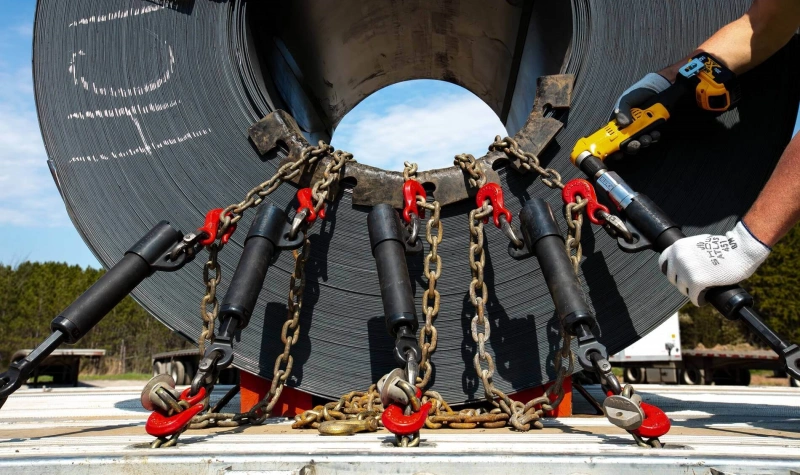
A chain binder is a hand-operated device that removes slack and applies tension to a transport chain used for cargo securement. It connects to two points on the chain and shortens the effective distance between them, helping the tie-down restrain equipment, steel, logs, pipe, and other heavy cargo on a truck or trailer.
The same tool is commonly called a load binder. You may also hear chain load binder, transport binder, or chain tensioner. In North American cargo-control work, “chain binder” and “load binder” usually describe the same product.
A binder does not replace the chain or determine whether the complete securement arrangement is adequate. The chain, hooks, connectors, anchor points, blocking, and vehicle structure all contribute to the system. The usable rating cannot exceed the limit of its lowest-rated component.
Key Takeaways
- A chain binder tensions a rated transport chain; it is not an overhead lifting device.
- Load binder and chain binder are normally interchangeable terms in cargo securement.
- Ratchet and lever binders create tension by different mechanisms and have different operating-clearance and release characteristics.
- The binder must match the chain size, chain specification, required working load limit, and tie-down arrangement.
- Product markings and instructions must be readable enough for the user to identify the model and confirm compatibility.
What Does a Chain Binder Do?
A transport chain can only restrain cargo effectively when it is selected, routed, and tensioned correctly. The binder takes up slack so the chain engages sooner if the load tries to move during braking, acceleration, cornering, or travel over an uneven road.
Depending on the securement method, the chain may run directly from a vehicle anchor to a designated point on the cargo, or it may pass over or around the cargo. Blocking, chocks, cradles, and dunnage may also be required. A binder provides tension within that arrangement; it does not replace a securement plan.
For U.S. interstate commercial transport, the FMCSA cargo securement rules apply performance, working-load-limit, and tiedown requirements to the complete securement system. Other countries and industries may use different rules, so the operator must check the requirements that apply to the load, vehicle, and route.
Is a Load Binder the Same as a Chain Binder?
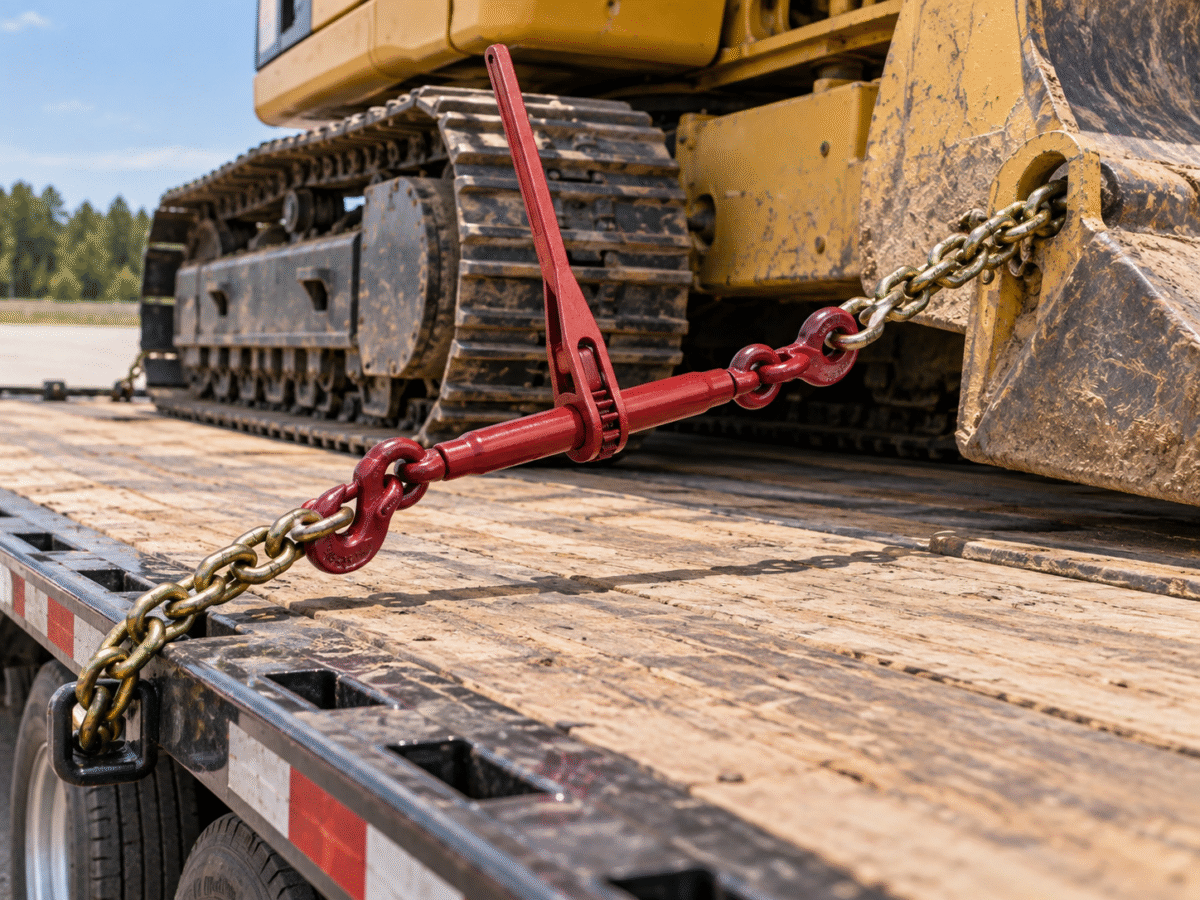
Yes, in most cargo-securement contexts. “Chain binder” emphasizes the chain being tensioned, while “load binder” emphasizes the cargo being restrained. The terms do not identify a specific operating mechanism. A supplier may offer ratchet binders, lever binders, and specialty designs under either name.
| Term | Usual meaning |
| Chain binder | General term for a device that tensions a transport chain |
| Load binder | The same type of device, with emphasis on cargo securement |
| Ratchet binder | A binder tightened in increments with a ratchet and threaded take-up |
| Lever binder or snap binder | A binder tightened by moving an over-center handle |
| Boomer | Informal trucking term often used for a lever binder |
| Chain tensioner | A broader term that may refer to a binder or another chain-tightening device |
Names vary, so a purchase order should state the binder type, compatible chain size and specification, required WLL, take-up, hook style, finish, and destination-market requirements.
Main Parts of a Chain Binder
Hooks or End Fittings
The end fittings engage the transport chain. Grab hooks are common because they engage a specified chain link. The hook opening and seat must match the chain size and link geometry. Never grind, heat, bend or force a hook to make an incompatible chain fit.
Binder Body
The body transfers force between the two ends. Its form depends on the design. A ratchet binder commonly uses a barrel, threaded shafts, and a ratchet mechanism, while a lever binder uses a handle and over-center linkage.
Handle
The handle provides mechanical advantage. Its length, sweep, grip, and position affect operating effort and the clearance required around the cargo and trailer. The operator must keep clear of the handle path and any chain movement that could follow a release of tension.
Ratchet Pawl and Gear
On a ratchet binder, the pawl controls the direction of the ratchet gear. Repeated handle strokes turn the threaded take-up and move the end fittings gradually. The mechanism must engage positively without slipping or binding.
Threaded Take-Up and Swivels
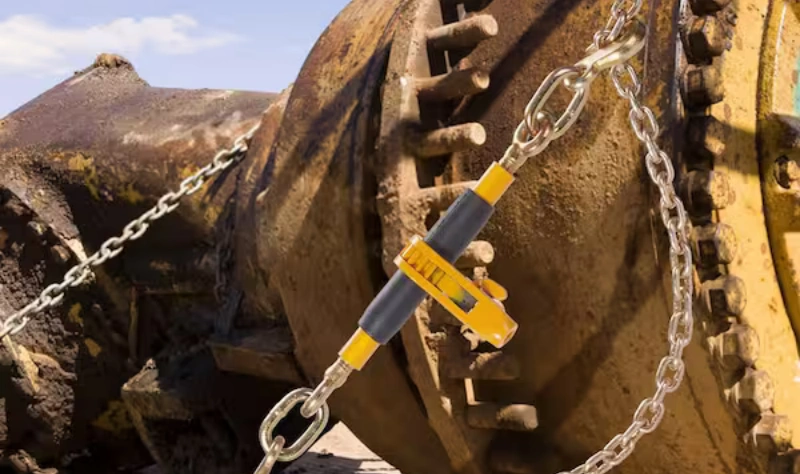
Threaded shafts change the effective binder length. Swiveling ends help the hooks align with the chain. Threads and pivots must be inspected and maintained according to the instructions for the exact model.
Identification and Rating Information
Useful product identification may include the manufacturer, model, compatible chain size, WLL, and traceability information. The exact marking requirement depends on the product and market. If the user cannot identify the binder or confirm its rating from reliable product information, the binder should be isolated until compatibility can be verified.
How Does a Chain Binder Work?
A chain binder converts movement at the handle into a shorter distance between its end fittings. That mechanical advantage increases tension in the connected chain.
A ratchet binder builds tension in small increments. Each handle stroke advances the ratchet and threaded take-up, allowing progressive adjustment and a controlled change in binder length.
A lever binder uses an over-center action. The operator sets the hook position and moves the handle through an arc until the mechanism passes its center point and locks under tension. The action is quick, but the handle and chain can store substantial energy. Safe body position and the manufacturer’s release method matter.
For a detailed functional comparison, review the types of chain binders. For operating steps, inspection points, and release precautions, use the guide on how to use a load binder safely.
Where Are Chain Binders Used?
Chain binders are used when a rated transport chain suits the cargo and the securement method. Common applications include:
- Excavators, loaders, tractors, skid steers and other mobile equipment secured to flatbeds or trailers
- Structural steel, fabricated components, plates and machinery with abrasive contact conditions
- Pipe and cylindrical products used with suitable bunks, cradles or chocks
- Logs, forestry equipment and agricultural machinery
- Construction materials and heavy attachments moved between yards and job sites
Chain is not automatically the right restraint for every load. Webbing or a purpose-built fixture may suit cargo that can be damaged by chain contact or requires another securement method. The load binder vs ratchet strap comparison explains the main system differences without treating either option as universally better.
What a Chain Binder Is Not Designed to Do?
| Tool | Primary function | Key distinction |
| Chain binder | Tensions transport chain for cargo securement | Usually remains installed as part of the tie-down during transport |
| Come-along | Pulls or positions a load over a distance | Uses a separate pulling mechanism and is selected for pulling work |
| Chain hoist | Raises or lowers a suspended load | Designed and rated for lifting |
| Turnbuckle | Adjusts length or tension in a fixed assembly | Uses a rotating body and threaded end fittings |
| Ratchet strap | Tensions synthetic webbing | Uses webbing rather than transport chain |
Do not use a standard transport chain binder for overhead lifting. Do not use it as a towing device or substitute for a come-along unless the manufacturer has specifically designed and rated the product for that purpose.
How to Read Chain Binder Capacity and Compatibility?
Start with the working load limit, or WLL, assigned to the exact binder model. WLL is the maximum service load stated by the manufacturer under the specified conditions. It is different from proof load and minimum breaking force. Selection and use must be based on WLL, not on a breaking-strength figure.
Next, confirm that the binder hooks are intended for the chain diameter and specification in the tie-down. A binder that accepts more than one nominal chain size may have different ratings or conditions for those sizes. Do not assume compatibility from appearance alone.
Then check take-up, open and closed dimensions, hook alignment, handle sweep, and the complete system rating. The chain, binder, end fittings, and anchor points must work together. If you are matching a binder to an existing chain, use the chain binder size guide and verify the final choice against the manufacturer’s current model data.
Buyers sourcing a common North American transport-chain option can also review the published Grade 70 transport chain information, while confirming the exact grade and rating required for the job.
Basic Safety and Inspection Boundaries
This definition page does not replace the instructions for the binder or a cargo-securement procedure. Before each use, the operator should confirm that the model and chain are compatible and inspect the binder for conditions that could affect operation or strength, including cracks, bending, deformed hooks, damaged threads, excessive corrosion, and a mechanism that will not engage correctly.
Operate from a stable position. Keep the body outside the handle path and clear of a tensioned chain. Do not side-load the binder, modify hooks, exceed the marked or documented WLL, or use an improvised handle extension. After initial tensioning, inspect the entire tie-down and recheck it at the intervals required by the applicable rules and company procedure.
For U.S. interstate commercial transport, 49 CFR 392.9 contains driver inspection and re-examination requirements, including stated exceptions. Operators in other jurisdictions must use the rules that apply to their work.
Why Can a Chain Become Loose After Tensioning?
A loose chain does not always mean the binder opened. Cargo may settle, tires or suspension may compress, dunnage may shift, or the chain may seat more deeply around contact points. Each change can reduce the original pre-tension.
If a tie-down loses tension, identify the cause before tightening it again. Check the cargo, anchors, blocking, chain, and binder as one system. Do not keep adding tension to compensate for a damaged component or an unstable load.
What to Specify When Buying Chain Binders?
A usable quotation request should identify:
- Binder type or preferred model
- Transport-chain diameter, grade or applicable specification
- Required binder WLL and complete tiedown requirements
- Take-up range and open or closed dimensional limits
- Hook or end-fitting configuration
- Finish, color and operating environment
- Quantity, destination and delivery target
- Required markings, packaging, inspection documents and test records
When product selection is the next step, compare Powerful Machinery load binders by model and published specifications. Distributors, fleet suppliers and private-label buyers can review the company’s chain binder manufacturer page for OEM and bulk-order inputs.
Chain Binder FAQ
What is a chain binder in simple terms?
It is a hand-operated device that tightens a rated transport chain in a cargo-securement system.
Is a load binder the same as a chain binder?
Usually, yes. Both names describe a device used to tension chain for cargo securement.
Can a chain binder be used with any chain?
No. The hook fit, chain diameter and specification, binder WLL, and complete tie-down arrangement must be compatible.
Can a chain binder be used for lifting?
A standard transport binder is not an overhead lifting device. Use equipment specifically designed, identified, and rated for lifting.
What is the difference between a ratchet binder and a lever binder?
A ratchet binder tightens in small increments through a ratchet and threaded take-up. A lever binder uses an over-center handle action. Their clearance, adjustment, and release characteristics differ.
How many chain binders are needed for one load?
There is no universal number. The answer depends on cargo weight, dimensions and shape, the securement method, tie-down arrangement, anchor points and applicable regulations.
How long does a chain binder last?
There is no universal service life. Use, loading, corrosion, impacts, maintenance, and storage affect condition. Inspection and the manufacturer’s criteria should determine whether it remains in service.
Good storage slows corrosion and protects threads and moving parts. See the chain binder storage guide for practical storage points.
Choose a Binder as Part of the Complete System
A chain binder removes slack and applies tension to the transport chain, but safe cargo securement depends on the complete arrangement. Confirm the chain and binder ratings, hook fit, anchor points, take-up, handle clearance, blocking, and the rules for the route before use.
For a model recommendation or commercial quotation, send your chain binder specification with the chain size and grade, required WLL, binder type, take-up, hook style, quantity, finish, destination, and document requirements.