To perform a safe wire rope clamp installation, you should follow these steps:
Select the correct clamp size for your wire rope.
Measure and prepare your wire rope for the loop.
Position the first clamp near the loop with the saddle on the live end.
Install additional clamps for larger ropes, spaced evenly.
Tighten all clamps securely with a torque wrench.
Inspect and retighten clamps after initial use.
Using certified wire rope clamps from Powerful Machinery reduces the risks shown below:
Issue | Percentage |
|---|---|
Clamps were replaced prematurely due to the environment | 40% |
Accidents from improper installation | 30% |
Wire rope failures from improper installation | 60% |
Follow each step carefully for a secure and reliable result.
Key Takeaways
Select the right clamp size for your wire rope to ensure a secure fit and prevent slippage.
Always position the saddle of the clamp on the live end of the wire rope for a strong grip.
Use a torque wrench to tighten clamps according to manufacturer’s specifications for safety and reliability.
Inspect wire rope clips regularly for wear and damage to maintain safety and performance.
Follow proper spacing guidelines for clamps to distribute loads evenly and prevent weak points.
Tools and Materials for Wire Rope Clamp Installation
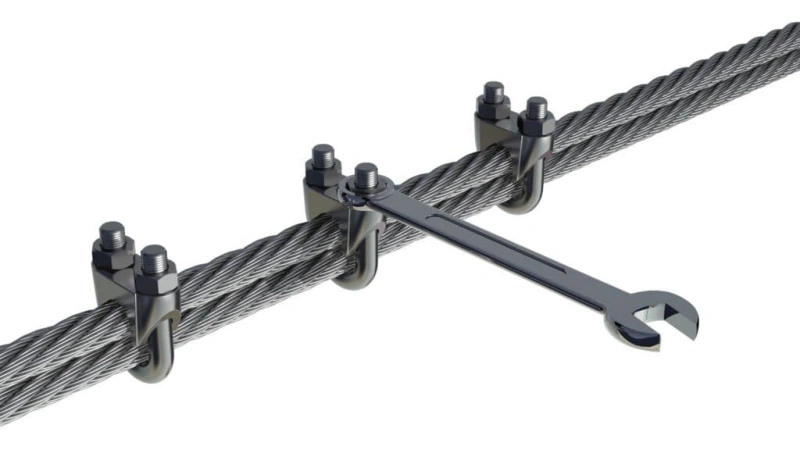
Essential Tools and Equipment
Before you install wire rope clips, gather all necessary tools and materials. You need to ensure that your installation meets industry standards and delivers reliable performance. Here is a checklist to help you prepare:
Wire rope clamps from Powerful Machinery
Wrench or socket set for tightening nuts
Tape measure for accurate measurements
Caliper or rope-diameter gauge to measure wire rope diameter
Safety gloves and eye protection
Inspect the wire rope for any signs of fraying or corrosion. Confirm that the clamp size matches the wire rope diameter. This step prevents installation errors and ensures a secure connection.
Tip: Always check the rope’s diameter with a caliper before selecting your clamp. This guarantees a proper fit and reduces the risk of slippage.
Choosing Powerful Machinery Wire Rope Clamps
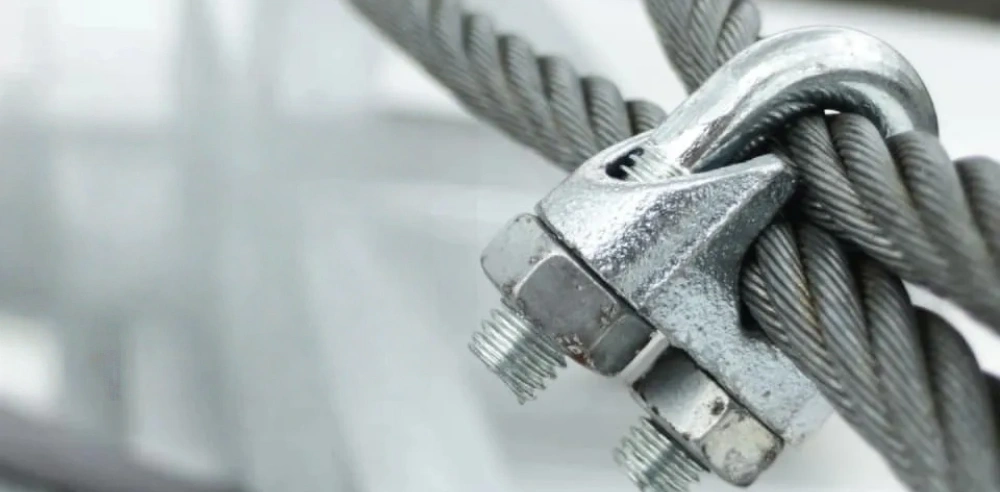
Powerful Machinery wire rope clamps stand out for their high-grade steel construction and corrosion resistance. You benefit from products that comply with ISO and OSHA safety standards.
These clamps offer easy assembly, allowing you to install wire rope clips in minutes without special equipment. The zinc-coated finish protects against harsh environments, making it ideal for marine, industrial, and construction applications.
Feature | Description |
|---|---|
High-grade steel construction | Resists abrasion and corrosion, suitable for harsh environments. |
Compliance with safety standards | Meets ISO 2408 and OSHA regulations, ensuring compliance and minimizing risks. |
Easy assembly | Installation can be completed quickly on-site. |
Versatility | Available in various finishes and custom designs. |
Choose clamps that match the wire rope diameter and ensure the Working Load Limit exceeds the rope’s Minimum Breaking Load. This step maximizes safety and reliability.
Selecting the Right Wire Rope Clips
You must select the correct types of wire rope clips for your application. Powerful Machinery offers several options, including DIN741 standard wire rope clips for light to medium-duty tasks and DIN1142 wire rope clips for heavy-duty rigging. Each type serves a specific purpose and delivers unique benefits.
Type of Wire Rope Clip | Description |
|---|---|
DIN741 standard wire rope clip | Widely used in Europe for light to medium-duty applications. |
DIN1142 wire rope clip | Heavy-duty cable clamp designed for higher strength and safer performance. |
When you install wire rope clips, always place the saddle on the live end and the U-bolt on the dead end. This technique prevents slippage and ensures a secure grip. Selecting the right types of wire rope clips and matching them to your wire rope diameter is essential for safe and effective installations.
Wire Rope Clamp Installation Steps
Preparing the Wire Rope
You must start every wire rope clamp installation by preparing the wire rope. This process ensures a safe and reliable connection. Follow these steps to get your wire rope ready:
Inspect the wire rope for any signs of damage, such as fraying, corrosion, or broken wires.
Replace the wire rope if you find any wear or defects.
Gather all necessary tools, including wire rope clips from Powerful Machinery, a wrench, a socket set, and a tape measure.
Confirm that the clamp size matches the wire rope diameter exactly.
Measure and prepare the wire rope for the intended loop or eye.
Tip: Always use a caliper to check the rope diameter. This prevents mismatched hardware and reduces the risk of slippage during use.
Positioning the Clamp and Saddle
Correct placement of the clamp and saddle is essential for a secure hold. When you install wire rope clips, follow these guidelines:
Place the saddle of the clamp on the live end of the wire rope. The live end carries the load.
Position the first clamp as close to the loop or thimble as possible.
For larger ropes, install additional clamps. Space them evenly along the dead end, about 6 to 8 times the rope’s diameter apart.
Make sure each clamp sits straight and does not twist the wire rope.
Note: The saying “Never saddle a dead horse” reminds you to always put the saddle on the live end.
Tightening Nuts and Ensuring Torque
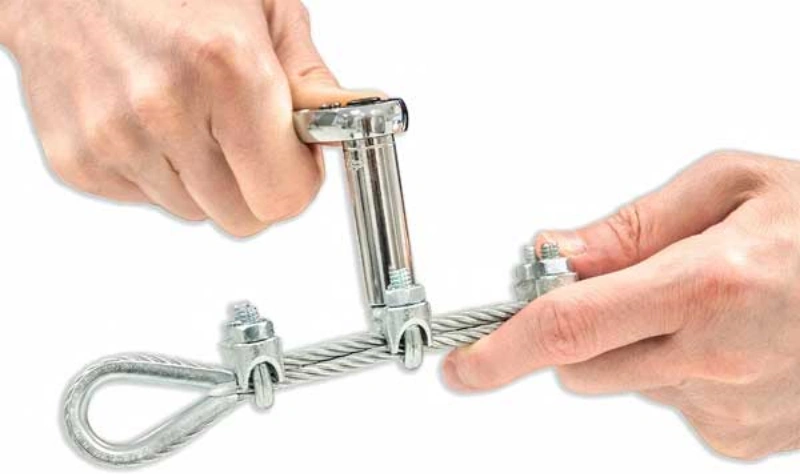
Proper tightening is critical for safety and performance. You must know how to properly torque wire rope clips to avoid slippage or failure. Use a torque wrench and follow the manufacturer’s specifications for each wire rope clamp installation.
ROPE DIAMETER | REQUIRED TORQUE (ft-lbs.) |
|---|---|
1/4″ | 15 |
1/2″ | 65 |
1″ | 225 |
1-1/2″ | 360 |
2″ | 750 |
Tighten the nuts evenly on each clamp.
Use the recommended torque for your wire rope diameter.
A properly torqued wire rope clip will hold the rope securely under load.
Always re-tighten the nuts after the first load is applied. This step ensures the connection remains secure.
Adding Additional Clamps and Spacing
You must use the correct number of wire rope clips for your application. The number depends on the diameter of your wire rope. Refer to the table below for guidance:
Wire Rope Diameter (mm) | Number of Clamps |
|---|---|
≤19 | 3 |
19-32 | 4 |
32-38 | 5 |
38-44 | 6 |
44-60 | 7 |
Space each clamp at least 6 times the rope’s diameter apart.
The last clamp should sit at least 140 mm from the end of the rope.
Even spacing distributes the load and prevents weak points.
Tip: Using the right number of wire rope clips and proper spacing is one of the most important steps to install a wire rope clip safely.
Final Inspection and Testing
After you install wire rope clips, you must inspect and test the assembly to ensure a secure connection. Follow these best practices:
Perform a visual check to confirm all clamps are tight and properly positioned.
Remove any clamps that show rust, cracks, or bent parts.
Replace hardware if you notice slippage after re-torquing.
Discard clamps that fail inspection or do not meet manufacturer standards.
Maintenance Practice | Frequency | Purpose |
|---|---|---|
Visual checks | Weekly | Early detection of issues |
Detailed inspections | Monthly | Comprehensive assessment |
Professional evaluations | Bi-annual | Expert analysis and assurance |
Note: Regular inspections and maintenance keep your wire rope clamp installation safe and reliable for long-term use.
If you want to know how to install wire rope clips step-by-step, always follow these procedures. You will achieve proper installation and maximize the safety and performance of your Powerful Machinery wire rope clips.
Wire Rope Clamp Installation Mistakes
When you install wire rope clips, you must avoid common mistakes that can compromise safety and performance. Following Powerful Machinery’s product guidelines helps you prevent these errors and ensures a secure connection.
Incorrect Clamp Position
Placing wire rope clips in the wrong position is a frequent mistake. You should always position the saddle on the live end of the wire rope. The live end carries the load, so the saddle must grip it securely. If you put the saddle on the dead end, the clamp will not hold the load, which can lead to slippage or failure.
“Never saddle a dead horse” serves as a critical reminder. Always place the saddle on the live end to prevent accidents.
Incorrect clamp position can cause:
Cable slippage, which may result in dropped loads.
Load failure, leading to serious accidents.
Increased wear and costly repairs.
Non-compliance with safety standards.
Wrong Clamp Size or Type
Choosing the wrong size or type of wire rope clips can weaken your assembly. If you use a clamp that is too small, it will not fit over the wire rope. If you use a clamp that is too large, it will not hold the rope tightly, causing slippage under load. Both mistakes can result in an insecure connection that may fail during operation.
You should always match the clamp size to the wire rope diameter. Refer to the manufacturer’s table to select the correct wire rope clips for your application.
Improper Nut Tightening
Many users make the mistake of tightening nuts by hand or with basic tools. This practice leads to uneven pressure and a weak grip. You should use a torque wrench to apply even pressure to the nuts on each wire rope clip. Follow the recommended torque values from Powerful Machinery to ensure a secure and reliable connection.
Tighten all nuts evenly.
Re-torque after the first load is applied.
Using Clamps on Plastic-Coated Wire Rope
You should not install wire rope clips directly over plastic-coated wire rope. The coating can compress or slip, reducing the clamp’s grip. If you must use wire rope clips on coated rope, strip the coating from the area where the clamp will sit.
This step ensures direct contact between the clamp and the wire strands, providing a secure hold.
Tip: Always follow Powerful Machinery’s guidelines for special applications to maintain safety and compliance.
By avoiding these mistakes, you ensure that your wire rope clips deliver maximum safety and performance in every installation.
Safety Tips and Troubleshooting
Safe Installation Practices
You must follow safety best practices when installing wire rope clips to protect both personnel and equipment. Always select certified clamps and clips from Powerful Machinery. These products meet international standards and help you avoid common hazards. Review the table below for essential safety practices:
Safety Practice | Description |
|---|---|
Load Capacity | Choose equipment rated for your load to prevent failures and accidents. |
Inspections | Inspect for wear or damage before each use to catch issues early. |
Load Distribution | Distribute loads evenly to avoid tipping or uneven stress. |
Qualified Personnel | Only trained workers should perform rigging and installation. |
Rated Load | Never exceed the rated load capacity to prevent sudden failures. |
Improper installation of wire rope clips can cause cable slippage, dropped loads, and serious injuries. You must always comply with safety regulations to avoid legal issues and equipment damage.
Inspecting for Wear and Damage
Regular inspection of wire rope clips and assemblies keeps your operation safe. Start by cleaning the rope to remove grease and grime. Move the rope a few feet at a time and check for these types of breaks:
Type of Break | Description |
|---|---|
Tension Break | Broken wire ends, coned and cupped, show overloading. |
Fatigue Break | Granular structure, caused by repeated bending. |
Abrasion Break | Knife-edge thinness, from contact with abrasive surfaces. |
Corrosion Break | Pitted surface signals hidden interior damage. |
Cut or Shear | Pinched or sheared ends, evidence of mechanical abuse. |
Core Protrusion | Core sticks out, often from shock loading or poor installation. |
You should perform daily visual inspections and document findings monthly. Use a caliper to measure the diameter and replace the rope if it falls below 95% of its original size. Monitor the overall length for any increases, which can indicate core failure.
Quick Adjust and Release Clamps
Powerful Machinery offers wire rope clips that allow for quick adjustments and easy release. These features help you make on-site changes without specialized tools. You can remove and reuse the clips, which is ideal for temporary or adjustable rigging setups.
Always strip plastic coatings from the rope before installing the clips to ensure a secure grip.
Troubleshooting Common Issues
You may encounter several issues during installation. Use these troubleshooting tips to resolve them:
Avoid bending the rope beyond its minimum bend radius to prevent internal damage.
Install wire rope clips with the saddle on the live end and use the correct number of clips.
Select hardware compatible with your wire rope material to reduce wear and corrosion.
Monitor tensioning with calibrated tools and recheck after load cycles. This highlights the importance of retorquing.
Inspect all end terminations for security.
Choose the right stainless steel grade for your environment.
Pre-inspect the wire rope for damage before installation.
Wind the rope correctly onto drums to prevent uneven wear.
Keep records of installation details for future maintenance.
By following these steps, you ensure your wire rope clips deliver reliable performance and long-term safety.
Conclusion
You achieve secure wire rope clamp installations by following each step carefully. Certified clamps from Powerful Machinery deliver strength and reliability. Always double-check your work and follow manufacturer guidelines for safety. Routine inspections and proper handling extend the life of your assembly.
Standard | Benefit |
|---|---|
ISO 2408 | Ensures steel wire ropes meet strict safety requirements |
OSHA | Promotes regular maintenance and minimizes risks |
Schedule regular inspections to spot wear or corrosion.
Store ropes in dry, cool areas.
Use clamps within rated capacity for ongoing reliability.
FAQ
How do you choose the correct wire rope clamp size?
You must match the clamp size to your wire rope’s diameter. Use a caliper for precise measurement. Reference the manufacturer’s sizing chart for accuracy. This ensures a secure fit and prevents slippage.
Can you reuse wire rope clamps?
Yes, you can remove and reuse wire rope clamps. Inspect each clamp for wear or damage before reinstallation. Replace any clamp that shows signs of corrosion or deformation.
How many wire rope clips do you need for a safe installation?
You need at least three clips for small-diameter ropes. Larger ropes require more clips. Always follow the manufacturer’s recommendations for the exact number. Proper spacing ensures load distribution and safety.
What is the difference between a wire rope clamp and a ferrule?
A wire rope clamp is adjustable and removable. You can use it for temporary or adjustable connections. A ferrule creates a permanent bond and offers higher strength for lifting applications.