When you compare bbb vs high test chain, your choice depends on your needs. High Test chains deliver superior strength and corrosion resistance, making them the top pick for marine and heavy-duty settings.
BBB chains suit lighter, budget-focused jobs and see steady use in niche markets. Powerful Machinery offers certified, high-performance chains for every application. You get reliable solutions backed by decades of expertise.
Key Takeaways
Choose High Test chains for heavy-duty tasks. They offer superior strength and durability for demanding jobs.
Select BBB chains for lighter marine applications. They are budget-friendly and suitable for moderate loads.
Always check the working load limit of the chain. Ensure it meets or exceeds the expected load for safety.
Match the chain type to your windlass. Compatibility is crucial for safe and efficient operation.
Regularly inspect your chains for wear and corrosion. Maintenance extends the lifespan and ensures reliability.
BBB vs High Test Chain: Quick Comparison
Key Specs and Differences
When you compare BBB vs a high test chain, you see clear differences in material, strength, and application. BBB chains use low-carbon steel and fit lighter marine tasks.
High test chains use high carbon steel and deliver greater strength for demanding jobs. You need to know these differences before you select a chain for your project.
Tip: Always check the working load limit and compatibility with your equipment before you choose a chain.
Here is a quick overview:
Chain Type | Material | Primary Application | Working Load Limit | Compatibility with Windlasses |
|---|---|---|---|---|
BBB Chain | Low Carbon Steel | Marine anchors, light mooring | 1,300 lbs to 6,900 lbs | No |
High Test | High Carbon Steel | Windlasses, towing, heavy mooring | 2,600 lbs to 13,000 lbs | Yes |
You get more strength per dollar-foot with a high-test chain. For example, a 5/16″ high test chain costs less and delivers higher breaking strength than a 3/8″ BBB chain.
High test chain offers over a ton of breaking strength per dollar-foot, while BBB chain provides about 1,670 pounds per dollar-foot. This cost advantage makes a high test chain a smart choice for heavy-duty applications.
BBB chains suit marine anchor setups where budget matters, and loads stay moderate.
High test chains fit windlass systems, towing, and cargo binding. You get higher strength and reliability.
You should select a high test chain when you need durability and compatibility with windlasses or mooring systems. BBB chains work well for lighter marine jobs and smaller boats.
Powerful Machinery Product Overview
Powerful Machinery gives you a full range of chain solutions for every need. You find certified products that meet international standards, including ISO, TUV Rheinland, and EURO CERT. The company guarantees that each chain meets or exceeds safety and performance requirements.
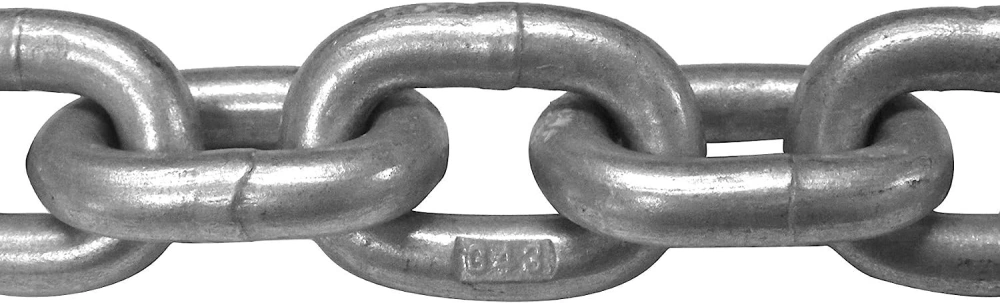
You can choose the G43 high test chain for demanding jobs. This chain uses high-carbon steel and meets ASTM and NACM standards. You get up to 50% more strength than standard Grade 30 chains.
The G43 high test chain fits towing, transport, load binding, and logging. You select from finishes like self-colored, bright, zinc-plated, or galvanized. The chain comes in sizes from 7mm to 22mm, with working load limits from 2,600 lbs to 24,500 lbs.
Powerful Machinery also offers marine-grade chains, including G4 and BBB types. These chains feature hot-dip galvanized finishes for corrosion resistance. You find chains marked every foot for windlass compatibility.
The company provides chains in grades G43, G70, G80, and G100, so you can match your strength needs to your application.
Note: Powerful Machinery’s chains are trusted by professionals in construction, marine, transportation, and cargo handling. You get reliable performance and certified quality for every project.
When you compare BBB vs the high test chain, you see that Powerful Machinery covers both options. You can select the right chain based on strength, material, and compatibility.
The company’s product range ensures you find a chain that fits your requirements, whether you need marine-grade corrosion resistance or heavy-duty towing strength.
Strength and Grades
Breaking Strength
You need to understand breaking strength when you select a chain for your project. Breaking strength shows the maximum force a chain can handle before it fails. This value helps you compare different chains and choose the right one for your application.
For example, a 5/16″ BBB chain has a breaking strength of 5,000 lb, while a 5/16″ high test chain offers 11,600 lb. You see a clear difference in strength as you move up in grade and material quality.
Here is a comparison of breaking strength for common chain sizes:
Chain Type | Size | Breaking Strength (BL) |
|---|---|---|
BBB | 5/16″ | 5,000 lb. |
BBB | 3/8″ | 10,600 lb. |
BBB | 1/2″ | 18,000 lb. |
BBB | 5/8″ | 27,600 lb. |
BBB | 3/4″ | 39,000 lb. |
High Test | 5/16″ | 11,600 lb. |
High Test | 3/8″ | 16,200 lb. |
You should always check the minimum tensile strength and ultimate tensile strength for each chain. These values help you confirm the chain will not fail under expected loads.
Chain Grades Explained
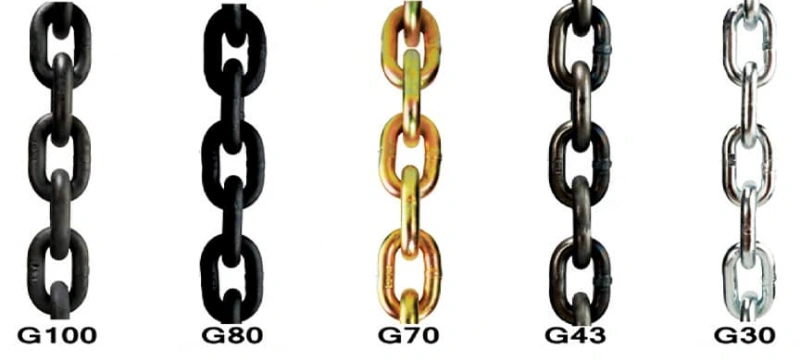
Chain grades tell you about the strength and recommended use for each chain. Grade 30 chains have the lowest strength and work best for light construction or agricultural jobs. Grade 43 chains offer moderate strength and fit towing, container securement, and marine use.
Grade 70 chains provide the highest strength in this group, made from heat-treated carbon steel. You use these chains for heavy load securement, trucking, and construction.
Chain Grade | Strength (Working Load Limit) | Recommended Applications |
|---|---|---|
Grade 30 | Low | Logging, light construction, agriculture, marine |
Grade 43 | Moderate (2,600–13,000 lbs) | Container securement, towing, marine |
Grade 70 | High (3,150–15,800 lbs) | Trucking, heavy load securement, and construction |
You see that as the grade increases, the chain’s breaking strength, minimum tensile strength, and ultimate tensile strength also rise.
Performance and Safety
You must consider performance and safety when you choose a chain. Always match the chain’s breaking strength to your load requirements. Never exceed the minimum tensile strength or ultimate tensile strength listed by the manufacturer. You protect your equipment and your team by using the right grade and size.
High test chains give you extra safety for demanding jobs. You get reliable performance and peace of mind when you select the correct chain for your application.
Dimensions and Compatibility
Link Size and Shape
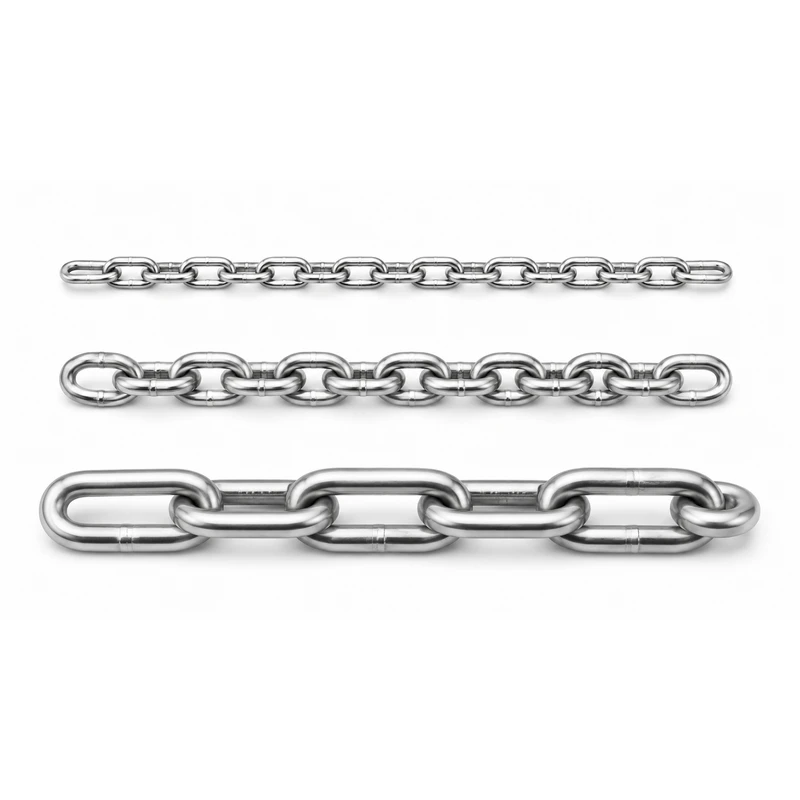
You must pay close attention to the size and shape of each chain link. The dimensions affect how the chain fits your equipment and how much weight it can handle. Short link chains provide better flexibility and fit most windlass gypsies.
Long link chains work well for general mooring but may not fit specialized windlass systems. The inside length and width of each chain link determine compatibility with anchors, hooks, and windlasses.
You should always check the manufacturer’s specifications for the chain you select. The right link shape ensures smooth operation and prevents jamming during heavy-weight lifts.
Chain Type | Link Shape | Typical Inside Length | Typical Inside Width | Best Use |
|---|---|---|---|---|
BBB | Short Link | 1.00″ – 1.20″ | 0.40″ – 0.50″ | Marine anchoring |
High Test | Short Link | 1.10″ – 1.30″ | 0.45″ – 0.55″ | Windlass, towing |
Windlass Fit and Standards
You need to match the chain to your windlass for safe and efficient operation. Many windlass models require specific chain dimensions. The Maxwell RC12-10 vertical windlass accepts High Test, BBB, or Proof Coil chains. You must ensure the windlass gypsy matches the chain type.
A gypsy designed for a 5/16″ High Test chain will not fit a 5/16″ BBB chain because the link shapes differ. Always check the windlass manual and chain standards before you make a selection. The chain must meet ASTM and NACM standards for strength and weight capacity.
Note: Matching the chain to your windlass prevents costly equipment damage and ensures you can lift the required weight safely.
Common windlass-compatible chains:
High Test chain
BBB chain
Proof Coil chain
Powerful Machinery Chain Options
Powerful Machinery offers a wide range of chain solutions for every application. You can choose chains in sizes from 7mm to 22mm, with link shapes designed for maximum compatibility. The G43 High Test chain provides superior strength and fits most windlass systems.
You select from finishes like galvanized or zinc-plated to resist corrosion. Each chain meets international standards and supports heavyweight loads. Powerful Machinery’s chains work for marine, towing, and cargo binding.
You find chains with marked links for easy measurement and windlass fit. The company’s chains guarantee reliable performance and safe weight handling in every environment.
Safety and Load Limits
Working Load Limits
You must understand the working load limit before you select a chain for your ground tackle system. The working load limit tells you the maximum load a chain can safely handle during normal use. Manufacturers test each chain to determine this value.
You should never exceed the working load limit because doing so increases the risk of failure. For example, a G43 high test chain offers a working load limit that ranges from 2,600 lbs to 24,500 lbs, depending on the size. BBB chains have lower working load limits, usually between 1,300 lbs and 6,900 lbs.
You need to match the working load limit to the demands of your ground tackle system. If your vessel is large or faces strong currents, you must choose a chain with a higher working load limit.
Always check the specifications for each chain. The working load limit ensures your chain can support the anchor, vessel, and environmental forces.
Tip: You should select a chain with a working load limit that exceeds the maximum expected load in your ground tackle system. This practice adds an extra layer of safety.
Safety Factors
You must consider several safety factors when you choose a chain for lifting or anchoring. The right chain grade reduces risks and improves performance. High-tensile steel chains provide superior strength and resist corrosion, making them ideal for marine environments.
You should select chains based on the operating environment. For salty waters, duplex stainless steel chains offer better protection.
Regular maintenance is essential. You need to inspect chains for wear, corrosion, or damage. This habit prevents unexpected failures and keeps your ground tackle system reliable. Vessel size and weight also affect your choice. Larger vessels require thicker chains to handle greater loads and windage.
Holding power requirements matter. Heavy vessels need chains with higher holding power to secure anchors.
Here is a summary of key safety factors:
Safety Factor | Description |
|---|---|
Chain Grade | Choose the right chain grade for your vessel to reduce risks. |
Material Strength | High-tensile steel chains offer superior strength and corrosion resistance. |
Environmental Conditions | Select chains based on operating environment, e.g., duplex stainless steel for salty waters. |
Regular Maintenance | Inspect chains for wear and damage to avoid unexpected failures. |
Vessel Size and Weight | Larger vessels require thicker chains for greater windage and forces. |
Holding Power Requirements | Heavy vessels need chains with greater holding power for secure anchoring. |
You improve the safety and reliability of your ground tackle system by following these guidelines. You protect your equipment and crew by choosing the right chain and maintaining it properly.
Use Cases: BBB vs High Test Chain
Marine and Anchoring Applications
BBB chains, made from low-carbon steel, primarily serve recreational boating needs. You often find them in small boats and light marine anchor setups where budget constraints matter. These chains are suitable for moderate loads and are easy to handle.
Conversely, high-test chains, constructed from high-carbon steel, excel in demanding marine environments. They are common in larger vessels and commercial operations. High Test chains are ideal for anchoring systems where strength and reduced weight are critical.
For example, on catamarans or smaller yachts, the lighter weight of High Test chains allows for smaller diameter chains that still maintain high strength. This makes them easier to handle and reduces the load on the anchoring system, providing safer and more reliable ground tackle.
Trucking, Towing, and Heavy Duty
In heavy-duty applications such as trucking and towing, the choice of chain becomes crucial. High-test chains are the preferred option because they offer superior strength and durability. They can handle the rigorous demands of securing cargo, towing heavy loads, or mooring large vessels.
Their high tensile strength ensures safety and reliability, especially when space and weight are limited. BBB chains, while suitable for lighter tasks, do not provide the same level of performance needed for these demanding ground systems.
When you need to secure or tow substantial loads, High Test chains deliver the necessary strength and safety margins.
Choosing the Right Chain for Your Needs
Selecting between BBB and High Test chains depends on your specific application. For recreational marine use, where costs and moderate loads are involved, BBB chains often suffice. However, for professional or heavy-duty ground tackle systems, High Test chains stand out due to their higher strength-to-weight ratio.
Consider the size of your vessel, the environmental conditions, and the load requirements. If space and weight are limited, High Test chains allow you to use smaller diameters without sacrificing strength. Always match your chain choice to your anchoring system and ground tackle needs to ensure safety and performance.
Material and Durability
Steel Types and Manufacturing
You need to know what makes a chain strong and reliable. Manufacturers use different steel types to create chains for various applications. Low-carbon steel forms the base for BBB chains. This material gives you flexibility and easy handling. High carbon steel creates high-test chains.
You get greater strength and toughness with this steel. Powerful Machinery uses advanced manufacturing methods to ensure each chain meets strict standards. The company tests every chain for tensile strength and durability. You can select chains made from alloy steel or stainless steel for specialized needs.
Alloy steel chains offer higher load capacity. Stainless steel chains resist corrosion and work well in harsh environments.
Note: Always check the steel type before you choose a chain. The right material ensures safety and performance.
Here is a quick comparison:
Steel Type | Used For | Strength | Corrosion Resistance |
|---|---|---|---|
Low Carbon | BBB Chain | Moderate | Good |
High Carbon | High Test Chain | High | Moderate |
Alloy Steel | Specialty Chain | Very High | Varies |
Stainless Steel | Marine Chain | High | Excellent |
Longevity and Corrosion Resistance
You want your chain to last as long as possible. Durability depends on both the steel type and the finish. Galvanized chains resist rust and corrosion. You can use these chains in marine or outdoor settings. Stainless steel chains provide the best protection against saltwater and harsh weather.
Regular maintenance increases the lifespan of any chain. Inspect your chain for signs of wear or corrosion. Replace damaged chains to keep your equipment safe.
Choose a galvanized chain for marine use.
Select stainless steel chain for maximum corrosion resistance.
Clean and inspect your chain often.
You get a longer service life when you select the right chain for your environment. Powerful Machinery offers chains with finishes like zinc-plated, bright, or hot-dip galvanized. These finishes protect the chain and keep it strong. You can trust these chains to perform in tough conditions.
Tip: Store your chain in a dry place when not in use. This simple step prevents rust and extends the chain’s life.
Powerful Machinery Advantages
Certified Quality and Standards
You want confidence in every chain you use. Powerful Machinery delivers that confidence by meeting strict international standards. Each chain goes through rigorous testing to ensure it meets or exceeds requirements like ISO9001, TUV Rheinland, and ASTM.
You can trust the G43 High Test Chain for its proven strength and reliability. This chain stands out because it meets ASTM and NACM standards, which means you get consistent performance in every application.
You find that Powerful Machinery’s chains offer more than just strength. The company focuses on quality at every step, from raw material selection to final inspection. You receive chains that pass demanding tests for tensile strength and durability.
The company’s commitment to quality ensures you get chains that perform in the toughest environments. You can select from a wide range of chains, including G43, G70, G80, and G100, all designed to deliver the highest level of quality and safety.
Note: Every chain from Powerful Machinery comes with full certification, so you know you are getting a product you can rely on.
Customer Success Stories
You see the real value of Powerful Machinery’s chains in the stories from satisfied customers. Ben Carter from Canada uses the G43 High Test Chain for logging and towing. He reports that the chain holds up under extreme loads and harsh weather.
David Müller from Germany relies on Powerful Machinery’s chains for marine projects. He appreciates the consistent quality and the peace of mind that come with certified products.
Liam O’Connell from Australia sources all his lifting chains from Powerful Machinery. He values the company’s attention to quality and the wide selection of certified chains.
These stories show that you can depend on Powerful Machinery for every chain need, whether you work in construction, marine, or transportation. You get chains that deliver strength, safety, and long-term value.
Tip: When you choose Powerful Machinery, you join a global community of professionals who trust the quality and reliability of every chain.
Conclusion
You make the best choice when you match the chain to your specific needs. High Test chains deliver superior strength and fit demanding jobs, while BBB chains suit lighter marine tasks.
Always check compatibility with your windlass and never mix different chain types or grades. Powerful Machinery provides certified chain solutions trusted worldwide. For more guidance, explore these helpful resources:
How to Tell Good Chain from Bad Chain: Safety Tips for Chain Shoppers
What Are the Different Grades of Chain?
Best Practices for Alloy Chain Sling Inspection and Chain Sling Use
Common questions include:
Can I connect different chain sizes or grades?
What happens if I mix different chain types?
How do I ensure compatibility with my windlass?
FAQ
What is the main difference between BBB and High Test chains?
You see BBB chains made from low-carbon steel for lighter loads. High Test chains use high carbon steel and deliver greater strength. Choose High Test for demanding jobs and BBB for moderate marine tasks.
How do I select the right chain size for my windlass?
You must check your windlass manual for compatible chain dimensions. Match the link size and shape to your windlass gypsy. Powerful Machinery offers chains marked for easy measurement and fit.
Are the Powerful Machinery chains certified for safety?
You receive chains tested to meet international standards like ISO9001, ASTM, and TUV Rheinland. Powerful Machinery guarantees certified quality for every chain, ensuring reliable performance and safety.
Can I use High Test chains for marine anchoring?
You can use High Test chains for marine anchoring. These chains provide superior strength and corrosion resistance. They fit larger vessels and commercial setups where reliability matters.