
Lever Hoists
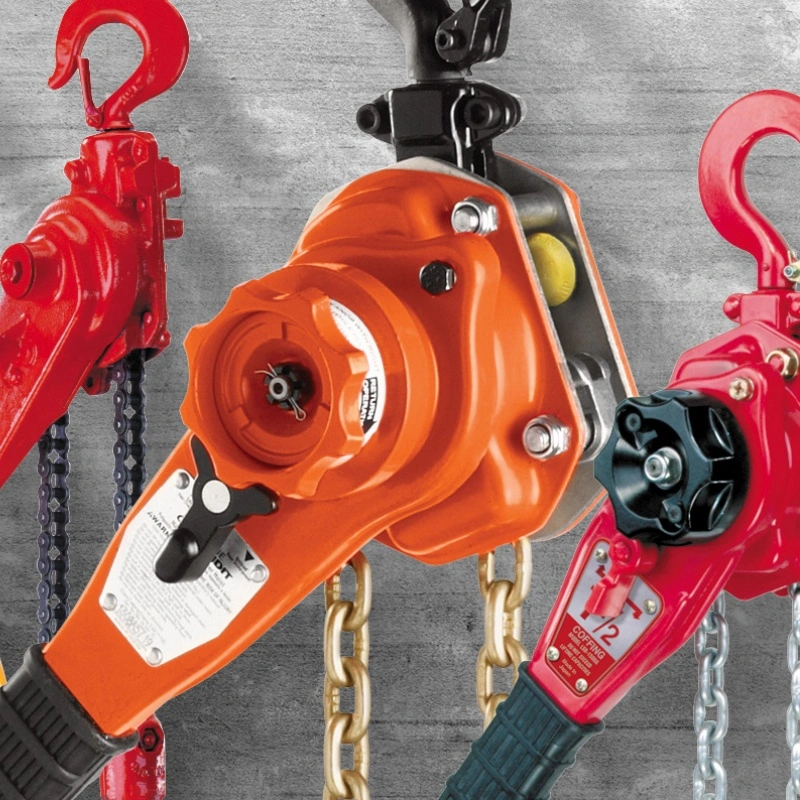
Powerful Machinery manufactures and supplies manual lever hoists for lifting, pulling, tensioning, and load-positioning work where compact equipment and close control matter. Our VA and VL series cover rated capacities from 0.75 to 9 t, with a 1.5 m standard lift across the listed models. Compare operating effort, load-chain size, dimensions, and net weight below, or browse our broader range of manual hoists before you request a quote.

Our lever hoists handle tough industrial loads reliably for long-lasting performance.
Protect your team and equipment with our hoists’ reliable safety mechanisms.
Get technical guidance and fast support directly from our experienced team.
Lift heavy loads efficiently with lever hoists engineered for accuracy and control.
Choose a Lever Hoist Series
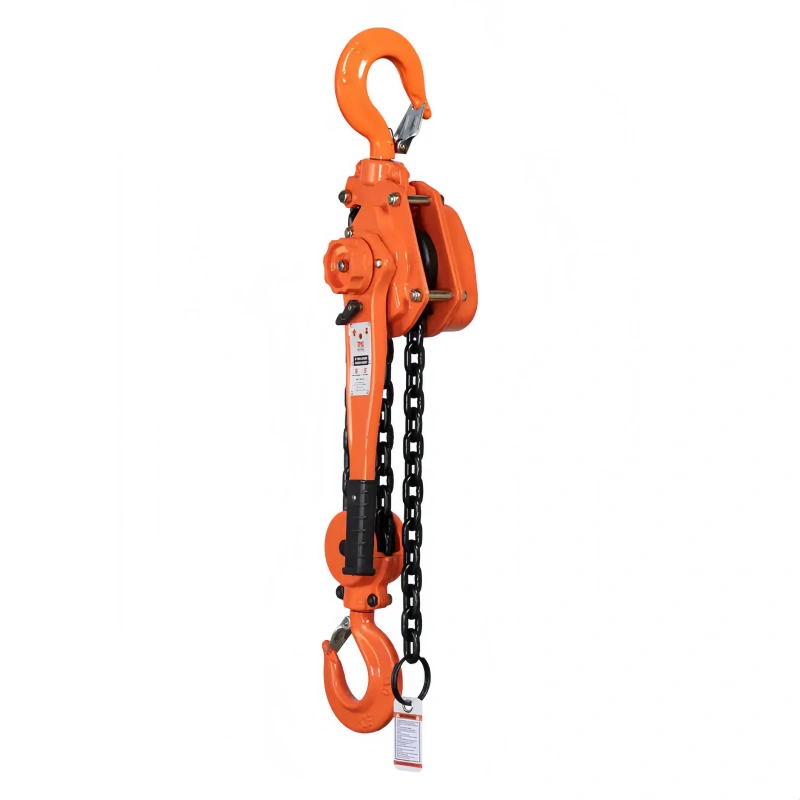
VA Series Lever Hoists
The VA range includes 0.75, 1.5, 3, 6, and 9 t models. Standard lift is 1.5 m, and the listed operating effort at rated capacity ranges from 140 to 360 N. Review the complete VA Series chain lever hoist page for its drawing, dimensions, packing measurements and extra-lift weight.
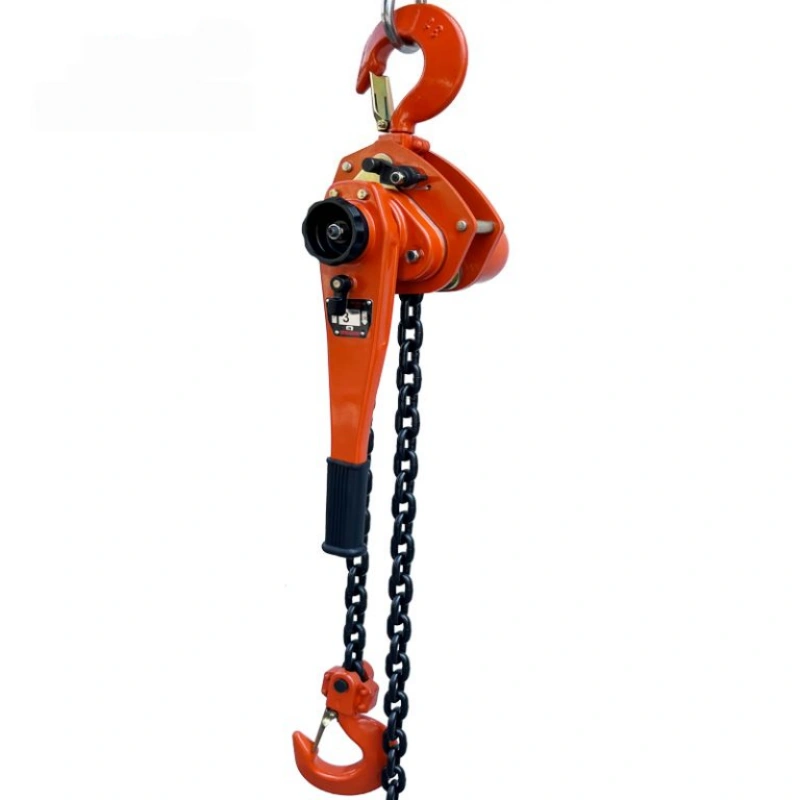
VL Series Lever Hoists
The VL range adds a 1 t option and covers 0.75, 1, 1.5, 3, 6 and 9 t rated capacities. Every listed model has a 1.5 m standard lift. Operating effort at rated capacity ranges from 148 to 357 N. The specifications below have been moved from the former manual lever chain hoist page so buyers can compare the full commercial range in one place.
Compact Lever Hoist Options
For lower capacities and a lightweight body, review the HSH-AL lever chain hoist, which has its own model-specific specification page. You can also compare the dedicated mini lever hoist range for compact lifting and positioning tasks. Confirm the required capacity, lift, environment and documentation for either option before ordering.
VA Series Specifications
| Specification | VA-0.75 | VA-1.5 | VA-3 | VA-6 | VA-9 |
|---|---|---|---|---|---|
| Rated capacity (t) | 0.75 | 1.5 | 3 | 6 | 9 |
| Standard lift (m) | 1.5 | 1.5 | 1.5 | 1.5 | 1.5 |
| Running test load (t) | 1.125 | 2.25 | 4.5 | 9 | 13.5 |
| Effort at rated capacity (N) | 140 | 220 | 320 | 340 | 360 |
| Load-chain falls | 1 | 1 | 1 | 2 | 3 |
| Load-chain diameter (mm) | 6 | 8 | 10 | 10 | 10 |
| Dimension A (mm) | 145 | 175 | 203 | 203 | 203 |
| Dimension B (mm) | 86 | 100 | 118 | 118 | 118 |
| Dimension C (mm) | 122 | 130 | 150 | 205 | 316 |
| Dimension D (mm) | 37 | 45 | 50 | 64 | 85 |
| Dimension H (mm) | 320 | 380 | 480 | 620 | 700 |
| Dimension L (mm) | 285 | 370 | 410 | 410 | 410 |
| Dimension K (mm) | 30 | 36 | 40 | 50 | 58 |
| Net weight (kg) | 7.5 | 11.5 | 21 | 31.5 | 47 |
| Packing L × W × H (cm) | 35.5 × 14 × 16.5 | 46.5 × 15.5 × 19 | 51 × 19 × 21.5 | 53 × 22 × 21.5 | 82 × 32 × 21.5 |
| Extra weight per metre of lift (kg) | 0.8 | 1.4 | 2.2 | 4.4 | 6.6 |
VL Series Specifications
| Specification | VL-0.75 | VL-1 | VL-1.5 | VL-3.0 | VL-6.0 | VL-9 |
|---|---|---|---|---|---|---|
| Rated capacity (t) | 0.75 | 1 | 1.5 | 3 | 6 | 9 |
| Standard lift (m) | 1.5 | 1.5 | 1.5 | 1.5 | 1.5 | 1.5 |
| Running test load (t) | 1.125 | 1.5 | 2.25 | 4.5 | 9 | 13.5 |
| Effort at rated capacity (N) | 148 | 197 | 216 | 336 | 345 | 357 |
| Load-chain falls | 1 | 1 | 1 | 1 | 2 | 3 |
| Load-chain diameter (mm) | 6.3 | 6.3 | 7.1 | 9 | 9 | 9 |
| Net weight (kg) | 6.6 | 6.6 | 11.65 | 21.1 | 23.7 | 54 |
| Dimension A (mm) | 155 | 155 | 170 | 198 | 198 | 198 |
| Dimension B (mm) | 128 | 128 | 147 | 182 | 230 | 350 |
| Dimension C (mm) | 310 | 310 | 350 | 470 | 590 | 740 |
| Dimension D (mm) | 240 | 240 | 365 | 365 | 365 | 365 |
| Dimension E (mm) | 28 | 32 | 36 | 47 | 49 | 65 |
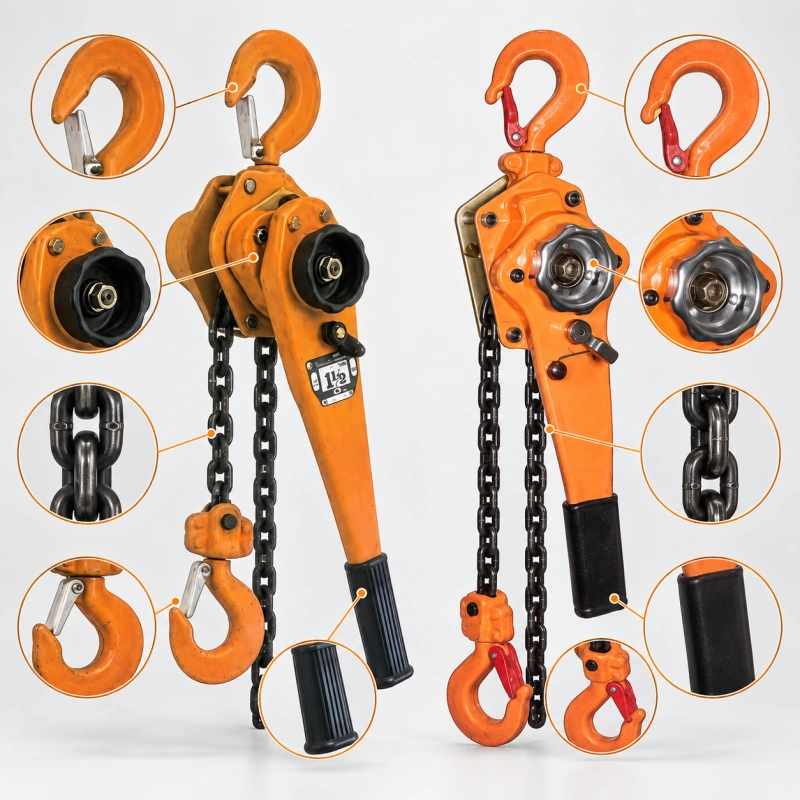
Verified VA and VL Features
The current product catalogue lists the following features for the VA and VL series:
- A double-pawl brake system and a Weston-style automatic load brake.
- Heat-treated steel plates, gears and shafts, forged upper and lower hooks with safety latches, and a high-tensile alloy steel load chain.
- A free-wheeling or idling mechanism for quick adjustment of the unloaded load chain.
- A 360-degree rotating handle for operation where clearance is limited.
- A stated 4:1 safety factor and fatigue testing at 1.5 times the working load limit for 2,000 cycles.
- EN 13157 listed as the applicable standard in the catalogue.
Confirm the exact model configuration, current declaration and required test documents for the destination market before placing an order. Free-wheeling is for unloaded chain adjustment only and must not be engaged while the hoist is carrying a load.
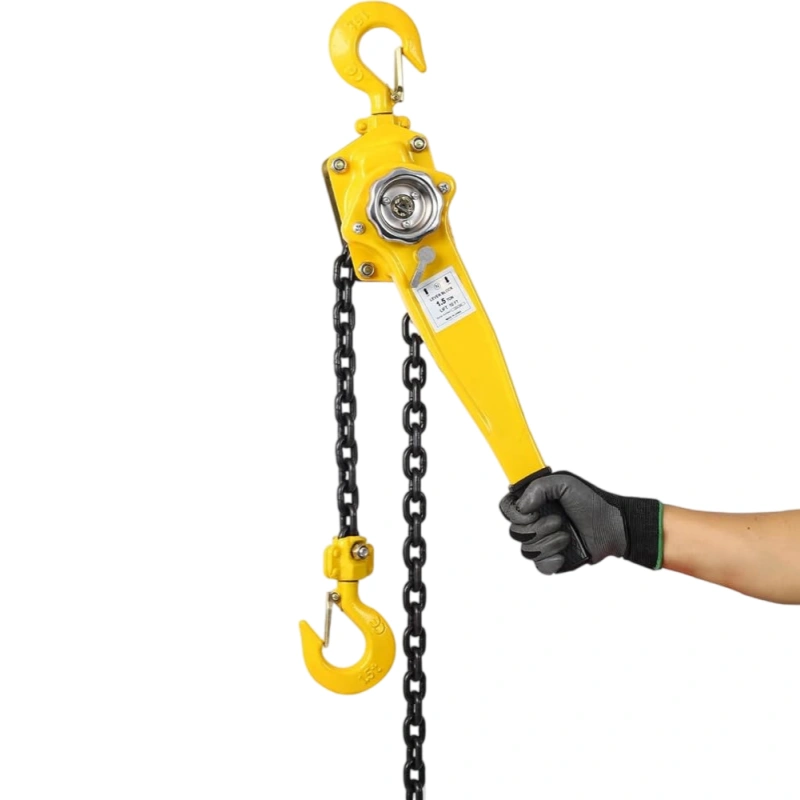
How to Select the Right Lever Hoist
- Rated capacity. Confirm the load, rigging arrangement and applicable site requirements. Never exceed the rated capacity marked on the selected hoist.
- Lift and reach. The listed VA and VL models have a 1.5 m standard lift. State any additional lift required in the RFQ.
- Operating effort. Compare the force required at rated capacity, particularly when the hoist will be used repeatedly or in restricted access.
- Headroom and clearances. Check the relevant drawing and dimensions against the anchor point, load path and available working space.
- Chain size and falls. Match the specified load chain and number of falls to the selected model. Do not substitute chain without written manufacturer approval.
- Environment and documentation. State temperature, moisture, corrosion, hazardous-area and regulatory requirements. We will confirm whether a suitable configuration and supporting documents are available.
If your work is mainly repetitive vertical lifting from a fixed overhead point, a hand chain block may be the better format. Review our practical lever hoist vs chain block comparison before selecting the operating mechanism.
Applications
VA and VL lever hoists are intended for controlled manual lifting, pulling, tensioning and load positioning. Typical requirements include equipment installation, machinery alignment, construction work, maintenance and field operations where electrical power is unavailable or the work area has limited access. The approved direction of pull, anchorage, rigging method and working angle depend on the selected model and its instructions; do not assume that every lever hoist is suitable for side loading or lifting at an angle.
Inspection and Safe Use
Before each use, confirm that the rated-capacity marking is legible and inspect the load chain, hooks, latches, housing and operating mechanism for visible damage or abnormal operation. Verify that the anchor point and rigging are rated for the task. Keep the load path clear, avoid shock loading and stop if the chain binds, the brake does not hold or any component appears damaged. Follow the supplied instructions and applicable local rules. See how to use a lever chain hoist and the lever hoist inspection checklist for the dedicated guidance pages.
Do not return a damaged hoist to service based on a general web checklist. Repairs, replacement criteria and post-repair testing should follow the model instructions and be handled by qualified personnel. Review the lever chain hoist repair and maintenance guidance for the correct escalation path.
Information to Include in Your RFQ
Send the following details so we can check the appropriate model and prepare an accurate quotation:
- Required rated capacity and quantity
- Standard or required lift height
- Lifting, pulling, tensioning or positioning task
- Available headroom and any dimensional limits
- Load description, attachment method and intended anchor point
- Expected use frequency and operating environment
- Required standard, declaration, inspection record or load-test document
- Branding, colour and packaging requirements
- Delivery country and requested trade terms
If you are also assessing production capability, testing, spare parts or OEM support, use our lever hoist manufacturer evaluation guide. To receive a model recommendation and quotation, send your lever hoist requirements.
Lever Hoist FAQs
What is a lever hoist?
A lever hoist is a portable manual device that uses a ratcheting lever, gearing, a brake and a load chain to lift, lower, pull or position a load. For a fuller explanation of its parts and working principle, read what a lever hoist is and how it works.
What capacities are available in the VA and VL series?
The VA series is listed at 0.75, 1.5, 3, 6 and 9 t. The VL series is listed at 0.75, 1, 1.5, 3, 6 and 9 t. Choose from the model specification, application and applicable requirements rather than capacity alone.
What is the standard lift?
The catalogue lists a 1.5 m standard lift for every VA and VL model on this page. State the required lift in your RFQ so the extra chain and resulting weight can be confirmed.
Can a lever hoist be used for horizontal pulling
A lever hoist may be suitable for pulling or positioning when the exact model instructions, attachment points and rigging arrangement permit it. Do not interpret “pulling” as approval for side loading, lifting people or using an unapproved anchor. Confirm the planned load path before use.
What standard is listed for the VA and VL series
The current Powerful Machinery catalogue lists EN 13157 for the VA and VL series. Ask us to confirm the current model documentation and any destination-market requirements before ordering.
What is the difference between a lever hoist and a chain block?
A lever hoist is operated with a ratcheting handle and is commonly chosen for short-stroke lifting, pulling, tensioning and positioning. A hand chain block uses a hand chain and is commonly selected for vertical lifting from an overhead support. The correct choice depends on the load path, duty, headroom and working area.
Have More Questions of Lever Hoists?
Have more questions about lever hoists? Our experts help you select the right model, understand load capacity, safety standards, maintenance, and certifications. Contact us for clear guidance and practical lifting solutions.