Lever hoists are manual devices used to lift, pull, and tension loads. Their main advantage is not simply that they are “small hoists.” A lever mechanism gives an operator a compact, portable way to apply controlled movement without an electric motor or compressed-air supply. That makes the design useful for field work, maintenance, installation, and load positioning where access, power availability, and setup time matter.
If you need the mechanism and component basics first, see what a lever hoist is and how it works. This article focuses on where lever hoists have a practical advantage, where the limits begin, and what to check before choosing a model.
Quick Answer: What Are the Main Advantages of a Lever Hoist?
| Advantage | Why it matters | Important qualification |
| No External Power Required | Useful where electricity or compressed air is unavailable or inconvenient. | The operator still supplies manual force; repetitive work can become tiring. |
| Compact and Portable | Do not describe this as unlimited “precision”; performance depends on the hoist, load, and rigging. | Weight and dimensions vary substantially by model and capacity. |
| Lifting, Pulling, and Tensioning Capability | One lever-hoist design can support several load-control tasks. | The exact orientation, anchor geometry and permitted use must follow the model instructions. |
| Controlled, Incremental Movement | The ratcheting action supports deliberate, step-by-step load movement. | Do not describe this as unlimited “precision”; performance depends on the hoist, load and rigging. |
| Useful in Confined Work Areas | A compact hoist body can fit where larger powered systems are difficult to install. | Check headroom, hook approach, handle sweep, and a suitable anchor before selection. |
| Fast Slack-Chain Adjustment on Equipped Models | Free-chaining can reduce setup time before the chain is loaded. | Use only as the manufacturer permits; never treat free-chaining as a loaded operating mode. |
| Broad Model Choice | Lever hoists are available from light compact models to higher-capacity industrial units. | Choose by rated capacity, lift, operating effort, environment, and documentation—not by capacity alone. |
1. Manual Operation Works Where Power Is Limited
A manual lever hoist does not need a motor, battery, power cord, or compressed-air line to create lifting or pulling force. For maintenance teams, construction crews, and field technicians, that can simplify deployment in temporary work areas and remote locations. It can also reduce the infrastructure needed for occasional lifts or positioning tasks.
The trade-off is manual effort. A lever hoist is not automatically the most productive choice for repetitive, high-cycle material handling. When the job requires frequent lifting, long travel, or sustained production throughput, a powered hoist may be more appropriate after the full application is assessed.
2. Compact Size and Portability Can Simplify Field Work
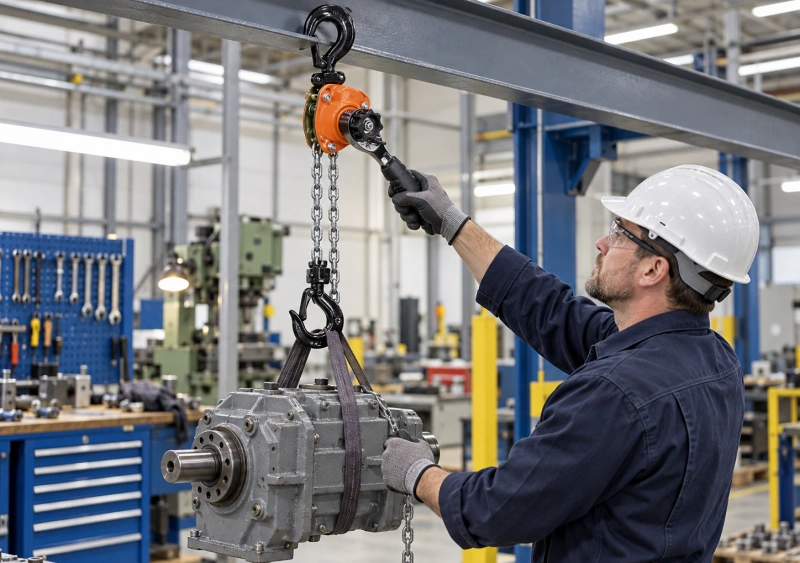
Lever hoists are available in compact designs that are practical to carry between work areas. The benefit is especially relevant when the hoist must be brought to the load instead of installed permanently above a workstation.
Use product-specific figures rather than a universal “typical weight.” For example, the HSH-AL lever chain hoist is an aluminum-body series with rated capacities from 0.25 to 1.5 t and published net weights from 2 to 6.3 kg. Those numbers describe that series only; larger lever hoists can be much heavier.
3. Lever Hoists Support Lifting, Pulling, and Tensioning Tasks
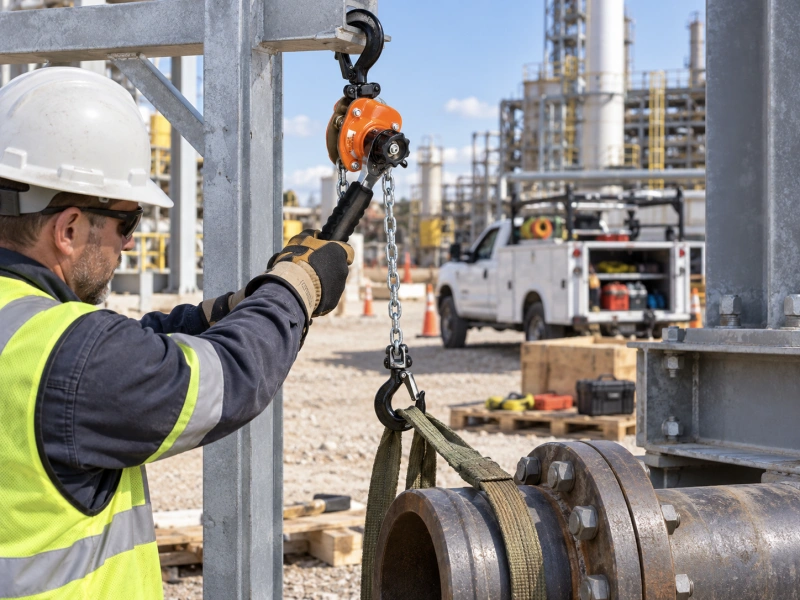
ASME lever-hoist standards describe these devices for lifting, pulling, and tensioning applications. In practice, that functional range is one reason lever hoists are used for equipment positioning, rigging adjustments, installation work, and controlled pulling as well as straightforward lifting.
That does not mean every lever hoist can be loaded at any angle or that a hook may be side-loaded. The hoist, support point, hooks, attachments, and load path must all be used within the exact model instructions and the applicable site rules. When a task involves non-vertical loading, confirm that the specific hoist and rigging arrangement are approved for it before use.
4. Ratcheting Operation Gives Deliberate, Incremental Control
The lever is moved through repeated strokes rather than through a continuous powered motion. This allows the operator to advance the load in deliberate increments, which can be helpful when aligning equipment, taking up tension, or making small positioning corrections.
The brake and ratchet mechanisms are part of the load-control system, but they should not be described with absolute terms such as “failsafe.” The operator must stay within rated capacity, use the correct loading geometry, and stop work if the hoist does not operate normally.
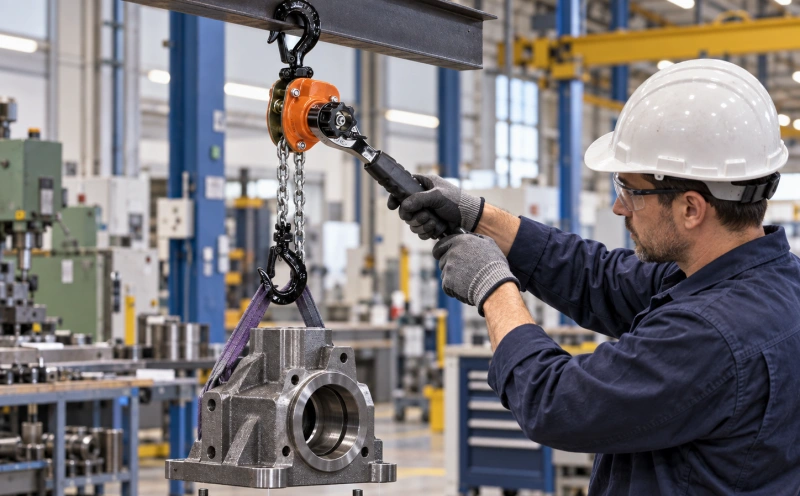
5. Compact Geometry Can Help in Restricted Access
A lever hoist can be useful where there is not enough room for a larger powered hoist installation. The important selection dimensions are not only the overall body size. Check minimum hook distance (headroom), handle length and swing clearance, hook opening, available lift, and whether the operator can work the lever without contacting the structure or load.
This is why “compact” should be treated as an application advantage, not a promise that every lever hoist fits every confined space.
6. Free-Chaining Can Speed Setup on Models Designed for It
Many lever chain hoists include a free-chaining or free-wheeling function that lets the operator position slack chain more quickly before the chain is placed under load. It can reduce repetitive lever strokes during setup and is particularly useful when the hook needs to be brought to the load efficiently.
Free-chaining is model-specific and must be used only under the conditions stated by the manufacturer. It is not a way to release or reposition a loaded chain. If the selector, brake, or chain does not move as expected, stop and follow the product manual rather than forcing the mechanism.
7. The Category Covers Both Lightweight and Higher-Capacity Models
Lever hoists are not limited to one small capacity range. Powerful Machinery’s VA and VL series, for example, include models up to 9 t, while compact HSH-AL models cover lower capacities. This range gives specifiers room to choose between portability, operating effort, dimensions, and rated capacity instead of assuming that all lever hoists are “light-duty.”
For current rated capacities, operating effort, and dimensional data, use the current lever hoist range rather than copying generic capacity limits from an informational article.
Steel vs Aluminum Lever Hoist Bodies: What Actually Changes?
Search data for this page shows clear interest in steel-versus-aluminum construction. The useful answer is more nuanced than “aluminum is better” or “steel is stronger.” Body material is only one part of the complete hoist design.
| Selection point | Aluminum-Body Design | Steel-Body/Steel-Frame Design |
| Weight | Can reduce unit weight in a purpose-designed model, which may improve portability. | May be heavier depending on design, capacity and construction. |
| Rated capacity | Must come from the complete model rating; body material alone does not establish WLL. | Same rule: use the nameplate/specification, not material assumptions. |
| Impact / durability | May be heavier depending on design, capacity, and construction. | Do not assume “steel = indestructible”; evaluate the complete hoist and service conditions. |
| Environment | Corrosion and temperature suitability depend on materials, coatings, lubrication and documentation. | Environmental suitability is likewise product-specific. |
| Best comparison method | Compare like-for-like rated models using weight, dimensions, operating effort, chain, hooks, brake, and documentation. | Use the same criteria; avoid marketing-only material comparisons. |
A useful QDP example is the HSH-AL lever chain hoist, which publishes an aluminum body and net weights of 2–6.3 kg across its listed 0.25–1.5 t models. QDP’s VA Series chain lever hoist is a different design and capacity range. These pages are useful product examples, but they are not a controlled, like-for-like material test. Do not claim a universal service-life or strength advantage from body material alone.
When Are Lever Hoists Especially Useful?
- Intermittent lifting or positioning where installing a powered hoist would add unnecessary infrastructure.
- Field maintenance and construction tasks where the hoist must be carried to the work area.
- Load alignment and tensioning that benefit from deliberate manual movement.
- Restricted-access locations where body size, headroom, and handle clearance can be matched to the available space.
- Applications without a convenient electrical or pneumatic power source.
When Might Another Hoist Be the Better Choice?
The advantages above have limits. A lever hoist may be a poor fit when the process requires high-cycle operation, frequent long lifts, automated movement, or sustained production throughput. Manual effort also becomes more significant as the operating demand increases.
If the real decision is between a lever hoist and a hand chain block, use the dedicated lever hoist vs chain block comparison. Keeping that comparison on one URL prevents this advantages article from competing with a separate search task.
How to Choose a Lever Hoist for Construction or Maintenance Work?
- Confirm the load weight and choose a hoist with an adequate rated capacity. Do not use an unknown load or rely on a guessed weight.
- Specify the required lift or reach, minimum hook distance (headroom), and the available space for lever movement.
- Confirm whether the task is lifting, pulling, tensioning, or positioning, and verify that the exact loading direction and rigging geometry are permitted by the model instructions.
- Compare operating effort, hoist weight, and handling requirements. A lighter body is useful only if the complete rated model still matches the application.
- Check the work environment: temperature, moisture, corrosive exposure, contamination, and outdoor service may require model-specific materials, lubrication, or protection.
- Review documentation for the exact model, including applicable standards, inspection instructions, replacement parts, and service support.
- Plan inspection and maintenance before the hoist enters service. Do not wait for abnormal operation to establish a maintenance process.
For a broader choice between lever and hand-chain equipment, review QDP’s manual hoists category. For detailed model selection and RFQ data, use the lever hoist range.
Safety Boundaries That Should Not Be Hidden by the “Advantages”
A benefit-focused article still needs clear operating boundaries. Never exceed the rated capacity, never use damaged or malfunctioning equipment, and do not assume that a lever hoist is suitable for personnel lifting. ASME HST-3 specifically excludes hoists used for lifting or supporting people from its normal scope.
Before use and at the intervals required by the applicable instructions and rules, inspect the equipment and remove it from service when defects are found. Use the lever hoist inspection checklist for the inspection topic, and refer service questions to qualified personnel using the lever chain hoist repair guidance rather than attempting undocumented repairs.
FAQ
What Is the Biggest Advantage of a Lever Hoist?
The main advantage is the combination of manual operation, compact size, and controlled lifting/pulling capability. That can make a lever hoist practical where power is unavailable, access is limited, or a load needs deliberate positioning. The actual advantage depends on the rated model and the task.
Can a Lever Hoist Pull Horizontally?
Lever hoists are used for pulling and tensioning as well as lifting, but “horizontal pulling” does not mean every loading angle or hook side load is acceptable. Confirm the exact model instructions, support point, and rigging geometry before applying load.
Is an Aluminum Lever Hoist Better Than a Steel Lever Hoist?
Not automatically. An aluminum-body design can reduce unit weight, which may improve portability, but body material alone does not determine rated capacity, safety, durability, or environmental suitability. Compare complete model specifications and documentation.
Do All Lever Hoists Have Overload Protection?
No. A load limiter or slip clutch is a model-specific feature. Do not assume it is present unless the manufacturer’s documentation for the exact hoist confirms it. The operator must still know the load and stay within the rated capacity.
What Is the Safest Lever Hoist?
There is no single universally “safest” lever hoist. Safety depends on selecting a correctly rated and documented model, using it within its intended application, inspecting it as required, maintaining it correctly, and using proper rigging and operator practices.
Can a Standard Lever Hoist Lift People?
Standard industrial lever hoists covered by ASME HST-3 are not intended for lifting or supporting people. Personnel lifting requires equipment and procedures specifically designed and approved for that purpose under the applicable rules.
Which Standards Apply to Lever Hoists?
In the United States, ASME B30.21 addresses lever-hoist construction, installation, operation, inspection, and maintenance, while ASME HST-3 establishes performance requirements for lever hoists and is used together with B30.21.
Other markets may use different requirements. QDP’s VA/VL catalogue lists EN 13157; confirm the exact ordered model and its documentation rather than applying one standard claim to every product.
Conclusion
Lever hoists are valuable when a job needs portable, manually powered load control for lifting, pulling, tensioning, or positioning. Their real advantages are strongest when the equipment is correctly matched to the load, space, operating direction, and work environment. Avoid choosing by a generic capacity range or by body material alone.
If you are ready to move from the general advantages to an actual specification, compare the current lever hoist range and provide the required capacity, lift, available headroom, application, environment, and documentation needs with your inquiry.