A manual chain block looks compact from the outside, but its lifting action depends on a matched set of load-bearing, drive, braking, and guiding components. If you are new to the equipment, start with what a chain block is. This guide focuses on the names and functions of the parts inside and around a typical hand-chain-operated hoist.
The two chains have completely different functions. The hand chain is the operator’s input: pulling it turns the hand wheel and gear train. The load chain carries the suspended load and passes over a pocketed load sheave. A mechanical load brake controls lowering and holds the load when hand-chain movement stops. Hooks or other approved suspension fittings connect the hoist to the support and the load.
Design details vary by model, rated capacity, and number of load-chain falls. Use this overview to identify the assemblies, then check the manual, parts list, and nameplate for the exact manual chain block model in service.
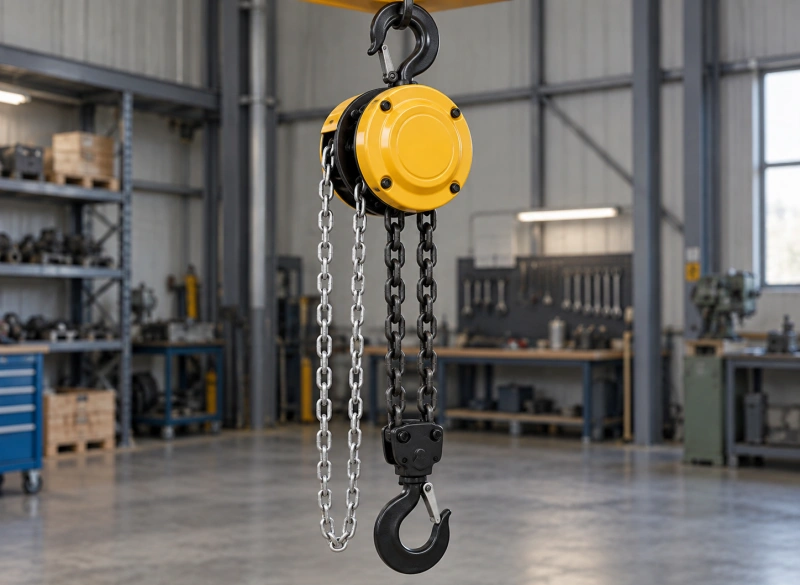
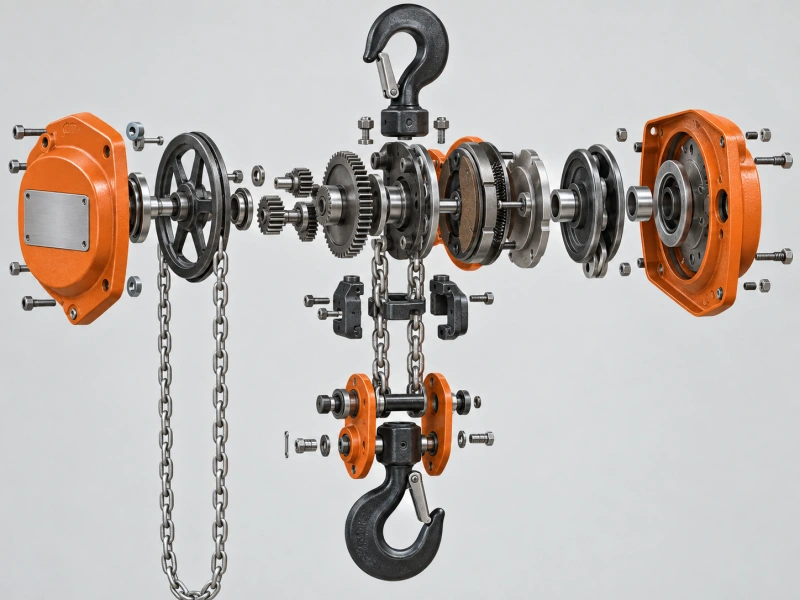
Main Parts of a Chain Block
| Component | What It Does |
| Top Hook or Suspension Fitting | Connects the hoist body to a suitable support, trolley, or approved suspension point. |
| Housing, Covers, and Side Plates | Align and protect internal assemblies. They are structural parts of the hoist body, not load-attachment devices. |
| Hand Chain | Provides the operator’s input and rotates the hand wheel; it does not carry the suspended load. |
| Hand Wheel | Receives motion from the hand chain and transmits it into the drive and brake mechanism. |
| Pinion and Reduction Gears | Reduce speed and increase torque so manageable hand pull can raise the rated load. |
| Mechanical Load Brake | Controls lowering and resists unintended reverse motion when hand-chain movement stops. |
| Load Sheave or Lift Wheel | Uses shaped pockets to engage calibrated load-chain links and move the chain through the hoist. |
| Chain Guide and Stripper | Guides the load chain into and out of the load-sheave pockets and helps maintain correct chain engagement. |
| Load Chain | Carries the suspended load through one or more load-chain falls. |
| Idle-End Anchor or Chain Stop | Controls the unloaded end according to the hoist design; it must not be treated as a normal load-supporting device. |
| Lower Hook Block | Connects the moving load-chain system to the bottom hook and may contain a return chain wheel on multi-fall models. |
| Top and Bottom Hooks With Latches | Provide suspension and load connections. The load belongs in the hook bowl; the latch is not load-bearing. |
| Nameplate and Markings | Identify the manufacturer, model, rated load, and other information required for operation, inspection, and parts matching. |
For a step-by-step explanation of how motion passes through these parts, see how a chain block works.
Suspension and Load Path Components
Top Hook or Suspension Fitting
The top connection supports the complete hoist and suspended load. Many portable chain blocks use a top hook, while other configurations may use an eye, lug, or integrated trolley. The connection must match the supporting structure and seat correctly. A hook must be loaded in the bowl, not at the tip or against the latch.
Load Chain
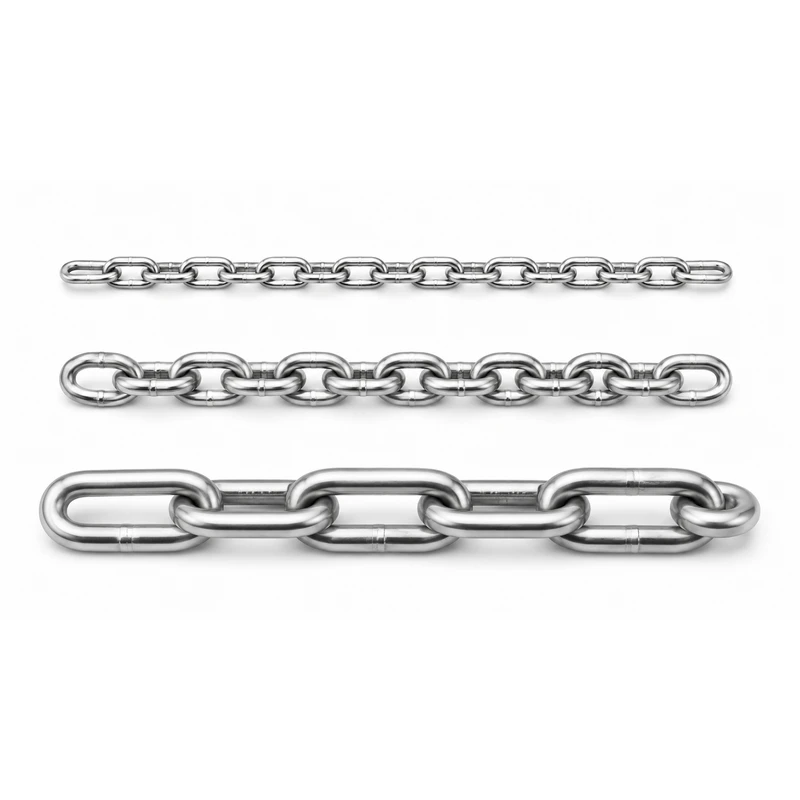
The load chain is a calibrated chain designed to engage the pockets of the specified load sheave. Nominal chain diameter, pitch, internal width, material, heat treatment, and finish must match the approved hoist specification. Similar-looking chain is not necessarily interchangeable. Do not knot the load chain, use it as a sling, run it over an edge, or extend it with an unapproved link or connector.
A light-capacity model may use one loaded chain fall. Higher-capacity models may reeve the chain through a lower block to create two or more falls. The reeving arrangement changes chain travel, hook speed, and the chain path that must be inspected, but it does not authorize a load above the marked rated load.
Lower Hook Block and Bottom Hook
The lower hook block connects the moving end of the load-chain system to the bottom hook. On a multi-fall hoist, the block may contain a return chain wheel or sheave, depending on the design. The hook should rotate or articulate only as its design permits, and the load must sit in the hook bowl. The latch helps retain a slack sling or attachment; it is not intended to carry the suspended load.
Operating and Drive Components
Hand Chain and Hand Wheel
The endless hand chain is the control input. Pulling one side rotates the hand wheel in the lifting direction; pulling the opposite side rotates it in the lowering direction. The correct side depends on the hoist design and the operator’s position, so follow the markings and operating instructions for the actual unit. The hand chain should run freely through its cover or guide without twisting or being side-pulled across the hand wheel.
Pinion and Reduction Gears
The hand wheel drives a pinion and one or more reduction stages. The gear train trades speed and chain travel for torque: the operator pulls a relatively long length of hand chain while the bottom hook moves a shorter distance. Hand pull at rated load is model-specific because friction, brake drag, bearing losses, gear geometry, and load-chain reeving all affect the result.
Load Sheave or Lift Wheel
The final drive turns the load sheave. Its pockets match the calibrated load-chain links, pulling the chain through the hoist rather than winding it onto a drum. Correct chain-to-sheave fit is essential. A mismatched, twisted, stretched, or badly worn chain can climb, bind, jump, or fail to seat correctly.
Braking and Control Components
Mechanical Load Brake
Most manual chain blocks use a self-acting mechanical load brake. The exact assembly varies, but it commonly includes friction surfaces and a ratchet-and-pawl arrangement. Under load, the mechanism develops the clamping action needed to resist unintended reverse motion. Pulling the hand chain in the lowering direction controls release so the load can descend.
The brake is a safety-critical matched assembly. Lubricant on a dry friction surface, incorrect parts, wear, or incorrect reassembly can impair load control. Brake inspection, adjustment, and repair belong to qualified personnel following the manufacturer’s instructions. Eddy-current and regenerative braking are powered-drive concepts and should not be used to describe the normal brake in a manual chain block.
Pawl and Ratchet Wheel
The pawl engages the ratchet wheel as part of the load-brake system to resist reverse rotation. A clicking sound during operation may be normal for a particular design, but a change in sound, slipping, poor load holding, or abnormal hand pull requires the hoist to be taken out of service and assessed. Do not diagnose brake condition from sound alone.
Guiding, Protection, and Identification Parts
Chain Guide and Stripper
Guides keep the load chain aligned as it approaches and leaves the load sheave. A stripper helps the chain disengage from the wheel at the correct point. Damage, debris, or misalignment around these parts can contribute to rough travel or poor chain engagement. The underlying cause must be identified before the hoist is returned to service.
Housing, Covers, and Side Plates
The housing protects the brake and gear train, while the side plates maintain alignment between shafts and load-path components. Dents, cracks, missing fasteners, or distorted covers can indicate impact or overload and may interfere with internal movement. Do not assume a hoist is safe simply because the chain still moves.
Nameplate and Markings
The nameplate links the physical hoist to its approved capacity, model, and parts information. A replacement chain, hook block, brake component, or gear must be selected using the correct model and serial information. If identification is missing or illegible, quarantine the unit until a qualified person can determine the correct disposition.
How the Components Work Together?
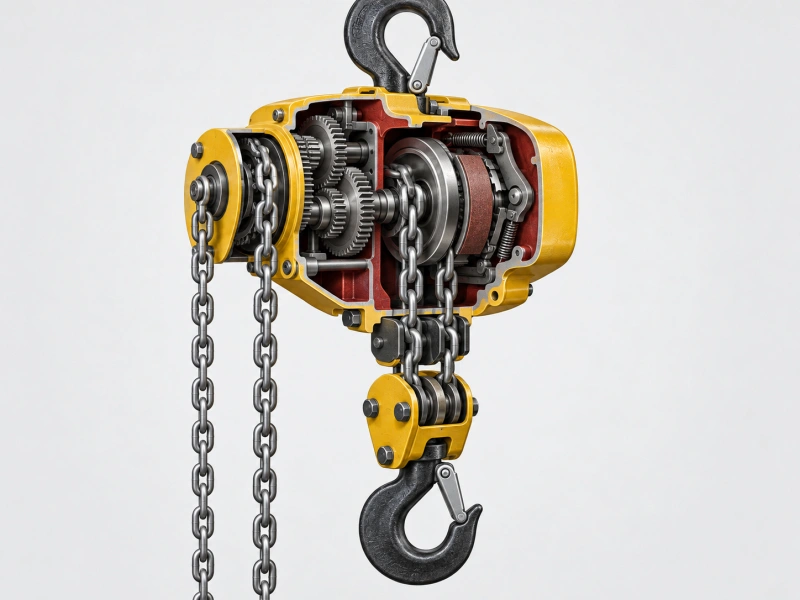
1. The operator pulls the hand chain, rotating the hand wheel.
2. The hand wheel transmits torque through the brake and drive components to the pinion and reduction gear train.
3. The gear train increases torque and turns the load sheave at a slower speed.
4. The load sheave moves the calibrated load chain, raising or lowering the lower hook block.
5. When hand-chain movement stops, the mechanical load brake resists reverse motion and holds the load within the hoist’s intended operating limits.
These parts function as one rated system. Replacing a component with an approximate substitute, changing the number of chain falls, adding an improvised drive, or altering the suspension can change load paths and braking behavior. The rated load applies only to the complete approved configuration.
How Component Layout Changes by Model and Capacity?
Manual chain blocks are available in different housing sizes, capacities, lifts, and chain-fall arrangements. Compact models prioritize portability and headroom. Higher-capacity models may use additional load-chain falls and a larger lower block, which increases the amount of chain travel for a given hook movement and adds reeving points that require inspection.
For a model-specific example, review the HSZ-T hand chain block to compare its rated capacities, load-chain falls, chain dimensions, hook-to-hook distance, and other configuration details.
Powerful Machinery’s current category page lists MINI and SK models and selected HS-VL capacity data. In that published table, the listed HS-VL configurations move from one load-chain fall at 0.5-2 t to two falls at 3-5 t and four falls at 10 t.
Treat these figures as model-specific examples, not as a universal rule. Confirm the exact model, rated load, lift, headroom, hand pull, chain size, number of falls, and required documents in the current quotation. To compare operating methods rather than parts, review the types of chain blocks.
Identifying Replacement Parts Correctly
Do not order a part by appearance alone. Two hoists can have similar covers and different chains, brakes, gears, or hook assemblies. Send the supplier enough information to identify the complete configuration:
- manufacturer, model, serial number, and a clear nameplate photo;
- rated load, standard or custom lift, and number of load-chain falls;
- load-chain dimensions and markings requested by the supplier;
- clear photos of the complete hoist, chain path, and affected assembly;
- part number from the approved manual or parts list, when available;
- description of the fault, damage, or operating symptom; and
- service environment and any previous repair or modification history.
Safety-critical replacements should follow the manufacturer’s parts and assembly instructions and be completed by authorized or qualified personnel. A hook, brake part, gear, or load chain that merely fits is not automatically suitable for the rated hoist.
What to Check Without Turning This Into an Inspection Procedure
Knowing the component names helps an operator describe a problem, but it does not replace a formal inspection. Before use, look for missing or illegible identification, hook or latch damage, twisted or damaged load chain, incorrect reeving, loose or damaged covers, abnormal resistance, chain jumping, unusual noise, or failure to hold the load. Stop operation if the hoist does not function normally.
Use the full chain block inspection checklist for inspection scope and removal-from-service decisions. Routine care belongs in the preventive maintenance guide.
If damage, slipping, jamming, or abnormal braking is found, remove the unit from service and follow the chain block repair guide and the manufacturer’s instructions. Cleaning and return-to-service after inactivity are covered in the chain block storage guide.
Chain Block Parts FAQ
What Is the Difference Between the Hand Chain and the Load Chain?
The hand chain is the operator’s control input and turns the hand wheel. The load chain carries the suspended load and engages the load sheave. They are designed for different functions and are not interchangeable.
Is the Load Sheave the Same as a Pulley?
It is sometimes called a load wheel, pocket wheel, or sprocket. Unlike a smooth rope pulley, it has shaped pockets that engage calibrated load-chain links. On a multi-fall hoist, the lower hook block may also contain a return chain wheel or sheave.
Does the Hook Latch Support the Load?
No. The load should sit in the hook bowl. The latch helps retain a slack sling or attachment but is not intended to carry the suspended load.
Can I Replace Only One Damaged Link in a Load Chain?
Do not make an improvised link repair. Follow the manufacturer’s replacement instructions for the exact hoist. Depending on the design and condition, replacement may require an approved complete chain assembly and inspection of the load sheave, guides, anchors, and lower block by qualified personnel.
Why Does a Chain Block Hold the Load When I Stop Pulling?
A self-acting mechanical load brake resists reverse motion. The exact construction varies by model, so brake parts and service procedures must come from the approved manual or parts list.
Are All Chain Block Parts Interchangeable?
No. Capacity, chain dimensions, gear geometry, brake construction, hook assemblies, and chain-fall arrangements vary. Match replacement parts to the manufacturer, model, and serial information rather than to appearance.
Specify the Complete Hoist, Not Just a Part Name
A clear component name is the starting point. A correct replacement or new-hoist specification also requires the rated load, lift, headroom, suspension, connection dimensions, hand-chain drop, operating frequency, environment, and required documents. Compare the available manual chain block models or send Powerful Machinery the nameplate and application details for a technical quotation.