You may ask, what is a trolley hoist? This device combines vertical lifting and horizontal movement, making material handling safer and more efficient. When you use a trolley hoist, you move heavy loads across beams with ease.
Powerful Machinery manufactures reliable trolley hoists for industrial sites. Understanding the core function of a trolley hoist helps you operate lifting equipment safely.
Term | Definition |
|---|---|
Trolley | A wheeled device suspended from and or traveling on an overhead rail or rails, designed to transport a load. |
Trolleys move objects along a track or rail.
They work with hoists to carry heavy loads horizontally.
Key Takeaways
A trolley hoist combines vertical lifting and horizontal movement, making it essential for safe material handling in various industries.
Using a trolley hoist reduces manual lifting, which lowers injury risks and boosts productivity for workers.
Choose the right type of trolley hoist based on load weight and work environment to ensure safety and efficiency.
Regular maintenance, including inspections and lubrication, extends the life of your trolley hoist and ensures reliable operation.
Powerful Machinery offers a range of certified trolley hoists, providing expert support and tailored solutions for your lifting needs.
What is a Trolley Hoist?
Definition and Core Function
You may wonder, what is a trolley hoist, and how does it work in your facility? A trolley hoist combines two essential actions: lifting heavy loads vertically and moving them horizontally along a beam. You use this equipment to handle materials that are too bulky or heavy for manual lifting.
The system relies on pulleys, cables, and wheels to move products quickly and safely. You often see trolley hoists in warehouses, production lines, and logistics centers. Chain hoists attach to the trolley, allowing you to raise and lower items with precision.
You can integrate a trolley hoist with an overhead crane to cover larger areas and streamline your workflow.
Trolleys support a hoist and position the hoist over the designated loading area, moving cargo horizontally across the beams by use of a tapered and a flat wheel.
You use a trolley to move loads across beams, while chain hoists provide the lifting force. This combination lets you transport materials efficiently, reducing the need for manual handling. You find trolley hoists in assembly facilities, where you move raw materials and finished products with ease.
When you ask, what is a trolley hoist, you discover that it is a vital tool for safe and efficient material handling.
Key Benefits in Industrial Use
You gain several advantages when you use a trolley hoist in your operations. The equipment reduces fatigue and improves ergonomics for your team. Workers avoid heavy manual lifting, which lowers the risk of injuries and boosts productivity.
Chain hoists and trolleys protect transported goods, keeping items secure and preventing damage during movement. You notice increased productivity because trolley hoists streamline your workflow and reduce cycle times.
You use trolley hoists in warehouses for lifting and transporting heavy loads.
You employ them on production lines to move raw materials and finished products.
You integrate trolley hoists with overhead crane systems for efficient material handling.
You find them in logistics centers and assembly facilities.
Chain hoists paired with trolleys help you achieve accurate positioning and safe movement of materials. When you ask, what is a trolley hoist, you see that it offers reliable performance and supports your industrial needs. You rely on this equipment to keep your operations running smoothly and safely.
How a Trolley Hoist Works?
Lifting Mechanism Explained
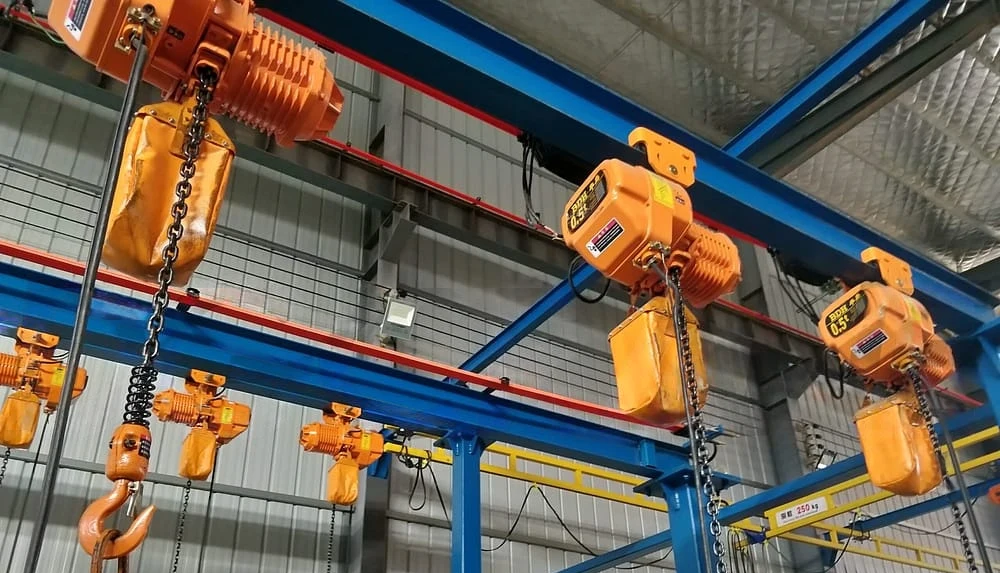
You operate a trolley hoist by using two main components: the hoisting unit and the trolley unit. The hoisting unit lifts loads vertically. You find an electric motor and gearbox inside the hoist. These parts work together to raise heavy items using a load chain or wire rope.
When you press the control button, the motor activates and pulls the chain or rope, lifting your cargo smoothly. The trolley unit supports the hoist and allows you to move it along a beam. You can use the hoist and trolley together or separately, depending on your needs.
This system gives you flexibility and control when handling materials. You often see trolley hoists installed on an overhead crane, which lets you cover large areas and reach different workstations.
Tip: Always check the load chain or wire rope for wear before you start lifting. This helps you prevent accidents and maintain safe operations.
Horizontal Beam Travel
You move loads horizontally by choosing the right trolley type for your application. Each trolley offers a unique method for beam travel:
Manual trolleys let you push the load by hand. You use these for lighter loads and when you do not need frequent movement.
Geared trolleys use gears and a hand chain. You pull the chain to move heavier loads with precision, especially over short distances.
Electric trolleys use a motor for fast and efficient movement. You select these for heavy-duty operations and frequent use.
Air trolleys operate in hazardous environments. You avoid electrical risks and ensure safe movement in areas where sparks could cause problems.
You attach the trolley hoist to an overhead crane to maximize your workspace. This setup allows you to lift and move materials across beams, improving efficiency and safety. You select the trolley type based on load weight, frequency of movement, and your work environment.
Main Components of a Trolley Hoist
Hoist Unit
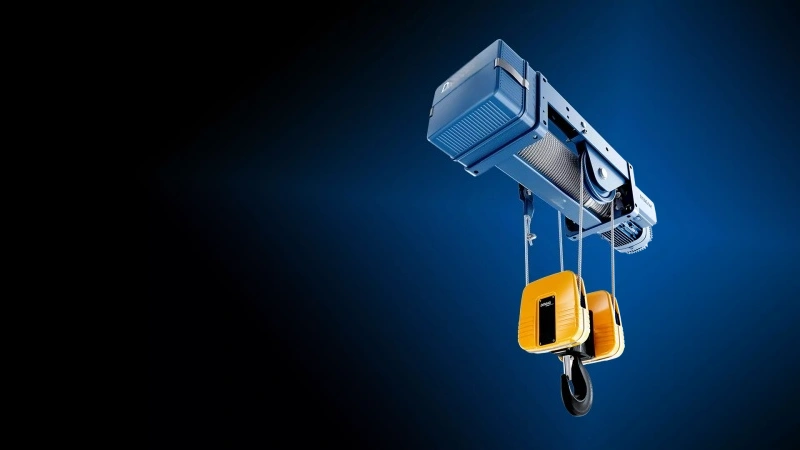
You rely on the hoist unit for vertical lifting. This part connects to the load with a hook assembly and raises or lowers materials. Manufacturers use high-grade alloy steel and industrial-grade steel for strength and durability. Heavy-duty gears and sealed motors protect the hoist from mechanical stress and environmental damage.
You benefit from corrosion-resistant coatings that extend the lifespan of the hoist trolley. The hoist unit ensures safe lifting and supports your daily operations.
Material Type | Description |
|---|---|
High-grade alloy steel | Provides strength, toughness, and wear resistance. |
Industrial-grade steel | Offers a reliable base for the hoist trolley. |
Heavy-duty gears | Withstand mechanical stress for long-term durability. |
Sealed motors | Protect internal parts from environmental damage. |
Corrosion-resistant coating | Shields the hoist from environmental wear. |
Trolley Frame and Wheels
The trolley frame supports the hoist and distributes the load across the beam. You find that platform size and shape affect stability. A wider platform helps prevent tipping and strain. Wheel design matters for movement efficiency. Larger, heavy-duty wheels absorb shocks and keep the trolley stable on uneven surfaces.
Rubber or polyurethane wheels improve traction and shock absorption. Low-profile and reinforced frames maintain balance, even on rough terrain. Compact designs make it easier for you to maneuver the hoist trolley in tight spaces. Swivel casters allow you to steer around obstacles.
Design Factor | Impact on Load Distribution and Stability |
|---|---|
Platform Size and Shape | Distributes weight evenly, prevents tipping. |
Wheel Design | Absorbs shocks, enhances stability. |
Wheel Material | Improves traction and shock absorption. |
Low Profile or Reinforced | Maintains balance on rough surfaces. |
Compact Design | Enhances maneuverability in tight spaces. |
Swivel Casters | Allows easier steering around obstacles. |
Controls and Safety Features
You operate the hoist trolley with controls that keep your work safe and efficient. Modern systems include several safety features:
Safe Torque Off removes motor and brake power during emergencies.
Load Check prevents lifting if the hoist trolley detects an overload.
Brake Checks monitor brake function for safety.
Collision Avoidance Systems automate movement to prevent accidents.
Remote Radio Controls let you operate the hoist trolley wirelessly.
You use these features to protect workers and equipment. When you connect the hoist trolley to an overhead crane, you gain more control and safety for material handling.
Tip: Always check the controls and safety systems before you start lifting. This helps you avoid accidents and ensures reliable operation.
Types of Hoist Trolley
You can choose from several types of hoist trolley, each designed for different lifting needs. Powerful Machinery offers a full range of options to match your application. The main types include plain (manual), geared, and electric hoist trolleys. Each type gives you a unique way to move loads along a beam.
Choosing the right trolley helps you improve safety and efficiency in your workspace.
Here is a quick comparison to help you understand the differences:
Type of Trolley | Operation Description | Applications |
|---|---|---|
Push-Type Trolley | Manually operated, moved by pushing or pulling, suitable for lighter loads. | Ideal for applications where frequent repositioning is not a priority. |
Geared Trolley | Uses a hand chain for precise control over movement. | Commonly used in workshops and heavy industry for the safe handling of delicate materials. |
Electric Travel Trolley | Powered by electric motors, allows for rapid and automated load positioning. | Best for operations requiring frequent lifting and integration into automated systems. |
Plain (Manual) Hoist Trolley
You use a plain hoist trolley when you need a simple and reliable way to move lighter loads. You push or pull the trolley by hand along the beam. This type works well in areas where you do not need to move the load often. You find plain trolleys in small workshops, maintenance areas, and places where space is tight.
You can trust Powerful Machinery’s plain hoist trolley for smooth travel and easy installation.
Geared Hoist Trolley
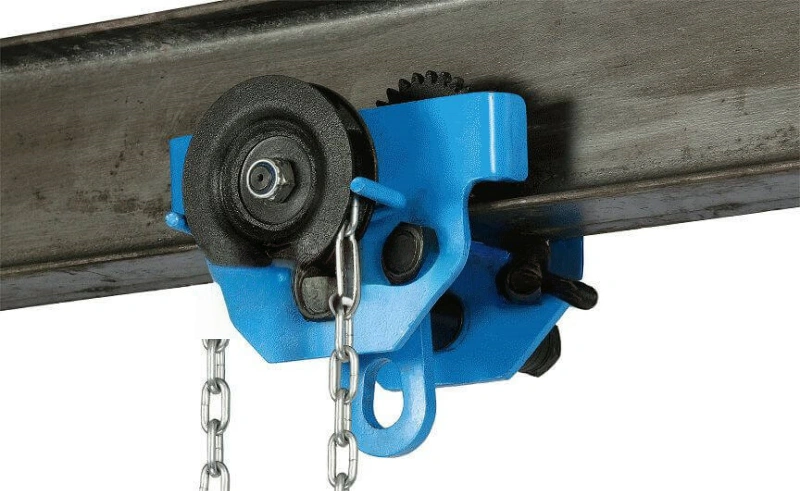
You choose a geared hoist trolley when you want more control over movement. This trolley uses a hand chain that lets you move heavy or delicate items with precision. You pull the chain to guide the trolley along the beam. You often see geared trolleys in factories, steel plants, and assembly lines.
You can handle heavier loads safely because the geared system gives you steady movement. Powerful Machinery’s geared hoist trolley is built for tough jobs and frequent use.
Electric Hoist Trolley
You select an electric hoist trolley for fast and automated lifting. This motorized hoist trolley uses an electric motor to move loads quickly along the beam. You operate it with a control pendant or remote, which makes it easy to position heavy items.
You find electric trolleys in large warehouses, production lines, and places with an overhead crane. You save time and reduce manual effort with this advanced system. Powerful Machinery’s electric hoist trolley supports high-duty cycles and demanding industrial tasks.
Tip: Always match the hoist trolley type to your load weight and work environment for the best results.
Hoist Trolley Features and Specifications
Load Capacity and Safety Standards
You must check the load capacity before you select a hoist trolley. Manufacturers rate each hoist for a maximum weight. You avoid accidents by following these ratings. Safety standards help you choose reliable equipment. Many hoist trolleys meet international certifications. These standards ensure quality and safe operation.
Certification/Standard | Description |
|---|---|
CE | Indicates compliance with European safety standards. |
UL | Underwriters Laboratories certification for safety. |
CCC | China Compulsory Certification for safety and quality. |
CSA Certification | Meets U.S. and Canadian safety requirements. |
ISO 9001 | Ensures quality management systems. |
ASME B30.17 | Standard for cranes and monorails. |
OSHA 1926.1400 | U.S. safety regulations for cranes and derricks. |
You protect your team and your facility by choosing a hoist trolley with these certifications.
Beam Compatibility and Installation
You must match the trolley to the beam for safe installation. Trolleys fit specific flange sizes. You check the beam shape, depth, width, and thickness. Proper alignment prevents binding and ensures smooth operation. You handle maximum capacity safely when you select the right beam and trolley.
Evidence Description | Key Points |
|---|---|
Trolley Compatibility | Trolleys are designed for specific beam flange sizes, affecting installation ease and safety. |
Maximum Capacity | Ensures the hoist can operate effectively without risk of failure. |
Beam Evaluation | Requires knowledge of beam shape, depth, width, and thickness for proper selection. |
Tip: Always inspect the beam before installing a hoist trolley. This step helps you avoid installation errors.
Lifting Height and Duty Cycle
You must consider lifting height and duty cycle when you choose a hoist. The Hoist Manufacturers Institute uses ratings from H1 to H5. H1 means infrequent use. H5 means heavy industrial use. H4 allows for 300 starts per hour and 30 minutes of run time per hour.
FEM ratings combine mechanism groups and load spectrums. You assess your lifting needs, including load weight and lift height, to ensure safe and efficient operation. You use a hoist trolley for frequent lifts in factories or less often in maintenance shops.
Durability and Maintenance
You extend the life of your hoist trolley with proper maintenance. You conduct routine inspections daily and monthly. You lubricate the chain and gears to reduce friction. You clean the hoist after each use. You check the load chain for damage or elongation.
You inspect electrical components for wear. You train operators for safe use. You schedule professional servicing each year. You perform load tests regularly. You keep detailed records of maintenance and inspections.
Routine inspections
Lubrication
Cleanliness
Load chain maintenance
Electrical checks
Operator training
Professional servicing
Load testing
Record keeping
Note: Regular maintenance keeps your hoist trolley reliable and safe for every lift. You use these practices to protect your investment and your workers.
Choosing a Trolley Hoist
Assessing Load and Application
You need to start by understanding your lifting requirements. The right trolley depends on the weight, size, and frequency of the loads you handle. You should also consider the environment where you plan to use the trolley.
For example, a warehouse may require a different setup than a steel plant. The following table shows important factors to review before making your choice:
Factor | Description |
|---|---|
Capacity | Check the weight of your heaviest load and use the Mean Effective Load (MEL) factor of .65. |
Suspension Type | Decide between fixed location or trolley-mounted, with rigid or articulating trolleys. |
Lift, Reach & Headroom | Measure the lift height, reach, and available headroom for proper function. |
Operation Type | Choose manual, electric, or pneumatic operation based on your needs. |
Duty Class | Review lifts per hour, load frequency, and distance according to ASME and HMI standards. |
Lifting Speed | Select lifting speeds that match your workflow for efficiency. |
Tip: Always measure your workspace and lifting needs before selecting a trolley. This helps you avoid costly mistakes.
Comparing Types and Features
You can compare different trolley hoists by looking at their efficiency and cost. Electric chain hoists work well for small- to medium-capacity lifting. Wire rope hoists handle heavier loads and offer faster lift speeds.
Manual hoists do not require electricity and are portable. The table below highlights key advantages and price ranges:
Hoist Type | Key Advantages | Price Range |
|---|---|---|
Good for small- to medium-capacity lifting | $500 – $2,000 | |
Wire Rope Hoists | High load capacity and fast lift speeds | $3,000 – $8,000 |
Manual Hoists | Portable, no electricity needed | $100 – $500 |
You should also consider the duty cycle and lifting speed. Light-duty manual chain hoists cost less, while heavy-duty electric wire rope hoists cost more but offer greater performance.
Evaluating Manufacturer and Support
You want a trolley from a manufacturer with a strong reputation and reliable support. Look for quality certifications like ISO or CE. Choose a supplier with a wide product range and essential safety features. After-sales support matters, including warranty, maintenance, and spare parts availability. The table below lists important criteria:
Criteria | Description |
|---|---|
Industry reputation | Find suppliers with positive reviews and testimonials. |
Quality certification | Ensure products meet standards for safety and quality. |
Product range | A diverse selection covers various lifting needs. |
Safety features | Overload protection and durable materials are essential. |
After-sales support | Warranty, maintenance, and spare parts access are important. |
Technical support | Expert advice helps with troubleshooting and product use. |
Innovation and technology | Advanced designs improve efficiency and safety. |
Global distribution | Wide networks ensure product availability and support. |
Note: Powerful Machinery offers certified trolley hoists, expert technical support, and reliable spare parts supply to keep your operations running smoothly.
Applications of Trolley Hoists
Manufacturing and Warehousing
You use a trolley in manufacturing and warehousing to move materials efficiently. On assembly lines, you rely on a trolley to handle parts and products, which improves workflow and reduces manual labor. In warehouses, you use a trolley to stack pallets and organize inventory.
This equipment works especially well in high-bay storage areas, where safe and efficient transport is essential.
Industry | Application |
|---|---|
Manufacturing | Used for assembly line material handling, enhancing workflow and reducing manual labor for improved precision and efficiency. |
Warehousing & Distribution | Employed for stacking pallets and organizing inventory, particularly effective in high-bay warehouses for safe and efficient goods transport. |
Construction and Steel Plants
You see a trolley in construction and steel plants for heavy lifting and fast material movement. Motorized trolleys help you handle materials with less effort, which reduces fatigue. You move items quickly, which is important for busy production lines.
When you integrate a trolley into an overhead crane system, you maximize efficiency and cover more workspace.
Motorized trolleys enhance material handling capabilities, reducing operator fatigue.
They facilitate faster transport of materials, crucial for busy production lines.
Integration into overhead crane systems allows for comprehensive material movement, maximizing efficiency.
Marine, Transportation, and Cargo Handling
You depend on a trolley in marine and cargo handling industries for safe and reliable load transfers. In marine settings, you use a trolley as part of gantry crane systems to move containers and cargo, even in tough conditions.
In transportation, you lift and move heavy materials like steel beams and glass panels, which gives you flexibility in changing environments.
In marine settings, trolley hoists are integral to gantry crane systems for handling containers and cargo, ensuring safe and efficient load transfers even in challenging conditions.
In construction, these systems are utilized to lift and move heavy materials like steel beams and glass panels, providing flexibility in dynamic environments.
Maintenance Workshops and Custom Projects
You benefit from a trolley in maintenance workshops and custom projects because of its flexibility and precision. You can use a gantry hoist system without needing permanent overhead structures. This setup lets you position heavy parts with millimeter accuracy, which speeds up assembly and reduces damage.
You also save costs, since you can move or sell the portable system if your needs change.
Flexibility: The gantry hoist system allows for maximum flexibility in workspaces without permanent overhead structures.
Precision: Technicians can position heavy parts with millimeter precision, enhancing assembly speed and reducing part damage.
Cost-Effectiveness: The portable setup saves costs on structural modifications and can be moved or sold if needs change.
Conclusion
You gain many benefits when you use a certified trolley hoist in your facility. The right equipment improves safety and boosts productivity. Powerful Machinery offers reliable solutions that fit your needs. You can trust their experience and strict quality control.
Feature | Benefit |
|---|---|
Unlimited duty cycle | Keeps lifting and moving tasks running smoothly. |
Drop stops & rubber bumpers | Protect workers and equipment during operation. |
Bronze side guide rollers | Make travel stable and easy. |
Nickel-plated load chain | Adds spark resistance for safer work. |
Powerful Machinery has over 20 years of industry experience.
Custom-engineered solutions help you meet project requirements.
High-quality hoist trolleys reduce physical strain and prevent accidents.
You can contact Powerful Machinery for expert advice and tailored lifting solutions.
FAQ
What is a trolley hoist?
A trolley hoist combines vertical lifting and horizontal movement. You use it to move heavy loads along beams in factories, warehouses, and workshops. Powerful Machinery designs trolley hoists for safe and efficient material handling.
How do you choose the right trolley hoist capacity?
You check the maximum weight you need to lift. You review beam size, lifting height, and duty cycle. Powerful Machinery provides certified hoists with clear load ratings for safe operation.
What is the difference between plain, geared, and electric trolley hoists?
You push a plain trolley by hand. You move a geared trolley using a hand chain. You operate an electric trolley with a motor and remote control. Each type suits different load weights and work environments.
How does proper installation affect performance?
You ensure correct installation for safety and smooth operation. You align the trolley with the beam and secure all parts. Powerful Machinery offers guidance for proper setup and reliable performance.