Rigging equipment is the collection of load-bearing components and accessories used to connect a load to a crane, hoist, winch, or other load-handling device. It includes slings, chains, wire ropes, hooks, shackles, lifting points, master links, blocks, and related fittings. These components form the load path between the lifting device and the object being moved.
No single item makes a rigging system safe on its own. The load, lifting method, sling configuration, connection points, environment, and rating of every component must be considered together. The system is limited by its weakest correctly identified component and by the way the components are used.
What Counts as Rigging Equipment?
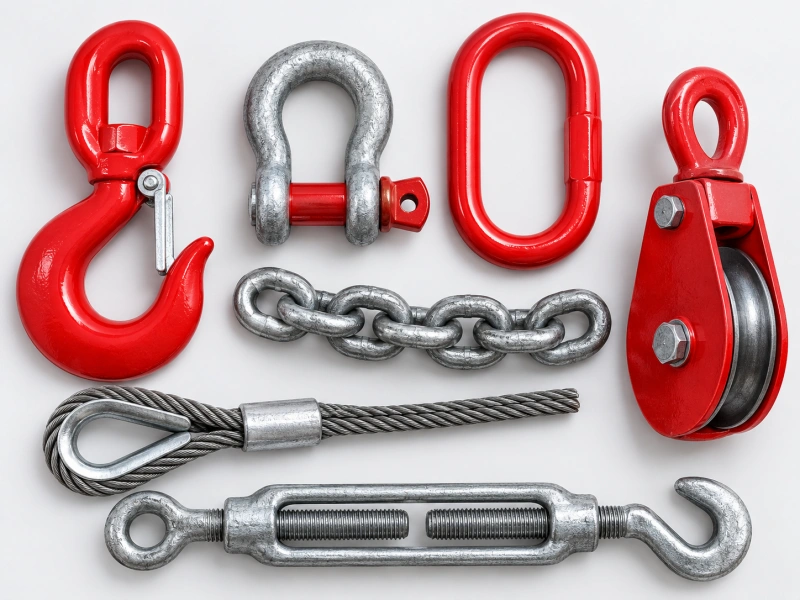
The term covers equipment that attaches, supports, connects, redirects, or controls a load during lifting and positioning. The exact list changes with the operation, but most industrial systems use components from four functional groups:
- Load-supporting components, such as chain, wire rope and synthetic slings.
- Connectors, such as hooks, shackles, master links and connecting links.
- Attachment and adjustment components, such as lifting points, turnbuckles and selected wire rope fittings.
- Load-direction and force-management components, such as blocks, sheaves and purpose-designed lifting beams.
Many of these connectors fall within the broader category of rigging hardware. The name of a component is only a starting point. Its markings, working load limit, dimensions, material, grade, and instructions determine whether it is suitable for a particular load path.
Rigging Equipment VS Lifting Equipment
Rigging equipment connects and supports the load. Lifting equipment supplies or controls the force that raises, lowers, or pulls it. A chain sling and shackle are rigging equipment; a crane or hoist is lifting equipment. In practice, they operate as one system, so their capacities, connection geometry and operating limits must be compatible.
| Rigging Equipment | Lifting Equipment |
| Connects, supports or secures the load. | Raises, lowers or pulls the load. |
| Examples include slings, hooks, shackles, chains and wire rope. | Examples include cranes, hoists and winches. |
| Selected for load path, configuration, angle and connection fit. | Selected for required capacity, travel, speed and operating conditions. |
| Must be compatible with the load and the lifting device. | Must be compatible with the rigging arrangement and operating plan. |
For a fuller comparison, read rigging equipment and lifting equipment.
Main Types of Rigging Equipment
Slings
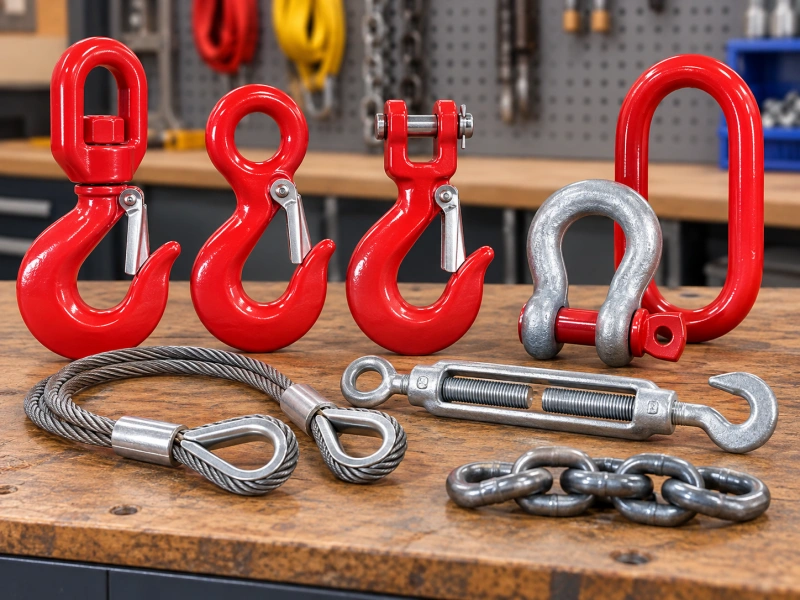
Slings connect the load to the lifting device or top connection. Common categories include alloy chain slings, wire rope slings, synthetic web slings, and round slings. Each responds differently to sharp edges, heat, chemicals, abrasion, and bending. Sling capacity also changes with configuration and angle, so the tag and current technical data must be checked for the planned lift.
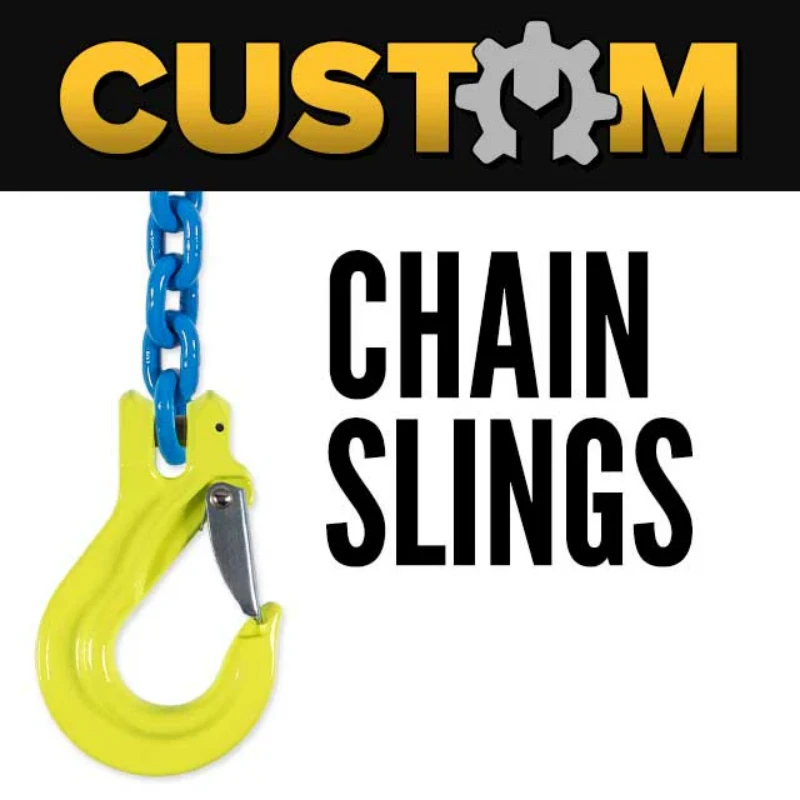
For heavy-duty chain assemblies, review the available chain slings.
Chains
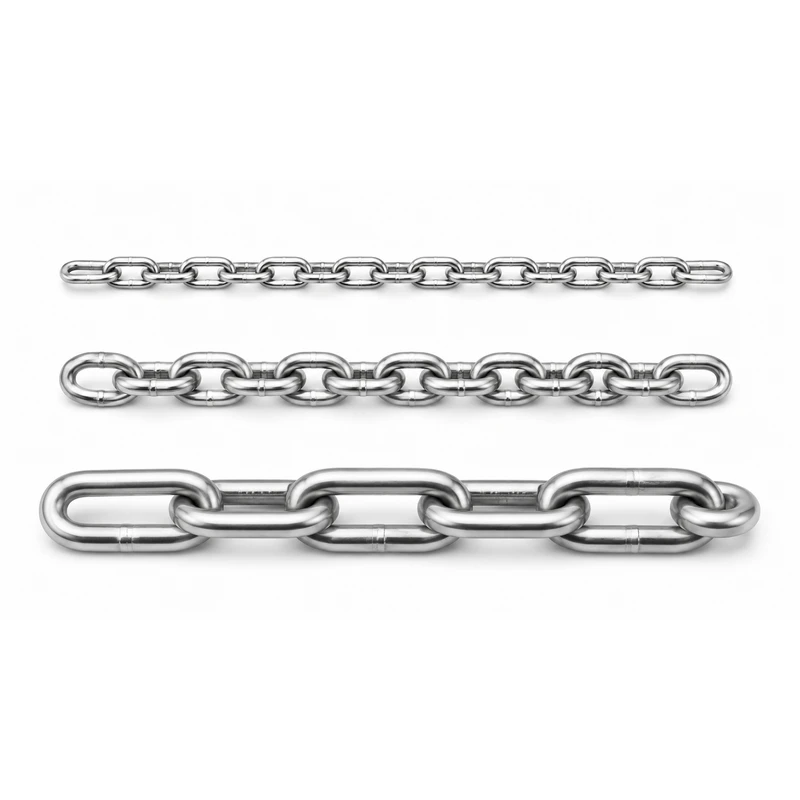
Industrial chains are used in lifting, lashing, conveying and other applications, but chain intended for one purpose is not automatically suitable for another. Lifting assemblies require an identified grade, size and compatible fittings. Proof coil, transport and general-purpose chain should not be treated as lifting chain unless the product is specifically rated and documented for lifting.
Wire Ropes
Steel wire rope consists of wires formed into strands around a core. Construction, diameter, lay, core, lubrication, termination, and bending conditions affect performance. A rope selected for a crane, winch or sling must match the equipment and service rather than being chosen by diameter alone.
Hooks
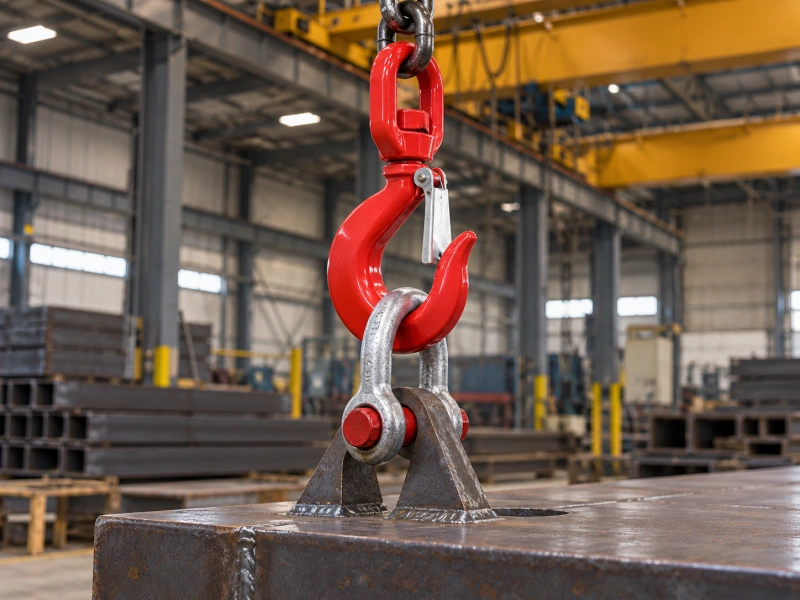
Lifting hooks provide a connection between the sling or chain assembly and a compatible lifting point. Eye, clevis, sling, grab, self-locking, and swivel designs serve different functions. The load should bear where the hook is designed to carry it, not on the tip or latch.
Shackles
Shackles are removable connectors used between slings, lifting points and other rigging components. Bow and dee shapes, screw pins and bolt-type pins are not interchangeable in every arrangement. Confirm the WLL, pin security, loading direction, and fit of the connected components.
Master Links and Connecting Links
Master links form the upper connection in many chain-sling assemblies. Connecting links join compatible chain and fittings. The internal dimensions must provide enough room for the mating components without crowding, binding, or loading an edge.
Lifting Points and Eye Bolts
Lifting points create a defined attachment on machinery or fabricated loads. Fixed eye bolts, swivel hoist rings, and other lifting points have different angular-loading rules. The base material, thread engagement, installation torque, orientation, and load direction all need to be checked for the specific product.
Turnbuckles and Tensioning Hardware
Turnbuckles adjust tension or length in guying, bracing, marine and structural assemblies. A turnbuckle should not be assumed suitable for overhead lifting simply because it can carry tension. Use the rating and intended application stated for the exact model, end fittings, and installation.
Wire Rope Fittings
Wire rope clips, thimbles, sockets and sleeves help form or protect terminations. Their suitability depends on rope construction and diameter, fitting type, installation procedure, and inspection. A termination has its own efficiency and requirements; it should not be treated as equivalent to the rope’s nominal breaking force.
Blocks, Pulleys and Sheaves
Pulley blocks redirect a line or form part of a tackle system. The block rating, sheave diameter, groove profile, line type, fleet angle, attachment, and side-plate condition affect use. The theoretical mechanical advantage of a tackle does not replace the rated capacity of its components or account for all friction losses.
What Rigging Equipment Is Used For?
Rigging equipment is used whenever a load must be connected, supported, restrained, or positioned in a controlled way. Common applications include:
- Construction: lifting structural steel, precast components, machinery and building materials.
- Manufacturing: installing presses, motors, dies, vessels and production equipment.
- Marine and offshore work: cargo handling, vessel maintenance, mooring-related tasks and project lifts.
- Transport and logistics: loading, unloading and securing machinery or industrial cargo with equipment rated for the task.
- Mining and heavy industry: moving components in abrasive or demanding environments.
- Maintenance and shutdown work: removing and reinstalling equipment where space and access affect the rigging plan.
The same component may be appropriate in one configuration and unsuitable in another. Application labels such as “marine” or “heavy duty” do not replace a review of the actual load, environment and product documentation.
How to Select Rigging Equipment?
Identify the Load
Confirm the load weight, centre of gravity, dimensions, lifting points, and whether loose parts or liquids can shift. If the weight cannot be verified, stop and obtain reliable engineering or manufacturer information before choosing the rigging.
Define the Load Path and Configuration
Map how force will pass from the load through the lifting points, connectors, and sling legs to the lifting device. Identify the number of sling legs, planned angles, equalization assumptions, and possible contact with edges. Do not assume that every leg in a multi-leg assembly shares the load equally.
Check Working Load Limits
Use the marked WLL and current manufacturer data for every component and configuration. Sling angle, hitch type, and loading direction can change the permitted capacity. Do not calculate a capacity from appearance, nominal size, or a generic design factor.
Confirm Compatibility
Connected parts need compatible dimensions and geometry. A shackle pin must seat correctly in the mating component; a hook must receive the lifting point in its bowl; a chain fitting must match the chain grade and diameter. Parts that physically fit can still form an unsuitable assembly.
Consider the Environment
Temperature, chemicals, salt water, moisture, abrasion and sharp edges can affect materials, coatings and service life. Ask for product-specific limits when conditions fall outside normal service. A galvanized or painted finish does not by itself confirm suitability for a corrosive, marine or high-temperature environment.
Specify Standards and Documentation
State the applicable product standard, required markings, testing, traceability, and documentation before ordering. Available material certificates, test reports, and third-party inspection depend on the exact product and agreed order scope.
Basic Safety and Inspection
Before use, verify identification and WLL, look for damage or deformation, check pins and locking devices, and confirm that the planned connection follows the product instructions. Remove questionable equipment from service rather than trying to judge its remaining capacity during the lift.
Inspection frequency and rejection criteria differ across chains, slings, hooks, shackles, wire ropes and below-the-hook devices. Use the applicable standard and manufacturer instructions for the exact item. The rigging equipment inspection guide covers inspection stages, frequency, records and equipment-specific checks in more detail.
Common Mistakes to Avoid
| Mistake | Why It Is a Problem | Better Approach |
| Choosing by size or appearance | Similar-looking items can have different grades, WLLs, and intended uses. | Use identification and current technical data. |
| Treating all chain as lifting chain | Transport or general-purpose chain may not be rated for overhead lifting. | Specify lifting grade and compatible components. |
| Ignoring sling angle | Lower angles can increase force in sling legs. | Calculate the planned configuration using approved data. |
| Crowding a hook or shackle | Poor fit can create point, side or eccentric loading. | Select dimensions that allow correct seating and articulation. |
| Using the latch as a load-bearing part | A hook latch is normally a retention device. | Seat the load in the hook bowl. |
| Assuming one inspection interval fits all equipment | Rules vary by item, service and jurisdiction. | Follow the applicable item-specific inspection program. |
Rigging Equipment Checklist for Planning
- Verified load weight and centre of gravity.
- Suitable lifting points and a defined load path.
- Correct sling type, configuration and angle.
- WLL confirmed for every component and the complete arrangement.
- Compatible dimensions, grades and connection methods.
- Environmental limits reviewed.
- Pre-use condition and identification checked.
- Applicable standards, records and documentation confirmed.
- Lift supervised and performed by personnel qualified for their assigned tasks.
FAQ
What Is Included in Rigging Equipment?
Rigging equipment commonly includes slings, lifting chain, wire rope, hooks, shackles, master links, connecting links, lifting points, blocks and compatible fittings. The exact equipment list depends on the operation and the load path.
Is a Hoist Rigging Equipment?
A hoist is normally classed as lifting equipment because it provides the force that raises or lowers the load. Slings, hooks, shackles, and related components connect the load to the hoist and are classed as rigging equipment.
What Are the Main Types of Rigging Equipment?
The main groups are slings and load-supporting components, connectors such as hooks and shackles, lifting points and adjustment hardware, and blocks or other components that redirect or manage the load path.
Can the Same Rigging Equipment Be Used for Every Lift?
No. Selection depends on load weight, centre of gravity, lifting points, configuration, environment, component compatibility and applicable standards. Equipment suitable for one lift may be unsuitable in a different arrangement.
Which Rigging Equipment Is Used to Balance a Load?
A purpose-designed lifting beam or spreader beam can help control load distribution, while an engineered sling arrangement may accommodate the load geometry and centre of gravity. The correct solution depends on the load, pick points and lift plan; adjustable hardware does not replace an engineered assessment where one is required.
What Connects Pieces of Rigging Equipment?
Shackles, hooks, master links and compatible connecting links commonly join parts of a rigging assembly. Every connector must have an adequate rating, suitable geometry, and the correct loading direction for the adjoining components.
How Should Rigging Equipment Be Stored?
Store identified equipment in a clean, dry, and organized area where it is protected from damaging moisture, chemicals, heat, abrasion, and impact. Keep tags and markings readable, separate rejected items from serviceable equipment, and follow product-specific storage instructions.
How Often Should Rigging Equipment Be Inspected?
There is no single interval for every item. Pre-use or shift checks and periodic documented inspections may apply, but the frequency and rejection criteria depend on equipment type, service conditions, manufacturer instructions, and governing requirements.
Where Can I Review Available Product Categories?
Use the product directory to browse chains, steel wire rope, hardware components, blocks, slings and lifting equipment. Confirm final specifications against the individual product page and quotation.
Conclusion
Rigging equipment creates the connection between a load and the device that moves it. Safe selection depends on the complete load path: the load, lifting points, sling arrangement, connectors, angles, environment, and rating of every component.
Start with verified load information, then choose compatible equipment using current product data. Keep detailed comparison and inspection questions on their dedicated pages so each decision is based on the right technical context.