
Lifting Clamps & Plate Clamps Manufacturer
Source lifting clamps for steel plates, structural beams, round bars, pipes, and approved industrial loads. Powerful Machinery supplies industrial lifting equipment, including vertical plate clamps, horizontal plate clamps, beam lifting clamps, and application-specific models for distributors, fabrication shops, construction projects, and material-handling operations.
Send us the load weight, material, dimensions, lifting direction, and required quantity. Our team will help you compare working load limit, jaw opening, gripping method, and connection arrangement before quotation. • Product options for vertical, horizontal, beam and round-material lifting |
Powerful Machinery - Your Reliable Lifting Clamp Manufacturer
Lifting Clamp Product Range
Choose the product family by load shape and lifting direction first. If you need a broader overview, compare the main types of lifting clamps before reviewing individual models. Each model must then be checked against the actual load, material, jaw range, and permitted loading directions.
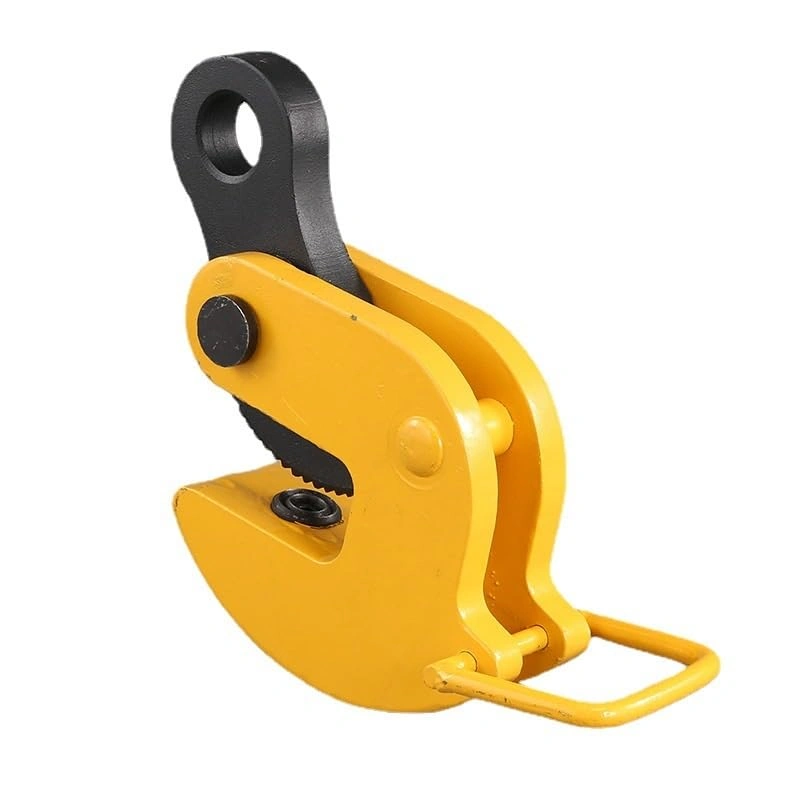
Vertical Plate Lifting Clamps
Vertical plate lifting clamps grip a steel plate at the edge for upright handling. Depending on the model, they may also turn a plate between horizontal and vertical positions. Specify the plate weight, thickness, hardness, starting position, and required turning angle. Long or flexible plates may require two clamps and a lifting beam.
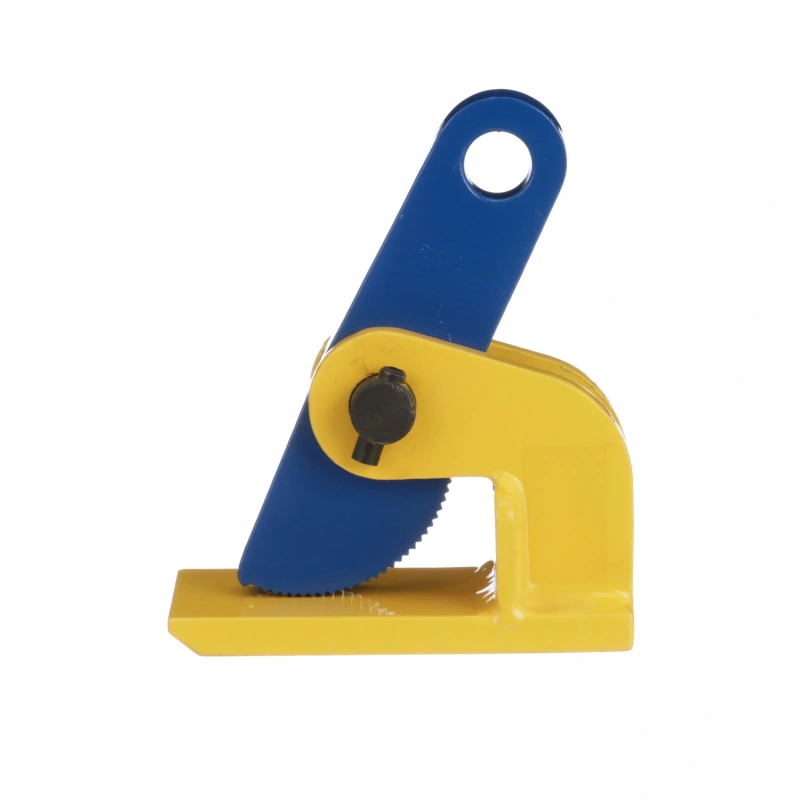
Horizontal Plate Lifting Clamps
Horizontal plate lifting clamps carry sheet or plate in a flat position. They are normally used in matched pairs or sets, with the capacity determined by the model, clamp quantity, and rigging angle. Send the plate size, weight, thickness, and center of gravity so the clamp arrangement can be reviewed for balance and sagging.
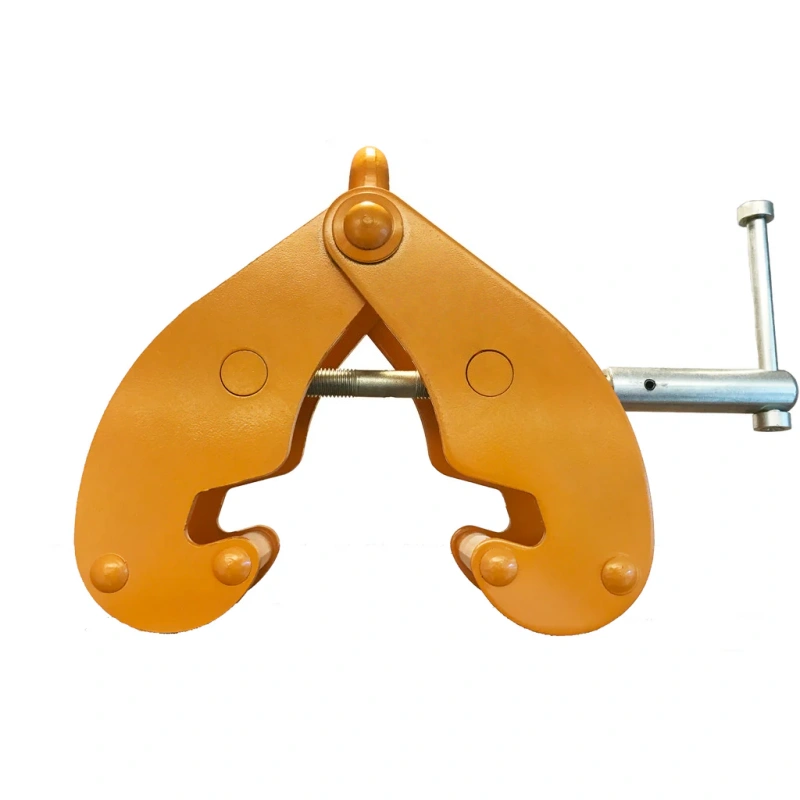
Beam Lifting Clamps
Beam lifting clamps are designed to grip structural sections that are being lifted. Confirm the beam profile, flange dimensions, weight, center of gravity, and travel orientation. Do not confuse these products with fixed beam clamps used as suspension points for a hoist; the two applications require different selection checks.
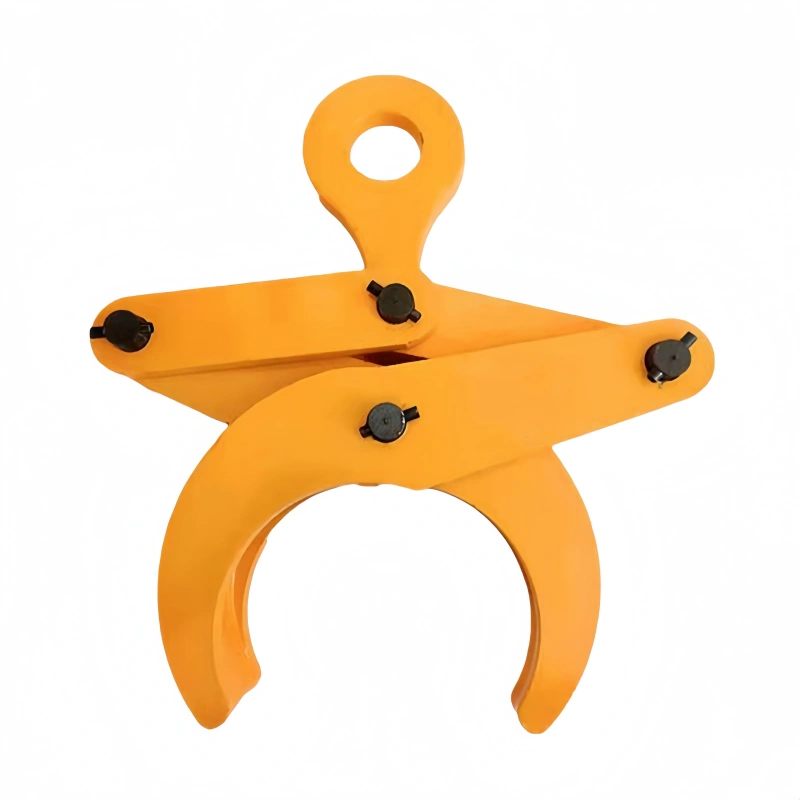
Round-Bar and Pipe Lifting Clamps
Round-bar and pipe lifting clamps use a contact profile suited to curved materials. Selection depends on outside diameter, wall or rim geometry, surface condition, load distribution, and lifting orientation. A standard flat-plate clamp should not be substituted unless the manufacturer specifically permits that use.
Not sure which clamp fits? Send a drawing, marked-up photo or load dimensions for review.
Compare Lifting Clamp Types
| Clamp Type | Best Suited To | Main Selection Details |
|---|---|---|
| Vertical Plate Clamp | Carrying or turning single steel plates into an upright position | Working Load Limit (WLL), minimum load, jaw range, material hardness, turning angle |
| Horizontal Plate Clamp | Moving plates or sheets in a flat position | Capacity per clamp/pair/set, sling angle, plate size, plate sagging considerations |
| Beam Lifting Clamp | Lifting structural beams and steel sections | Beam profile, flange dimensions, balance, lifting orientation |
| Round-Bar / Pipe Clamp | Handling approved curved sections such as pipes or round bars | Diameter, wall thickness/profile, surface condition, lifting orientation |
Lifting Clamp Specifications to Confirm
A model number or tonnage alone is not enough to select a lifting clamp. Include the following information in your inquiry so the quotation reflects the actual load and lifting arrangement.
| Specification | What to Provide | Why It Matters |
|---|---|---|
| Maximum Gross Load | Total weight supported by the clamp or clamp set | Establishes the required Working Load Limit (WLL) |
| Load Shape and Material | Plate, beam, pipe, bar or other approved profile; material grade | Determines the clamp family and contact method |
| Critical Dimensions | Plate thickness, flange width, outside diameter and tolerances | Must fit the usable jaw or profile range |
| Lifting Direction | Vertical, horizontal, turning, side pull or positioning | Confirms permitted load directions and any derating |
| Surface Condition | Hardness, coating, paint, oil, scale or finished surface | Affects grip and whether a special or non-marring model is needed |
| Clamp Quantity and Rigging | Number of clamps, spacing, sling angle, lifting beam and connection | Affects load sharing, stability and connection compatibility |
| Service Environment | Temperature, outdoor exposure, corrosion, chemicals and duty cycle | May change material, finish, inspection or operating limits |
| Documentation | Destination market, standard, markings, test certificate and manual | Keeps the supplied product aligned with project requirements |
When the clamp is connected through a sling set or lifting beam, include the proposed chain slings, shackles, and hook dimensions in the RFQ. The complete assembly must provide adequate capacity and articulation without forcing the clamp into an unapproved loading direction.
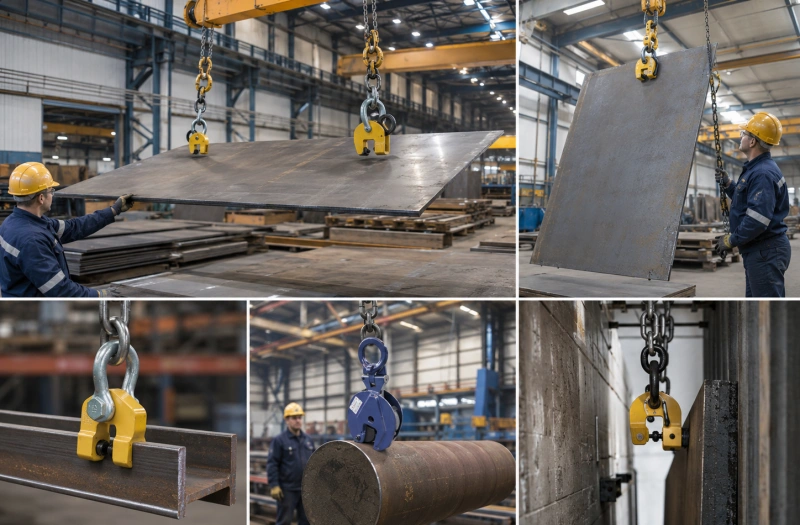
Industrial Applications
Lifting clamps are used where flat, structural or round materials need a direct lifting point and wrapping a sling is slow or impractical. Common applications include steel service centers, fabrication workshops, construction, shipbuilding, machinery manufacturing, warehouses, ports, maintenance operations and industrial distribution.
• Loading, unloading and positioning steel plate
• Turning plate for welding, cutting or assembly
• Moving structural beams and fabricated sections
• Handling round bars, approved pipes and similar profiles
• Repetitive material movement in production and warehousing
• Project-specific lifting arrangements where space around the load is limited
Why Buy Lifting Clamps from Powerful Machinery?
Product Range Built Around Industrial Buying Needs
Choose the right lifting solution for plate, beam, or round-material handling instead of using one clamp type for unrelated applications. Buyers comparing lifting clamp manufacturers should evaluate whether suppliers can provide the correct product family, capacity, jaw or profile range, and required documentation. Powerful Machinery organizes its lifting clamp range around these key selection factors, making it easier to compare suitable options quickly.
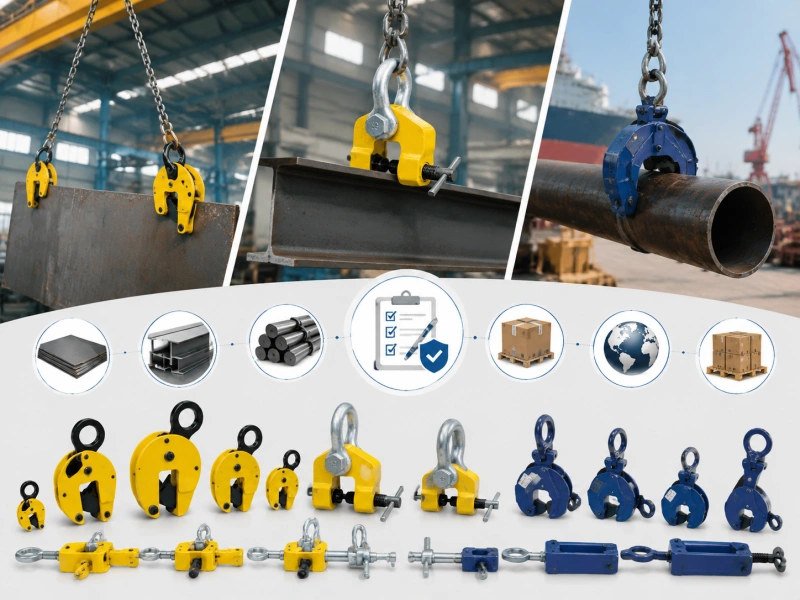
Application-Based Quotation Support
Your quotation can be based on the load weight, dimensions, material, orientation, environment and connection arrangement. This reduces avoidable back-and-forth and makes product limitations, documentation and commercial assumptions clearer before ordering.
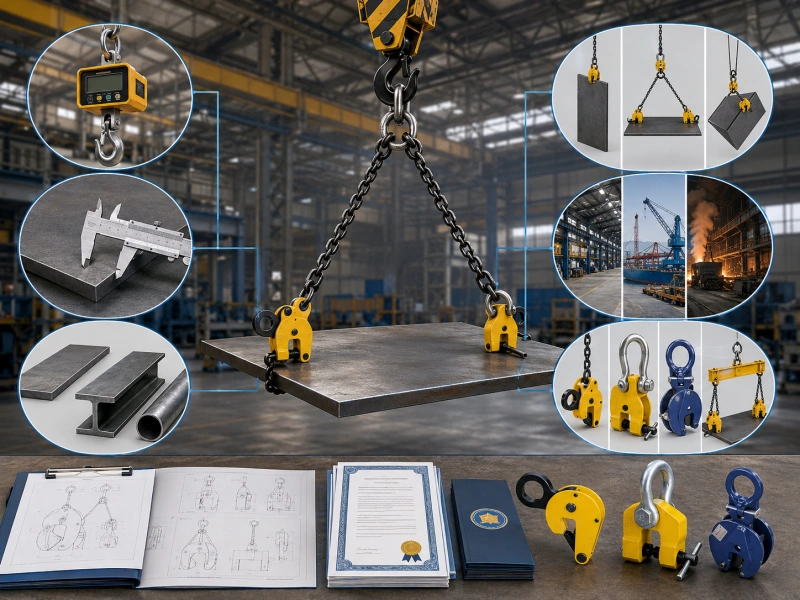
OEM and Bulk-Order Options
For distributors and repeat buyers, include required branding, color, packaging, labeling, manuals, spare parts and inspection documents in the RFQ. Custom requests should be confirmed against the intended application and applicable project requirements before production.
For distribution programs, also state the target market, expected annual volume, preferred carton quantities, barcode or label format, language requirements and whether samples are needed before a production order. For project purchases, identify the required delivery batches, approval process and document submittal schedule. These details allow the quotation to separate standard products from project-specific work and make lead-time assumptions easier to review. If several lifting clamp models will be ordered together, provide a line-by-line schedule with quantity, capacity, jaw range and intended application so packing, spare parts and documentation can be coordinated across the order.
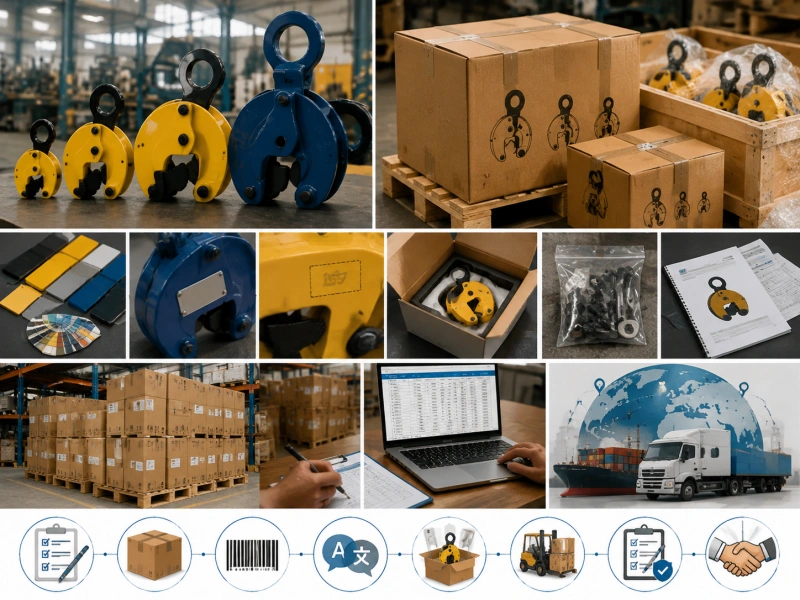
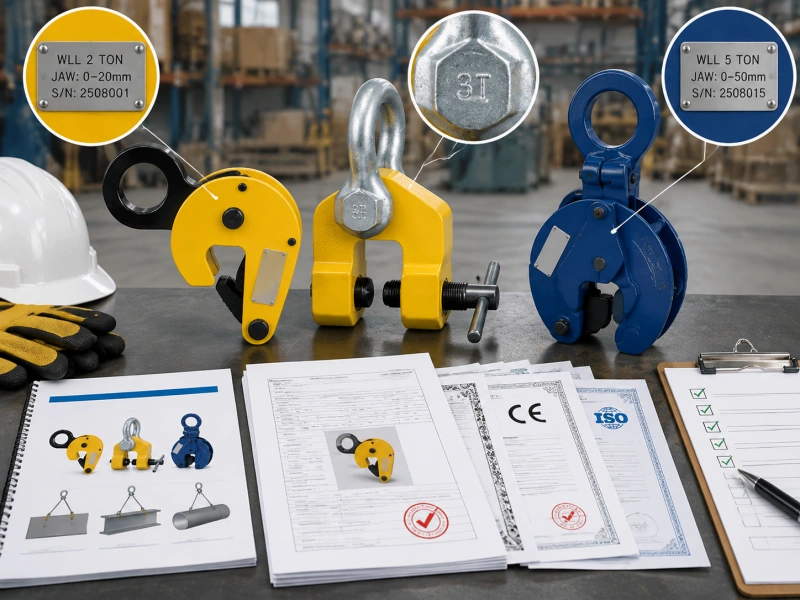
Quality and Documentation Review
Confirm the required product markings, WLL, jaw range, identification, operating instructions and test or conformity documents at quotation stage. The final documentation package should match the destination market, product model and buyer specification rather than relying on a generic certificate statement.
How to Request a Lifting Clamp Quote
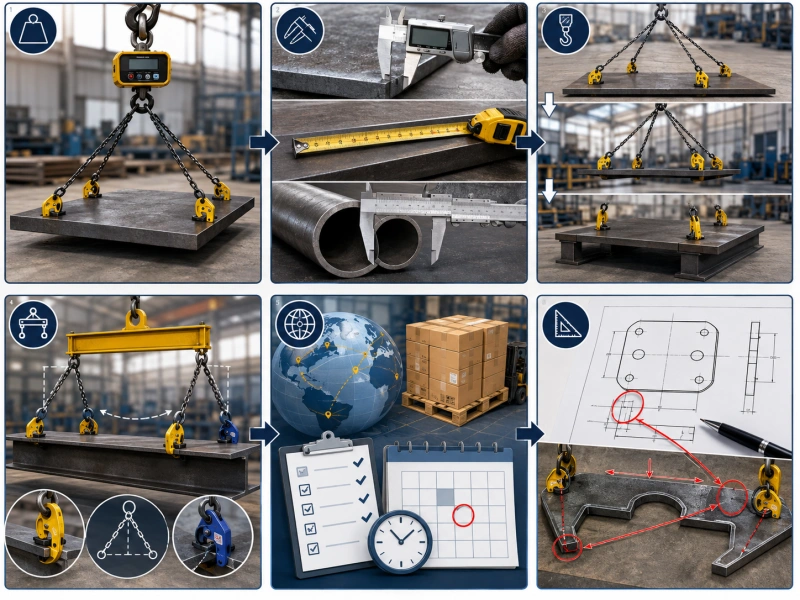
1. Describe the load and maximum gross weight.
2. Add the material grade, surface condition and critical dimensions.
3. Show the starting, travel and final lifting positions.
4. State the number of clamps, sling angle and lifting-beam arrangement.
5. Include the destination country, required standard, quantity and delivery target.
6. Attach a drawing or marked-up photo when the shape, center of gravity or clearance is unusual.
Lifting Clamp FAQs
Which Lifting Clamp Do I Need?
Start with the load shape and lifting direction. Use a vertical plate clamp for upright plate handling, a horizontal clamp for flat plate transport, a beam lifting clamp for structural sections, or a profile-matched clamp for round materials. Then check WLL, minimum load, jaw range, hardness and rigging geometry.
What Information Is Needed for a Quote?
Send the maximum gross load, material, plate thickness or profile dimensions, surface condition, starting and final orientation, clamp quantity, sling or lifting-beam arrangement, destination market, required documents and order quantity.
Are Vertical and Horizontal Plate Clamps Interchangeable?
No. They are designed for different load positions and rigging arrangements. Use each clamp only in the directions and configurations permitted by its manufacturer. A universal model must still be checked against its specific load diagram and limitations.
Can One Clamp Lift Different Plate Thicknesses?
Only within the model’s stated jaw range and engagement requirements. Measure the actual material, including tolerances and coatings, and confirm that the full range fits before ordering.
Can You Supply OEM Lifting Clamps?
OEM requests can include branding, color, packaging, labels, manuals and project documentation. Send the expected quantity and market requirements so feasibility, tooling, samples and approval steps can be confirmed in the quotation.
What Documents Should Be Requested?
Request the operating manual, product markings, WLL and jaw-range information, identification details and any test or conformity documents required by your market or project. State these requirements before ordering so the document package can be confirmed.
Request a Factory Quote
Tell us what you are lifting, how it will be moved, and where the product will be used. Contact Powerful Machinery to discuss the right lifting clamp range, quantity, packaging, and documentation requirements for your project or distribution program.