Comparing Key Features for 2026
Explore essential differences between pallet jacks and stackers.
Features | Pallet Jack | Pallet Stacker |
|---|---|---|
Lift Height | Up to 31.5 inches (high-lift models) | Up to 18 feet or more |
Load Capacity | 2,200 – 17,000 lbs | 3,000 – 5,500 lbs or more |
Maneuverability | High, designed for tight spaces | Less nimble due to larger size |
Typical Use | Short-distance pallet movement | Stacking pallets at height |
Power Options | Manual, Electric, Ride-on | Manual, Semi-electric, Electric, Ride-on, Counterbalance |
Best For | Warehouses, retail, logistics | Warehouses, factories, distribution |
When you compare a pallet jack vs. a stacker for your operation in 2026, you must consider your lift height, application, and efficiency needs. Powerful Machinery provides both options to suit your workflow.
Logistics experts recommend focusing on load capacity, maneuverability, energy-efficient systems, and smart features such as sensors and IoT integration.
Eco-friendly designs and recyclable components help reduce your carbon footprint.
Cost-effectiveness depends on total ownership costs, including maintenance and lifespan.
Making a SMART, future-proof choice ensures your equipment matches your goals and maximizes productivity.
Key Takeaways
Pallet jacks excel in moving heavy loads over short distances, making them ideal for tight spaces and quick transport.
Pallet stackers are designed to lift and stack pallets at greater heights, maximizing vertical storage and efficiency.
Consider your specific needs, such as load capacity and workspace layout, when choosing between pallet jacks and stackers.
Electric models of both pallet jacks and stackers reduce physical strain and improve productivity, making them a smart investment.
Use the SMART criteria to evaluate equipment options, ensuring they align with your operational goals and future needs.
Pallet Jack vs Stacker: Quick Comparison
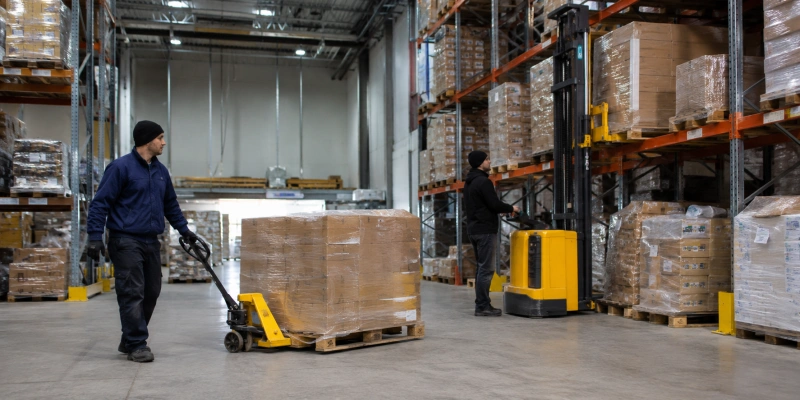
When you compare pallet jack vs stacker, you need to look at the core differences in design, performance, and application. Both types of equipment play a vital role in modern warehouses, but each serves a unique purpose.
Powerful Machinery offers a full range of pallet jacks and pallet stackers, so you can select the right tool for your workflow.
Key Differences
The following table highlights the main differences between pallet jacks and pallet stackers. This quick overview helps you see which equipment matches your operational needs.
Feature | Pallet Jacks | Pallet Stackers |
|---|---|---|
Lift Height | Up to 31.5 inches (high-lift models) | Up to 18 feet or more |
Load Capacity | 2,200 – 17,000 lbs | 3,000 – 5,500 lbs or more |
Maneuverability | High, designed for tight spaces | Less nimble due to larger size |
Typical Use | Short-distance pallet movement | Stacking pallets at height |
Power Options | Manual, Electric, Ride-on | Manual, Semi-electric, Electric, Ride-on, Counterbalance |
Best For | Warehouses, retail, logistics | Warehouses, factories, distribution |
You can see that pallet jacks excel at moving heavy loads across short distances, especially in tight spaces. Pallet stackers, on the other hand, allow you to lift and stack pallets to much greater heights, making them ideal for vertical storage.
When to Choose Each?
Choosing between a pallet jack and a stacker depends on your daily tasks and warehouse layout. Here are some practical guidelines to help you decide:
Choose pallet jacks if:
You need to move pallets horizontally over short distances.
Your workspace has narrow aisles or limited turning space.
You want a flexible tool for loading, unloading, or quick transport.
You operate in retail, small warehouses, or logistics centers with frequent pallet movement.
You value easy operation and minimal training for your team.
Choose pallet stackers if:
You need to lift pallets to high storage racks or mezzanines.
Your operation involves frequent stacking or unstacking of goods.
You handle high-volume or mid-sized commodities in a warehouse or factory.
You require powered lifting for heavy loads or want to reduce manual labor.
You want to maximize vertical storage and improve space efficiency.
Tip: If your facility handles both horizontal transport and vertical stacking, you may benefit from using both pallet jacks and pallet stackers. Powerful Machinery’s product range covers all these needs, from compact manual pallet jacks to advanced electric pallet stackers.
In many logistics centers and manufacturing facilities, pallet stackers handle tasks like loading and unloading trucks, moving pallets within the facility, and stacking goods in storage racks. Pallet jacks remain the go-to choice for short-distance movement and flexible operation in tight spaces.
When you evaluate pallet jack vs stacker, consider your lift height requirements, load weights, and the physical layout of your warehouse. Powerful Machinery’s experts can help you match the right equipment to your specific application, ensuring you get the best value and performance.
Pallet Jack Overview
What is a Pallet Jack?
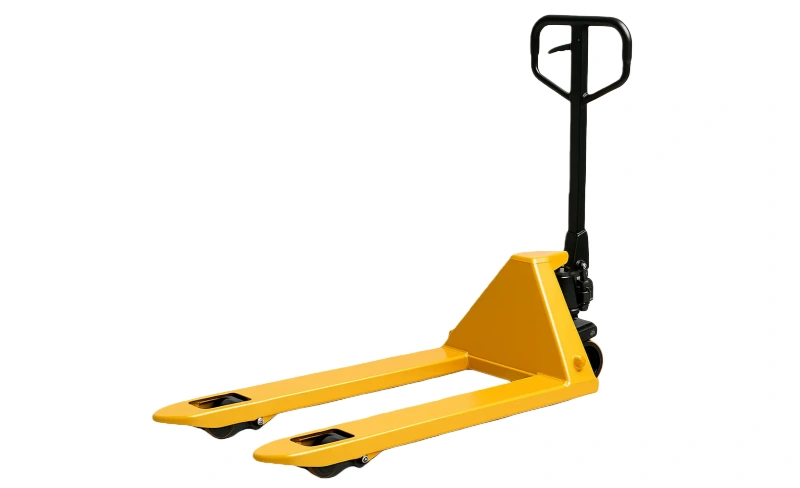
A pallet jack, also known as a pallet truck, is a fundamental tool designed to move pallets efficiently within warehouses, retail stores, and logistics centers. It consists of forks that slide under a pallet and a handle to steer and pump the forks up and down.
You can find manual pallet jacks operated by hand or electric models powered by batteries to reduce physical effort. Pallet jacks focus on horizontal transport, moving heavy loads quickly over short distances. Their compact design allows you to maneuver easily in tight aisles and confined spaces.
Main Uses and Benefits
Pallet jacks serve as essential equipment for transporting pallets from one location to another. You can use them for loading and unloading trucks, moving goods between storage areas, or positioning pallets for further processing. Here are key benefits you gain by using pallet jacks:
They dramatically reduce manual handling time and physical strain on workers.
They enable quick, precise movement of heavy loads, boosting productivity.
Electric pallet jacks improve material handling efficiency by up to 30% compared to manual options.
They lower worker fatigue and allow one person to move heavy loads safely.
Their design maximizes load transportation capabilities while minimizing physical strain.
Ergonomic features like adjustable handles and smooth controls help prevent injuries. Electric pallet trucks enhance mobility, letting you move more goods with less effort, which improves workflow and reduces downtime.
Pros and Cons
Using pallet jacks offers many advantages, but you should consider some challenges to optimize safety and performance.
Pros:
High maneuverability in narrow aisles and tight spaces.
Simple operation requiring minimal training.
Versatility for various industries, including retail, warehousing, and logistics.
Available in manual and electric models to suit different workloads.
Long service life, with many electric pallet jacks lasting 5 to 8 years under normal use, and some heavy-duty models exceeding 10 years.
Note: Proper use and maintenance extend the lifespan and ensure safety.
Cons:
Overloading can cause unsafe handling conditions.
Pushing and pulling heavy loads may still cause physical strain if not managed properly.
Musculoskeletal injuries, especially back injuries, remain a concern due to repetitive tasks and improper lifting techniques.
Human error contributes significantly to accidents involving pallet trucks.
By selecting the right pallet jack model and training your team on safe handling, you can maximize benefits while minimizing risks.
Pallet Stacker Overview
What is a Pallet Stacker?
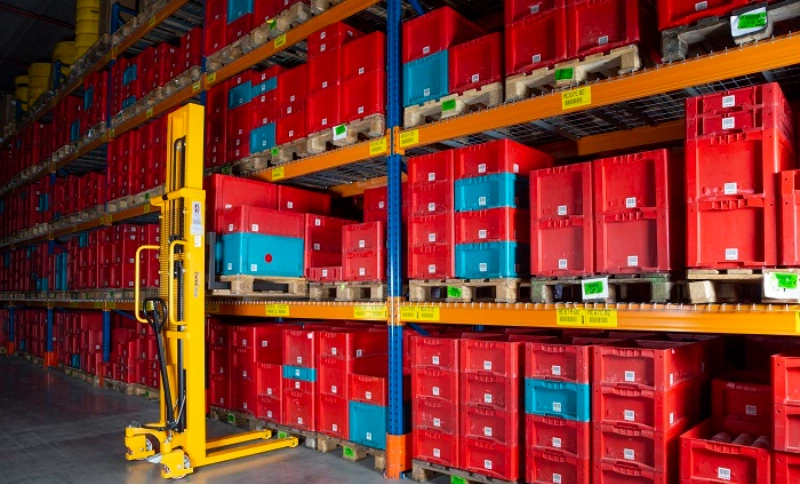
A pallet stacker is a specialized material handling tool designed for lifting and stacking pallets vertically. You use a pallet stacker when you need to move goods to higher storage racks or mezzanines.
Unlike a pallet jack, which focuses on horizontal movement, a pallet stacker uses electric or hydraulic systems to raise loads to significant heights. You can find models with adjustable forks, allowing you to handle different pallet sizes and elevations.
This equipment suits warehouses, factories, and distribution centers where vertical space matters.
Tip: If you want to maximize your warehouse’s vertical storage, a pallet stacker gives you the flexibility and reach that a pallet jack cannot match.
Here’s a quick comparison to highlight the differences:
Feature | Pallet Jack | Pallet Stacker |
|---|---|---|
Primary Use | Short-distance horizontal movement of pallets | Vertical lifting and stacking of pallets |
Lifting Mechanism | Manual hydraulic pump for slight lifting | Electric or hydraulic systems for significant lifting |
Load Capacity | Generally, lower load capacity | Higher load capacity for heavy goods |
Fork Adjustment | Fixed forks | Adjustable-height forks for various elevations |
Maneuverability | Lightweight and compact | Requires more space for operation |
Main Uses and Benefits
You rely on pallet stackers for efficient vertical handling of goods. They excel in high stacking applications, letting you store more products in less floor space. You can use pallet stackers for loading and unloading trucks, organizing inventory, and moving heavy items to upper racks.
Their electric or semi-electric operation reduces manual labor and speeds up warehouse tasks.
Key benefits include:
Simple operation with minimal training required
Adaptability for various warehouse layouts and pallet types
Cost-effectiveness compared to larger forklifts
Enhanced productivity through faster lifting and sorting
Built-in safety features that protect your team
Reduced physical strain, especially with electric models
Greater maneuverability than traditional forklifts
Note: Pallet stackers help you improve supply chain efficiency and workplace safety at the same time.
Pros and Cons
When you choose a pallet stacker, you gain several advantages:
You lift and stack heavy goods with ease.
You save time and reduce labor costs.
You increase safety with advanced features.
You adapt to changing warehouse needs.
Pallet stackers require more space than pallet jacks, but they offer unmatched vertical reach and flexibility. You can select from manual, semi-electric, or fully electric models to match your workload and budget. For operations focused on high stacking and efficient use of space, a pallet stacker remains the smart choice.
Electric Options for 2026
Latest Features
You see rapid innovation in electric pallet stackers and electric pallet jack technology. Manufacturers now offer advanced features that transform warehouse operations. The table below highlights the most important advancements for 2026:
Advancement | Description | Impact |
|---|---|---|
Improved Battery Life | Lithium-ion batteries deliver longer run times and faster charging. | Less downtime, more productivity. |
Automated Navigation Systems | Smart sensors guide equipment, reducing labor costs by over 25%. | Streamlined workflow, fewer errors. |
Eco-Friendly Features | Regenerative braking and efficient motors lower energy use. | Up to 20% reduction in consumption. |
Integration of IoT | Real-time monitoring boosts warehouse efficiency by more than 30%. | Better decision-making, fewer delays. |
Enhanced Ergonomics | Adjustable handles and cushioning improve operator comfort. | Lower injury rates, higher productivity. |
You benefit from these features whether you choose an electric pallet stacker or an electric pallet jack. Automated navigation and IoT integration help you optimize every move in your warehouse.
Efficiency and Sustainability
Electric pallet stacker models deliver faster movement and higher load capacity compared to manual equipment. You experience less physical strain and lower risk of injury. Electric pallet jack units also improve workflow by integrating with warehouse management systems.
Both options support zero-emission operation, making them ideal for indoor environments.
Electric pallet handling equipment helps you meet air quality standards and reduces your environmental impact.
Sustainability Benefit | Description |
|---|---|
Zero-emission operation | Supports clean indoor air and reduces environmental footprint. |
Lower operating costs | Cuts fuel and maintenance expenses, boosting sustainability. |
Compliance with air standards | Meets strict indoor air quality regulations for enclosed spaces. |
You see significant improvements in safety, productivity, and sustainability when you upgrade to electric pallet stackers and electric pallet jack solutions.
Cost and Maintenance
Electric pallet stacker and electric pallet jack equipment offer long-term savings. You spend less on fuel and maintenance. Automated systems reduce labor costs and minimize downtime.
Enhanced ergonomics lower injury rates, saving you money on healthcare and lost productivity. You invest in technology that pays off through efficiency and reliability.
Electric pallet stacker models require less frequent maintenance due to advanced engineering.
Electric pallet jack units deliver consistent performance and reduce total ownership costs.
You achieve higher ROI by choosing electric options that match your operational needs.
You make a smart investment when you select an electric pallet stacker or electric pallet jack equipment for your warehouse in 2026.
Choosing Smart: The SMART Criteria
When you select between a pallet jack and a pallet stacker, you should use the SMART criteria. This approach helps you make a decision that fits your operation now and in the future. Here’s how you can apply each step:
Specific Needs
You must identify your unique requirements before choosing equipment. Consider these factors:
Maneuverability: Pallet jacks work best in tight spaces. Stackers offer power steering for larger areas.
Load Capacity and Lifting Height: Stackers handle heavier loads and reach higher shelves. Pallet jacks suit ground-level transport.
Workspace Constraints: Pallet jacks excel in horizontal movement. Stackers provide flexibility for vertical storage.
Cost Considerations: Pallet jacks usually cost less to buy and maintain.
Tip: List your daily tasks and match them to the strengths of each machine.
Measurable Specs
You should compare key specifications to ensure the equipment meets your needs:
Load capacity at the required lift height and load center
Battery capacity, especially if you run multiple shifts
Turning radius, tested with your actual pallets in your aisles
Warranty length and covered components
Pre-shipment inspection and spare parts support
Powerful Machinery provides detailed specs and can help you verify these points for your operation.
Application Fit
You need to match the equipment to your workflow. Walkie pallet stackers can boost productivity by up to 20% in busy facilities. They excel at loading trucks, moving pallets, and stacking goods. Regular maintenance of pallet jacks also keeps your warehouse running smoothly and reduces downtime.
ROI and Productivity
You should evaluate how each option impacts your bottom line. Electric models reduce labor costs and injuries. Proper maintenance extends equipment life and increases uptime. Choose the solution that delivers the best return on investment for your business.
Technology Trends
Stay ahead by considering the latest trends:
Industry 4.0 integration with IoT sensors and AI for real-time tracking
Autonomous systems like AGVs and robotic palletizers
Modular systems for flexible operations
Digital twin technology for predictive optimization
Powerful Machinery offers support and customization to help you adopt these innovations and future-proof your warehouse.
Conclusion
You see clear differences between pallet jacks and pallet stackers.
Pallet stackers lift and stack pallets at various heights, maximizing storage space and efficiency.
Pallet jacks move pallets on the ground level and excel in tight spaces.
Both offer manual and electric models, with electric options reducing operator fatigue and strain.
Use the SMART criteria to match equipment to your needs. For small warehouses, pallet jacks offer flexibility. For high stacking, pallet stackers deliver vertical reach. Consult Powerful Machinery for expert guidance and tailored solutions.
FAQ
What is the main difference between a pallet jack and a pallet stacker?
You use a pallet jack for moving pallets on the ground. A pallet stacker lifts and stacks pallets at different heights. Each tool fits a specific need in your warehouse.
Which option is better for small warehouses?
You benefit from a pallet jack in small warehouses. It moves easily in tight spaces and handles short-distance transport. A pallet stacker works better if you need to store goods on high racks.
How do I choose the right pallet handling equipment for my operation?
You should consider your lift height, load weight, and available space. Compare the features of each machine. Powerful Machinery can help you select the best solution for your workflow.
Are electric models worth the investment?
You gain higher efficiency and lower physical strain with electric models. They reduce labor costs and improve productivity. Electric options also support sustainability goals in modern warehouses.
Can I use both pallet jacks and pallet stackers together?
You can use both tools for maximum flexibility. Move pallets with a pallet jack and stack them with a pallet stacker. This combination streamlines your warehouse operations.