When you compare shackle manufacturers, a familiar brand name is only the starting point. A lifting shackle must match the working load limit (WLL), connection geometry, load direction, pin type, material, environment, and the standard named in your purchase order. You also need evidence: readable markings, material traceability, inspection records, and the test documents required for your market.
This updated guide keeps the original list of eight manufacturers and brands, then shows you how to compare them as a buyer. It also gives you first-party data from Powerful Machinery: a Grade S WLL table, proof-load and minimum breaking-load values, a practical QC workflow, typical MOQ and lead-time guidance, customization inputs, and the factory evidence you should expect from a serious shackle supplier.
If you first need to compare shackle types, WLL ranges, pin options, dimensions, and quotation requirements, start with our lifting and rigging shackles range.
Important: Green Pin is a Van Beest brand, not a separate manufacturer. It remains in this list because many buyers search for and specify the Green Pin brand independently.
Key Takeaways
- Compare the exact shackle model and standard, not only the manufacturer name.
- Treat WLL, proof load, minimum breaking load, and design factor as different values. Never use the breaking load as the allowable working load.
- Ask for a current certificate package that matches your purchase order, batch, heat, size, finish, and destination market.
- Use screw pin shackles for connections that are regularly assembled and removed; use bolt-type shackles when a secure, long-term connection is more important.
- For custom shackles, send the load case, standard, dimensions, pin type, material, finish, marking, quantity, and inspection plan before asking for price.
Shackle Manufacturers and Brands: Quick Comparison
| Manufacturer/brand | Best fit | Product evidence | Buyer check |
| Crosby Group | Global lifting projects and documented catalog selection | Carbon, alloy, screw pin, bolt type, wide-body and specialty shackles | Send RFQ details; MOQ and lead time vary by model, finish, and tooling |
| Van Beest | Marine, offshore and international distribution | Green Pin lifting, lashing and mooring hardware with technical documentation | Specify brand and product number; Green Pin is part of Van Beest |
| Powerful Machinery | B2B bulk supply, OEM/ODM and custom forged shackles | Grade S, U.S.-type, stainless steel, bow/anchor and Dee ranges | Send RFQ details; MOQ and lead time vary by model, finish and tooling |
| Green Pin | Buyers who specify a premium Van Beest product line | Standard, wide-body, polar, sling and specialty shackles | Buy through an authorized channel and match the certificate to the model |
| YOKE Industrial | Integrated lifting hardware and engineered component sourcing | Lifting points, chain fittings, wire-rope accessories and selected connectors | Verify current shackle models and approvals in the latest catalog |
| Chicago Hardware | U.S.-made industrial and marine hardware | Drop-forged anchor and chain shackles; round, screw and bolt pins | Confirm whether the product is rated for the intended lifting application |
| Peerless Industrial | North American chain and rigging supply programs | Chain, lifting products and related industrial hardware | Check current product ownership, catalog scope and availability before specification |
| Columbus McKinnon | U.S.-made and specialty shackle applications | Super Strong, alloy, long-reach, theatrical and web-sling shackles | Compare carbon vs. alloy range, WLL, and 5:1 or 6:1 design factor by model |
Manufacturer, Authorized Distributor, or Industrial Supplier?
Not every shackle supplier serves the same purchasing need. A manufacturer is usually the better fit for OEM/ODM projects, custom dimensions, controlled drawings, private-label markings, batch traceability, and repeat production runs.
An authorized distributor is often the faster option when you need a specific branded shackle or catalog model, regional stock, smaller quantities, or a tight delivery window. A multi-brand industrial supplier can simplify mixed orders when shackles are purchased together with slings, chain, hooks, or other rigging hardware.
Whichever source you choose, compare the exact shackle model rather than the company name alone. Confirm the WLL, body and pin type, dimensions, material, finish, applicable standard, markings, certificate package, quantity, lead time, applicable Incoterm, and whether the quoted item is manufactured in-house, supplied from stock, or sourced through another channel. For product specifications and quotation requirements, review our lifting and rigging shackles range.
If domestic sourcing is a project requirement, verify the manufacturing location, country of origin, stock location, and actual manufacturer separately. Our guide to U.S. shackle manufacturers can help you build a regional shortlist.
1. Crosby Group
Overview
Crosby remains one of the most recognized names in lifting and rigging hardware. Its current shackle portfolio includes screw pin, round pin, bolt-type, alloy, carbon, wide-body, subsea, theatrical, and other specialty designs. That depth makes Crosby useful when your project requires an established catalog product, published dimensions, and application guidance.
What Buyers Should Verify
Do not order a “Crosby shackle” without a model number. A G-209 screw pin anchor shackle, a G-2130 bolt-type anchor shackle, and a G-2160 wide-body shackle solve different connection problems. Confirm the nominal size, WLL, bow and pin material, design factor, finish, temperature range, side-loading guidance, and certificate options for the exact model.
Official product reference: Crosby G-209 / S-209 screw pin anchor shackles.
2. Van Beest
Overview
Van Beest manufactures lifting, lashing and mooring fittings and is best known for the Green Pin brand. Buyers use its products across marine, offshore, construction and industrial applications. Its practical strength is not one generic shackle; it is the breadth of application-specific products, documentation and global availability.
What Buyers Should Verify
Match the product family to the connection. Standard bow and Dee shackles cover common lifts, while wide-body, polar, sling, and other specialty designs address synthetic-sling bearing area, low-temperature service, or high-capacity work. Confirm the product code, WLL, material, design factor, finish, certification package, and authorized supply channel.
Official brand reference: Van Beest – Green Pin products.
3. Powerful Machinery
Overview
Powerful Machinery is a Qingdao-based physical manufacturer and B2B exporter of chains, wire rope and rigging hardware. For shackles, the value proposition is direct factory communication, standard and custom production, in-house mold development, forging and forming, machining, heat-treatment control, batch testing, marking, and export documentation.
The factory supports standard product supply as well as OEM/ODM projects built from drawings and performance requirements. See the Powerful Machinery factory overview.
Manufacturing Capability You Can Audit
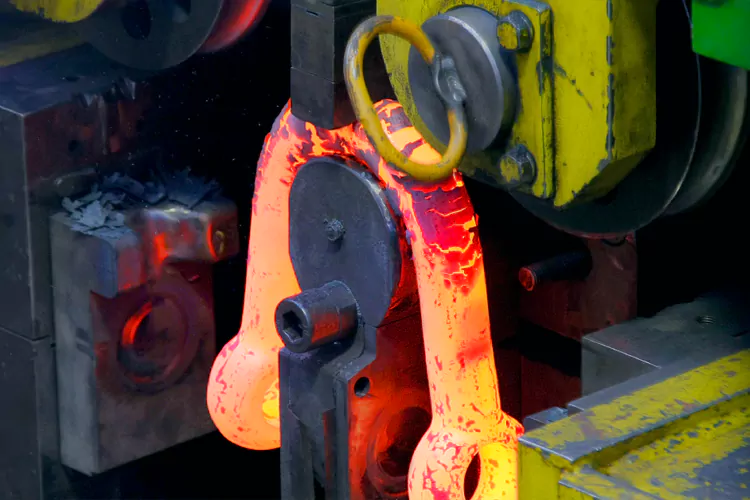
- Precision forging and forming for shackle bodies and pins, using high-tonnage presses to establish the required geometry and grain flow.
- Controlled heat treatment for the selected carbon or alloy steel system, followed by hardness or mechanical-property checks as required by the specification.
- Independent mold development and machining for non-standard bow profiles, pin sizes, tooling, logos and OEM/ODM dimensions.
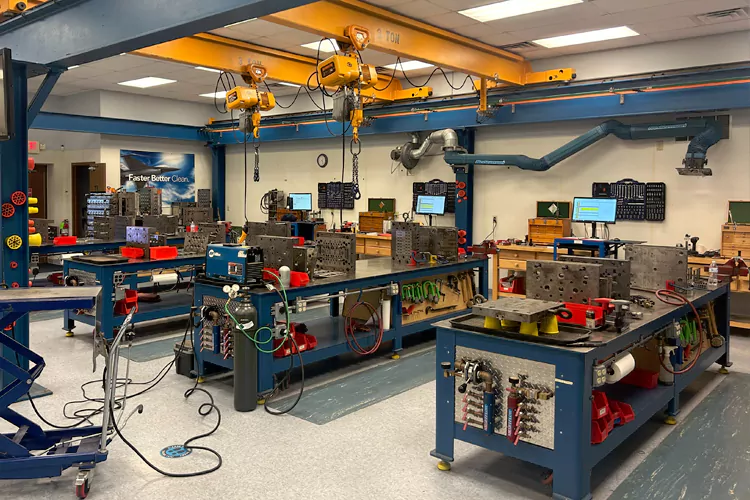
- In-house testing capability that includes tensile equipment, chemical-composition analysis, and fatigue-test equipment; the exact inspection plan is agreed upon by product and order.
- Batch identification, WLL marking and documentation support from raw-material verification through packing and shipment.
Actual Grade S Bow Shackle Specifications
The table below uses Powerful Machinery’s published AS 2741 Grade S bow shackle range. The published product data states proof load at 2 x WLL and minimum breaking force at 6 x WLL. The proof-load and minimum-breaking-load columns are calculated from those published ratios. Always use the WLL marked on the supplied shackle and confirm the current drawing and certificate before use.
| Nominal size | WLL | Published proof load (2 x WLL) | Published minimum breaking load (6 x WLL) |
| 6 mm | 0.5 t | 1 t | 3 t |
| 8 mm | 0.75 t | 1.5 t | 4.5 t |
| 10 mm | 1 t | 2 t | 6 t |
| 11 mm | 1.5 t | 3 t | 9 t |
| 13 mm | 2 t | 4 t | 12 t |
| 16 mm | 3.2 t | 6.4 t | 19.2 t |
| 19 mm | 4.7 t | 9.4 t | 28.2 t |
| 22 mm | 6.5 t | 13 t | 39 t |
| 25 mm | 8.5 t | 17 t | 51 t |
| 29 mm | 9.5 t | 19 t | 57 t |
| 32 mm | 12 t | 24 t | 72 t |
| 35 mm | 13.5 t | 27 t | 81 t |
| 38 mm | 17 t | 34 t | 102 t |
| 44 mm | 25 t | 50 t | 150 t |
| 51 mm | 35 t | 70 t | 210 t |
| 63 mm | 55 t | 110 t | 330 t |
Do not confuse the values: WLL is the maximum authorized load in the stated conditions. Proof load is a controlled manufacturing or certification test. Minimum breaking load is not a usable capacity and must never replace WLL in a lift plan.
| Specification item | Powerful Machinery published capability/order requirement |
| Standard | AS 2741 Grade S product family; confirm the revision and destination-market acceptance on the PO |
| Material | WLL, grade, size, and batch/traceability identification as required by the applicable specification |
| Finish | Hot-dip galvanized, powder-coated or other agreed finish, depending on corrosion exposure and order |
| Pin options | Screw pin for frequent assembly; safety bolt/nut/cotter pin for longer-term or vibration-sensitive connections |
| Marking | WLL, grade, size and batch/traceability identification as required by the applicable specification |
| Capacity range | Published Grade S bow range: 0.5 t to 55 t WLL, nominal sizes 6 mm to 63 mm |
Testing and QC Procedure
- Contract review: engineering checks the applicable standard, WLL, load direction, pin type, material, finish, marking, certificate requirements, and acceptance criteria.
- Raw-material verification: check supplier documents, heat or batch identity and, where specified, chemical composition and mechanical properties.
- Tooling and first-piece approval: verify the forging die, body and pin geometry, thread fit, critical dimensions and the approved sample or drawing.
- Forging and heat treatment control: record process parameters and maintain lot separation through forming, heat treatment, and surface preparation.
- In-process inspection: check dimensions, alignment, surface condition, threads, pin engagement, hardness, and visual defects according to the inspection plan.
- Proof-load testing: apply the specified proof load using calibrated equipment and record the batch, item, or sampling basis required by the standard and PO.
- Post-test inspection: inspect for permanent deformation, cracks, thread damage, and dimensional change; perform NDT when the specification or buyer requires it.
- Final release: verify markings, quantity, coating, packaging and traceability, then compile the agreed certificate package before shipment.
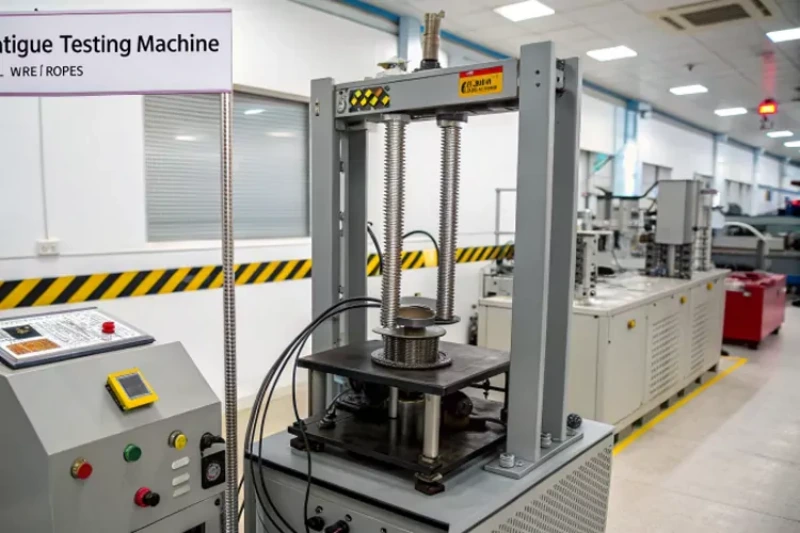
For a deeper explanation of test terminology, read proof testing of rigging equipment. Your RFQ should still state the exact proof-load ratio, sampling plan, calibration requirement, and certificate format for the shackle order.
Certificates and Documents to Request
A logo or an ISO statement does not tell you whether a particular shackle batch meets your project requirements. Ask the supplier to identify the document, issuer, scope, revision, and batch connection. Powerful Machinery states that the following documents may be supplied depending on the product and order:
- Certificate of conformity tied to the PO and product specification.
- Material test certificate or mill certificate, with heat or batch traceability where required.
- Proof-load or load-test report showing test basis, load, equipment identification, date and result.
- Dimensional and final inspection report, including coating and marking checks.
- Third-party inspection or witnessing by SGS, BV, or another agreed body when included in the contract.
- Current quality-management certificate and scope, if your vendor-approval process requires it.
Certificate check: Request the actual current certificate copy before publication or purchase. Do not describe OSHA or ASME as product-certification bodies, and do not assume a company-level ISO 9001 certificate certifies every shackle model.
MOQ, Lead Time and Customization
| Commercial item | Published guidance and buyer action |
| MOQ | B2B MOQ applies. A published Grade S bow shackle factory listing shows 50 pieces; final MOQ depends on size, finish, marking, packaging and tooling. |
| Standard lead time | Price and schedule should be quoted against a controlled drawing, standard revision, quantity by size, Incoterm, destination, and document list. |
| Custom lead time | Confirm after drawing review, tooling assessment, sample approval and inspection-plan agreement. Tooling and third-party witnessing add time. |
| Customization | Dimensions, pin type, material, finish, WLL marking, batch/serial marking, logo, packaging and documentation can be reviewed for OEM/ODM orders. |
| Quotation basis | Price and schedule should be quoted against a controlled drawing, standard revision, quantity by size, Incoterm, destination and document list. |
Application Engineering: What to Send With Your RFQ
- Maximum gross load, dynamic factors, and the required WLL; never request a size from load weight alone.
- Connection geometry: pin diameter, bow clearance, lug thickness, sling eye width and the dimensions from our shackle size guide.
- Load direction and any expected side loading; review the relevant types of lifting shackles before freezing the pin and bow style.
- Screw pin, round pin, or safety bolt requirement, including vibration, rotation, and connection duration.
- Material and environment: carbon/alloy steel, stainless grade, temperature, saltwater, chemicals, abrasion, and coating life.
- Applicable standard and revision, destination market, inspection level, proof-load basis, NDT and third-party witness requirements.
- Permanent markings, traceability, packaging, quantity by size, and target delivery date.
Published Buyer Case: 500-Piece G2130 Marine Order
| Case field | Details |
| Buyer need | A bulk order of 500 G2130 anchor shackles for marine-based projects, with secure bolt/nut/cotter-pin retention. |
| Published configuration | 304/316 stainless steel G2130-style anchor shackles with WLL by size and a safety-pin design. |
| Approved PO excerpt, size mix, batch certificate, inspection result, delivery date, installed photo, and customer permission. | Stainless steel addressed corrosion exposure; the safety bolt arrangement reduced the risk of accidental loosening in longer-term connections. |
| Evidence currently published | A buyer review on the Powerful Machinery G2130 product page states the quantity, marine use and reorder intention. |
| Evidence to add for a stronger case study | Approved PO excerpt, size mix, batch certificate, inspection result, delivery date, installed photo and customer permission. |
Related product: G2130 stainless steel anchor shackle.
4. Green Pin
Overview
Green Pin is Van Beest’s premium lifting and lashing brand. Buyers often specify it separately because its catalog includes recognizable standard and specialty products, published technical data, and international distribution. Treat Green Pin as a product-brand choice within the Van Beest manufacturing organization, not as an independent second factory.
What Buyers Should Verify
Confirm the exact Green Pin product code. A standard bow shackle, wide-body shackle, and polar shackle do not share the same geometry or application limits. Ask for the model-specific WLL, minimum breaking load, material, finish, temperature limit, and certificate options. Verify that the distributor is authorized and that the product markings match the documents.
Official reference: Green Pin products.
5. YOKE Industrial
Overview
YOKE Industrial is known for lifting points, chain fittings, wire-rope accessories, and other engineered lifting components. It can be a useful supplier when the shackle is part of a larger controlled hardware system, and the buyer wants compatible components, technical support, and asset-management features.
What Buyers Should Verify
Use the latest YOKE catalog rather than a third-party summary. Confirm that the required shackle or connector is current, that its WLL and standard cover your application, and that any class approval or certificate applies to that exact product and manufacturing site. For system assemblies, verify compatibility across the chain, master link, hook, and shackle.
Official company reference: YOKE Industrial.
6. Chicago Hardware & Fixture Company
Overview
Chicago Hardware manufactures industrial and marine hardware in the United States. Its catalog includes drop-forged anchor and chain shackles with round pin, screw pin, and bolt-type closures, plus related wire-rope and chain fittings. This makes it relevant for buyers who prioritize a domestic U.S. source and established catalog geometry.
What Buyers Should Verify
Confirm the exact catalog figure, finish, and federal-specification claim. Not every industrial connector should automatically be treated as an overhead-lifting shackle. Ask for the current WLL, design factor, marking, test basis, and certificate package, and ensure the product is permitted by your site standard and lift plan.
Official product reference: Chicago Hardware shackles.
7. Peerless Industrial Group
Overview
Peerless is associated with North American chain, lifting, and industrial hardware programs. For procurement teams, the practical question is not the historical company description; it is whether the current catalog and ownership structure can supply the exact rated shackle or connected chain product your project requires.
What Buyers Should Verify
Request the current manufacturer name, product code, manufacturing location, WLL, standard, markings and certificate route. If you are matching older installed hardware, do not assume that a legacy Peerless name maps directly to a current product. Obtain written confirmation of the approved replacement.
8. Columbus McKinnon
Overview
Columbus McKinnon offers U.S.-made CM shackles for general and specialty applications, including Super Strong, alloy, long-reach, theatrical and web-sling models. Its range is useful when a buyer needs a recognized domestic product and wants to compare strength-to-size, special geometry or application-specific finishes.
What Buyers Should Verify
CM Super Strong carbon shackles are published with a 6:1 design factor, while CM alloy anchor shackles are published with a 5:1 design factor. That difference is a useful reminder: never apply one brand-wide breaking-load ratio to every model. Confirm the selected shackle’s WLL, material, design factor, pin style, and application limitations.
Official product reference: CM lifting shackles.
How to Choose a Shackle Manufacturer or Supplier?
A good shackle manufacturer or supplier comparison should lead to an auditable purchasing decision. Start with product fit and supporting technical evidence, then verify the supply channel, documentation, commercial terms, and level of support required for the order. Use the criteria below to move from a brand or supplier shortlist to an approved source.
| Selection criterion | Evidence to request |
| Product fit | Heat/batch identity links the material record, production lot, test result, and shipped product |
| Standard control | Quotation and drawing name the standard, revision, grade, design factor and marking rules |
| Material traceability | Heat/batch identity links the material record, production lot, test result and shipped product |
| Testing | Proof-load and NDT requirements are defined; equipment calibration and sampling/individual-test basis are recorded |
| Documentation | CoC, MTC, proof-load report, inspection report and third-party witness documents are agreed before production |
| Manufacturing evidence | Factory photos/video show the relevant process; the supplier can explain forging, heat treatment, machining and inspection |
| Commercial fit | MOQ, lead time, Incoterm, packaging, warranty and change-control process support your supply plan |
| Engineering support | The supplier challenges an unsafe or incomplete RFQ instead of quoting an unverified size |
Shackle Manufacturer RFQ Checklist
- Application and load case, including maximum gross load and any dynamic or angular loading.
- Shackle type, pin type, nominal size, WLL and connection dimensions.
- Material grade, heat treatment, surface finish, and service temperature/environment.
- Applicable standard and revision; design factor, proof-load ratio and minimum breaking-load requirement.
- Individual or batch test basis, NDT method, third-party witness and acceptance criteria.
- Markings, logo, serial/batch code, language, and packaging labels.
- Certificate package, drawing approval, sample/first-article approval and change control.
- Quantity by size, annual forecast, MOQ, target delivery date, destination, Incoterm and packing method.
After delivery, use a documented shackle inspection checklist and remove hardware with missing markings, cracks, distortion, damaged threads, excessive wear, or other rejectable conditions from service.
FAQ
What is a shackle used for?
A shackle is a rated connector used to join lifting slings, chains, wire rope, hooks, lifting points, and other rigging hardware. The body and pin must be loaded only within the manufacturer’s rated conditions.
How do you choose the right shackle size?
Start with the required WLL and application, then check the bow and pin geometry against the connected sling eye, chain, hook, or lifting lug. Size alone does not establish capacity. Confirm load direction, side-loading limits, temperature, material, and the applicable standard.
What is the difference between WLL and breaking load?
WLL is the maximum load authorized for normal use in the stated conditions. Minimum breaking load is the minimum force at which the product is expected to fail during destructive testing. The ratio between them is the design factor. Breaking load must never be used as a working capacity.
Should every shackle be proof tested?
The test basis depends on the product standard, jurisdiction, buyer specification, and manufacturer. Some orders require individual proof testing; others use batch testing or destructive sampling. State the required basis in the RFQ and retain the matching report.
Which certificates should a shackle manufacturer provide?
Common documents include a certificate of conformity, material certificate, proof-load report, dimensional inspection report, and third-party inspection record when required. The correct package depends on the standard, project, and destination market. Ask for document samples before placing the order.
What is the MOQ and lead time for custom shackles?
Powerful Machinery operates as a B2B supplier and applies MOQ by product. A published Grade S bow shackle listing shows 50 pieces, while actual MOQ varies by size, tooling, marking, finish, and packaging. Published lead-time guidance ranges from about 15-30 days for some standard Grade S products to 30-60 days sitewide; custom tooling, sample approval, or third-party witnessing can extend the schedule.
Can shackles be customized?
Yes, when the requested design can be engineered, manufactured, tested, and documented to the applicable requirements. Common custom items include dimensions, pin style, material, finish, logo, batch or serial marking, and packaging. Do not request a new WLL by marking alone; load rating requires engineering validation and test evidence.
Conclusion
The best shackle manufacturer is the one that can prove the selected model fits your load, connection, environment, and compliance requirements. Brand reputation helps you build a shortlist, but your purchase order should still control the WLL, material, design factor, proof load, minimum breaking load, standard, marking, testing, and certificate package.
If you need standard or custom lifting shackles for wholesale, OEM, or project supply, send Powerful Machinery your drawing, WLL, standard, material, pin type, finish, quantity, and inspection requirements. Our engineering and quality teams can review the RFQ, identify missing inputs, and prepare a factory quotation. Contact Powerful Machinery.