Choosing the right material handling equipment plays a crucial role in boosting your operation’s efficiency and safety. Industry studies show that factories using advanced systems cut labor costs by up to 74%, reduce product damage by 78%, and experience fewer picking errors.
When you understand how to select material handling equipment, you can avoid costly mistakes and improve productivity. Focus on key factors like load type, operating environment, safety standards, budget limits, and vendor reliability.
Partnering with trusted providers such as Powerful Machinery ensures certified, high-performance solutions tailored to your needs.
Key Takeaways
Assess your operational needs before selecting equipment. Understand load types, weight, and size to choose the right tools.
Avoid common mistakes like overlooking total costs and neglecting safety. Consider all aspects of your operation to make informed decisions.
Choose equipment that matches your materials. Different materials require specific handling solutions to ensure safety and efficiency.
Prioritize safety and compliance. Select certified equipment with advanced safety features to protect your workforce and meet industry standards.
Plan for maintenance and vendor reliability. Regular inspections and strong vendor support help keep your equipment running smoothly and efficiently.
How to Select Material Handling Equipment for Your Business?
Assessing Load and Operational Needs
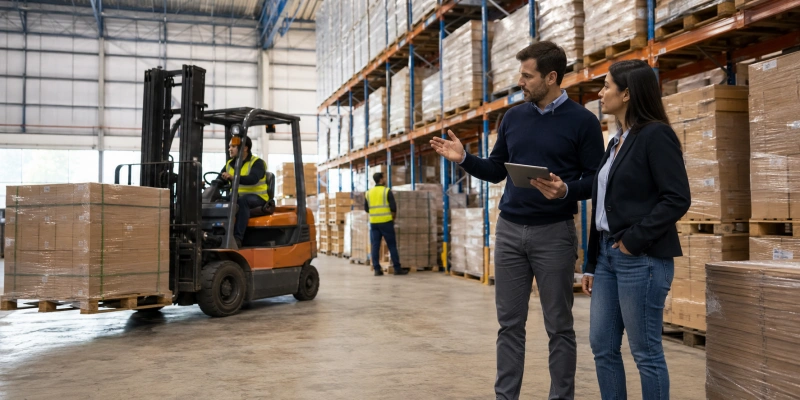
You need to start with a clear understanding of your operational requirements before deciding how to select material handling equipment. Powerful Machinery offers a wide range of solutions that address unique business needs, from heavy-duty lift tables to ergonomic pallet jacks.
You must evaluate the weight and size of your loads. For example, forklifts and pallet jacks work best for items placed on pallets, while smaller materials may require conveyor systems. The weight of your materials determines the type of equipment you need.
Forklifts must have the right weight capacity to ensure safety and prevent accidents. You should also consider the load center, which affects the effective weight capacity of the equipment.
Industry experts recommend a structured approach when you want to know how to select material handling equipment. You should analyze your workflow and operational goals. Assess throughput, speed, and labor needs. Think about space constraints and whether you need compact or vertical storage solutions.
Evaluate lifecycle costs, including maintenance and long-term savings. Powerful Machinery’s direct manufacturer pricing helps you manage costs while ensuring quality.
Common mistakes businesses make when selecting material handling equipment include:
Overlooking the true cost of ownership, such as maintenance, downtime, and energy use.
Ignoring reliability, which leads to increased downtime and production loss.
Neglecting safety, resulting in accidents and injuries.
Failing to plan for future expansion, causing costly retrofits.
Not understanding material behavior, which leads to operational inefficiencies.
You should avoid these pitfalls by considering all aspects of your operation. Powerful Machinery’s experts can help you identify the right equipment for your facility, ensuring you maximize productivity and minimize risks.
Factor | Description |
|---|---|
Material Characteristics | Inspect material properties such as durability, weight, physical form, and hazards to shortlist appropriate equipment. |
Load Capacity | Determine the required load capacity based on operational use to ensure safety and efficiency, avoiding risks associated with overloading. |
Check for safety features like anti-lock brakes and load sensors to enhance operational efficiency and worker security. | |
Flexibility & Adaptability | Equipment should be adaptable to various environments and workflows, ensuring operational efficiency. |
Regulatory Compliance | Ensure machinery meets necessary regulatory standards for safety and operator training. |
Budget | Consider the total cost of ownership, including maintenance and efficiency, to balance quality and cost. |
Customization Requirements | Adapt equipment to specific operational needs to improve flexibility and efficiency. |
Powerful Machinery provides customizable options for material handling equipment, allowing you to tailor solutions to your workflow. You can select platform sizes, fork dimensions, and load capacities that fit your operational needs. This flexibility ensures you achieve optimal productivity and safety.
Matching Equipment to Material Types
You must match your equipment to the materials you handle. The shape, size, weight, and fragility of your materials influence how to select material handling equipment.
Powerful Machinery’s product range includes pallet trucks, lift tables, cargo skates, hoisting equipment, and forklift attachments. Each type serves a specific purpose and adapts to different material types.
Equipment Type | Purpose |
|---|---|
Pallets | Facilitate easy movement and storage of goods, optimizing space. |
Racks | Enable efficient vertical storage, maximizing warehouse space. |
Shelving Units | Provide adaptable storage solutions for various items. |
Drawers | Offer secure storage for smaller or high-value items, enhancing retrieval. |
You must consider material characteristics. For example, composites in the automotive and aerospace industries require precise cutting and bonding techniques. Reinforced fabrics in construction benefit from controlled cutting and sealing processes.
Multilayer textiles in the apparel sector need careful handling to prevent damage. Powerful Machinery tailors solutions for these materials, ensuring your equipment meets industry-specific requirements.
Tip: Custom solutions from Powerful Machinery address challenges such as dust control, material degradation, uneven flow, manual labor bottlenecks, downtime, and contamination risk.
You can use enclosed conveyors, bucket elevators, vibratory feeders, and sealed systems to maintain material integrity and boost productivity.
Successful businesses analyze their material types and workflows to select the right equipment. For example, companies in logistics use pallet trucks and racks to optimize space and increase picker productivity. Manufacturing facilities rely on hoisting equipment and lift tables to handle heavy loads safely.
Powerful Machinery’s certified products help you meet regulatory standards and adapt to changing operational needs.
You can avoid common challenges by working with a trusted provider. Powerful Machinery’s expertise ensures you select material handling equipment that fits your materials, workflow, and facility layout. This approach improves productivity, reduces downtime, and supports safe operations.
Types of Material Handling Equipment
You have many options when choosing material handling equipment for your business. Each type of equipment serves a specific purpose and helps you move, store, or organize materials efficiently.
Powerful Machinery offers a wide range of equipment, including pallet trucks, lift tables, cargo skates, hoisting equipment, and forklift attachments. These solutions support different industries and adapt to various operational needs.
Here is a quick overview of the main categories and their typical applications:
Category | Examples | Typical Applications |
|---|---|---|
Storage and Handling Equipment | Pallets, Racks, Shelving Units, Drawers | Organizing, storing, and retrieving goods efficiently. |
Industrial Trucks and Machines | Forklifts, Pallet Jacks, Order Pickers | Moving, loading, and unloading materials in facilities. |
Bulk Material Handling Equipment | Conveyor Belts, Hoppers, Grain Elevators | Transporting and storing large quantities of bulk materials. |
Engineered Systems | Automated Storage and Retrieval Systems, AGVs, Robotic Delivery Systems | Automating tasks and improving efficiency in operations. |
You can select equipment based on your workflow, load type, and facility layout. For example, pallet trucks and lift tables help you move heavy loads safely. Cargo skates allow you to transport large machinery with minimal effort.
Hoisting equipment and forklift attachments give you flexibility for lifting and positioning tasks.
Customization is a key advantage when you work with Powerful Machinery. You can choose equipment with specific platform sizes, load capacities, or special attachments to fit your unique requirements.
Certified safety features, such as anti-slip surfaces, secure locking mechanisms, and responsive controls, help you reduce workplace accidents and protect your team.
In 2023, material handling equipment was involved in over 145,000 injuries and 106 fatalities in the U.S. Overexertion from lifting accounted for 27% of workplace injuries, costing $13.7 billion annually.
Forklifts alone caused more than 7,000 accidents each year. Choosing certified equipment with advanced safety features helps you lower these risks and create a safer work environment.
When you invest in the right equipment, you improve productivity, reduce manual strain, and support long-term operational success.
Facility and Environment Considerations
Space and Layout Impact
You must evaluate your facility’s size and layout before selecting material handling equipment. The shape of your workspace determines how efficiently you can move materials. Small spaces require compact equipment, such as pallet jacks or cargo skates, which allow you to navigate tight aisles.
Large facilities benefit from conveyor systems that move materials along a consistent path. Forklifts provide flexibility for handling diverse loads and accessing various storage areas. Automated storage and retrieval systems (AS/RS) maximize vertical space, making use of facility height.
Assess space constraints to avoid bottlenecks.
Choose equipment that fits your workflow and material flow.
Consider vertical storage solutions for facilities with limited floor space.
Powerful Machinery offers customizable options to match your facility’s layout. You can select platform sizes, fork dimensions, and load capacities that fit your operational needs. Tailored solutions ensure smooth and continuous material flow, reducing operational costs.
Indoor vs. Outdoor Use
You must decide whether your equipment will operate indoors or outdoors. Indoor environments require equipment with smooth-rolling wheels and compact designs. Outdoor settings demand rugged construction and weather-resistant materials. Floor conditions also play a role.
Uneven surfaces need equipment with reinforced frames and larger wheels. Powerful Machinery provides material handling equipment designed for both indoor and outdoor use, ensuring durability and reliability.
Environment | Recommended Features | Powerful Machinery Options |
|---|---|---|
Indoor | Compact design, smooth wheels | Pallet jacks, lift tables |
Outdoor | Heavy-duty frame, weather resistance | Cargo skates, hoisting equipment |
Environmental Factors
You must consider environmental factors such as temperature, humidity, and exposure to chemicals. High temperatures require equipment with heat-resistant components. Humid environments need corrosion-resistant materials. Facilities with chemical exposure demand specialized coatings and seals.
Powerful Machinery offers equipment with customizable features to address these challenges. You can select materials and finishes that protect your investment and maintain safety standards.
Tip: Always inspect floor conditions and environmental hazards before choosing equipment. Customization ensures your material handling solutions perform reliably in any setting.
Safety, Compliance, and Ergonomics
Meeting Industry Standards
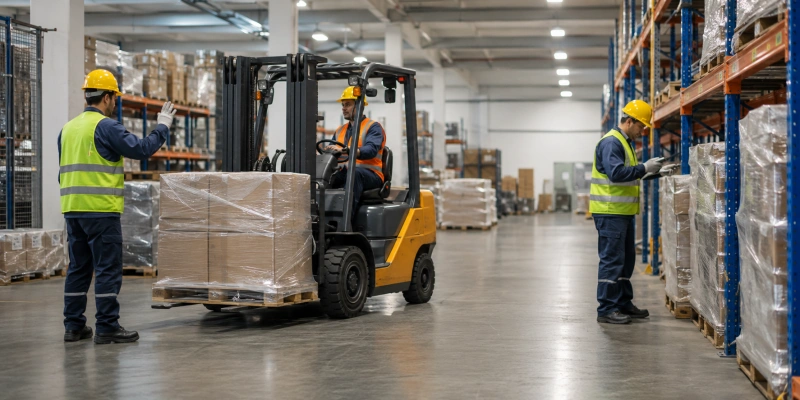
You must prioritize compliance when selecting material handling equipment. Powerful Machinery’s products meet strict certifications, including ISO9001, OSHA, and TUV Rheinland.
These certifications guarantee that you receive equipment with reliable safety features and advanced features. Industry standards such as OSHA regulations require periodic inspections, operator certifications, and workplace safety plans.
ANSI standards provide best practices for different equipment types. You should keep up-to-date documentation to prepare for inspections or audits.
Perform daily inspections before use.
Only certified operators should run cranes, forklifts, and lift tables.
Know the equipment’s maximum load capacity and never exceed it.
Meeting these standards ensures efficiency and reduces risks in your operation. You protect your team and maintain a safe work environment.
Reducing Risks and Injuries
You must address common causes of injuries to improve safety and efficiency. Poor training, ignoring load capacity, skipped inspections, and bad stacking often lead to accidents.
You can prevent these issues by conducting pre-use equipment inspections, training operators properly, and using the right equipment for each task. Clear communication and signaling help maintain safety. Safe load handling procedures and regular maintenance audits further reduce risks.
Common Causes of Injuries | Preventive Measures |
|---|---|
Poor Training | Conduct Pre-Use Equipment Inspections |
Ignoring Load Capacity or Stability | Train Operators and Workers Properly |
Skipped Inspections | Use the Right Equipment for the Task |
Bad Stacking | Maintain Clear Communication and Signaling |
Human Factors | Implement Safe Load Handling Procedures |
Ensure a Clean and Organized Work Environment | |
Schedule Regular Maintenance and Safety Audits |
Powerful Machinery integrates safety features such as anti-lock brakes and load sensors. These features support automation and robotics, improving efficiency and reducing manual strain.
Ergonomic Design Features
You must consider ergonomic design to reduce operator fatigue and injury. Powerful Machinery offers equipment with hydraulic lift mechanisms, responsive controls, and smooth-rolling wheels. These features support safe lifting practices and minimize manual labor.
Ergonomic interventions lower upper extremity pain and reduce low back pain frequency among employees.
Key Findings | Description |
|---|---|
Employee Pain Reduction | Employees using ergonomic interventions reported lower upper extremity pain. |
Low Back Pain Frequency | Interventions led to significantly lower low back pain frequency. |
Survey Participation | 32.5% of employees completed at least one survey. |
You should teach employees to lift using ergonomic techniques and incorporate ergonomic equipment into your workplace. Prevention through design controls risks and supports efficiency. Robotic and automation solutions further enhance safety and reduce injuries.
Tip: Prioritize safety features and ergonomic design when selecting material handling equipment. You improve efficiency, protect your workforce, and support long-term productivity.
Budget, Vendor Selection, and Maintenance
Cost Analysis and Manufacturer Pricing
You need to start your cost analysis by understanding your needs and goals. Look at the initial purchase cost, but do not stop there. Consider ongoing expenses, such as maintenance, training, and energy use. Calculate the total cost of ownership over the equipment’s life.
This gives you a clear view of your financial commitment. Explore funding options and perform a break-even analysis to see when your investment will pay off. Research vendors and evaluate their proposals. Build flexibility into your budget so you can adapt to changes.
Powerful Machinery offers direct manufacturer pricing, which helps you control costs and get high-quality solutions for your inventory and storage needs.
Choosing Reliable Vendors
Selecting the right vendor is critical for long-term success. You should compare vendors based on several criteria. Use the table below to guide your decision:
Criteria | Description |
|---|---|
Material Characteristics | Check durability, weight, and hazards to match your inventory and storage solutions. |
Load Capacity | Make sure the equipment fits your operational needs and inventory requirements. |
Safety Features | Look for advanced safety features to protect your team and inventory. |
Flexibility & Adaptability | Choose solutions that adapt to different environments and workflows. |
Regulatory Compliance | Confirm the vendor meets global standards for safety and training. |
Budget | Balance quality and cost for the best value. |
Customization Requirements | Find vendors who offer solutions tailored to your inventory and storage needs. |
Powerful Machinery stands out with certified, customizable solutions and strong after-sales support. This support increases customer retention and boosts long-term value for your inventory and storage solutions.
Maintenance Planning
You must plan maintenance to keep your equipment reliable. Schedule regular service based on the type of equipment. For example, general forklifts need maintenance every 500 hours or six months. Internal combustion forklifts require service every 250 to 300 hours.
If you operate in high-dust areas, increase the frequency. Proactive maintenance planning reduces breakdowns and extends the life of your solutions.
Proactive maintenance planning improves productivity, lowers repair costs, and extends equipment life. You avoid unplanned downtime, keep your inventory moving, and protect your investment in storage solutions.
Strong after-sales support from vendors like Powerful Machinery ensures you get the most from your solutions. You receive expert advice, fast parts replacement, and ongoing service, which keeps your inventory and storage solutions running smoothly.
Conclusion
Selecting the right material handling equipment involves assessing your operational needs, matching equipment to your materials, and considering your facility’s environment.
Choosing certified, customizable solutions from trusted brands like Powerful Machinery gives you durability, advanced technology, and strong after-sales support.
Regular maintenance and inspections prevent failures and reduce downtime.
New safety features and ongoing evaluation create a safer, more efficient workplace.
Customizable equipment adapts to your workflow, boosting productivity and long-term value.
FAQ
What is material handling, and why is it important?
You use material handling to move, store, protect, and control goods throughout your facility. Proper material handling improves safety, reduces costs, and increases efficiency. You can optimize material handling by choosing the right equipment and automation strategies for your workflow.
How do automated systems improve storage and inventory control?
Automated systems, such as automated storage and automated picking systems, help you organize storage and manage inventory control. You can use AI-driven warehouse robotics and robotic pickers to speed up picking, reduce errors, and keep your storage areas organized.
What should you consider when selecting material handling equipment?
You should look at load type, storage needs, facility layout, and safety requirements. Automated solutions and ai can help you optimize material handling. You also need to think about future growth and how automation strategies can support your business.
How does automation impact material handling safety?
Automation reduces manual lifting and repetitive tasks. You lower the risk of injuries and accidents. Automated equipment, including robotic pickers, helps you maintain safe storage practices and ensures consistent material handling throughout your operation.
Can you customize material handling solutions for unique storage needs?
Yes, you can customize equipment for different storage requirements. Powerful Machinery offers tailored solutions for various industries. You can select features that fit your workflow, automate processes, and optimize material handling for your specific storage and inventory control needs.