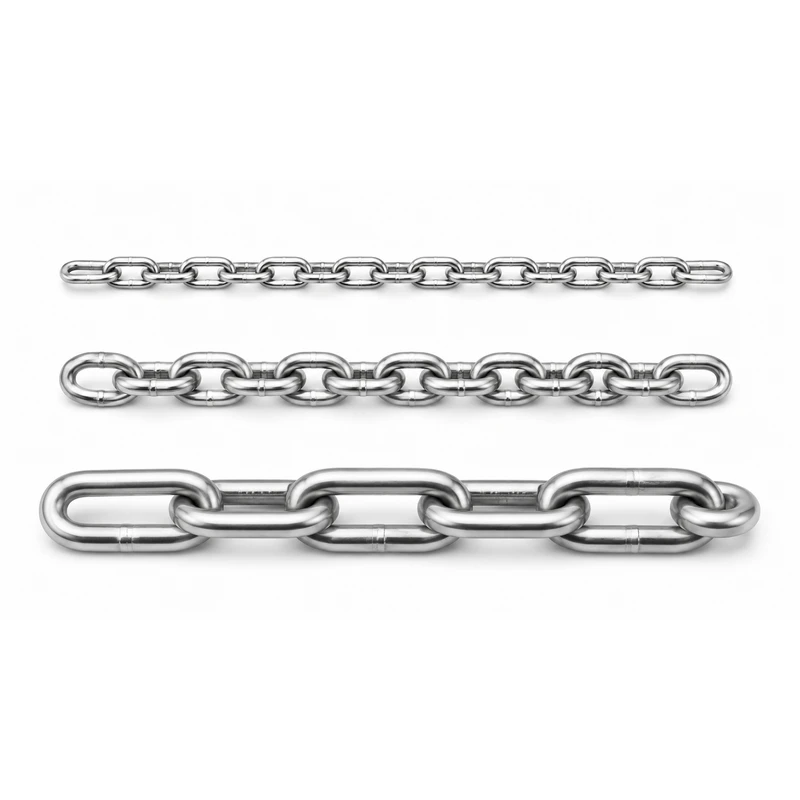
A chain block lifts a load by trading distance for force. When the operator pulls the hand chain, it turns the hand wheel and a reduction gear train. The gears rotate a pocketed load sheave, which moves the load chain and raises or lowers the bottom hook. A mechanical load brake controls the motion and holds the suspended load when the operator stops pulling.
In many markets, chain block, hand chain block, and manual chain hoist describe the same type of hand-operated hoist. This article uses “chain block” for that equipment. Electric and air-powered chain hoists use different drive systems, so their controls and safety devices are outside the scope of this explanation.
Chain Block Components and Their Functions
The mechanism is easier to understand when the two chains are considered separately. The hand chain is the operator’s control input, while the load chain carries the suspended load. For a more detailed assembly breakdown, see the chain block components guide.
| Component | Function |
| Top Hook or Suspension Fitting | Connects the hoist to a support or trolley suitable for the load and application. |
| Hand Chain | Allows the operator to rotate the hand wheel from floor level. It does not support the lifted load. |
| Hand Wheel | Receives motion from the hand chain and transmits it into the drive and brake mechanism. |
| Pinion and Reduction Gears | Reduce output speed and increase output torque, providing the main mechanical advantage. |
| Load Sheave or Pocket Wheel | Engages the calibrated load-chain links and moves the chain through the hoist. The load chain is not wound onto a drum. |
| Load Chain | Carries the suspended load through the bottom hook assembly. Some capacities use multiple chain falls reeved through a lower hook block. |
| Chain Guide and Stripper | Helps the load chain enter and leave the load sheave correctly. |
| Mechanical Load Brake | Controls lowering and holds the load when the operator stops moving the hand chain. |
| Bottom Hook and Latch | Connect the hoist to a suitable lifting attachment or load connection point. The load must be seated in the hook bowl, not on the tip or latch. |
How the Lifting Cycle Works
The Operator Pulls the Hand Chain
Pulling one side of the endless hand chain rotates the hand wheel. Pulling in the direction marked for raising turns the drive in the lifting direction. The exact side or direction depends on the hoist design and the operator’s position, so the markings and operating instructions for the specific model take precedence.
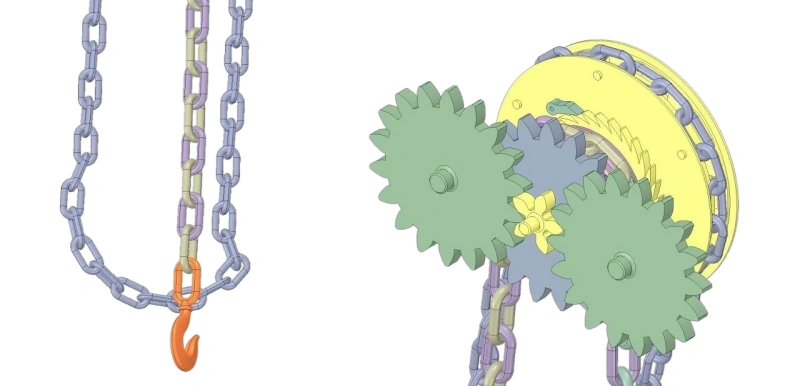
The Gear Train Multiplies Torque
The hand wheel turns a small pinion that drives one or more larger gears. This reduction lowers the rotational speed at the load sheave and increases torque. The operator therefore pulls a relatively long length of hand chain while the load rises a much shorter distance. This force-distance tradeoff is the basis of the hoist’s mechanical advantage.
A gear ratio alone does not determine the hand pull required at rated load. Friction, bearing losses, brake drag, chain reeving, and the number of load-chain falls also affect operating effort. Use the manufacturer’s hand-pull specification for the exact model rather than estimating it from a generic ratio.
The Load Sheave Moves the Load Chain
The final gear rotates the load sheave. Its pockets engage the calibrated links of the load chain and pull the chain through the hoist housing. On a single-fall hoist, the bottom hook travels with one loaded chain fall. On a multi-fall hoist, the chain is reeved through a sheave in the lower hook block, which changes chain travel, hook speed, and the load carried by each fall.
The Brake Holds the Load
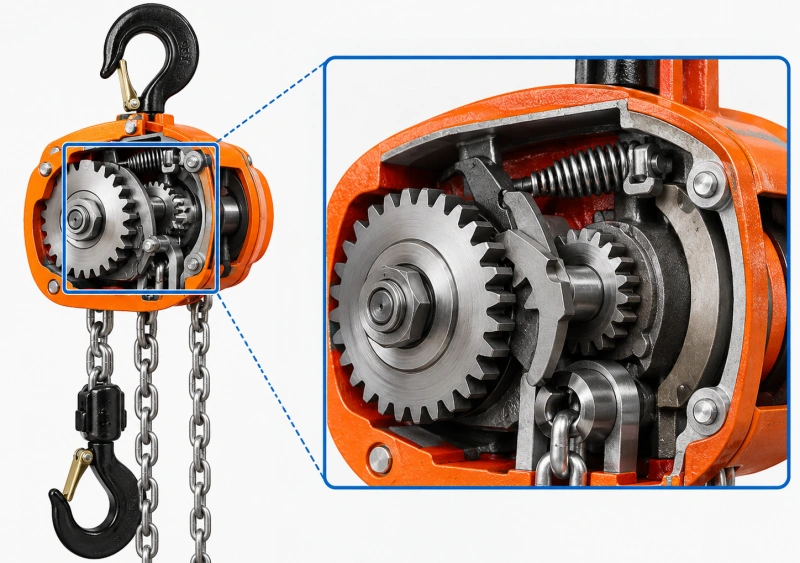
Most hand chain hoists use a self-acting mechanical load brake. Under load, threaded drive components and friction surfaces develop clamping force, while a ratchet wheel and pawl prevent unintended reverse rotation. When the operator stops pulling, the load remains supported by the load chain and held by the brake mechanism.
The brake is a controlled mechanical assembly, not a simple catch. Oil, grease, dirt, wear or incorrect assembly can impair braking, particularly if dry friction surfaces are contaminated. Brake inspection and repair must be performed by qualified personnel in accordance with the manufacturer’s instructions.
How Lowering Works?
Pulling the opposite side of the hand chain rotates the hand wheel in the lowering direction. The drive modulates the brake so controlled reverse movement can occur while the suspended load continues to act on the brake mechanism. The load sheave then feeds the load chain through the hoist and the bottom hook descends.
If the hand chain becomes unusually hard to pull, the load will not hold, the chain jumps or jams, or the hoist produces an abnormal sound, stop operation. Set the load down safely if possible, remove the hoist from service, and arrange an inspection. Do not apply extra force, pull abruptly, or use improvised means to increase input force, because doing so can damage the hoist and mask a developing fault.
What Chain Hoists Use to Lift Heavy Loads?
Every chain hoist requires an energy input, a drive that converts that input into torque, a load-bearing chain engaged with a load sheave, and a means of controlling or holding the load. A manual chain block receives its input through the hand chain and gear reduction. An electric chain hoist receives input from a motor and typically uses motor controls and powered-hoist braking arrangements.
The load chain carries the suspended load, but the chain alone does not create mechanical advantage. Lifting capability comes from the complete system: the drive, gear reduction, load sheave, chain reeving, supporting structure, hooks, and brake. Each component must match the hoist’s rated configuration.
Mechanical Advantage and Rated Capacity
Mechanical advantage describes how the mechanism increases output force relative to the operator’s input force. In a chain block, gear reduction and, where fitted, multiple load-chain falls reduce the hand force required to raise the load. The tradeoff is slower hook travel and greater hand-chain movement.
Mechanical advantage does not increase the hoist’s rated capacity. The rated load marked on the nameplate is the maximum permitted load for the complete hoist in its approved configuration. Never treat a proof-test load, breaking strength, design factor, or calculated gear ratio as permission to exceed that rating.
How to Operate a Chain Block Within Its Intended Use?
The sequence below explains how the mechanism is used. It does not replace the supplied manual, site procedure, or operator training. Use the full chain block operating guide for a task-level procedure.
- Confirm the total suspended load and select a hoist whose marked rated load will not be exceeded.
- Verify that the support, suspension fitting, load attachment, and surrounding structure are suitable for the planned load.
- Inspect the nameplate, hooks, latches, load chain, hand chain, housing, and brake function before use. The load chain must be correctly reeved and free of twists.
- Position the hoist so the load line is vertical, and the load is seated in the bowl of the bottom hook. Remove slack gradually and verify the setup before continuing.
- Pull the hand chain smoothly. Keep hands, clothing, and other objects away from the chains, sheaves, and moving parts.
- Keep people clear of the suspended load and its travel path. Never lift people, pass a suspended load over people, or leave a suspended load unattended.
- Lower the load onto a stable support and release tension before disconnecting it.
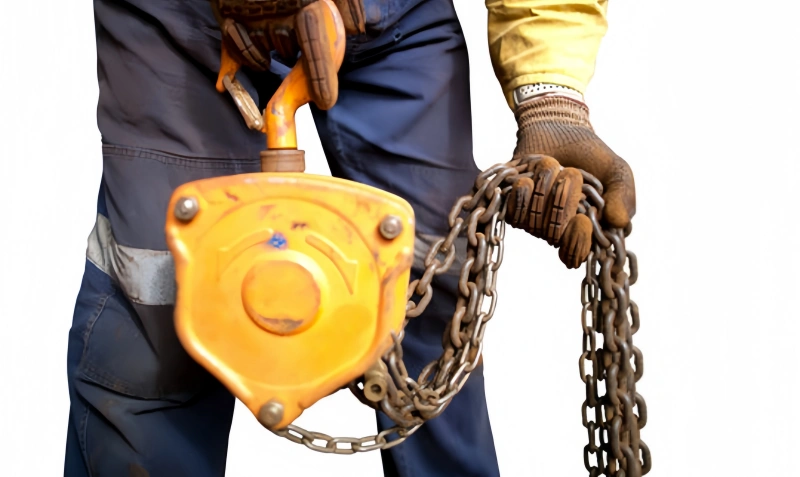
Before each shift or use, follow the manufacturer’s checks and the site inspection program. The chain block inspection checklist explains what to examine and when a unit should be removed from service.
Operating Limits the Mechanism Cannot Overcome
- Do not side-pull unless the manufacturer explicitly approves the exact hoist and configuration for that use. A standard hand chain hoist is intended for vertical lifting of a freely suspended load.
- Do not use the load chain as a sling, run it over an edge, twist it, knot it, or extend it with an unapproved chain or connector.
- Do not use the hook latch to support the load, and do not tip-load a hook.
- Do not use an undocumented “safety margin” or a percentage of rated load as a substitute for selecting the correct capacity. Stay within the marked rated load.
- Do not add a motor or other improvised drive to the hand chain. Use the hoist only as specified by the manufacturer.
Choosing a Chain Block for the Job
Start with the lifting task, then compare the available manual chain block models. Your inquiry should identify the total suspended load, required lift, available headroom, suspension method, hook or connection dimensions, operating frequency, environment, quantity, and required documents.
If you are choosing between hand-chain and lever-operated equipment, compare manual hoist types first. A lever hoist versus chain block comparison is useful when access, operating direction, or load positioning affects the selection.
| Selection Input | Why It Matters |
| Rated Load | Must cover the complete suspended load without exceeding the nameplate rating. |
| Lift | Defines the required hook travel and load-chain length. |
| Headroom | Determines whether the hoist and hook assembly fit between the support and the load. |
| Hand-Chain Drop | Places the operating loop at a usable height for the operator. |
| Hand Pull at Rated Load | Indicates the operating effort for that model and capacity. |
| Load-Chain Falls | Affects hook speed, chain travel, reeving, and inspection. |
| Suspension and Connections | Confirm that the top support and bottom attachment fit and are loaded correctly. |
| Environment and Frequency | May change the required finish, lubrication, inspection plan or hoist type. |
Maintenance and Storage
Lubricate the load chain only as directed by the manufacturer, and keep lubricants away from dry brake friction surfaces. Inspection frequency depends on service, environment, use, and applicable requirements; a universal monthly or annual schedule is not appropriate for every hoist.
Use the manufacturer’s manual and the site’s qualified inspection program. The chain block maintenance guide covers preventive care, while the chain block storage guide covers cleaning, corrosion protection, and return-to-service checks.
FAQ
Is a Chain Block the Same as a Manual Chain Hoist?
Usually, yes. “Chain block,” “hand chain block,” “chain pulley block,” and “manual chain hoist” are commonly used for a hand-operated chain hoist. “Chain hoist” can also be a broader term that includes electric or air-powered equipment, so confirm the drive type when the wording is unclear.
Does a Chain Block Wind the Load Chain Onto a Drum?
No. A chain block normally moves calibrated load chain over a pocketed load sheave. The chain passes through the hoist instead of winding onto a drum.
Why Does the Load Stay Up When You Stop Pulling?
A self-acting mechanical load brake prevents unintended reverse movement. The exact brake design varies by model, but it commonly combines friction surfaces with a ratchet-and-pawl arrangement.
Can a Chain Block Be Used for Horizontal Pulling?
Do not assume it can. Standard hand chain hoists are generally intended for vertical lifting of freely suspended loads. Use a lever hoist or another device designed for pulling when the task is not vertical, unless the chain block manufacturer expressly approves the application.
How Much Hand Chain Must Be Pulled to Raise the Load?
That depends on the gear reduction, load-chain falls, and model. The hand chain travels much farther than the hook because the hoist exchanges travel and speed for lifting force. Use the model’s hand-chain travel or overhaul data when planning the job.
What Should I Do If the Chain Block Will Not Lift or Lower Smoothly?
Stop operating it. Do not force the hand chain or modify the hoist. Lower or secure the load safely if possible, remove the unit from service, and have it inspected in accordance with the manufacturer’s authorized procedure or by qualified service personnel.
Request the Correct Chain Block Configuration
Send Powerful Machinery the rated load, lift, headroom, suspension, connection dimensions, operating conditions, quantity, destination, and required documents. We can use those details to identify the appropriate chain block configuration for quotation. Final selection, installation, operation, and inspection must follow the approved product data, supplied instructions, and requirements that apply at the worksite.